Thinking about replacing a missing tooth? Dental implants are often hailed as the gold standard for tooth replacement, offering incredible durability, a natural look, and long-term oral health benefits. But let’s be honest, one of the first questions that pops into most people’s minds is: “How much does it cost?” 🤔 I understand this concern completely. Investing in your smile is a significant decision, and understanding the financial aspect is crucial.
In this comprehensive guide for 2025, I’ll walk you through everything you need to know about the average cost of a single dental implant. We’ll explore what makes up the price tag, the various factors that can influence it, and how you can make this life-changing treatment more affordable. My goal is to demystify the numbers and help you feel confident and informed as you consider your options.
Read Also:-Demystifying Dental Implant Cleaning Cost in 2025: Your Comprehensive Guide.
Key Takeaways
- No Single Price Tag: The average cost of one dental implant isn’t a fixed number; it varies widely based on several factors.
- Core Components: The total cost typically includes the implant post, the abutment, the crown, and the surgical placement.
- Average Range (2025): For a single dental implant (including all core components and surgery), you can generally expect to pay anywhere from $3,000 to $6,000 in 2025.
- Additional Procedures Can Increase Cost: If you need services like tooth extraction, bone grafting, or a sinus lift, the total cost could rise to $8,000 or even $10,000+.
- Long-Term Value: Despite the upfront cost, dental implants often prove to be a cost-effective solution in the long run due to their exceptional durability and benefits to overall oral health.
Understanding Dental Implants: What Are They, Exactly?
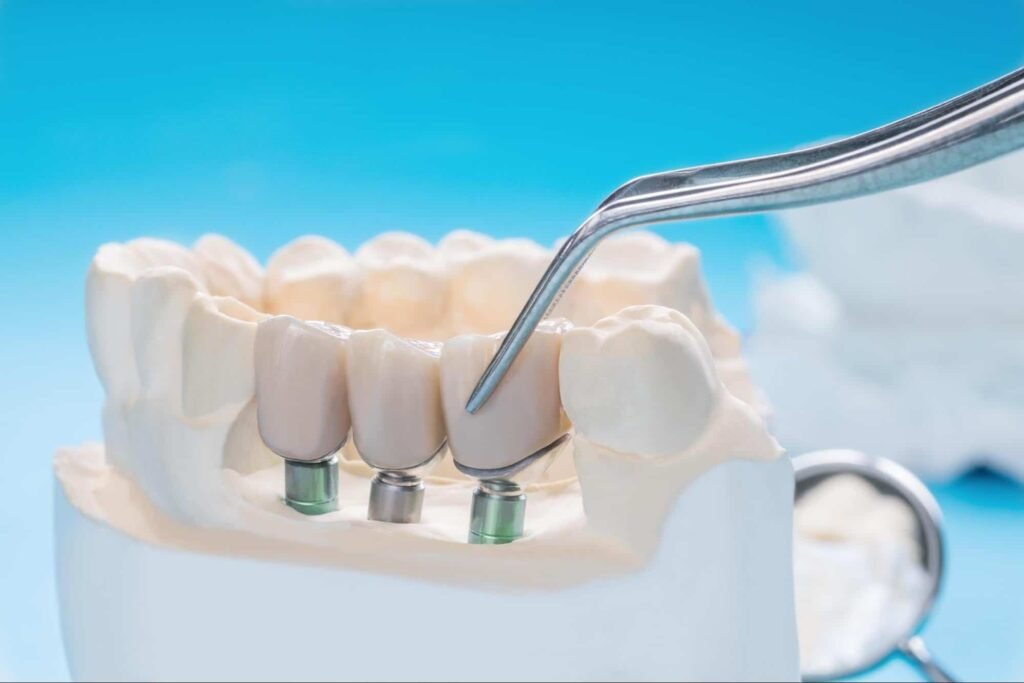
Before we dive into the numbers, let’s quickly clarify what a dental implant is. Many people hear “dental implant” and picture a new tooth, but it’s actually a three-part system designed to replace the root of a missing tooth and provide a stable foundation for a new, artificial tooth.
Here’s a simple breakdown:
- The Implant Post (Fixture): This is a small, screw-shaped post, usually made of titanium (or sometimes zirconia), that is surgically placed into your jawbone. Think of it as the new “root” of your tooth. Over several months, your jawbone will naturally fuse with the implant in a process called osseointegration, making it incredibly strong and stable.
- The Abutment: Once the implant has integrated with your bone, a small connector piece called an abutment is attached to the top of the implant. This piece extends above the gum line and serves as the anchor for your new tooth.
- The Crown (Prosthetic Tooth): This is the visible part of your new tooth. It’s a custom-made crown, typically made from porcelain or ceramic, designed to match the color, shape, and size of your natural teeth. It’s securely cemented or screwed onto the abutment.
“Think of a dental implant as a small, titanium screw that acts like a new tooth root, providing a sturdy foundation for a beautiful, functional replacement tooth.” ✨
Together, these three components create a complete, natural-looking, and fully functional tooth replacement that can last for decades.
The “Average Cost of 1 Dental Implant” – A Complex Answer for 2025
When you ask, “What’s the average cost of one dental implant?” I wish I could give you a single, straightforward number. However, the reality is that there isn’t one fixed price. The cost is highly variable, much like buying a car – you wouldn’t expect a compact sedan to cost the same as a luxury SUV.
In 2025, for a single dental implant that includes the implant post, the abutment, the custom crown, and the surgical procedure for placement, you can generally expect the total cost to fall within the range of $3,000 to $6,000.
However, it’s crucial to understand that this range represents the core procedure. Many patients require additional preparatory procedures before the implant can even be placed. If these extra steps are necessary, the total cost can easily climb to $8,000, $10,000, or even more per implant.
Let’s break down what contributes to this range.
Breakdown of the Costs: What You’re Really Paying For
To truly understand the cost, it’s helpful to see where your money goes. Here’s a look at the typical components that make up the total price of a single dental implant:
1. The Implant Post (Fixture)
- Cost Range: Approximately $1,000 – $3,000
- This is the titanium screw that goes into your jawbone. The cost here can vary based on:
- Material: While most are titanium, some higher-end or specialized implants might use zirconia.
- Brand: Reputable implant manufacturers often have higher costs due to extensive research, development, and quality control.
- Size and Design: Different implant sizes and designs are used for various bone conditions, which can slightly impact cost.
2. The Abutment
- Cost Range: Approximately $300 – $600
- This is the connector piece between the implant and the crown.
- Stock vs. Custom: A standard, “stock” abutment is generally less expensive than a custom-milled abutment, which is precisely designed for your unique gum line and bite. Custom abutments often provide a more aesthetic and functional outcome.
- Material: Can be titanium, zirconia, or other materials.
3. The Crown (Prosthetic Tooth)
- Cost Range: Approximately $1,000 – $3,000
- This is the visible, artificial tooth.
- Material: Porcelain, ceramic, or zirconia crowns are common. Zirconia is often stronger and more expensive.
- Lab Fees: Custom crowns are made in a dental lab by skilled technicians. The quality and complexity of their work contribute significantly to the cost.
- Aesthetics: Highly aesthetic crowns designed to perfectly match surrounding teeth can incur higher lab fees.
4. Surgical Procedure Fees
- Cost Range: Approximately $1,500 – $3,000 (for the placement of the implant post)
- This covers the actual surgical placement of the implant into your jawbone.
- Surgeon’s Expertise: Highly experienced oral surgeons or periodontists may charge more.
- Facility Fees: Where the surgery is performed (dental office vs. specialized surgical center).
- Anesthesia: The type of anesthesia used (local, IV sedation, general anesthesia) and the presence of an anesthesiologist.
Core Dental Implant Cost Summary (2025):
| Component | Estimated Cost Range (USD) in 2025 |
|---|---|
| Implant Post (Fixture) | $1,000 – $3,000 |
| Abutment | $300 – $600 |
| Crown (Prosthetic Tooth) | $1,000 – $3,000 |
| Surgical Placement Fee | $1,500 – $3,000 |
| Total Core Cost Range | $3,800 – $9,600 |
(Note: While the sum of the ranges can be high, typically, the “average” single implant cost that includes all these components falls within the $3,000-$6,000 range when considering overall averages, as some dentists might bundle fees or have lower rates for certain components.)
Factors Influencing the Total Cost of a Single Dental Implant
As I mentioned, the base cost is just one piece of the puzzle. Several other factors can significantly impact the final price you pay for one dental implant in 2025.
1. Geographic Location
Just like real estate, dental costs vary depending on where you live.
- Urban vs. Rural: Dentists in major metropolitan areas with higher overhead costs (rent, salaries) typically charge more than those in smaller towns.
- Cost of Living: States or regions with a higher cost of living generally have higher dental fees.
2. Dentist’s Experience and Specialization
- General Dentist vs. Specialist: While some general dentists place implants, many cases are handled by specialists like oral surgeons or periodontists. Specialists often have more advanced training, equipment, and expertise, which can translate to higher fees.
- Reputation: Highly sought-after dentists with extensive experience and a strong track record may charge more for their services.
3. Diagnostic Imaging and Planning
Before any surgery, your dentist needs a clear picture of your oral anatomy.
- X-rays: Standard dental X-rays are usually included, but more advanced imaging is often required.
- 3D CT Scans (Cone Beam CT): These scans provide a detailed 3D view of your jawbone, nerves, and sinuses, which is essential for precise implant planning and placement. This can add a few hundred dollars to the total.
- Digital Impressions/Models: Used to create accurate models for crown fabrication.
4. Pre-Prosthetic Procedures (If Needed)
This is where the cost can really increase. Many patients require additional procedures to prepare their mouth for the implant.
- Tooth Extraction: If the damaged tooth is still in place, it needs to be extracted first. This can cost anywhere from $75 to $600, depending on the complexity (simple vs. surgical extraction).
- Bone Grafting: If your jawbone isn’t thick or dense enough to support an implant, a bone graft might be necessary. This involves adding bone material (from your own body, a donor, or synthetic) to the site.
- Cost: $200 – $1,200 per site, depending on the material and extent of the graft.
- Sinus Lift: If you need an implant in your upper jaw and your sinus cavity is too close to the bone, a sinus lift procedure may be required to raise the sinus floor and create enough bone height.
- Cost: $1,500 – $3,000 per side.
- Gum Grafting: In some cases, gum tissue might need to be added to ensure proper coverage and aesthetics around the implant.
- Temporary Tooth: While waiting for the implant to heal, you might opt for a temporary crown or partial denture to maintain aesthetics, which adds to the cost.
5. Type of Anesthesia
The comfort level during the procedure can impact the cost.
- Local Anesthesia: Most basic implant placements use local anesthesia (numbing the area), which is usually included.
- Oral Sedation: Pills taken before the appointment to help you relax.
- IV Sedation: Administered intravenously for deeper relaxation, often by an anesthesiologist, adding $300 – $800+ per hour.
- General Anesthesia: For very anxious patients or complex cases, general anesthesia might be used, which is significantly more expensive.
6. Material Quality and Brand 🌟
As mentioned earlier, the quality and brand of the implant post, abutment, and crown can affect the price. Premium brands often come with extensive research, higher success rates, and better long-term warranties.
7. Laboratory Fees 🧪
The dental lab that fabricates your custom crown and potentially a custom abutment plays a significant role. High-quality labs with skilled technicians who can create highly aesthetic and functional restorations will charge more.
8. Follow-up Appointments and Maintenance 🗓️
While often included in the initial quote, ensure you understand if follow-up visits, post-operative care, and initial cleaning around the new implant are covered.
“Many factors, from your location to whether you need a bone graft, can shift the final price of a dental implant. It’s truly a personalized investment!” 💡
Is It Worth the Investment? The Long-Term Value of Dental Implants
Looking at the numbers for 2025, you might initially feel that the cost of a single dental implant is high. However, it’s crucial to consider the long-term value and benefits that dental implants offer, especially when compared to alternative tooth replacement options like bridges or dentures.
1. Exceptional Durability and Longevity 💪
- Implants: With proper care, dental implants can last 15 to 25 years, or even a lifetime. This means you might only pay for them once.
- Bridges: Dental bridges typically last 5-15 years before needing replacement. Replacing a bridge every decade or so can accumulate significant costs over a lifetime.
- Dentures: Partial or full dentures may need adjustments or replacements every 5-10 years.
2. Improved Oral Health and Bone Preservation 🦴
- Implants: They are the only tooth replacement option that stimulates your jawbone, preventing bone loss that naturally occurs when a tooth is missing. This helps maintain your facial structure and keeps surrounding teeth stable.
- Bridges: Require grinding down healthy adjacent teeth to support the bridge, potentially compromising their long-term health. They also don’t prevent bone loss beneath the missing tooth.
- Dentures: Can accelerate bone loss over time and may cause gum irritation.
3. Superior Function and Comfort 😄
- Implants: Function just like natural teeth. You can eat, speak, and smile with complete confidence and comfort. There’s no slipping or clicking, and no dietary restrictions.
- Bridges: Can sometimes feel less stable and might require careful eating.
- Dentures: Can slip, make chewing difficult, and require adhesives.
4. Enhanced Aesthetics and Confidence ✨
- Implants: Look and feel incredibly natural. Because they are integrated into your jawbone, they provide a stable foundation that mimics your natural teeth, enhancing your smile and boosting your self-esteem.
- Other options: While effective, may not always offer the same level of natural appearance or stability.
When you factor in the potential for repeated costs, maintenance, and the compromise to oral health associated with other options, the initial investment in a dental implant often becomes the most cost-effective and beneficial solution over your lifetime.
Navigating the Costs: How to Afford a Dental Implant in 2025
I understand that even with the long-term benefits, the upfront cost can be a barrier. Fortunately, there are several ways to make a dental implant more affordable in 2025.
1. Dental Insurance Coverage 🛡️
- Limited Coverage: Most standard dental insurance plans typically do not cover the entire cost of dental implants. They might consider implants a cosmetic procedure or an “elective” treatment.
- Partial Coverage: However, some plans may cover portions of the treatment, especially if it’s deemed medically necessary. Your insurance might cover:
- Diagnostic X-rays and CT scans.
- Tooth extraction (if needed).
- Bone grafting (sometimes).
- The crown portion of the implant.
- Check with Your Provider: Always contact your insurance provider directly to understand your specific benefits for dental implants in 2025. Your dental office can often help you with this.
2. Payment Plans and Financing Options 💳
- Third-Party Lenders: Many dental offices partner with third-party financing companies like CareCredit, LendingClub, or Alphaeon Credit. These companies offer special healthcare credit cards with various payment plans, including interest-free options for a certain period.
- In-House Payment Plans: Some dental practices offer their own flexible payment plans, allowing you to pay for your treatment in installments over time.
- Personal Loans: You might consider a personal loan from a bank or credit union, though these typically come with interest.
3. Health Savings Accounts (HSAs) and Flexible Spending Accounts (FSAs) 💰
- If you have an HSA or FSA through your employer, you can use these tax-advantaged accounts to pay for dental implants and related procedures. These funds are pre-tax, meaning you save money on your treatment. Be sure to check your balance and contribution limits for 2025.
4. Dental Schools 🎓
- Dental schools often offer treatments at a reduced cost because procedures are performed by students under the close supervision of experienced faculty members. This can be a great option for complex procedures like implants if you’re comfortable with the extended treatment time.
5. Community Dental Clinics and Discount Plans 🤝
- Some non-profit or community dental clinics offer services at a lower cost based on a sliding scale.
- Dental discount plans (different from insurance) require an annual fee and provide discounts on various dental procedures from participating dentists.
6. Shop Around and Get Multiple Quotes 📝
- Don’t hesitate to consult with a few different dentists or specialists. Get itemized quotes for the entire procedure, including any potential additional treatments. This will help you compare costs and choose the best option for your budget and needs.
7. Dental Tourism ✈️
- Some individuals choose to travel to other countries where the cost of dental implants can be significantly lower. While this might seem appealing, it’s essential to weigh the pros (cost savings) against the cons (travel expenses, follow-up care challenges, language barriers, quality control).
“Affording a dental implant in 2025 is more achievable than you might think! Explore insurance, financing, and even dental schools to find a path that works for you.” ✅
Questions to Ask Your Dentist About Implant Costs
When you have your consultation, it’s vital to ask thorough questions to ensure you understand all the financial aspects. Here are some key questions I recommend asking:
- “Can you provide a detailed, itemized breakdown of the entire cost for my single dental implant?”
- “What exactly is included in the quoted price (e.g., implant post, abutment, crown, surgery, X-rays, follow-up visits)?”
- “Are there any potential additional costs I should be aware of, such as bone grafting, extractions, or temporary restorations?”
- “What are your accepted payment methods, and do you offer in-house payment plans or work with third-party financing (like CareCredit)?”
- “How much of this procedure do you anticipate my dental insurance will cover in 2025, and what will my out-of-pocket expense be?”
- “What is the estimated timeline for the entire implant process, from start to finish?”
- “What are the different material options for the implant and crown, and how do they affect the cost and longevity?”
- “What is your experience and success rate with single dental implants?”
Asking these questions will help you get a clear picture of the investment required and avoid any surprises down the line.
Conclusion
The “average cost of 1 dental implant” in 2025 is a dynamic figure, influenced by a multitude of factors, from the specific components used to the expertise of your dental team and any necessary preparatory procedures. While the core cost typically ranges from $3,000 to $6,000, additional treatments can push the total higher.
However, I believe that viewing dental implants as an investment rather than just an expense is key. Their unparalleled longevity, natural feel, and significant benefits for your oral health and confidence often make them the most cost-effective and rewarding solution in the long run.
If you’re considering a dental implant, my strongest recommendation is to schedule a consultation with a qualified dental professional. They can provide a personalized assessment, discuss all your options, and give you an accurate, itemized cost estimate tailored to your unique needs. A brighter, healthier smile is within reach! 🦷😊
SEO Meta Title and Meta Description
Meta Title: Average Cost of 1 Dental Implant in 2025: Your Guide
Meta Description: Discover the average cost of 1 dental implant in 2025, including factors affecting price, component breakdown, and how to afford your single tooth implant. Get informed!