
Losing a tooth can be a big deal. It affects how you chew, how you speak, and even how you smile. If you’re facing this situation, you’re likely wondering about the best way to replace it. Two of the most popular and effective options are dental implants and dental bridges. While both can restore your smile and chewing ability, they differ significantly in their procedure, longevity, and, most importantly, their cost.
As your guide through this important decision, I’m here to break down the ins and outs of dental implant versus bridge cost in 2025. My goal is to help you understand not just the initial price tag, but also the long-term value, benefits, and potential drawbacks of each option, so you can make an informed choice that’s right for your health and your wallet. Let’s dive in!
Key Takeaways
- Initial Cost vs. Long-Term Value: Dental implants typically have a higher upfront cost than bridges in 2025, but they often prove more cost-effective over their much longer lifespan, potentially lasting a lifetime.
- Impact on Healthy Teeth: Implants stand alone, preserving your natural teeth, while traditional bridges require altering healthy adjacent teeth to support the replacement.
- Bone Health & Jaw Preservation: Implants stimulate the jawbone, preventing bone loss that often occurs after a tooth is lost. Bridges do not offer this benefit, which can lead to changes in facial structure over time.
- Durability and Maintenance: Implants are incredibly durable and easy to clean, much like natural teeth. Bridges may require more specific cleaning and typically need replacement every 5-15 years.
- Personalized Decision: The best choice depends on many factors, including your budget, oral health, bone density, and long-term goals. Always consult with your dentist to discuss the ideal solution for your unique situation.
Understanding Tooth Loss and Replacement Options
Losing a tooth isn’t just a cosmetic issue; it can have serious health consequences. When a tooth is missing, the surrounding teeth can shift, affecting your bite. Your jawbone, no longer stimulated by the tooth root, can begin to shrink, leading to a sunken appearance and weakening of adjacent teeth. That’s why replacing a missing tooth promptly is crucial for maintaining your oral health, chewing function, and facial structure.
In 2025, modern dentistry offers two primary fixed solutions for tooth replacement: dental implants and dental bridges. While removable dentures are another option, we’ll focus on these permanent, fixed solutions that offer superior stability and comfort.
What is a Dental Implant?
Imagine replacing a missing tooth with something that feels and functions almost exactly like your natural tooth. That’s essentially what a dental implant offers. It’s considered the gold standard for tooth replacement in 2025 because it addresses both the visible part of the tooth and its crucial root structure.
The Dental Implant Procedure
The process for getting a dental implant involves a few key steps:
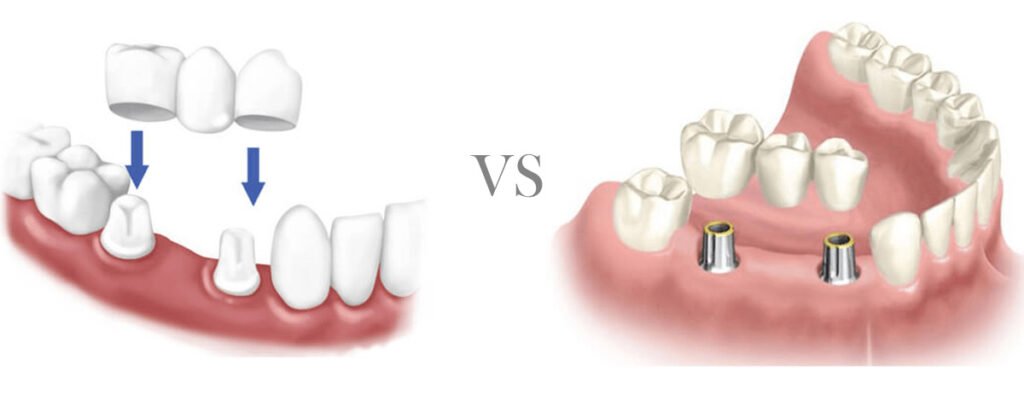
- Implant Placement: A small, screw-shaped post, usually made of titanium, is surgically placed into your jawbone where the missing tooth once was. Titanium is used because it’s biocompatible, meaning your body accepts it readily.
- Healing (Osseointegration): Over several months, your jawbone naturally grows around the titanium post, fusing with it. This process, called osseointegration, creates a strong, stable foundation, much like a natural tooth root.
- Abutment Placement: Once the implant has fully integrated with your bone, a small connector piece called an abutment is attached to the implant. This piece will hold your new tooth.
- Crown Attachment: Finally, a custom-made crown (the visible part of the tooth) is securely attached to the abutment. This crown is designed to match the color, shape, and size of your natural teeth, blending seamlessly with your smile. 🦷
Benefits of Dental Implants
Dental implants come with a host of advantages that make them a highly desirable option:
- Exceptional Longevity: With proper care, dental implants can last a lifetime. This makes them a very cost-effective solution in the long run.
- Preserves Bone Health: Unlike other options, implants stimulate the jawbone, preventing the bone loss that naturally occurs after a tooth is extracted. This helps maintain your facial structure.
- No Impact on Adjacent Teeth: Implants are self-supporting. They don’t require any alteration or grinding down of neighboring healthy teeth, which is a significant advantage over bridges.
- Natural Look and Feel: Because they are anchored directly into the bone, implants feel and function just like your natural teeth. You can eat, speak, and smile with confidence.
- Improved Oral Health: Implants are easy to clean, just like natural teeth, promoting better overall oral hygiene.
- High Success Rate: Dental implants boast a success rate of over 95%, making them a very reliable solution.
💡 Pull Quote: “Dental implants are the closest thing to natural teeth, offering unparalleled stability, aesthetics, and long-term oral health benefits by preserving your jawbone.”
Drawbacks of Dental Implants
While implants offer many benefits, it’s important to consider their downsides:
- Higher Initial Cost: The upfront investment for a dental implant is generally higher than for a dental bridge.
- Surgical Procedure: Getting an implant involves a surgical procedure, which carries some risks, though minor.
- Longer Treatment Timeline: The entire process, from implant placement to crown attachment, can take several months due to the healing period required for osseointegration.
- Not for Everyone: Patients need sufficient bone density to support an implant. If bone loss has occurred, additional procedures like bone grafting might be necessary, adding to the cost and timeline.
What is a Dental Bridge?
A dental bridge, as its name suggests, “bridges” the gap created by one or more missing teeth. It’s a traditional and effective way to replace missing teeth, especially when the surrounding teeth can provide support.
The Dental Bridge Procedure
A traditional dental bridge typically involves these steps:
- Preparation of Abutment Teeth: The teeth on either side of the gap (called abutment teeth) are carefully reshaped. This involves removing a small amount of enamel to make room for the crowns that will cap them.
- Impressions: Impressions of your teeth are taken and sent to a dental lab, where your custom bridge is fabricated. A temporary bridge might be placed to protect your prepped teeth.
- Bridge Placement: Once the permanent bridge is ready, your dentist will cement it onto your prepared abutment teeth. The bridge consists of crowns for the abutment teeth and an artificial tooth (or teeth) called a pontic, which fills the gap.
Types of Dental Bridges
While the traditional bridge is most common, there are other types:
- Traditional Bridge: The most common type, where crowns are placed on the teeth on either side of the missing tooth, with a pontic in between.
- Cantilever Bridge: Used when there are healthy teeth only on one side of the missing tooth. It’s less common and not recommended for the back of the mouth due to stress on the supporting tooth.
- Maryland Bonded Bridge (Resin-Bonded Bridge): This type uses a metal or porcelain framework that is bonded to the back of the two adjacent teeth, rather than requiring crowns. It’s more conservative but generally less strong.
- Implant-Supported Bridge: If you’re missing several teeth in a row, two dental implants can be placed to support a bridge, eliminating the need to use natural teeth as anchors. This combines aspects of both treatments.
Benefits of Dental Bridges
Dental bridges offer several compelling advantages:
- Quicker Treatment: The entire process for a dental bridge is generally much faster than for an implant, often completed in just a few weeks.
- Lower Initial Cost: In most cases, the upfront cost of a dental bridge is less than that of a single dental implant.
- Less Invasive: The procedure doesn’t involve surgery into the jawbone, making it less invasive than an implant.
- Good for Multiple Missing Teeth: Bridges can effectively replace one or several missing teeth in a row.
- Suitable for Certain Conditions: If you have insufficient bone for an implant or certain medical conditions that make surgery risky, a bridge might be a more suitable option.
Drawbacks of Dental Bridges
It’s important to be aware of the disadvantages of dental bridges:
- Impact on Healthy Teeth: The biggest drawback is that healthy adjacent teeth must be ground down to support the bridge. This makes them more vulnerable to decay and sensitivity.
- Shorter Lifespan: While durable, bridges typically last 5-15 years before needing replacement, especially compared to the potentially lifelong nature of implants.
- No Bone Stimulation: Bridges do not stimulate the jawbone beneath the missing tooth, which can lead to bone loss over time. This can eventually affect the fit of the bridge and the appearance of your face.
- Potential for Abutment Tooth Issues: The supporting teeth are under increased stress and can be more prone to problems like cavities or nerve damage, potentially requiring root canals.
- Cleaning Challenges: Cleaning under a bridge can be more difficult than cleaning natural teeth or implants, requiring special floss threaders or interdental brushes.
Dental Implant Cost Breakdown (2025)
When we talk about the cost of a dental implant in 2025, it’s not just a single price. It’s a combination of several factors and procedures. I want to give you a clear picture of what you can expect.
Average Cost Range for a Single Dental Implant in 2025
For a single dental implant, including the implant post, abutment, and crown, you can generally expect a cost range between $3,000 and $6,000 per tooth. This is a broad estimate, and the actual cost can vary quite a bit.
Factors Influencing Dental Implant Cost
Several elements contribute to the final price tag:
- Geographical Location: Dental costs vary significantly by region, city, and even neighborhood. Practices in major metropolitan areas tend to have higher prices.
- Dentist’s Experience and Specialization: Highly experienced periodontists or oral surgeons who specialize in implant dentistry may charge more for their expertise.
- Materials Used: The type of crown material (porcelain, zirconia), the quality of the titanium implant, and the abutment can affect the cost.
- Additional Procedures: This is where costs can increase substantially. Many patients need preparatory procedures before an implant can be placed:
- Tooth Extraction: If the tooth is still present, its removal will be an additional cost.
- Bone Grafting: If you don’t have enough jawbone, a bone graft is needed to build up the area. This can add $500 to $2,500 or more per site.
- Sinus Lift: For implants in the upper jaw, if the sinus cavity is too close to the bone, a sinus lift may be required, adding $1,500 to $3,000 or more.
- Gum Grafting: Sometimes needed to improve gum health around the implant.
- Sedation Options: The type of anesthesia or sedation used during the surgical procedure (local anesthetic, oral sedation, IV sedation) will impact the overall cost.
- Diagnostic Tests: X-rays, 3D CT scans, and other diagnostic imaging are necessary for planning and are typically included in the overall fee or charged separately.
Components of Implant Cost
To help you understand a typical bill, here’s a breakdown:
- Surgical Placement of Implant Post: This is the cost for the titanium screw and the surgical procedure itself. (Often the largest portion).
- Abutment: The connector piece between the implant and the crown.
- Dental Crown: The custom-made artificial tooth.
- Initial Consultation & Planning: X-rays, 3D scans, and treatment planning.
- Follow-up Appointments: Post-surgical checks and healing assessments.
Multi-Tooth Implants and All-on-4
If you’re missing multiple teeth, the cost structure changes:
- Multiple Single Implants: Replacing several individual teeth with implants will involve the cost per implant multiplied by the number of implants.
- Implant-Supported Bridge: If you’re replacing three or four teeth in a row, you might get two implants supporting a bridge of three or four crowns. This can be more cost-effective than three or four individual implants.
- All-on-4® Dental Implants: This is a popular option for replacing an entire arch of teeth (upper or lower) with just four strategically placed implants. The cost for an All-on-4 procedure in 2025 can range from $15,000 to $30,000 per arch, depending on materials and complexity.
Insurance Coverage for Implants
Many dental insurance plans in 2025 do not fully cover the cost of dental implants, as they are often classified as a “major procedure” or even “cosmetic.” However, some plans are beginning to offer partial coverage. It’s crucial to:
- Check your specific plan: Look for coverage for “major restorative procedures” or “prosthodontics.”
- Ask for a pre-determination: Your dentist can submit a treatment plan to your insurance provider to find out exactly what they will cover before you commit.
- Medical insurance: In some cases, if tooth loss is due to an accident or medical condition, your medical insurance might cover parts of the implant procedure, especially bone grafting or extractions.
Dental Bridge Cost Breakdown (2025)
Dental bridges generally present a lower initial cost compared to dental implants. However, just like implants, the price can fluctuate based on several factors.
Average Cost Range for a Dental Bridge in 2025
The cost of a traditional dental bridge is typically quoted per unit. A three-unit bridge (two crowns on abutment teeth and one pontic in the middle) is a common example.
You can expect a range of $700 to $1,500 per unit in 2025.
So, a three-unit bridge might cost anywhere from $2,100 to $4,500.
Factors Influencing Dental Bridge Cost
Here’s what impacts the price of a bridge:
- Number of Pontics and Abutments: The more missing teeth you’re replacing, and thus the more units in the bridge, the higher the cost. A three-unit bridge will be cheaper than a four-unit bridge.
- Materials Used:
- Porcelain Fused to Metal (PFM): A common and durable option, often mid-range in cost.
- All-Porcelain/All-Ceramic: Offers excellent aesthetics, often preferred for front teeth, and can be slightly more expensive.
- Zirconia: Very strong and aesthetically pleasing, often at the higher end of the price range.
- Gold Alloys: Less common now but still used for its strength in some cases, can be costly.
- Geographical Location: Similar to implants, costs vary by region.
- Complexity of the Case: If the abutment teeth require significant preparation or if there are other underlying oral health issues, the cost may increase.
- Additional Procedures:
- Tooth Extraction: If the tooth to be replaced is still present.
- Root Canal Treatment: If an abutment tooth has decay or nerve damage, a root canal might be needed before it can support a crown, adding significantly to the cost.
- Fillings or Other Restorations: If the abutment teeth need other dental work.
- Type of Bridge:
- Traditional bridges are the most common and represent the average costs mentioned.
- Cantilever bridges might be slightly less if they only involve one abutment tooth, but their limited use makes them less frequently compared.
- Maryland bridges are often less expensive (e.g., $1,500 – $2,500) because they don’t require full crowns on the abutment teeth, but they are generally less durable.
- Implant-supported bridges will be significantly more expensive, as they involve the cost of two implants plus the bridge itself (e.g., $6,000 – $12,000+).
Insurance Coverage for Bridges
Dental bridges are generally considered a more traditional and widely covered restorative procedure by dental insurance plans in 2025.
- Partial Coverage: Most insurance plans will cover a significant portion, often 50% or more, of the cost of a traditional dental bridge.
- Annual Maximums: Be mindful of your plan’s annual maximums, as a bridge could consume a large part of it.
- Waiting Periods: Some plans have waiting periods for major restorative work.
⚠️ Pull Quote: “While dental bridges offer a lower initial cost and faster treatment, remember to factor in the potential long-term expenses of replacement and ongoing care for the supporting teeth.”
Direct Cost Comparison: Implants vs. Bridges (2025)
Let’s put the numbers side-by-side for a clearer picture. Keep in mind these are estimates for 2025 and can vary widely.
Initial Cost Comparison for a Single Missing Tooth
| Feature | Dental Implant (Single Tooth) | Dental Bridge (3-Unit Traditional) |
|---|---|---|
| Initial Cost (2025) | $3,000 – $6,000 (including post, abutment, crown) | $2,100 – $4,500 (for 3 units: 2 crowns + 1 pontic) |
| Additional Costs | Bone graft, sinus lift, extraction, sedation | Extraction, root canal on abutment teeth, sedation |
| Treatment Time | 3-9 months (due to healing) | 2-4 weeks |
| Invasiveness | Surgical procedure | Non-surgical (tooth preparation) |
| Impact on Adjacent | None | Requires grinding down healthy adjacent teeth |
| Bone Preservation | Yes ✅ (stimulates jawbone) | No ❌ (bone loss can occur beneath the pontic) |
| Lifespan | 20+ years, often lifetime with proper care | 5-15 years (typically needs replacement) |
| Maintenance | Brush and floss like natural teeth | Requires special cleaning tools (floss threaders) for under the bridge |
| Insurance Coverage | Often partial or limited coverage | More commonly covered, often 50% or more |
Long-Term Cost Considerations
This is where the “value for money” perspective truly comes into play.
- Dental Implants:
- Higher initial cost, but potentially lower long-term cost.
- Because implants can last a lifetime, you might only pay for them once.
- Less risk of problems with adjacent teeth means fewer future dental bills related to those teeth.
- Prevents bone loss, avoiding potential future costs associated with a weakening jawbone or changes in facial structure.
- Dental Bridges:
- Lower initial cost, but potentially higher long-term cost.
- Bridges typically need to be replaced every 5-15 years. If a bridge costs $3,000 and needs replacement every 10 years, over 30 years, you could pay $9,000 ($3,000 x 3).
- The abutment teeth supporting the bridge are vulnerable. If one of these teeth develops decay or needs a root canal, the entire bridge might need to be removed and replaced, incurring significant additional costs.
- Bone loss under the bridge can also lead to aesthetic issues and complications over time.
💰 Pull Quote: “Don’t just look at the upfront cost. When comparing dental implants vs. bridges, always consider the long-term investment and potential future expenses.”
Beyond the Price Tag: Other Factors to Consider
While cost is a major factor, it shouldn’t be the only one. Let’s explore other crucial aspects.
Longevity and Durability
- Implants: Designed to be a permanent solution. The titanium post is incredibly durable and integrates with your bone, providing unmatched stability. The crown itself may need replacement after 10-15 years due to wear, but the implant post should remain intact.
- Bridges: Have a finite lifespan. The stress on the abutment teeth, potential for decay, and general wear and tear mean they will eventually need to be replaced. This means repeat costs over your lifetime.
Read More:-Dental Implant Repair Cost: Your Comprehensive Guide for 2025.
Impact on Adjacent Teeth
- Implants: They are independent. Your healthy adjacent teeth are left untouched, preserving their natural strength and integrity. This is a huge advantage for long-term oral health.
- Bridges: Require the irreversible grinding down of healthy enamel on the neighboring teeth. This makes these teeth more susceptible to decay, sensitivity, and the need for future dental work like root canals.
Bone Health Preservation
- Implants: This is a critical benefit. The implant post acts like a natural tooth root, stimulating the jawbone and preventing the bone loss that occurs when a tooth is missing. This maintains your facial structure and supports the stability of surrounding teeth.
- Bridges: Do not stimulate the jawbone beneath the pontic. Over time, this can lead to bone shrinkage, which might create a gap under the bridge, trap food, and even alter your facial appearance.
Aesthetics and Functionality
- Implants: Offer superior aesthetics and functionality. They look and feel just like natural teeth. You can eat all your favorite foods without worry, and they blend seamlessly with your smile.
- Bridges: While aesthetically pleasing, they don’t always offer the same natural feel as an implant. Some people might notice a slight difference in chewing. The lack of bone stimulation can also lead to a sunken appearance under the bridge over time.
Treatment Timeline and Invasiveness
- Implants: Involve a surgical procedure and a longer overall treatment time (several months) due to the osseointegration period.
- Bridges: Are quicker to place (a few weeks) and involve a less invasive procedure, making them appealing if speed is a priority or if you’re not a candidate for surgery.
Maintenance and Oral Hygiene
- Implants: Extremely easy to maintain. You brush and floss them just like your natural teeth. Regular dental check-ups are key.
- Bridges: Require a bit more effort. Food particles can get trapped under the pontic, necessitating the use of special tools like floss threaders or interdental brushes to clean effectively. Poor cleaning can lead to decay in the abutment teeth or gum issues.
When is an Implant the Better Choice?
Based on what we’ve discussed, I generally recommend considering a dental implant when:
- You prioritize long-term value and durability.
- You want to preserve your natural, healthy adjacent teeth.
- You are concerned about preventing jawbone loss.
- You seek the most natural look, feel, and function.
- You are a suitable candidate for minor oral surgery.
- You are willing to commit to the longer treatment timeline.
When is a Bridge the Better Choice?
A dental bridge might be a more suitable option if:
- You’re looking for a quicker and less invasive solution.
- Your budget is a primary concern for the upfront cost.
- The teeth adjacent to the gap already have large fillings or crowns and could benefit from new crowns anyway.
- You are not a candidate for dental implant surgery due to medical conditions or insufficient bone density without extensive grafting.
- You are missing multiple teeth in a row, and an implant-supported bridge is not an option.
Navigating Insurance and Financing Options
The cost of dental work can be substantial, but there are ways to make it more manageable.
Dental Insurance Coverage
- Understand Your Plan: As mentioned, most dental insurance plans in 2025 offer more coverage for bridges than for implants. Always contact your provider directly to understand your specific benefits, annual maximums, deductibles, and waiting periods.
- Pre-Determination: Have your dentist submit a pre-determination form to your insurance company. This will give you an exact idea of what your out-of-pocket costs will be for both options.
- Hybrid Approach: Some plans might cover the extraction and bone graft portions of an implant procedure, even if they don’t cover the implant post or crown directly.
Financing Options
Don’t let the upfront cost deter you from the best solution for your health. Many dental practices offer:
- Payment Plans: In-house payment plans allow you to spread the cost over several months or even a year.
- Third-Party Financing: Companies like CareCredit or LendingClub offer specialized healthcare credit cards or loans with low or no-interest options for qualified applicants.
- Health Savings Accounts (HSAs) and Flexible Spending Accounts (FSAs): If you have an HSA or FSA through your employer, you can use these tax-advantaged accounts to pay for dental implants or bridges.
- Dental Schools: University dental schools often provide high-quality care at reduced costs, as procedures are performed by students under the supervision of experienced faculty.
- Discount Plans: Some dental discount plans can offer savings on various procedures, though they are not insurance.
Making Your Decision: A Consultative Approach
Ultimately, the decision between a dental implant and a dental bridge in 2025 is a personal one. It hinges on your unique oral health needs, budget, aesthetic goals, and long-term expectations.
I strongly recommend scheduling a thorough consultation with an experienced dentist. They can:
- Assess your oral health: Evaluate your bone density, gum health, and the condition of your adjacent teeth.
- Discuss your options: Explain which treatment options are viable for your specific situation.
- Provide detailed cost estimates: Give you a precise breakdown of the costs for both implants and bridges, including any necessary preliminary procedures.
- Review your insurance benefits: Help you understand what your insurance will cover.
- Answer all your questions: Address any concerns you have about the procedures, recovery, or maintenance.
Gathering all this information will empower you to make an informed choice that you feel confident about.
My Final Thoughts
Choosing between a dental implant and a dental bridge is a significant decision for your oral health and your finances. While dental implants often come with a higher initial price tag in 2025, their long-term benefits—like bone preservation, protection of adjacent teeth, and superior longevity—often make them a more valuable investment over time. Bridges, on the other hand, offer a quicker, less invasive, and initially more affordable solution, but with potential trade-offs in terms of impact on other teeth and lifespan.
I hope this comprehensive guide has shed light on the dental implant versus bridge cost debate, helping you understand the nuances beyond just the dollar signs. Remember, investing in your oral health is investing in your overall well-being. Take the time to discuss your options with your dentist, weigh the pros and cons carefully, and choose the solution that best fits your needs for a healthy, confident smile in 2025 and beyond.