Losing a tooth can be a challenging experience, impacting not just your smile but also your ability to chew, speak, and even your self-confidence. For many years, traditional options like dentures and bridges were the go-to solutions. However, dental implants have emerged as the gold standard, offering a remarkably durable and natural-looking replacement for missing teeth. They feel and function just like your own teeth, giving you a renewed sense of confidence and comfort.
As an expert in the field, I often hear the same question from my patients: “How much do implant teeth cost?” It’s a completely understandable concern, as dental implants represent a significant investment in your oral health and overall well-being. The truth is, there isn’t a single, fixed price, and I’m here to help you understand why. In this comprehensive guide, I’ll break down the various factors that influence the cost of dental implants in 2025, explore different pricing scenarios, and discuss payment options to help you make an informed decision. Let’s dive in! 🦷💰
Key Takeaways
- Varying Costs: The cost of dental implants isn’t fixed; it depends on factors like the number of implants, materials, location, and the dentist’s expertise.
- Single Implant Range: A single dental implant, including the implant post, abutment, and crown, typically ranges from $3,000 to $6,000 or more in 2025.
- Full Mouth Solutions: Full arch solutions like All-on-4 or All-on-6 can range from $15,000 to $30,000 per arch, or even higher for full mouth reconstruction.
- Additional Procedures: Costs can increase if you need preliminary treatments like bone grafts or tooth extractions before implant placement.
- Investment in Health: While the upfront cost can be significant, dental implants are a long-term investment in your oral health, comfort, and quality of life, often offering better value than traditional options over time.
Read More:-How Much Do Dentists Really Charge for Teeth Whitening in 2025?
What Exactly Are Dental Implants? 🤔
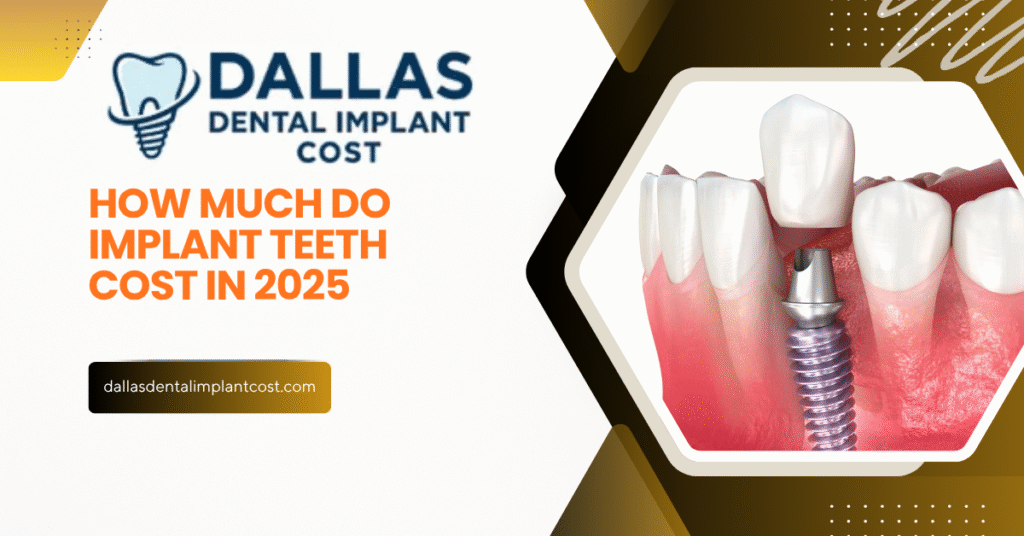
Before we delve into the numbers, let’s clarify what a dental implant actually is. Simply put, a dental implant is a small, screw-shaped post, usually made of titanium, that your dentist surgically places into your jawbone. This post acts like the root of a natural tooth. Over time, your jawbone fuses with the implant in a process called osseointegration, creating a strong and stable foundation.
Once the implant is firmly integrated, a small connector piece called an “abutment” is attached to it. Finally, a custom-made crown (the visible part of the tooth) is placed on top of the abutment. The result? A new tooth that looks, feels, and functions just like your natural teeth.
The Three Main Parts of a Dental Implant:
- The Implant Post: The titanium screw that replaces the tooth root, surgically placed into your jawbone.
- The Abutment: A small connector that attaches to the implant post and extends above the gum line.
- The Crown: The custom-made artificial tooth that fits over the abutment, designed to match your natural teeth.
Dental implants are truly remarkable because they not only restore your smile but also help preserve your jawbone, preventing the bone loss that often occurs after losing a tooth. This is a huge benefit that traditional bridges or dentures can’t offer.
The Million-Dollar Question: How Much Do Implant Teeth Cost? (General Overview) 💲
When patients ask me, “How much do implant teeth cost?”, I always start by explaining that it’s similar to asking, “How much does a car cost?” You can buy a compact car for one price, or a luxury SUV for a much higher price, and many options in between. The same applies to dental implants.
In 2025, the cost for a single dental implant (including the implant post, abutment, and crown) can generally range anywhere from $3,000 to $6,000 or more. This is a broad range, and it’s essential to understand that this is just for one tooth. If you need multiple implants or a full mouth restoration, the costs will naturally be higher.
“Dental implants are an investment in your oral health, comfort, and quality of life. While the upfront cost can seem significant, their long-term benefits often make them the most cost-effective solution.”
It’s crucial to remember that this figure is an average, and many variables can push the price up or down. Think of it as a journey with several stops, each potentially adding to the overall cost. Let’s break down these factors in detail.
Factors Influencing the Cost of Dental Implants 📊
Understanding the various elements that contribute to the total cost will help you better prepare and discuss options with your dentist. I’ve identified several key factors:
1. Type of Implant Procedure
The number of teeth being replaced and the type of restoration will significantly impact the price.
- Single Tooth Implant: This is the most common scenario. You’re replacing one missing tooth with one implant, one abutment, and one crown. As mentioned, this is generally in the $3,000 – $6,000+ range.
- Multiple Implants (Implant-Supported Bridge): If you’re missing several teeth in a row, you might not need an implant for every single tooth. An implant-supported bridge uses two or more implants to support a bridge of several artificial teeth. For example, two implants might support a bridge of three or four teeth. This will be more expensive than a single implant but less than individual implants for each tooth.
- Full Arch Implants (All-on-4, All-on-6): For individuals missing all or most of their teeth in one jaw (upper or lower), solutions like “All-on-4” or “All-on-6” are popular. These involve placing 4 to 6 implants strategically in the jawbone to support a full arch of permanent, fixed teeth.
- All-on-4: Typically uses four implants per arch.
- All-on-6: Uses six implants per arch, often providing greater stability.
These options are significantly more expensive, often ranging from $15,000 to $30,000 per arch or even higher, depending on the complexity and materials.
- Full Mouth Reconstruction: This involves replacing all teeth in both the upper and lower jaws, often using a combination of individual implants and implant-supported bridges or full arch solutions. This is the most extensive and thus the most expensive option, potentially reaching $40,000 to $80,000 or more for both arches.
2. Materials Used 🛠️
The quality and type of materials used for the implant post and the crown can influence the cost.
- Implant Post Material:
- Titanium: This is the most common and widely used material for implant posts due to its biocompatibility (meaning it’s well-accepted by the body) and strength.
- Zirconia: Some patients opt for zirconia implants, which are metal-free and tooth-colored. While they offer aesthetic benefits, they are often newer to the market and can be more expensive than titanium.
- Crown Material: The visible part of your new tooth comes in various materials, each with different costs, aesthetics, and durability.
- Porcelain Fused to Metal (PFM): Offers good strength and aesthetics but can sometimes show a metal margin.
- All-Ceramic/Porcelain: Highly aesthetic, mimicking natural teeth well, but can be slightly less durable than zirconia.
- Zirconia: Extremely strong and durable, and also highly aesthetic. This is a very popular choice for crowns and bridges.
- E-max: A type of ceramic known for its excellent aesthetics and strength.
3. Diagnostic Procedures 🔍
Before any surgery, your dentist needs a clear picture of your oral health and bone structure.
- Initial Consultation: The first visit to discuss your needs and assess if you’re a candidate for implants. This may have a separate fee.
- X-rays: Standard dental X-rays provide a 2D view of your teeth and bones.
- 3D CT Scans (Cone Beam CT – CBCT): This advanced imaging provides a detailed 3D view of your jawbone, nerves, and sinuses. It’s crucial for precise implant planning and placement, ensuring safety and optimal results. These scans typically add a few hundred dollars to the total cost.
4. Preparatory Procedures (Bone Grafts & Sinus Lifts) 🦴
Sometimes, the jawbone isn’t strong or dense enough to support an implant. In these cases, additional procedures are necessary before the implant can be placed.
- Bone Grafting: If you’ve had a missing tooth for a while, or if you have gum disease, your jawbone might have deteriorated. A bone graft involves adding bone material (from your own body, a donor, or synthetic material) to the jaw to increase its volume and density. This can be a small, localized graft or a more extensive procedure.
- Cost Range: Bone grafts can add $200 to $3,000 or more per site, depending on the size and type of graft material.
- Sinus Lift (Sinus Augmentation): If you need an implant in your upper jaw, specifically in the back, there might not be enough bone between your jaw and the maxillary sinuses. A sinus lift involves gently raising the sinus membrane and adding bone graft material to create sufficient bone height.
- Cost Range: Sinus lifts are more complex and can add $1,500 to $3,000 or more per side.
- Tooth Extractions: If a damaged tooth needs to be removed before implant placement, this will be an additional cost.
- Cost Range: Simple extractions can be $75-$200, while surgical extractions can range from $150-$650 or more.
5. Geographic Location 🌍
Just like real estate, dental costs can vary significantly depending on where you live.
- Urban vs. Rural: Dentists in major metropolitan areas or regions with a higher cost of living (e.g., New York City, Los Angeles) typically charge more than those in smaller towns or rural areas.
- Regional Differences: Costs can also vary from state to state and even within different neighborhoods of the same city.
6. Dentist’s Experience and Specialization 👩⚕️👨⚕️
The expertise and reputation of your dental professional play a role in pricing.
- General Dentist vs. Specialist: While some general dentists perform implant placements, many cases are handled by specialists like oral surgeons or periodontists. These specialists have undergone additional years of training and often have more advanced equipment and experience, which can reflect in their fees.
- Technology and Facilities: A practice that uses cutting-edge technology (like guided implant surgery, digital impressions) and has state-of-the-art facilities might have higher costs, but often provides a more precise and comfortable experience.
7. Anesthesia Options 😴
The type of anesthesia used during your procedure can also affect the total cost.
- Local Anesthesia: This is typically included in the surgical fee and numbs only the area being treated.
- Nitrous Oxide (Laughing Gas): An additional cost for mild sedation.
- Oral Sedation: Pills taken before the procedure to help you relax; an extra fee.
- IV Sedation (Conscious Sedation): Administered intravenously by an anesthesiologist, offering a deeper level of relaxation. This is a significant additional cost, often $300 to $800+ per hour.
- General Anesthesia: For very complex cases or extremely anxious patients, this involves being completely unconscious. It’s the most expensive option and requires an anesthesiologist.
8. Lab Fees 🧪
The creation of your custom abutment and crown is done by a dental laboratory. The quality of the lab, the materials used, and the complexity of the design contribute to these fees, which are passed on by your dentist.
9. Follow-up Appointments and Maintenance 📅
Post-operative check-ups and any necessary adjustments are usually included in the overall cost, but it’s always good to confirm. Long-term maintenance, like regular cleanings and check-ups, is crucial for the longevity of your implant, just like your natural teeth.
Breaking Down the Costs: A Closer Look at Specific Scenarios (2025 Estimates)
To give you a clearer picture, let’s look at typical cost breakdowns for different implant scenarios in 2025. Please remember these are estimates and can vary widely.
Scenario 1: Single Dental Implant Cost 🦷
This is for replacing one missing tooth.
| Component | Estimated Cost Range (USD) | Notes |
|---|---|---|
| Initial Consultation | $50 – $250 | May be waived if you proceed with treatment. |
| Diagnostic X-rays/CT Scan | $100 – $600 | Essential for planning. |
| Tooth Extraction (if needed) | $75 – $650 | Cost varies based on complexity. |
| Bone Graft (if needed) | $200 – $3,000+ | Varies by size and material. |
| Implant Placement Surgery | $1,500 – $3,000 | Surgical placement of the titanium post. |
| Implant Post | Included in surgery cost | The actual titanium screw. |
| Abutment | $300 – $700 | Connector piece. |
| Custom Crown | $1,000 – $2,500 | The visible tooth, material dependent. |
| Anesthesia/Sedation | $0 – $1,000+ | Local anesthesia usually included; sedation is extra. |
| Follow-up Appointments | Often included | Post-op checks. |
| Total Estimated Cost | $3,000 – $6,000+ | For a single implant, without complex preliminary procedures. |
Pull Quote: “A single dental implant is often a lifelong solution, making the initial investment worthwhile for many patients.”
Scenario 2: Multiple Dental Implants (Implant-Supported Bridge) 🌉
For replacing 2-4 missing teeth with 2 implants.
| Component | Estimated Cost Range (USD) | Notes |
|---|---|---|
| Initial Consultation & Diagnostics | $150 – $700 | Comprehensive planning required. |
| Tooth Extractions (if needed) | $150 – $1,300 | For multiple teeth. |
| Bone Grafts/Sinus Lifts (if needed) | $500 – $6,000+ | More complex, potentially larger areas. |
| Implant Placement Surgery (2 implants) | $3,000 – $6,000 | For two implant posts. |
| Abutments (2) | $600 – $1,400 | Two connector pieces. |
| Implant-Supported Bridge (3-4 units) | $2,500 – $6,000 | The custom bridge replacing multiple teeth. |
| Anesthesia/Sedation | $0 – $2,000+ | May require deeper sedation for longer procedures. |
| Total Estimated Cost | $6,750 – $23,400+ | For a 3-4 unit bridge supported by two implants. |
Scenario 3: Full Arch Dental Implants (All-on-4 / All-on-6) 🥳
For replacing all teeth in one jaw (upper or lower).
| Component | Estimated Cost Range (USD) | Notes |
|---|---|---|
| Comprehensive Diagnostics | $300 – $1,000 | Extensive planning with 3D imaging. |
| Tooth Extractions (if needed) | $500 – $2,000 | Removing remaining teeth in the arch. |
| Bone Reduction/Contouring | Often included | Reshaping the jawbone for optimal implant placement. |
| Implant Placement Surgery (4-6 implants) | $6,000 – $12,000 | Surgical placement of multiple implants. |
| Abutments | Often included | Specialized multi-unit abutments. |
| Temporary Prosthesis | $1,500 – $3,000 | Provisional set of teeth worn during healing. |
| Permanent Full Arch Prosthesis | $7,000 – $15,000 | The final, fixed bridge (acrylic, zirconia, or hybrid). |
| Anesthesia/Sedation | $1,000 – $3,000+ | Often requires IV sedation or general anesthesia. |
| Total Estimated Cost per Arch | $15,000 – $30,000+ | For one arch (upper or lower) with All-on-4/6. |
- Full Mouth Implants (Both Arches): If you need full arch implants for both the upper and lower jaw, you can expect the cost to range from $30,000 to $60,000 or even significantly higher, depending on the complexity, materials, and specific procedures needed.
Is It Worth the Investment? Benefits of Dental Implants ✨
Looking at these numbers, you might wonder if dental implants are truly worth the cost. As someone who has seen countless lives transformed by this procedure, I can confidently say, yes, for most people, they absolutely are. Consider these incredible benefits:
- Long-Term Solution: Unlike dentures or bridges that may need to be replaced every 5-10 years, dental implants are designed to last a lifetime with proper care. This makes them a more cost-effective solution in the long run. Think of it as buying a durable, high-quality product versus a cheaper item that needs frequent replacement.
- Improved Appearance and Self-Confidence: Implants look and feel just like your natural teeth. They can dramatically improve your smile, facial aesthetics, and boost your confidence. No more worrying about gaps or loose dentures! 😊
- Better Chewing and Speech: With implants, you can eat virtually any food you enjoy without discomfort or fear of your teeth slipping. Your speech will also be clearer, as implants don’t move around like ill-fitting dentures.
- Preservation of Jawbone: This is a critical benefit! When a tooth is lost, the jawbone underneath begins to shrink. Implants stimulate the jawbone, preventing this bone loss and maintaining your facial structure. This helps you avoid that sunken-in look often associated with long-term tooth loss.
- Comfort and Convenience: Implants become a permanent part of your mouth, so there’s no need for messy adhesives, removal for cleaning, or discomfort often associated with removable dentures. You brush and floss them just like your natural teeth.
- Prevent Shifting of Remaining Teeth: A gap left by a missing tooth can cause surrounding teeth to shift, leading to bite problems and further dental issues. Implants fill these gaps, keeping your other teeth in their proper positions.
Payment Options and Financial Assistance for Dental Implants 🤝
I understand that the cost of dental implants can be a barrier for some. However, there are several ways to make them more affordable. Don’s let the initial price tag deter you from exploring this life-changing treatment.
1. Dental Insurance Coverage 📜
This is often the first question patients ask. The reality is that dental insurance coverage for implants can be tricky:
- Limited Coverage: Many dental insurance plans still consider implants a “cosmetic” procedure, or they have specific limitations. They might cover only a small percentage of the cost, or nothing at all for the implant itself.
- Coverage for Related Procedures: However, your insurance might cover parts of the treatment, such as:
- Initial consultations and diagnostic X-rays.
- Tooth extractions.
- Bone grafting procedures.
- The crown that goes on top of the implant (sometimes covered under restorative dentistry).
- Check Your Policy: I always advise patients to contact their insurance provider directly to understand their specific benefits and limitations for dental implants in 2025. We can also help you with this!
2. Payment Plans and Financing Options 💳
Most dental practices understand the financial commitment of implants and offer flexible payment solutions:
- In-House Payment Plans: Many dentists offer their own payment plans, allowing you to pay in installments over several months, often with no interest.
- Third-Party Financing: Companies like CareCredit and LendingClub specialize in healthcare financing. They offer various plans, including interest-free options for a certain period, or low-interest loans for longer terms. These can make monthly payments much more manageable.
- Credit Cards: While not ideal due to potentially high interest rates, some patients use credit cards, especially if they have a card with a 0% introductory APR offer.
3. Health Savings Accounts (HSAs) and Flexible Spending Accounts (FSAs) 💰
If you have an HSA or FSA through your employer, you can use these pre-tax dollars to pay for dental implant procedures. This can effectively save you money by reducing your taxable income. Be sure to check your account balance and contribution limits for 2025.
4. Dental Schools 🎓
Dental schools often offer dental implant procedures at a reduced cost compared to private practices. The work is performed by dental students who are closely supervised by experienced faculty members. While it might take longer due to the educational environment, it can be a viable option for those on a tighter budget.
5. Dental Tourism ✈️
Some individuals consider traveling to other countries where dental procedures, including implants, might be significantly cheaper. While this can offer cost savings, it’s crucial to weigh the risks:
- Quality Concerns: Research the clinic and dentist thoroughly to ensure high standards of care and hygiene.
- Follow-up Care: Consider how you’ll handle follow-up appointments or complications once you return home.
- Travel Costs: Factor in flights, accommodation, and time off work.
6. Government Programs or Charities
While less common for routine dental implants, some government programs or charitable organizations might offer assistance for individuals with specific medical conditions or very low incomes. It’s worth researching local resources if you meet certain criteria.
Questions to Ask Your Dentist About Implant Costs (Checklist) ✔️
When you have your consultation, don’t hesitate to ask detailed questions. A transparent dental practice will be happy to provide all the information you need. Here’s a checklist of questions I recommend:
- What is the total estimated cost for my specific case? (Emphasize “total” and “my specific case” as costs are highly individualized).
- Does this estimate include all parts of the procedure: the implant post, abutment, and crown?
- Are there any preliminary procedures I need (like extractions, bone grafts, or sinus lifts), and what are their individual costs?
- What diagnostic fees are included (X-rays, 3D CT scans)?
- What type of materials will be used for the implant and the crown, and are there different options with varying costs?
- What anesthesia options are available, and what are their associated costs?
- Are follow-up appointments and post-operative care included in the total price?
- What payment plans or financing options do you offer?
- How does my dental insurance factor into the total cost, and will your office help me file claims?
- Are there any potential hidden fees I should be aware of? (A good practice will have none).
- What is the estimated timeline for the entire implant process?
By asking these questions, you’ll gain a clear understanding of the financial commitment and feel more confident in your decision.
My Final Thoughts on Dental Implant Costs 💭
I hope this detailed breakdown has helped clarify the question, “how much do implant teeth cost?” in 2025. It’s clear that the price tag varies significantly based on individual needs, the complexity of the case, geographic location, and the specific dental professional you choose.
While the upfront cost of dental implants can seem substantial, I encourage you to view it as a long-term investment in your health, comfort, and confidence. The ability to eat, speak, and smile without worry is truly priceless. Unlike other dental restorations, implants offer unparalleled stability, durability, and bone preservation benefits that can save you money and discomfort in the long run.
My best advice? Schedule a consultation with a qualified and experienced dental implant professional. They can provide a thorough examination, discuss your specific needs, and give you a personalized treatment plan with a clear, itemized cost estimate. Don’t let the fear of cost prevent you from exploring a solution that could genuinely transform your life. Your healthy, confident smile is worth it!