Navigating the costs of essential dental procedures can be a significant concern, especially when considering advanced tooth replacement options like dental implants. For residents in Dallas, understanding how to leverage pre-tax savings through Health Savings Accounts (HSAs) and Flexible Spending Accounts (FSAs) is crucial. This comprehensive guide will break down which dental implant procedures qualify for HSA/FSA reimbursement in Dallas clinics, including common treatments like All-on-4 and necessary bone grafts, providing updated 2026 contribution limits and practical tips for making your claims. Our goal is to empower you with the knowledge to make informed financial decisions for your oral health in 2026.
Key Takeaways
- Dental Implants are Generally Eligible: Most dental implant procedures, including the implant surgery, abutment, and crown, are considered medically necessary and therefore HSA/FSA eligible.
- Ancillary Procedures Qualify: Essential related procedures like bone grafts, tooth extractions necessary for implant placement, and diagnostic X-rays are also typically covered.
- Cosmetic Exclusions: Procedures purely for cosmetic enhancement, not for the restoration of chewing function or oral health, are generally not eligible.
- 2026 Contribution Limits: Be aware of the updated HSA and FSA contribution limits for 2026 to maximize your pre-tax savings.
- Documentation is Key: Always retain detailed receipts, explanations of benefits (EOBs), and statements from your Dallas dental provider to support your claims.
Understanding HSA and FSA for Dallas Dental Implants
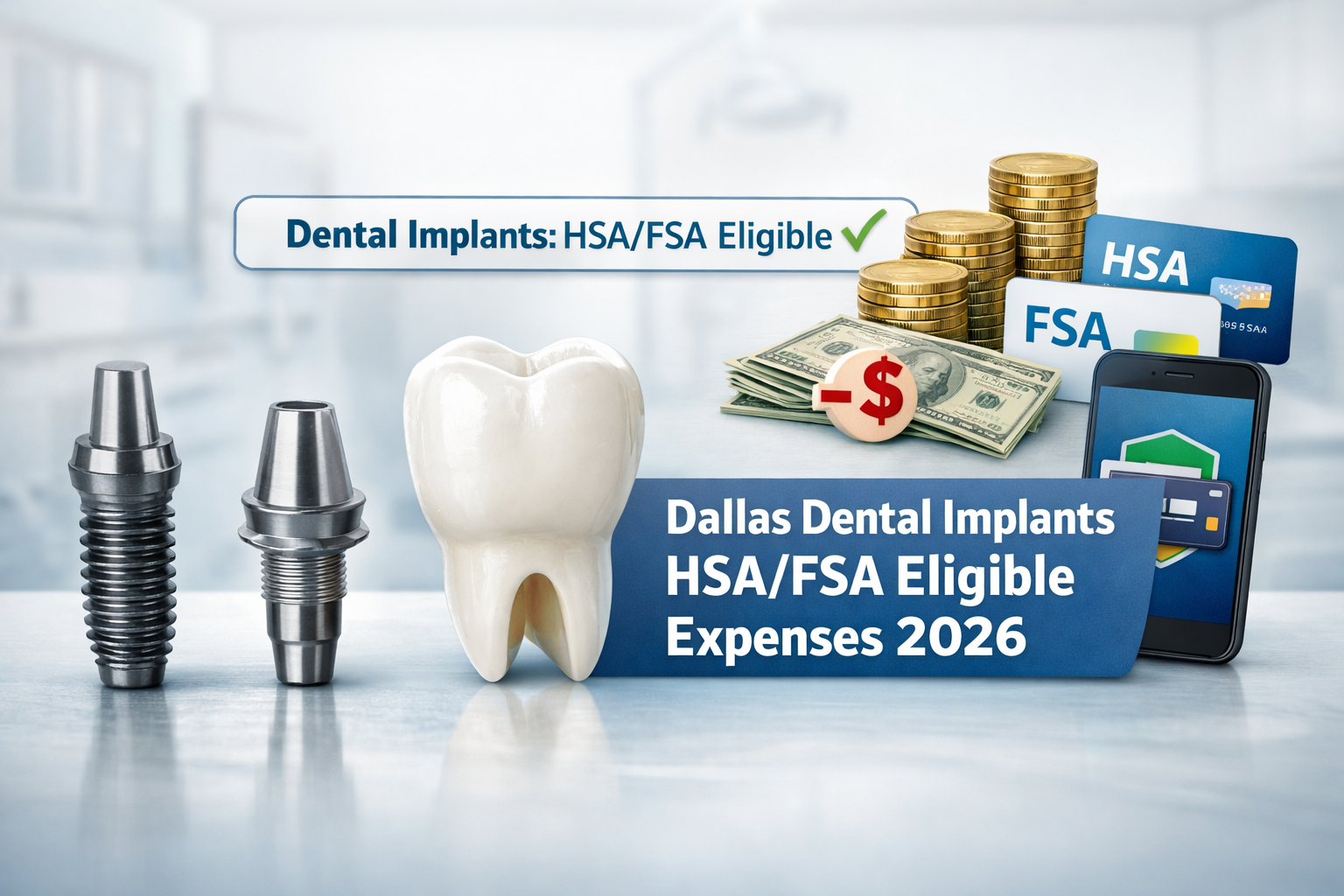
Health Savings Accounts (HSAs) and Flexible Spending Accounts (FSAs) offer valuable opportunities to save money on healthcare costs by allowing you to pay for eligible medical, dental, and vision expenses with pre-tax dollars. For individuals considering dental implants in Dallas, these accounts can significantly reduce the out-of-pocket financial burden. The good news is that dental implants are overwhelmingly considered a medically necessary procedure, making them eligible for HSA and FSA reimbursement in 2026.
An HSA is available to individuals enrolled in a High-Deductible Health Plan (HDHP). It’s a triple-tax-advantaged account: contributions are tax-deductible, earnings grow tax-free, and withdrawals for qualified medical expenses are tax-free. Unlike FSAs, HSAs roll over year to year and are portable, meaning the funds belong to you even if you change employers.
FSAs are typically offered by employers and allow you to set aside pre-tax money for healthcare costs. The primary difference from an HSA is the “use-it-or-lose-it” rule, where funds generally must be spent by the end of the plan year, though some plans offer a grace period or a limited carryover amount. Understanding these distinctions is crucial when planning for significant expenses like implant surgery.
In Dallas, many dental practices that specialize in tooth replacement options are familiar with the documentation required for HSA/FSA claims. When consulting with a dentist about the dental implant procedure, it’s wise to inquire about detailed cost breakdowns that clearly delineate eligible expenses.
What Makes Dental Implants Eligible?
The Internal Revenue Service (IRS) defines eligible medical expenses as costs for the “diagnosis, cure, mitigation, treatment, or prevention of disease, and for treatments affecting any structure or function of the body.” Since dental implants restore essential chewing function, support overall oral health, and prevent issues like bone loss or shifting teeth, they fit squarely within this definition.
This eligibility extends beyond just the implant itself. It often includes the various stages and components of the dental implant process:
- Initial Consultation and Diagnostics: X-rays, 3D scans, and preliminary evaluations to determine suitability for implants. (For more on diagnostics, see Optimal Dental Implant X-Ray Frequency: Your 2026 Guide).
- Implant Surgery: The surgical placement of the titanium post into the jawbone.
- Abutment Placement: The connector piece between the implant and the crown.
- Dental Implant Crown: The visible part of the tooth that attaches to the abutment, restoring the look and function of a natural tooth. (Learn more about Dental Implant Crown Replacement Cost Dallas | 2026 Guide).
- Related Procedures: This can include necessary tooth extractions before implant placement, bone grafting to ensure sufficient jawbone density, and gum tissue treatments. These are often integral to a successful implant outcome.
For those considering full mouth reconstruction or multiple missing teeth solutions, comprehensive treatments like All-on-4 dental implants are also generally eligible. The key factor is that the procedure aims to restore function and mitigate health issues, not merely enhance appearance.
Eligible Dental Implant Procedures and Related Expenses for 2026
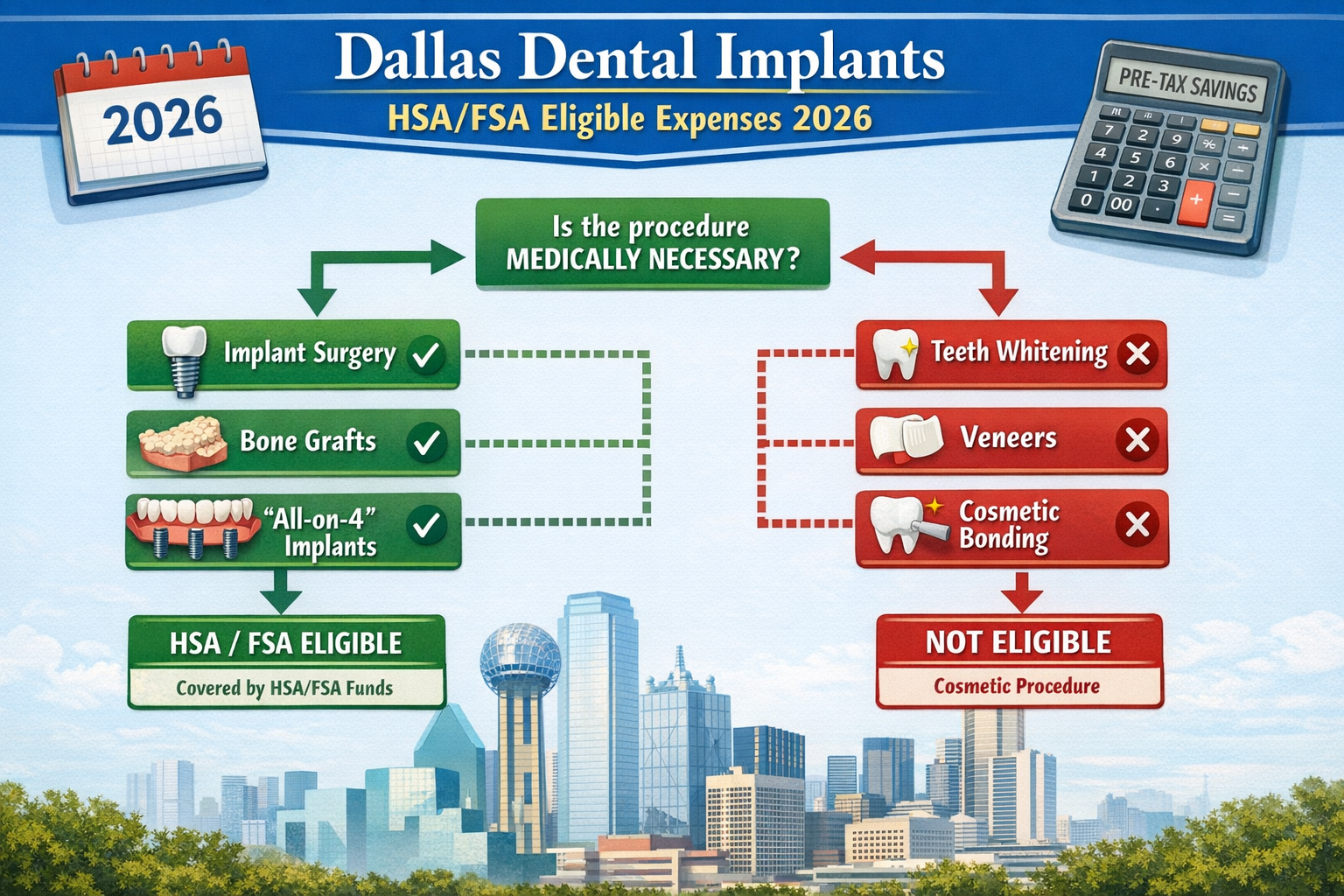
When planning for dental implants in Dallas, understanding which specific components and procedures qualify for HSA/FSA reimbursement in 2026 can optimize your financial strategy. The general rule is that any procedure considered medically necessary for the restoration of function, treatment of disease, or prevention of further oral health issues is eligible.
Here’s a breakdown of common dental implant-related expenses that typically qualify:
1. The Dental Implant Procedure Itself
The core components of the dental implant process are almost always eligible:
- Implant Placement: The surgical procedure to insert the titanium implant post into the jawbone. This is fundamental to replacing missing teeth and restoring stability.
- Abutment: The connector piece that is placed on top of the implant and holds the dental crown.
- Dental Crown or Prosthesis: The custom-made tooth restoration (crown, bridge, or denture) that attaches to the abutment, completing the implant. Whether it’s a single crown, a bridge, or a full set of teeth (as with Full Mouth Dental Implants Cost Dallas 2025 | Medicare Guide), these are considered integral.
2. Ancillary Procedures Critical for Implant Success
Many patients require preparatory procedures to ensure the long-term success of their dental implants. These are also typically eligible:
- Tooth Extractions: If a damaged tooth needs to be removed before an implant can be placed, the extraction cost is eligible.
- Bone Grafting: Often, patients lack sufficient bone density in their jaw to support an implant. Bone grafting procedures are essential to build up the jawbone, making them an eligible expense. This includes the materials and the surgical procedure. For more information, explore Bone Graft Costs for Dental Implants in Dallas TX: Necessity.
- Sinus Lifts: Similar to bone grafting, a sinus lift increases the amount of bone in the upper jaw area, often necessary for upper implants.
- Gum Grafts/Periodontal Treatment: If gum disease or insufficient gum tissue would jeopardize the implant, these treatments are typically eligible.
- Diagnostic Services: X-rays, CT scans, and other imaging studies used to plan the implant surgery are qualified expenses. Dallas TX Dentists using 3D Guided Implant Surgery 2026 leverage these diagnostics.
3. Comprehensive Tooth Replacement Options
For individuals requiring multiple implants or full arch restoration:
- All-on-4 Dental Implants: This popular method for replacing a full arch of teeth using four strategically placed implants is fully eligible, as it restores comprehensive chewing function and improves overall oral health.
- Implant-Supported Dentures/Bridges: Any custom prosthetic supported by dental implants falls under eligible expenses.
4. Post-Operative Care and Maintenance
While initial implant placement is the major expense, ongoing care is also important:
- Follow-up Appointments: Post-surgical checks and evaluations are considered eligible. (See Dallas Dental Implant Follow-Up: Ensuring Lasting Smile Suc).
- Necessary Maintenance: While routine cleanings are generally not HSA/FSA eligible unless for specific medical conditions, specialized cleaning tools or procedures explicitly for implant maintenance might be, if prescribed by a dentist to prevent complications.
- Prescription Medications: Any pain relievers or antibiotics prescribed post-surgery are eligible.
🗣️ Patient-First Insight: “When exploring tooth replacement options, it’s reassuring to know that essential treatments like dental implants are recognized for their health benefits and can be funded with pre-tax dollars. Always discuss the full treatment plan and costs with your Dallas dentist.”
What is Generally NOT Eligible?
It’s important to differentiate between medically necessary and purely cosmetic procedures. While dental implants are generally eligible, some related items might not be:
- Teeth Whitening: Cosmetic procedures like teeth whitening are typically not HSA/FSA eligible.
- Over-the-Counter Oral Hygiene Products: Unless specifically prescribed by a dentist for a medical condition, items like regular toothbrushes, toothpaste, and floss are not eligible.
- Elective Cosmetic Modifications: If a procedure is solely for aesthetic improvement without addressing a functional deficit or disease, it will likely not qualify.
Always confirm with your plan administrator if you are unsure about the eligibility of a specific expense.
Maximizing Your Pre-Tax Savings: 2026 Contribution Limits & Claim Tips
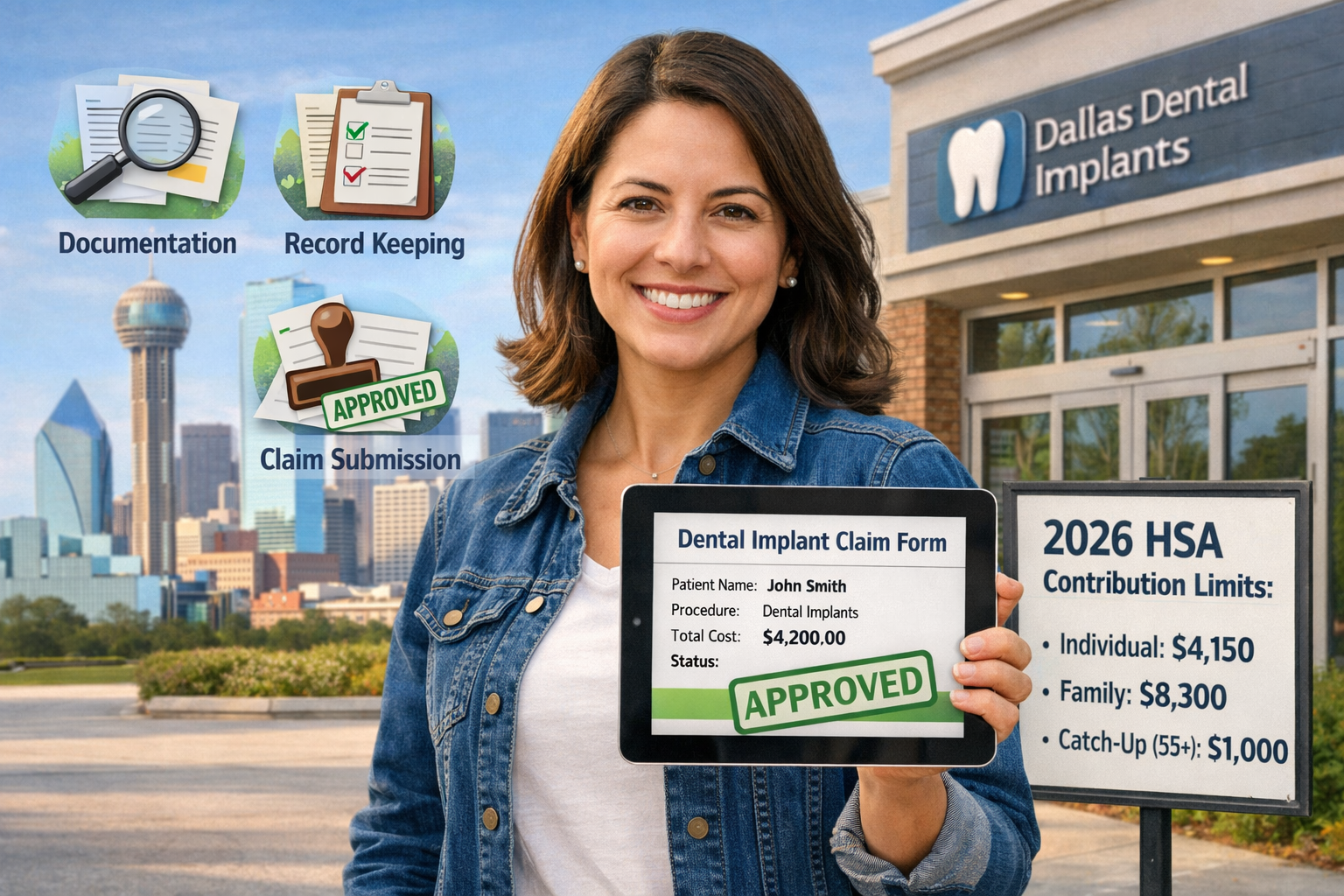
Utilizing your HSA or FSA effectively for Dallas dental implants involves not just knowing what’s eligible, but also understanding the financial limits and proper claiming procedures for 2026. This strategic approach ensures you maximize your pre-tax savings.
Updated 2026 HSA and FSA Contribution Limits
The IRS typically adjusts HSA and FSA contribution limits annually for inflation. While official 2026 limits are often announced later in the preceding year, it’s wise to plan based on potential increases from the prior year. As a reference, the 2025 HSA contribution limits were:
- Self-Only Coverage: $4,150
- Family Coverage: $8,300
- Catch-Up Contribution (Age 55+): An additional $1,000
For FSAs, the 2025 contribution limit was generally $3,200 per employee. These figures provide a strong benchmark for your 2026 planning. Always confirm the official 2026 limits with your plan administrator or the IRS website as soon as they are released.
Tip: If you anticipate needing dental implants in Dallas in 2026, consider contributing the maximum allowable amount to your HSA or FSA to cover potential costs with pre-tax dollars. For FSAs, remember the “use-it-or-lose-it” rule, so carefully estimate your healthcare expenses for the year.
Essential Claim Tips for Dallas Dental Implant Expenses
Proper documentation and timely submission are critical for successful HSA/FSA claims.
Obtain a Detailed Statement from Your Dentist:
- Ensure your Dallas dental clinic provides an itemized statement or receipt that clearly lists the procedure performed (e.g., “dental implant placement,” “bone graft,” “dental crown”).
- The statement should include the date of service, the cost, and the patient’s name. This serves as proof of a qualified medical expense.
- Many dental practices are accustomed to providing “superbills” or detailed invoices suitable for health savings accounts.
Keep All Explanations of Benefits (EOBs):
- If your dental insurance provides any coverage for a portion of your dental implant cost, you will receive an EOB. This document is crucial as it shows what your insurance paid and what your out-of-pocket responsibility is.
- The EOB helps substantiate that the expense was not reimbursed by another source. For information on insurance, check out Best Dental Insurance Implants Dallas 2025 | Coverage Guide.
Understand Your Plan’s Specifics:
- Each HSA or FSA plan may have slightly different submission requirements or deadlines. Familiarize yourself with your plan administrator’s portal or guidelines.
- Some plans require a doctor’s Letter of Medical Necessity for certain procedures, although dental implants are usually considered inherently medically necessary. It’s always good practice to confirm.
Submit Claims Promptly:
- For FSAs, be mindful of the plan year-end and any grace period or carryover rules. You typically have until a certain date in the following year to submit claims for expenses incurred in the prior year.
- HSAs are more flexible, as funds roll over indefinitely. However, it’s still advisable to keep meticulous records and submit claims in a timely manner for your own accounting.
Maintain Excellent Records:
- Create a dedicated folder (physical or digital) for all your dental implant-related expenses and documentation. This includes receipts, EOBs, and any communication with your dental provider or plan administrator.
- The IRS recommends keeping records for at least three years after the tax filing deadline.
By diligently following these tips, Dallas residents can confidently navigate the financial aspects of dental implants using their HSA or FSA funds, ensuring a smoother process and maximizing their pre-tax benefits for their long-term oral health. For a broader look at managing costs, refer to How to Save Money on Dental Implants in Dallas | Cost Guide 2025.
Conclusion
Understanding Dallas Dental Implants HSA/FSA Eligible Expenses 2026: Full Guide to Using Pre-Tax Dollars is a powerful way for individuals in Dallas to make essential tooth replacement options more affordable. Dental implants are recognized as medically necessary treatments designed to restore function, prevent further oral health complications, and improve overall quality of life. This means that the majority of costs associated with the dental implant procedure, including preparatory work like bone grafts and the final crown, can be paid for with your pre-tax HSA or FSA funds.
As you plan for 2026, remember to familiarize yourself with the updated contribution limits for both HSAs and FSAs. The careful planning and diligent record-keeping outlined in this guide are paramount to successfully leveraging these valuable benefits. Always ensure you receive detailed, itemized statements from your Dallas dental provider and retain all relevant documentation for your claims.
Taking proactive steps to understand your financial options can significantly ease the journey toward a healthier, more confident smile. If you are considering dental implants, a consultation with a dentist is the crucial first step. During this visit, discuss your treatment plan in detail and inquire about comprehensive cost breakdowns that can assist with your HSA/FSA submissions. Empower yourself with knowledge, plan effectively, and take advantage of these pre-tax benefits to invest in your long-term oral health.
References
- Internal Revenue Service. (n.d.). Publication 502, Medical and Dental Expenses. Retrieved from IRS.gov (Accessed November 21, 2024).