
Navigating healthcare coverage as a senior can be complex, especially when it comes to specialized dental procedures like dental implants. Many individuals in Dallas and across the nation wonder, “Does Medicare Cover Dental Implants in Dallas? A Detailed Guide for Seniors in 2026” aims to unpack these complexities, providing clear, factual information about what Medicare typically covers, what it doesn’t, and the alternative options available for seniors seeking dental implants in Dallas. Our goal is to empower you with the knowledge to make informed decisions about your oral health.
Dental implants represent a significant advancement in tooth replacement options, offering a durable and natural-looking solution for missing teeth. For many seniors, the prospect of restoring their smile and chewing function with dental implants is highly appealing, but the financial aspect, particularly regarding insurance coverage, is often a primary concern.
Key Takeaways
- Original Medicare (Parts A & B) Generally Excludes Dental Implants: Traditional Medicare typically does not cover routine dental care, including most dental implant procedures.
- Medicare Advantage (Part C) May Offer Dental Benefits: Many Medicare Advantage plans include dental coverage, which can sometimes extend to partial coverage for dental implants. These plans vary widely, so thorough research is crucial.
- Supplemental Plans and Other Options Exist: Private dental insurance, dental discount plans, and financing options are available to help manage the cost of dental implants in Dallas.
- Consultation is Key: The best approach is always to consult with a local Dallas dentist specializing in dental implants and discuss your specific Medicare plan and financial situation.
- Costs Vary in Dallas: The cost of dental implants in Dallas can fluctuate based on the type of implant, the complexity of the procedure, and the dental practice.
Understanding Medicare and Dental Coverage in 2026
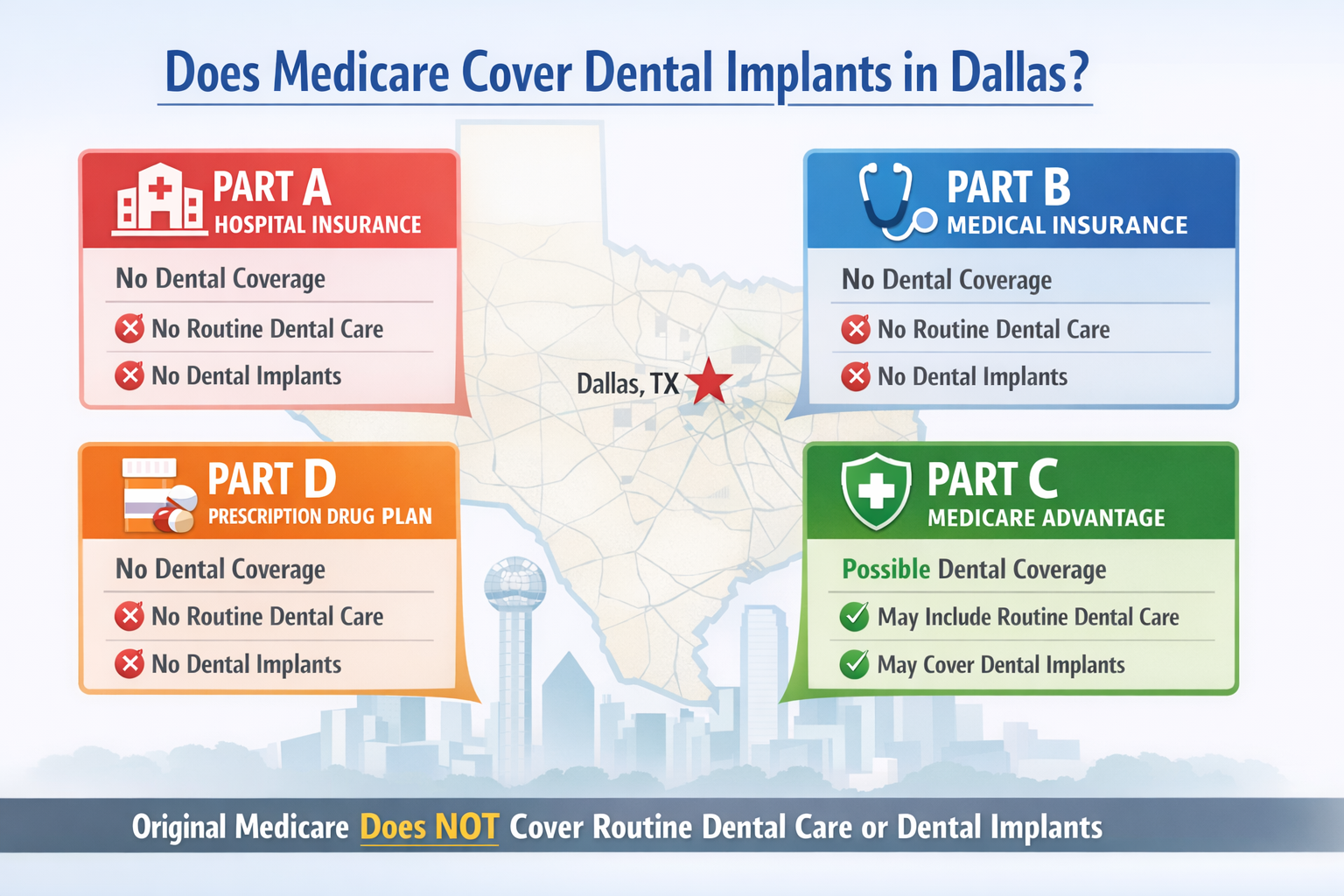
For seniors in Dallas, understanding the different parts of Medicare is the first step in determining coverage for dental implants. Medicare is divided into several parts, each with specific coverage areas.
Original Medicare (Parts A & B) and Dental Implants
Original Medicare, which includes Part A (Hospital Insurance) and Part B (Medical Insurance), generally does not cover routine dental care, cleanings, fillings, dentures, or most dental implant procedures. This is a crucial point for seniors asking, “Does Medicare Cover Dental Implants in Dallas?”
- Medicare Part A (Hospital Insurance): Primarily covers inpatient hospital stays, skilled nursing facility care, hospice care, and some home health care. It does not include dental services.
- Medicare Part B (Medical Insurance): Covers certain doctors’ services, outpatient care, medical supplies, and preventive services. Like Part A, it typically excludes routine dental work and dental implants.
There is a very limited exception: if a dental procedure is medically necessary to protect your overall health, and is performed in a hospital setting, Part A might cover the hospital stay. However, this is rare for dental implants themselves and usually pertains to severe medical conditions related to oral surgery. For instance, if you need a tooth extraction due to a severe infection before a kidney transplant, the hospital stay might be covered, but not the implant itself. This is an important distinction when considering the financial aspect of dental implant procedure.

Medicare Advantage Plans (Part C) and Potential Dental Implant Coverage
Medicare Advantage Plans, often referred to as Part C, are offered by private companies approved by Medicare. These plans must provide all the benefits of Original Medicare and often include additional benefits such as vision, hearing, and most importantly for this discussion, dental coverage.
For seniors in Dallas, a Medicare Advantage plan might be your best bet when asking, “Does Medicare Cover Dental Implants in Dallas? A Detailed Guide for Seniors in 2026”. Many Part C plans include benefits that can help cover a portion of the cost for dental implants. However, the extent of this coverage varies significantly from plan to plan.
- What to Look For: When evaluating Medicare Advantage plans, carefully review the Summary of Benefits and Evidence of Coverage documents. Look for specific mention of “comprehensive dental benefits” or “major dental services” that might include procedures like extractions, crowns, bridges, and dental implants.
- Limitations and Networks: Be aware that these plans often come with annual maximums, deductibles, co-pays, and network restrictions. You may need to choose a dentist within the plan’s network, which could limit your options for dental implants in Dallas.
- Prior Authorization: Some plans may require prior authorization for major dental work, including implant surgery.
It is highly recommended to contact the Medicare Advantage plan directly or speak with a licensed insurance agent to understand the specifics of their dental benefits, especially regarding implant cost in Dallas and related procedures. For those researching comprehensive dental care options, our resource on Does Medicare Cover Dental Implants in Dallas TX? 2026 Cover provides further detail.
Medicare Part D (Prescription Drug Coverage)
Medicare Part D only covers prescription drugs. It has no bearing on dental procedures or dental implants.
Navigating Costs and Finding Coverage for Dental Implants in Dallas in 2026
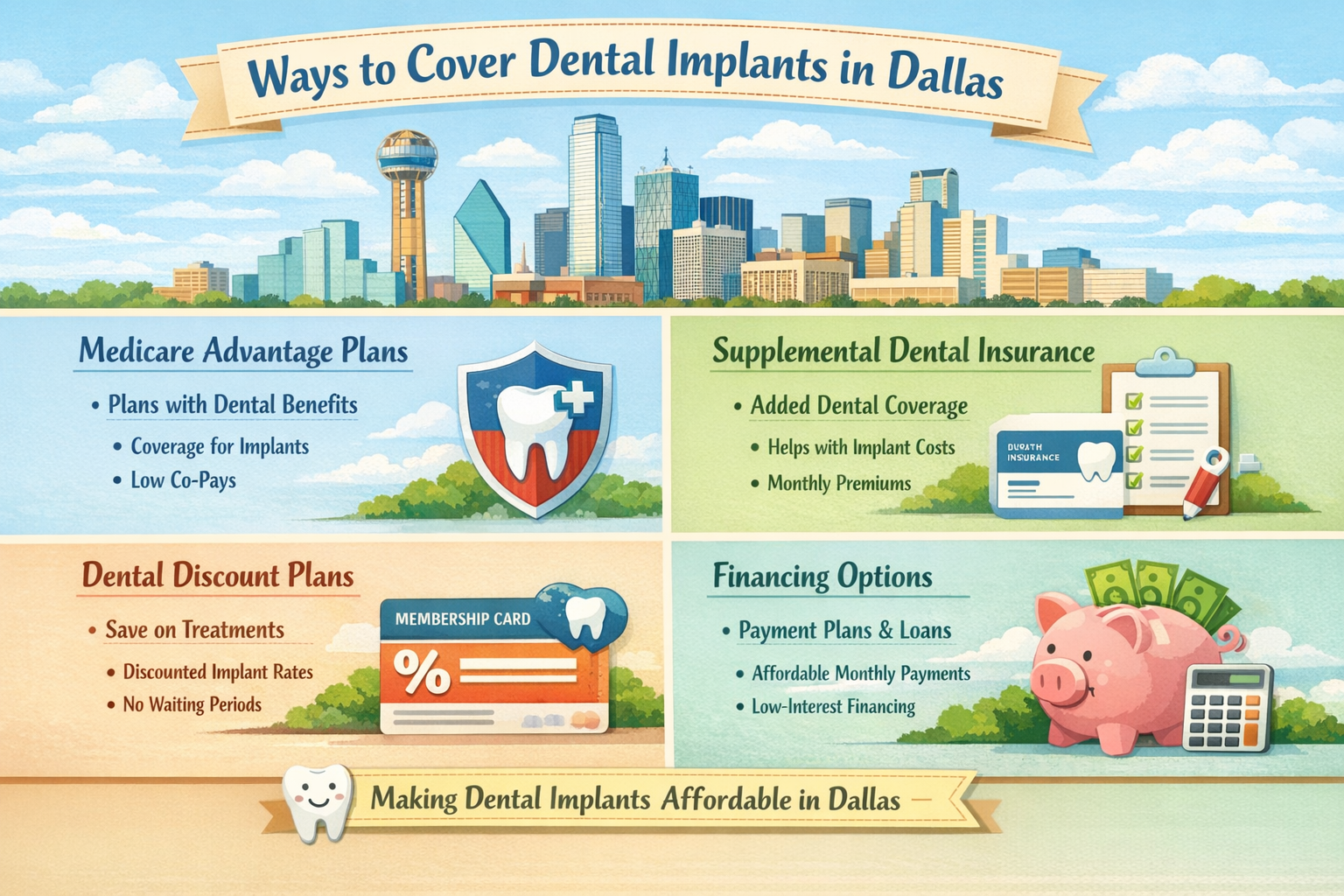
Since Original Medicare generally doesn’t cover dental implants, seniors in Dallas need to explore other avenues to manage the cost. The average implant cost in Dallas can vary widely depending on factors like the number of implants, bone grafting needs, and the specific dental implant procedure.
Supplemental Dental Insurance Plans
Many private insurance companies offer standalone dental insurance plans that can supplement Medicare. These plans are designed specifically to cover dental procedures, often including major services like dental implants, though usually after a waiting period.
- Waiting Periods: Most comprehensive dental insurance plans have waiting periods (often 6-12 months) before covering major procedures like dental implants.
- Annual Maximums: Plans typically have an annual maximum benefit, which might not fully cover the entire cost of dental implants, especially for multiple teeth.
- Deductibles and Co-insurance: You will likely have a deductible to meet and then pay a percentage (co-insurance) of the cost, with the plan covering the rest up to the annual maximum.
When researching supplemental plans, ask detailed questions about coverage for implant surgery process, specific types of dental implants (e.g., single implants, all-on-4), and any associated procedures like bone grafting.

Dental Discount Plans
Dental discount plans are not insurance but offer members access to a network of dentists who provide services at a reduced fee. For a yearly membership fee, you can receive a percentage off dental procedures, including dental implants.
- Immediate Savings: Unlike insurance, there are usually no waiting periods for discount plans, allowing for immediate savings.
- No Annual Maximums: Most discount plans do not have annual maximums, which can be beneficial for extensive treatment plans.
- Network Specific: You must use a dentist within the plan’s network to receive the discounted rates.
This can be a viable option for seniors seeking a more affordable path to getting dental implants in Dallas. For more details on local pricing, explore our Dallas Dental Implant Cost Guide 2025 | Medicare Coverage & Pricing. You might also find our guide on Dental Discount Plans Dallas Implants: Save 20-60% in 2025 helpful.
Financing Options and Payment Plans
Many dental practices in Dallas understand the financial commitment involved with dental implants and offer various financing options:
- In-house Payment Plans: Some dentists offer their own payment plans, allowing you to pay for your treatment in installments over time.
- Third-Party Medical Financing: Companies like CareCredit or LendingClub provide specialized healthcare credit cards with low or no-interest financing options for qualified applicants.
- Health Savings Accounts (HSAs) and Flexible Spending Accounts (FSAs): If you have an HSA or FSA, these funds can be used for qualified medical and dental expenses, including dental implants. These accounts allow you to use pre-tax dollars, offering a tax advantage.
Discussing these options during your initial consultation with a dentist is a crucial step in planning for your long-term oral health.
Making an Informed Decision for Your Oral Health in 2026
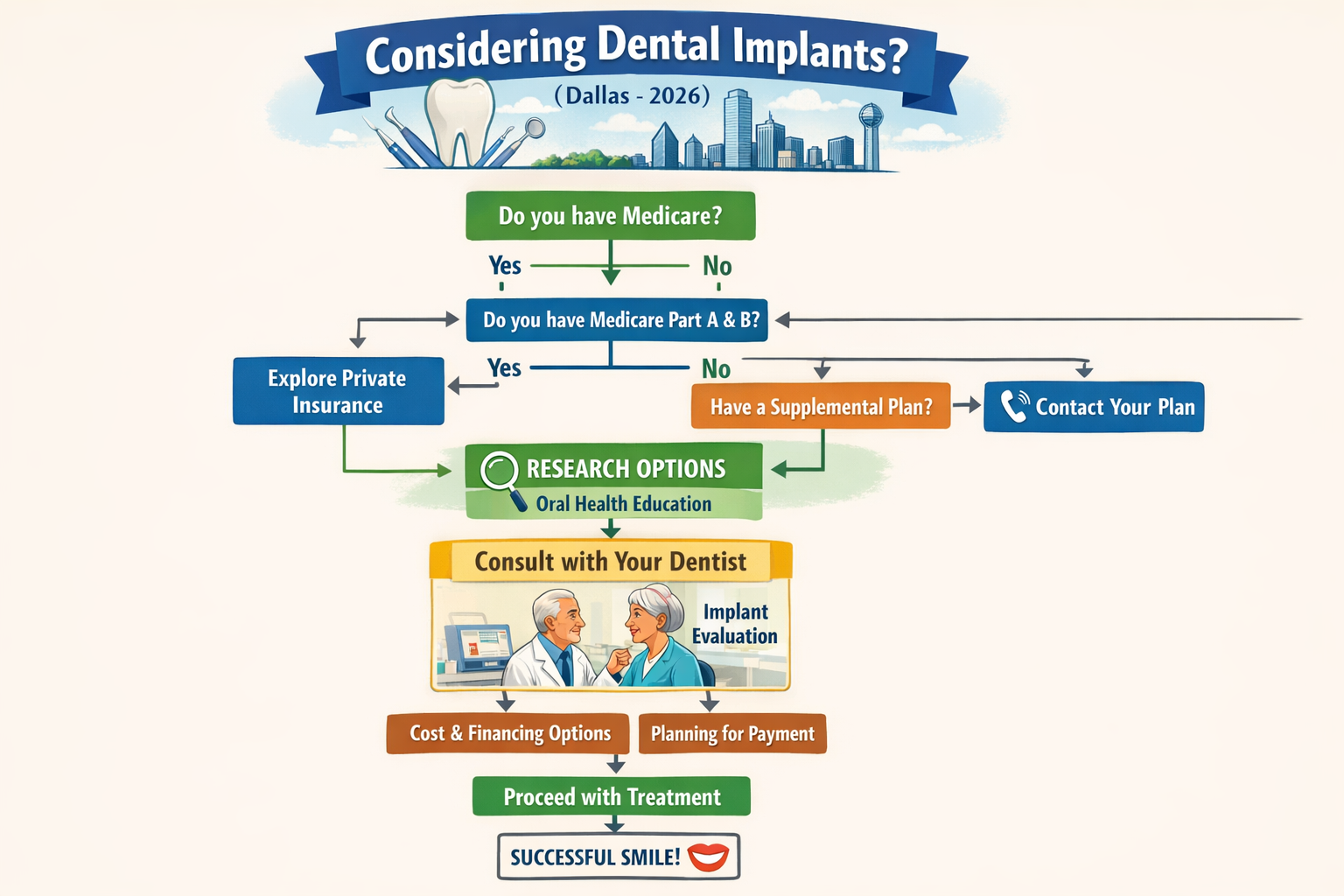
Choosing dental implants is an investment in your health and quality of life. For seniors in Dallas, understanding the coverage landscape and exploring all available financial avenues is essential.
Steps for Dallas Seniors Considering Dental Implants
- Review Your Current Medicare Plan: If you have a Medicare Advantage (Part C) plan, carefully review its dental benefits. Contact your plan provider directly for clarification on dental implant coverage.
- Research Supplemental Options: Investigate private dental insurance plans and dental discount plans available in the Dallas area that specifically cover or reduce the cost of dental implants.
- Schedule a Consultation with a Dallas Dentist: This is perhaps the most critical step. A qualified dentist specializing in dental implants can assess your oral health, determine if you are a candidate for dental implants, and provide a detailed treatment plan and cost estimate. During this consultation, be transparent about your financial concerns and ask about payment plans or financing options. Many Dallas practices offer comprehensive dental implant education to help patients understand their options.
- Compare Costs and Options: Obtain quotes from a few different dental practices in Dallas. The cost can vary, so comparing services, experience, and overall value is important. Be sure to ask about all-inclusive pricing for the entire implant surgery process, including any necessary preliminary procedures like bone grafting.
- Understand the Value of Dental Implants: While the upfront cost might seem substantial, remember that dental implants offer significant long-term benefits for patient safety, chewing function, speech, and aesthetic appeal, often outperforming other tooth replacement options like dentures or bridges in durability and comfort.

When comparing options, consider how 3D Guided Dental Implants Dallas 2026 might impact precision and success rates, and how this could influence overall value. It’s also wise to consider potential Dental Implant Recovery Complications Dallas and what your dentist offers for post-operative care.
The Importance of Professional Consultation
Choosing a skilled and experienced dental professional for your dental implants in Dallas is paramount. During your consultation, ensure the dentist explains the entire process, discusses potential risks and benefits, and provides a clear breakdown of the costs. This commitment to patient-first care ensures you are fully informed throughout your journey to restoring your smile. Do not hesitate to ask questions about their experience, the materials they use, and their post-procedure care protocols to ensure long-term oral health.
Conclusion
For seniors in Dallas asking, “Does Medicare Cover Dental Implants in Dallas? A Detailed Guide for Seniors in 2026,” the answer is complex. Original Medicare generally does not provide coverage for dental implants. However, Medicare Advantage (Part C) plans often include some dental benefits that may partially cover these procedures. Beyond Medicare, exploring supplemental dental insurance, dental discount plans, and financing options are crucial steps for managing costs.
Restoring your smile with dental implants is an investment in your health and well-being. By thoroughly researching your coverage options, engaging in an open dialogue with your dental provider, and understanding all available financial avenues, you can confidently move forward with informed decision-making. We encourage all seniors to schedule a consultation with a dentist specializing in dental implants in Dallas to discuss their unique situation and create a personalized plan for achieving optimal oral health.