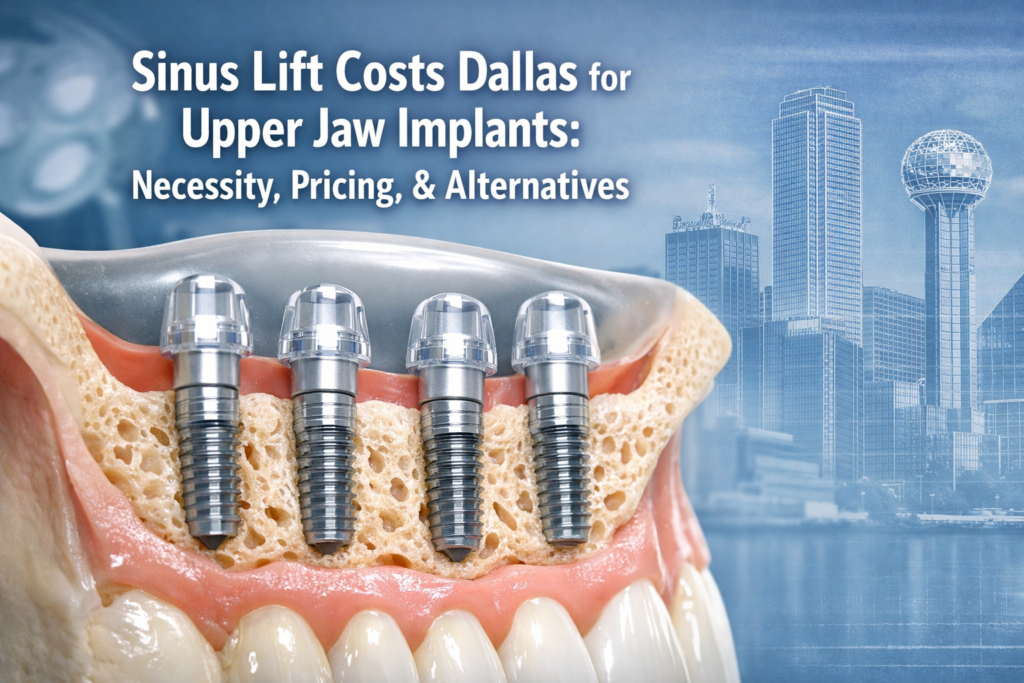
For many Dallas residents considering dental implants in the upper jaw, the thought of needing an additional procedure can be daunting, both for its complexity and its impact on the overall cost. Specifically, a sinus lift, which typically adds $1,500-$3,000 to the total expense, is often a crucial step to ensure the long-term success of upper jaw implants. This article delves into the necessity of sinus lift procedures, explores current pricing trends for Sinus Lift Costs Dallas for Upper Jaw Implants: Necessity, Pricing, and Alternatives in 2026, and examines alternative solutions for those seeking reliable tooth replacement options. Understanding these aspects is key to making informed decisions about your dental implant journey and long-term oral health.
Key Takeaways
- A sinus lift is often necessary for upper jaw dental implants when there isn’t enough bone height, preventing complications and ensuring implant stability.
- The Sinus Lift Costs Dallas for Upper Jaw Implants generally range from $1,500 to $3,000 per side in 2026, influenced by procedure type, materials, and clinic.
- Factors like the extent of bone loss, type of bone graft material used, and the dental professional’s expertise significantly impact the final cost.
- Alternatives such as short implants, tilted implants, or zygomatic implants can sometimes bypass the need for a sinus lift, offering different pathways to successful implant placement.
- A thorough consultation with a qualified Dallas dentist or oral surgeon is essential to determine the most appropriate and cost-effective treatment plan for your specific needs.
The Necessity of Sinus Lifts for Upper Jaw Implants
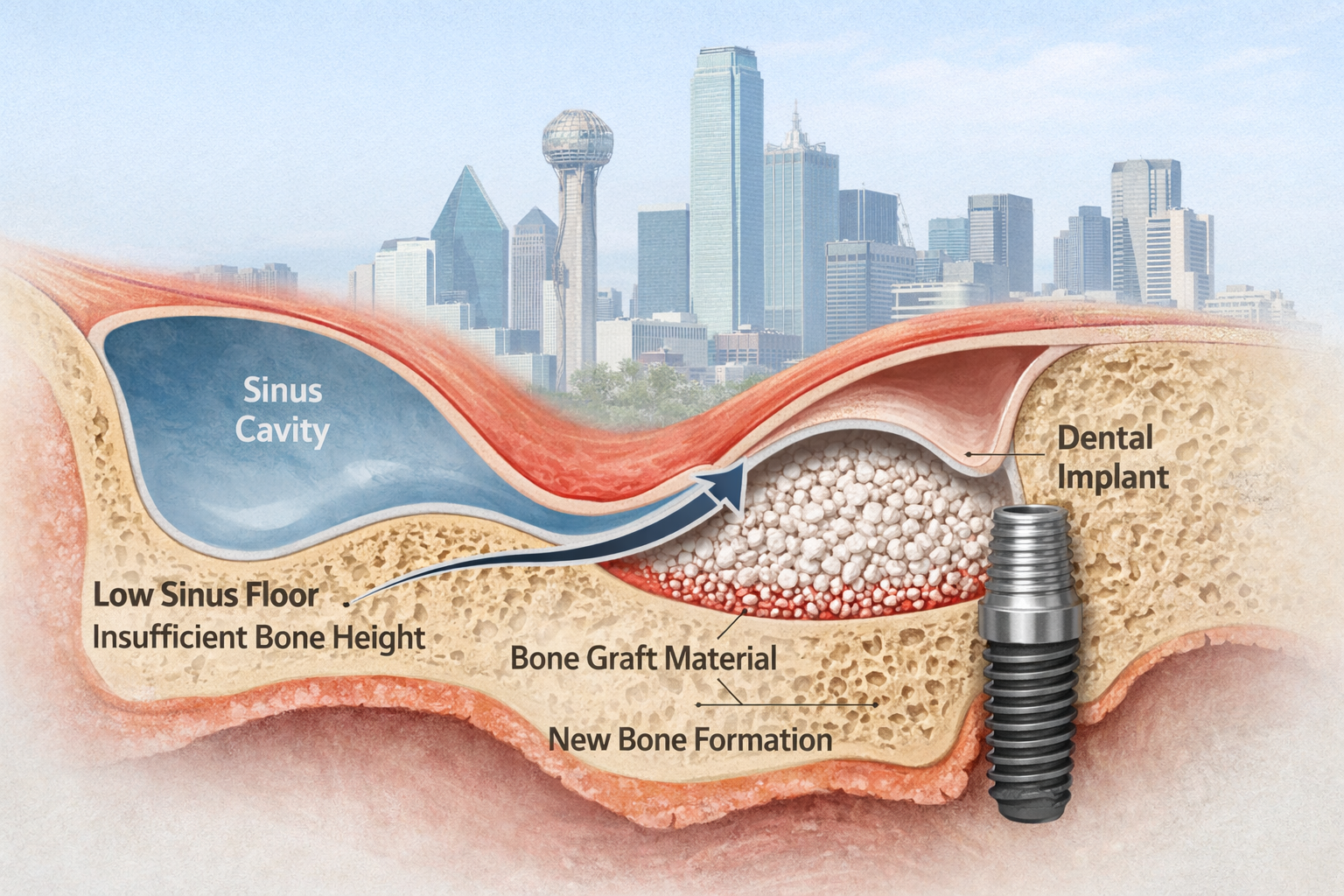
When considering dental implants in Dallas, particularly for the upper back jaw, a common challenge arises: insufficient bone volume. The maxillary sinuses are air-filled cavities located just above your upper back teeth. If you’ve had missing teeth in this area for a while, or if you naturally have large sinuses, the bone between your mouth and the sinus cavity can become too thin or soft to securely hold a dental implant. This is where a sinus lift, also known as sinus augmentation, becomes necessary.
A sinus lift is a surgical procedure designed to add bone to your upper jaw in the area of your molars and premolars. The process involves gently lifting the membrane that lines the sinus floor and then placing bone graft material into the space created. This new bone will then integrate with your existing jawbone over several months, creating a robust foundation for dental implants.
Why is a Sinus Lift Critical?
Without adequate bone, dental implants cannot properly integrate (osseointegrate) with the jawbone. Placing an implant into insufficient bone can lead to:
- Implant failure: The implant may not fuse with the bone, leading to instability or loss.
- Sinus perforation: The implant could penetrate the sinus cavity, causing complications like infection or chronic sinus issues.
- Reduced longevity: Even if initially stable, implants in weak bone are prone to long-term issues.
Therefore, for many patients pursuing dental implants in the upper jaw, a sinus lift is not merely an optional add-on but a critical prerequisite for the long-term success and stability of their new teeth. It’s a foundational step to ensure patient safety and the durability of the implant surgery process.
Types of Sinus Lifts
There are generally two main types of sinus lift procedures:
- Lateral Window Sinus Lift (Open Sinus Lift): This is typically performed when a significant amount of bone augmentation is required. A small window is created on the side of the upper jawbone, allowing the surgeon direct access to lift the sinus membrane and place a substantial amount of bone graft material.
- Crestal Sinus Lift (Internal Sinus Lift): This less invasive technique is suitable when only a small amount of additional bone is needed. The bone graft material is placed through the socket where the implant will eventually go, lifting the sinus membrane from below.
Your dental professional will assess your specific bone structure through advanced imaging, like 3D CT scans, to determine which type of sinus lift, if any, is necessary. For a deeper dive into whether you might need this procedure, explore our article on “Sinus Lift & Bone Graft Necessity in Dallas: How to Know if”.
Understanding Sinus Lift Costs Dallas for Upper Jaw Implants in 2026
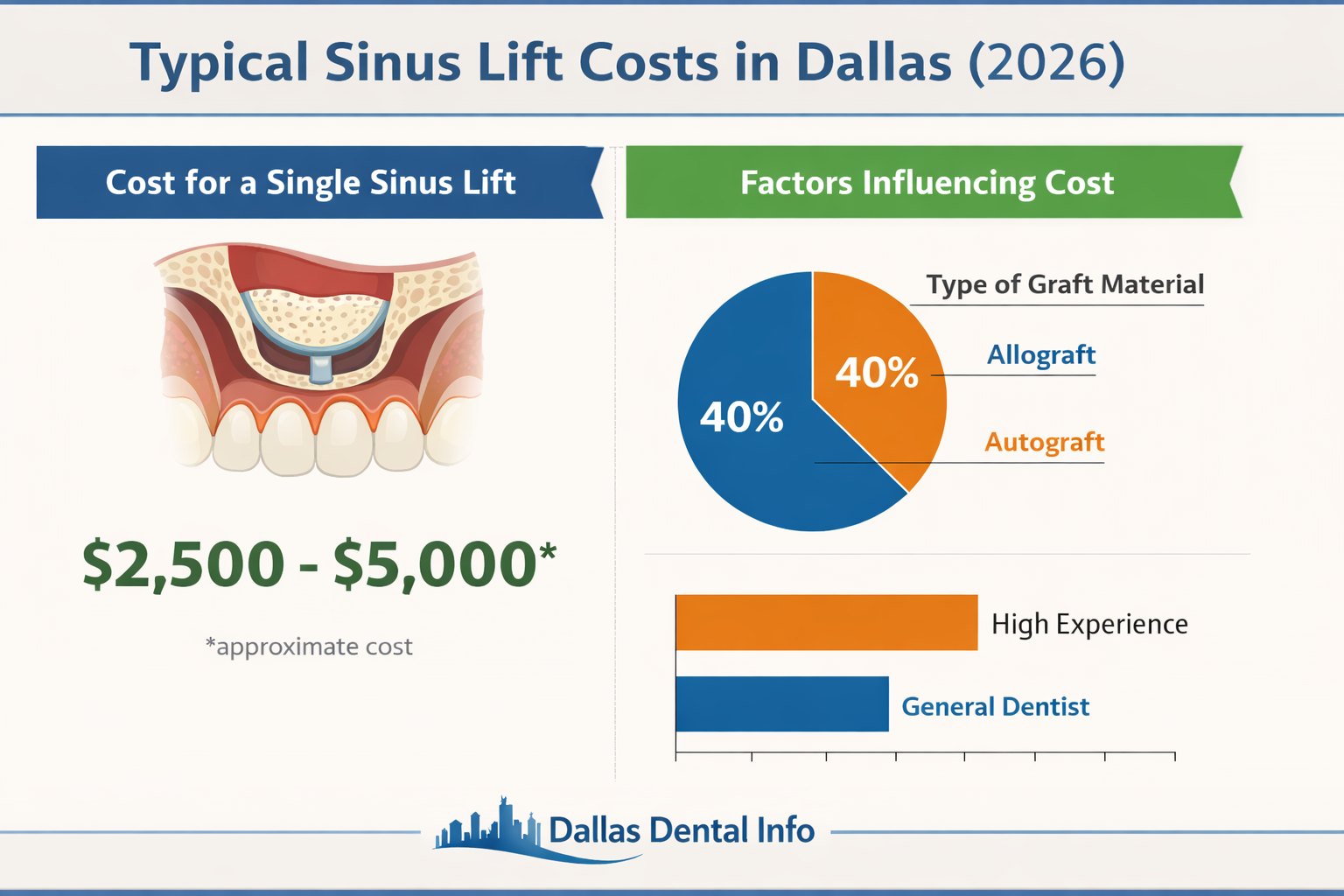
The cost of a sinus lift in Dallas can vary, influenced by several factors unique to each patient and clinic. As of 2026, Dallas residents can expect the Sinus Lift Costs Dallas for Upper Jaw Implants to typically range from $1,500 to $3,000 per side. This figure is for the sinus lift procedure itself and does not include the cost of the actual dental implant or its restoration.
Factors Influencing the Price
Several key elements contribute to the total cost:
- Type of Sinus Lift: A lateral window sinus lift, being a more involved surgical procedure, generally costs more than a crestal sinus lift.
- Bone Graft Material: The source and type of bone graft material play a significant role.
- Autogenous bone: Bone taken from the patient’s own body (e.g., jaw, hip, or tibia) is considered the gold standard but may involve additional surgical fees.
- Allograft: Processed human cadaver bone.
- Xenograft: Animal bone (commonly bovine).
- Alloplast: Synthetic bone material. The cost of these materials varies, with autogenous grafts often incurring higher overall costs due to the additional surgical site.
- Anesthesia: The type of anesthesia used (local anesthesia, oral sedation, IV sedation) will impact the overall fee. Sedation options can add to the procedure cost but greatly enhance patient comfort during implant surgery.
- Surgeon’s Expertise and Location: Highly experienced oral surgeons or periodontists in prime Dallas locations may have higher fees than general dentists who perform the procedure. However, specialized expertise often translates to higher success rates and reduced risks.
- Pre- and Post-Operative Care: This includes initial consultations, diagnostic imaging (X-rays, CT scans), follow-up appointments, and prescriptions for pain management or antibiotics.
- Clinic Overhead: The specific clinic’s operating costs, technology, and staffing also factor into pricing.
It’s important to understand that these costs are separate from the actual Dallas dental implant costs 2026 which will include the implant post, abutment, and crown. When planning for dental implants, always ask for a comprehensive breakdown of all expected expenses. For insights into broader dental implant expenses in the region, refer to our comparison of “Dallas Dental Implant Cost vs National Averages 2026”.
Insurance Coverage
Dental insurance typically offers limited coverage for dental implant procedures, and coverage for bone grafts and sinus lifts can vary significantly. Some PPO plans might cover a portion of the bone grafting as a “major restorative” procedure, while others may consider it elective. It is crucial to contact your insurance provider directly or have your Dallas dental office verify your benefits. Many clinics also offer dental implant financing in Dallas, including CareCredit and other payment plans, to help manage the investment.
Alternatives to Sinus Lifts for Upper Jaw Implants
While a sinus lift is often the most predictable solution for upper jaw bone deficiency, it’s not always the only path. Advancements in dental implant technology and surgical techniques have introduced several alternatives that might allow some patients to avoid a sinus lift, reducing both the overall cost and treatment time. Exploring these options with your Dallas dentist is a vital part of informed decision-making for your missing teeth solutions.
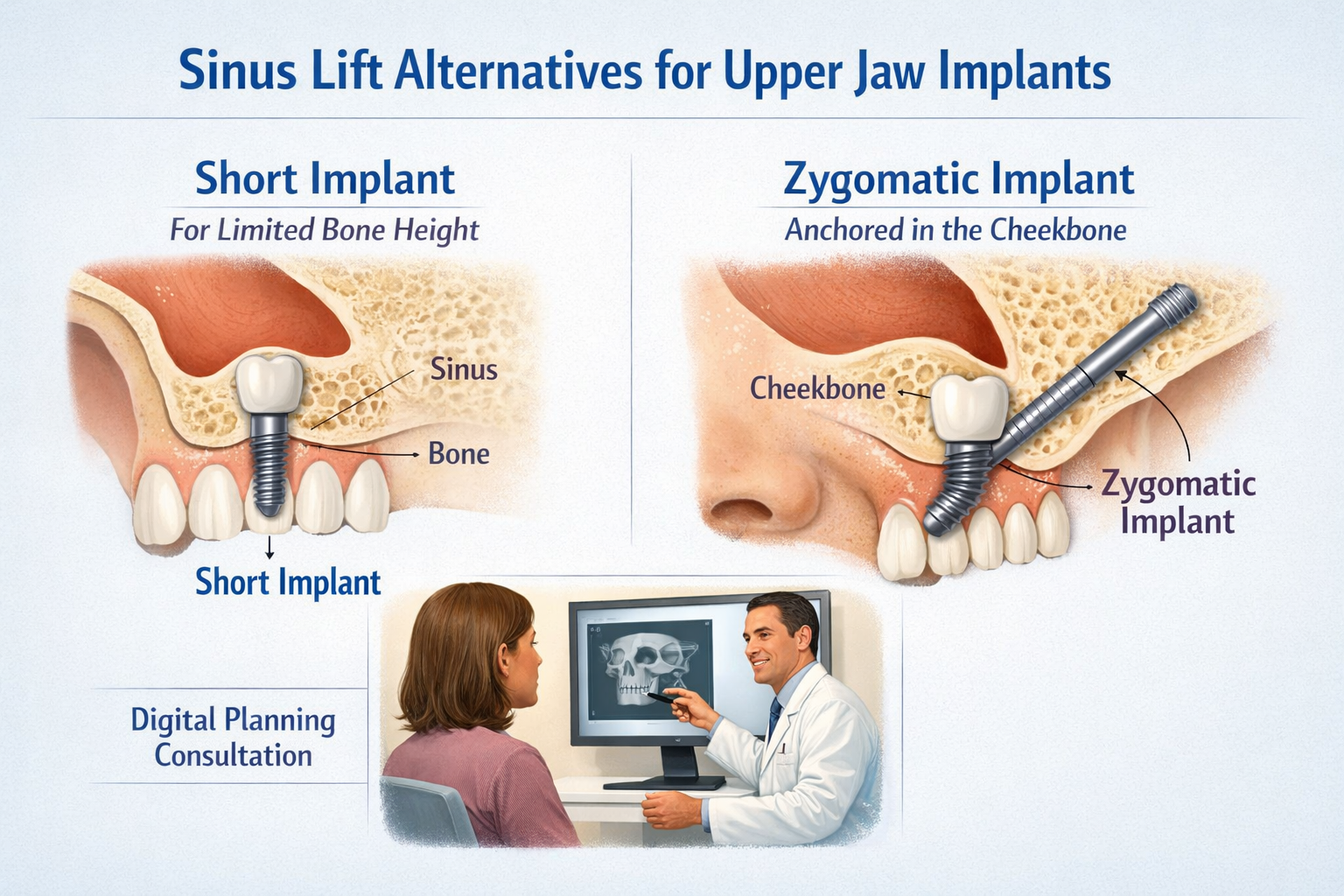
Short Implants
Traditionally, dental implants were required to be a certain length to ensure stability. However, research and development have led to the successful use of “short implants,” which are typically 4 to 8 millimeters long. These implants are specifically designed for areas with limited bone height, such as the posterior maxilla, where a sinus lift might otherwise be needed. By using a shorter implant, the dentist can often place it without encroaching on the sinus cavity.
Pros:
- Avoids the need for a sinus lift, reducing cost and healing time.
- Less invasive procedure.
Cons:
- Not suitable for all cases of severe bone loss.
- Long-term success rates are comparable to traditional implants, but careful patient selection is key.
Tilted Implants
In procedures like the All-on-4 or All-on-6 dental implant systems, implants are strategically placed at an angle in the jawbone. This angulation allows the implants to bypass the sinus cavity in the upper jaw and utilize the denser bone available in the anterior (front) part of the jaw. This technique is particularly effective for full-arch tooth replacement options. Learn more about this approach in our article on “All-on-4 vs All-on-6 Implants in Dallas 2026: Cost Premium A”.
Pros:
- Often eliminates the need for bone grafting or sinus lifts.
- Allows for immediate function in many cases.
- Efficient for full-arch restorations.
Cons:
- Requires a specific anatomical setup to be effective.
- More complex planning and surgical technique.
Zygomatic Implants
For patients with extreme bone loss in the upper jaw, even after potential bone grafting or sinus lifts, traditional implants may not be an option. Zygomatic implants are longer implants that anchor into the zygoma (cheekbone), which typically has very dense bone. This approach completely bypasses the need for bone augmentation in the upper jaw.
Pros:
- Solution for severe upper jaw bone loss, often preventing the need for complex bone grafts.
- Immediate loading is often possible.
Cons:
- A more complex surgical procedure requiring specialized expertise.
- Higher cost than traditional implants or short implants.
Considerations for Choosing an Alternative
The decision to pursue an alternative to a sinus lift depends on several factors, including:
- The extent of your existing bone loss.
- Your overall health and bone quality.
- The number and location of missing teeth.
- Your budget and timeline.
A comprehensive consultation with a skilled Dallas dentist is paramount. They will conduct a thorough examination, including 3D imaging, to determine the most suitable and safest treatment plan for your unique oral health education needs. By exploring all tooth replacement options and understanding the implant surgery process, you can make an informed decision for your long-term oral health. Preparing for your consultation is key; consider reviewing “Preparing for Your Dental Implant Consultation in Dallas: Key” to maximize your visit.
Conclusion
Navigating the complexities of dental implant procedures, especially when an additional step like a sinus lift is involved, requires clear information and professional guidance. For residents of Dallas considering upper jaw implants, understanding the Sinus Lift Costs Dallas for Upper Jaw Implants: Necessity, Pricing, and Alternatives in 2026 is a crucial step. A sinus lift is often a vital procedure that ensures sufficient bone volume for stable and long-lasting dental implants, preventing potential complications and safeguarding your investment in your oral health.
While the cost, typically ranging from $1,500 to $3,000 per side in Dallas, adds to the overall expense, it’s an investment in the foundational success of your tooth replacement options. However, modern dentistry also offers alternatives such as short implants, tilted implants, and zygomatic implants, which may be suitable for certain cases and could help some patients avoid a traditional sinus lift.
The most important next step is to schedule a consultation with a qualified and experienced dental professional in Dallas. A thorough examination, including advanced imaging, will allow them to assess your individual bone structure, discuss all available options—whether it’s a sinus lift, an alternative, or a combination of approaches—and provide a transparent breakdown of the estimated costs. Empower yourself with knowledge and partner with a trusted dental team to achieve a healthy, confident smile.