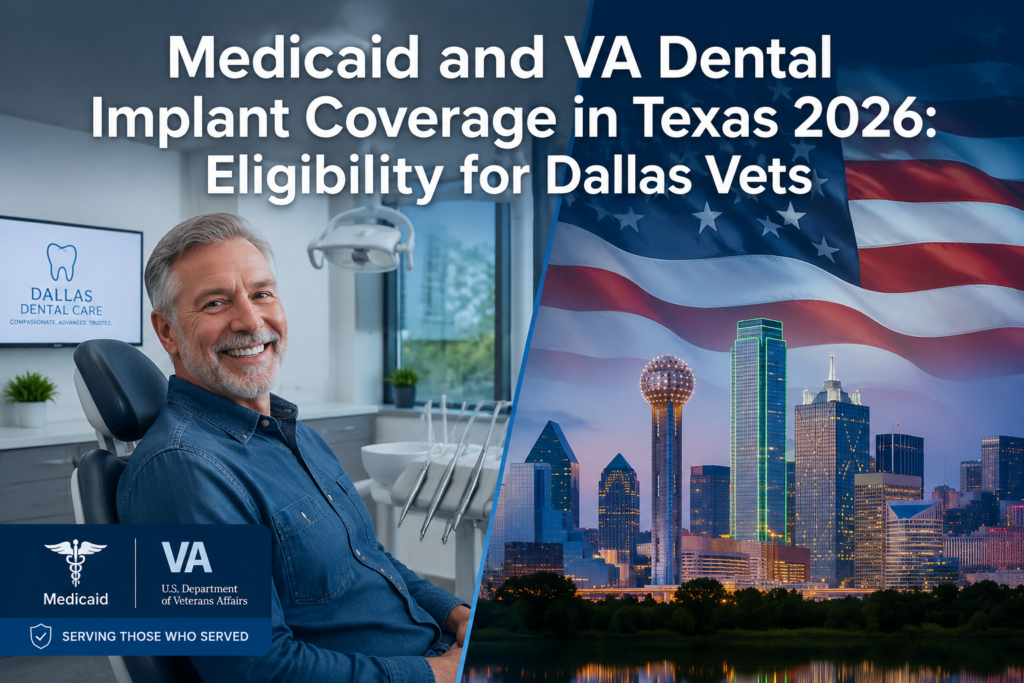
Each year, thousands of Texans face the challenge of missing teeth, impacting not only their daily lives but also their overall health. While dental implants are a superior tooth replacement option, the cost can be a significant barrier for many. For Dallas residents, especially veterans and those with limited income, understanding benefit programs like Medicaid and VA dental coverage is crucial. This article provides a comprehensive, medically responsible overview of Medicaid and VA Dental Implant Coverage in Texas in 2026, focusing on eligibility for Dallas veterans and other qualifying individuals. Our aim is to offer clear, factual information to help you make informed decisions about your long-term oral health.
Key Takeaways
- Medicaid Coverage is Limited: In Texas, adult Medicaid typically offers limited dental benefits, primarily for emergency care and medically necessary procedures. Dental implants are generally not covered for routine adult care but may be considered in specific, severe medical cases.
- VA Benefits Vary by Eligibility: VA dental benefits for veterans in Dallas depend heavily on service-connected disability status, former POW status, or specific health conditions. Comprehensive care, including dental implants, is usually available to those with a 100% service-connected disability.
- Navigating Dallas Resources: Dallas veterans and Medicaid recipients should connect with local VA facilities and dental providers who accept Medicaid to understand their specific benefits and explore all available tooth replacement options.
- Professional Consultation is Essential: Always consult with a qualified dentist in Dallas to assess your oral health needs and discuss potential coverage options before undergoing any dental implant procedure.
- Understand ‘Medical Necessity’: For Medicaid, the concept of “medical necessity” is key. It refers to services required to prevent disease, disability, or to alleviate pain, not just aesthetic improvements.
Understanding Medicaid Dental Coverage in Texas for Adults in 2026
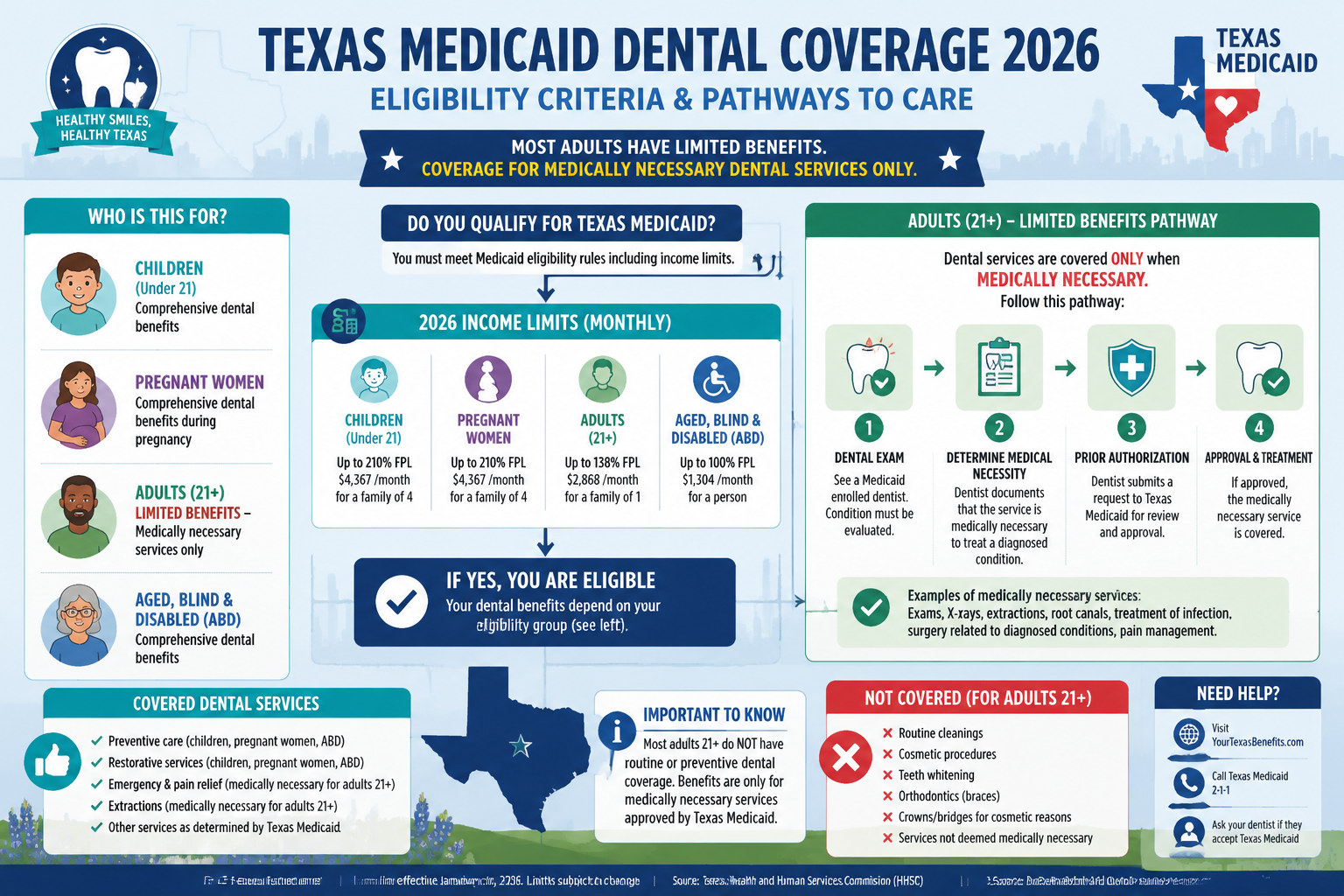
Medicaid, a joint federal and state program, provides health coverage to millions of Americans with limited income and resources. However, the scope of dental benefits, particularly for adults, varies significantly by state. In Texas, the dental coverage for adults under Medicaid is generally limited in 2026, often focusing on emergency care and procedures deemed medically necessary. This means that while children typically receive comprehensive dental benefits, adult coverage is far more restricted.
Dental implants in Dallas are a durable and effective solution for missing teeth, offering numerous benefits for long-term oral health. However, they are often considered a cosmetic or elective procedure by many insurance plans, including adult Medicaid.
What Does “Medically Necessary” Mean for Medicaid?
For Medicaid to potentially cover a dental implant procedure in Texas, it must fall under the umbrella of “medical necessity.” This classification is strict and requires documentation demonstrating that the dental issue is causing significant health problems beyond simple tooth loss. Examples might include:
- Severe Systemic Health Impact: If missing teeth are directly contributing to severe malnutrition, uncontrolled diabetes, or other serious systemic health conditions that cannot be managed otherwise.
- Traumatic Injury: In cases of severe facial trauma where dental implants are crucial for reconstructive surgery and restoring basic function.
- Congenital Defects: If missing teeth are due to a birth defect that significantly impairs oral function or overall health.
It is rare for Medicaid to cover dental implants for typical tooth replacement needs. Most often, alternatives like dentures or partial dentures are considered sufficient and are more likely to be covered when deemed necessary. Patients in Dallas seeking to understand if their situation qualifies for medically necessary dental care should consult directly with their Medicaid provider and a dental professional.
How to Explore Limited Medicaid Benefits
If you believe your condition might meet the “medically necessary” criteria, here are steps Dallas residents can take:
- Contact Texas Medicaid: Reach out to the Texas Health and Human Services Commission (HHSC) to get the most current information on adult dental benefits and the process for requesting coverage for complex procedures.
- Consult with a Dentist: Schedule a consultation with a dentist in Dallas who has experience working with Medicaid patients. They can assess your oral health, document your condition, and help determine if there’s a pathway to argue for medical necessity.
- Gather Documentation: Be prepared to provide comprehensive medical and dental records illustrating the severity of your condition and how it impacts your overall health.
Remember, the process can be challenging, and approval is not guaranteed. However, understanding the specific guidelines for Medicaid and VA Dental Implant Coverage in Texas 2026: Eligibility for Dallas Vets is the first step toward exploring your options.
VA Dental Implant Coverage in Texas 2026: Eligibility for Dallas Vets
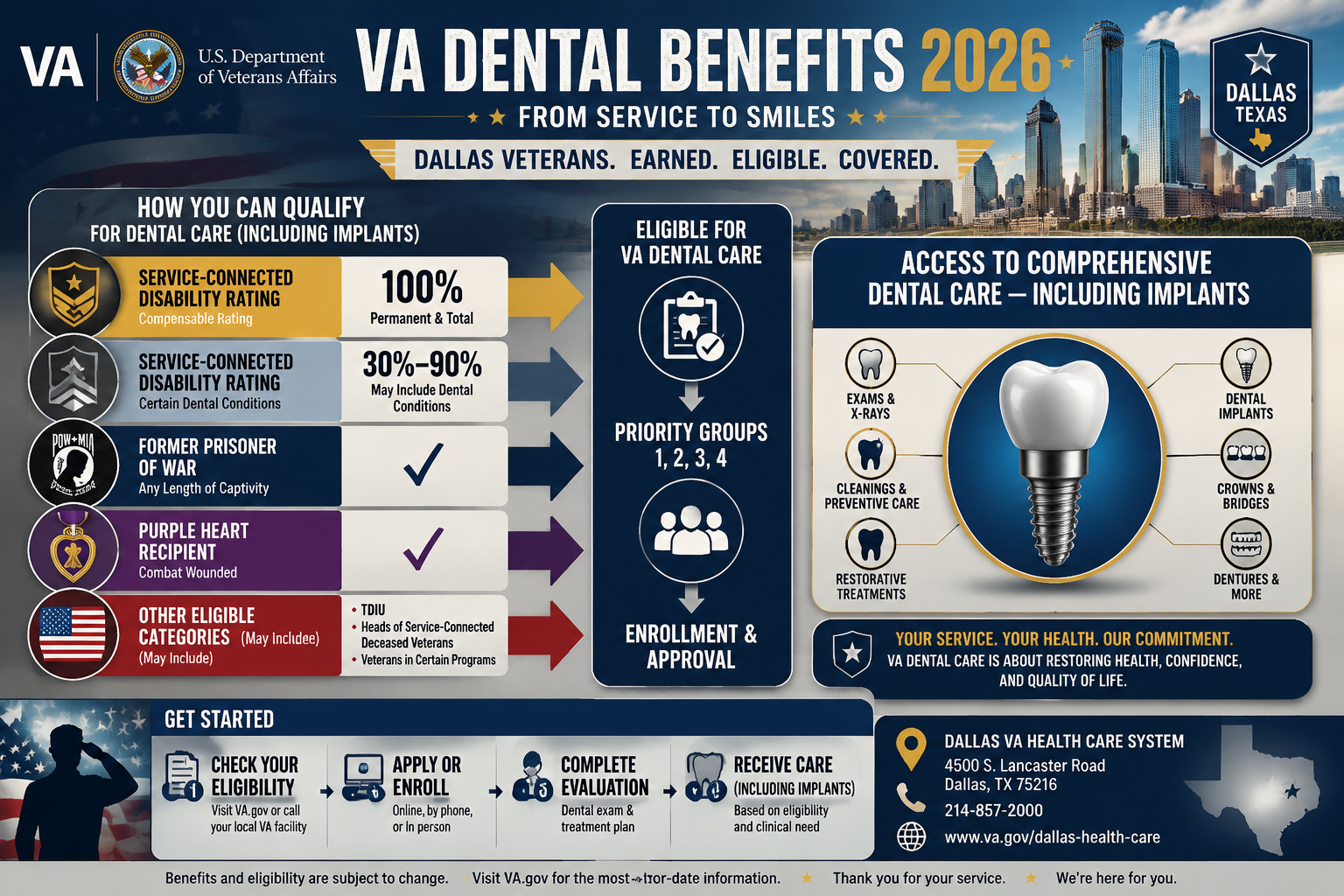
For many veterans in Dallas, the Department of Veterans Affairs (VA) provides a crucial pathway to comprehensive healthcare, including dental services. Unlike Medicaid, VA dental benefits can be quite extensive, but eligibility for advanced procedures like dental implants depends on specific service-connected conditions and other criteria. Understanding these requirements is vital for Dallas veterans seeking high-quality tooth replacement options.
General Eligibility for VA Dental Benefits
VA dental care is not universally provided to all veterans. Eligibility is categorized, with different levels of care available based on service-connected disabilities and other factors. Here are the primary categories for dental benefits in 2026:
- Category 1: Service-Connected Dental Condition: Veterans with a dental condition that is considered service-connected and compensable (rated at 0% or more disabling) may be eligible for all necessary dental treatment. This is the most comprehensive category.
- Category 2: Former Prisoners of War (POW): All former POWs are eligible for complete dental care.
- Category 2a: 100% Service-Connected Disability: Veterans with a 100% service-connected disability, or those who are considered individually unemployable due to service-connected conditions, are eligible for full dental care. This is a key category for dental implant coverage.
- Category 3: Specific Medical Conditions: Veterans with a service-connected disability that aggravates an oral condition, or conditions resulting from VA care, may be eligible for treatment of those specific conditions.
- Category 4: Non-Service-Connected, Medically Necessary: In some cases, dental treatment may be authorized if it is found to be medically necessary for the treatment of a service-connected medical condition. This can be a complex determination.
- Category 5: Veterans Enrolled in a VA Vocational Rehabilitation Program: Those in a VA vocational rehabilitation program may be eligible for care that will contribute to their employability.
- Category 6: One-Time Treatment for Newly Discharged Veterans: Veterans honorably discharged from service within 180 days, who had not received a dental exam or treatment within 90 days of discharge, may be eligible for one-time treatment if they apply within 180 days of discharge.
Dental Implant Coverage for Dallas Vets
For veterans in Dallas, securing dental implant coverage through the VA primarily falls under Category 1 (service-connected dental condition) or Category 2a (100% service-connected disability).
- 100% Service-Connected Disability: If you are a Dallas veteran with a 100% service-connected disability, you are generally eligible for comprehensive dental care, which can include dental implants if deemed clinically appropriate by a VA dentist. This is the clearest path to coverage.
- Direct Service-Connected Oral Condition: If the loss of a tooth or teeth directly resulted from a service-connected injury or condition, and dental implants are the most appropriate solution to restore function and health, coverage is more likely.
It’s important to understand that even with eligibility, the specific treatment plan, including whether dental implants are chosen over other tooth replacement options, will be determined by the VA dental care team based on clinical need and availability of services.
Steps for Dallas Vets to Access VA Dental Care
- Verify Eligibility: The first step is to confirm your eligibility category by contacting your local VA medical center or visiting the VA’s website. You can also call the VA Health Benefits line.
- Apply for VA Healthcare: If you haven’t already, apply for VA healthcare benefits.
- Schedule a Dental Exam: Once enrolled and eligible for dental care, schedule a comprehensive dental examination at a VA dental clinic. For Dallas vets, this would typically involve the Dallas VA Medical Center.
- Discuss Tooth Replacement Options: During your exam, discuss your missing teeth and inquire about dental implants with the VA dentist. They will evaluate your oral health, discuss suitable tooth replacement options, and determine if dental implants are clinically indicated for your situation.
- Understand the Process: The VA dentist will outline the entire dental implant procedure, including any necessary preparatory work like bone grafting.
For veterans exploring their options, it’s beneficial to understand that VA dental benefits are designed to support your long-term oral health, helping you regain confidence and function. For more information on costs associated with dental care, you might explore our article on Dallas Dental Implant Costs 2026 vs National Averages: Why Texas Patients Save 20-30%.
Navigating Dental Implant Coverage in Dallas: Resources for Veterans and Medicaid Recipients
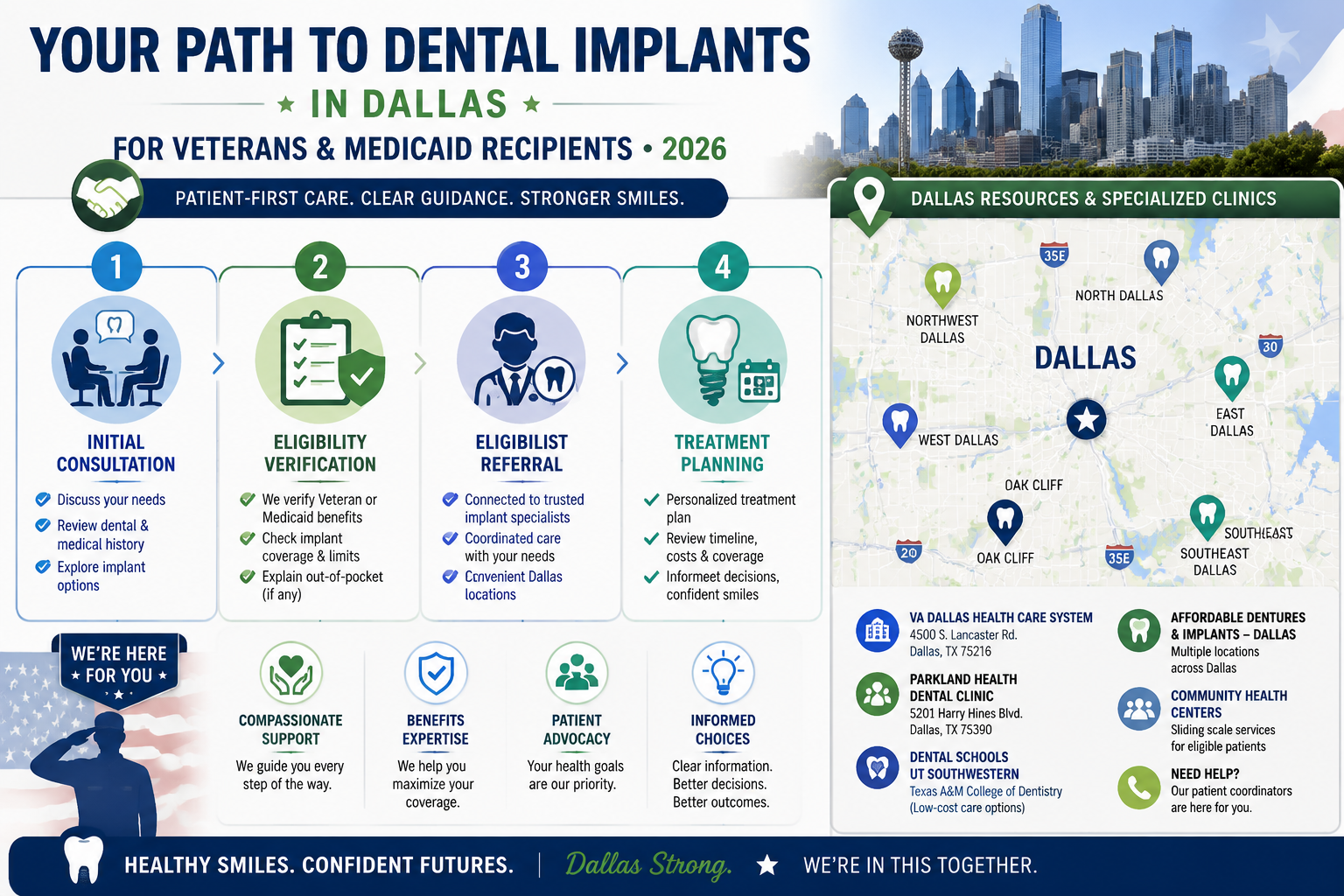
Exploring options for Medicaid and VA Dental Implant Coverage in Texas 2026: Eligibility for Dallas Vets can feel complex. However, several resources and strategies can help Dallas residents navigate the process effectively. The key is knowing where to look and whom to ask.
Finding Dallas Dental Providers for Medicaid and VA Patients
Identifying dental practices in Dallas that accept Medicaid or are approved VA providers is a critical first step.
- For Medicaid:
- Texas Health and Human Services Commission (HHSC): Their website often has a searchable directory of providers who accept Medicaid.
- Medicaid Managed Care Plans: If you are enrolled in a Medicaid managed care plan, contact your plan directly for a list of participating dental providers.
- Local Community Dental Clinics: Many community health centers and dental schools offer services to Medicaid patients, often at reduced costs. These can be valuable resources for initial consultations and basic care.
- For VA Benefits:
- Dallas VA Medical Center: The primary VA facility in Dallas is where most eligible veterans will receive their dental care. Start by contacting their dental department.
- VA Community Care Program: In some instances, if the VA cannot provide necessary care within a specific timeframe or geographic distance, they may authorize care through the VA Community Care program with approved civilian dentists. This pathway might also be considered for dental implants, depending on your eligibility and VA approval.
Essential Steps for Both Medicaid and VA Applicants
Regardless of whether you are seeking Medicaid or VA coverage, a structured approach is beneficial:
- Initial Consultation with a Dentist in Dallas: Schedule an appointment with a dentist to evaluate your oral health. They can explain your tooth replacement options, assess if dental implants are suitable for your specific situation, and provide a detailed treatment plan and cost estimate. This is crucial for understanding the implant cost in Dallas before pursuing coverage.
- Understand the Dental Implant Procedure: Familiarize yourself with the steps involved in implant surgery process. This helps in asking informed questions and preparing for the journey. For complex cases involving significant bone loss, you might need to understand procedures like a Sinus Lift and Bone Graft Procedures in Dallas.
- Document Everything: Keep thorough records of all communications, approvals, denials, and clinical documentation. This will be invaluable if appeals or further discussions are needed.
- Explore Alternative Financing and Resources: If full coverage for dental implants isn’t available through Medicaid or the VA, consider other options. Many dental practices offer payment plans, and there are third-party financing solutions. You can learn more about these in our guide to Dental Implant Financing Options Dallas. Additionally, some dental schools or non-profit organizations may offer reduced-cost implant services.
- Advocate for Your Oral Health: Don’t hesitate to ask questions, seek second opinions, and follow up with both your dental provider and the benefit program administrators. Your long-term oral health is a significant aspect of overall well-being.
- Consider Local Support Groups: For veterans, connecting with local veteran support groups in Dallas can provide valuable insights and peer advice on navigating VA benefits.
Making an informed decision about dental implants requires careful consideration of all factors, including eligibility, financial aspects, and the clinical recommendations from your dental professional.
Conclusion
Understanding Medicaid and VA Dental Implant Coverage in Texas 2026: Eligibility for Dallas Vets is a critical step for individuals seeking to restore their smiles and improve their oral health. While adult Medicaid in Texas generally offers limited dental benefits, focusing on medically necessary cases, VA benefits can be more extensive for eligible veterans, particularly those with service-connected disabilities.
For Dallas residents, navigating these systems requires diligence, detailed documentation, and open communication with both benefit administrators and dental professionals. Whether you are a veteran with a service-connected disability or a Medicaid recipient exploring options for medically necessary care, the first step is always to verify your specific eligibility and consult with a qualified dentist in Dallas. They can help you understand the full range of tooth replacement options, including the dental implant procedure, and guide you toward the best solution for your individual needs. Prioritizing patient safety and comprehensive oral health education is paramount in this journey.
Actionable Next Steps:
- Verify Your Eligibility: Contact Texas Medicaid or your local VA office to confirm your current dental benefit eligibility in 2026.
- Schedule a Consultation: Find a reputable dentist in Dallas experienced with dental implant procedures and schedule an initial consultation to discuss your specific needs and a personalized treatment plan.
- Ask Detailed Questions: Prepare a list of questions about coverage, costs, the procedure, and alternatives.
- Explore All Financial Options: If direct coverage is limited, inquire about payment plans, financing options, or community resources that may offer assistance.
- Advocate for Yourself: Be persistent in gathering information and appealing decisions if you believe your case warrants further review, especially for medically necessary situations.
References
- U.S. Department of Veterans Affairs. (2026). Dental care for Veterans. Retrieved from https://www.va.gov/health-care/about-va-health-benefits/dental-care/ (Accessed January 15, 2026)
- Texas Health and Human Services. (2026). Dental services. Retrieved from https://www.hhs.texas.gov/services/health/medicaid-chip/medicaid-chip-members/dental-services (Accessed January 15, 2026)
SEO Meta Title: Dallas Vets: Medicaid & VA Dental Implant Coverage 2026 Eligibility SEO Meta Description: Dallas veterans and Medicaid recipients, understand your 2026 eligibility for dental implant coverage in Texas. Learn about VA benefits and Medicaid’s ‘medical necessity’ rules.