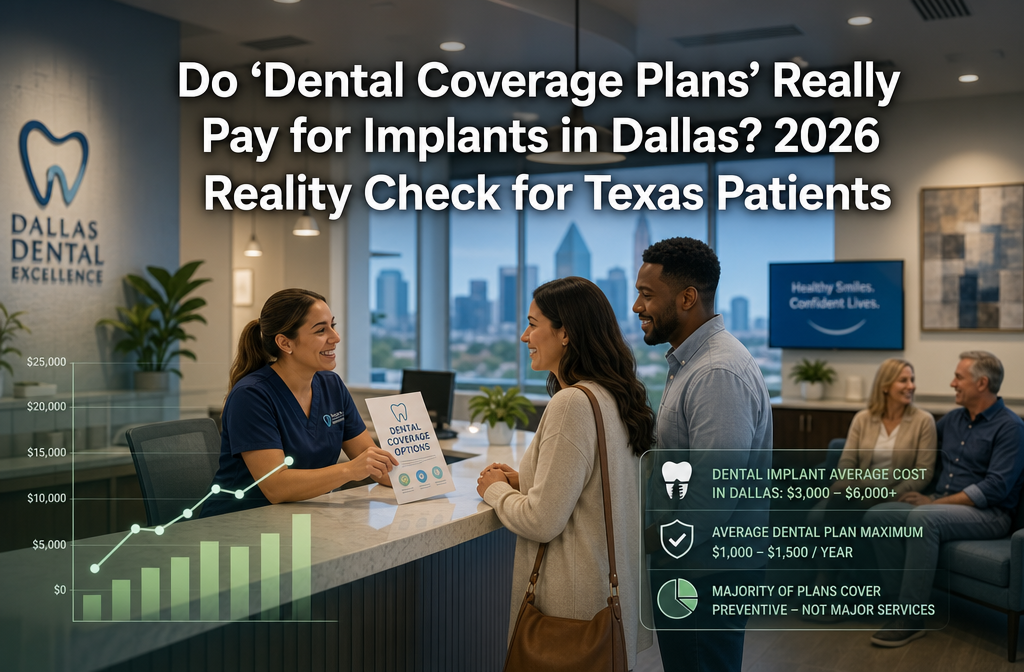
The notion that “dental coverage plans” fully cover dental implants is a common misconception that many Texas patients face in 2026. While dental implants are widely recognized as a superior long-term solution for missing teeth, navigating insurance benefits to cover their cost can be complex and often disappointing. For residents in Dallas, understanding the specifics of your dental coverage plan is crucial to managing expectations and financial planning for this significant investment in your oral health. This article aims to provide a clear, factual “2026 Reality Check for Texas Patients” regarding dental implant coverage, helping you make informed decisions about your tooth replacement options.
Key Takeaways
- Most standard dental coverage plans in Dallas offer limited or no direct coverage for dental implants.
- Annual maximums, waiting periods, and specific exclusions (like “missing tooth clauses”) are common barriers to full coverage.
- PPO plans generally offer more flexibility but still have significant limitations on implant benefits compared to comprehensive medical insurance.
- Understanding the different components of dental implant costs—surgery, abutment, crown—is vital as plans may cover only certain parts.
- Exploring alternatives like dental discount plans or third-party financing can help manage the financial aspect of dental implants.
Do ‘Dental Coverage Plans’ Really Pay for Implants in Dallas? Understanding the Landscape in 2026
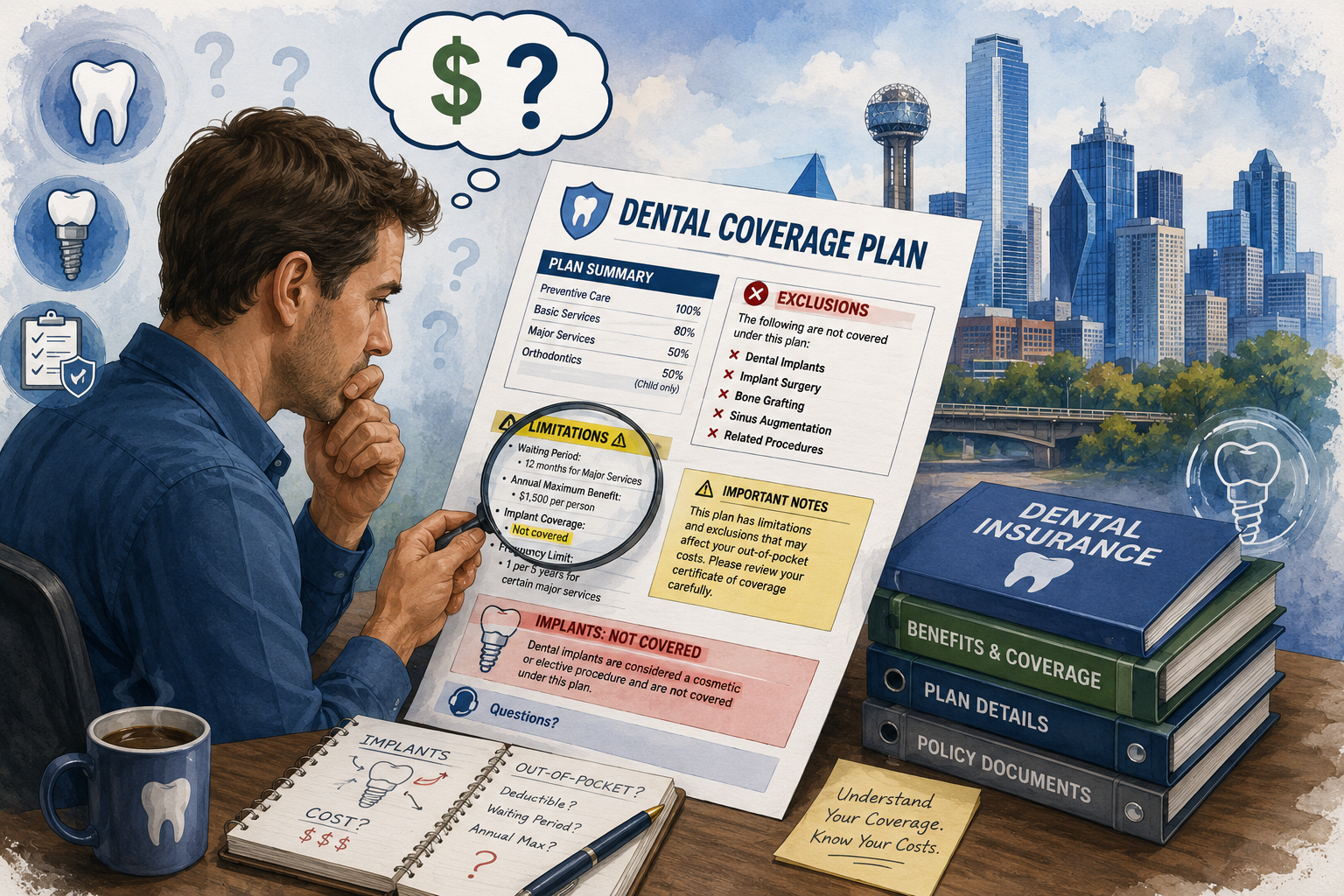
Many individuals assume that their dental insurance, much like medical insurance, will cover a significant portion of complex procedures such as dental implants. However, the reality in 2026 for dental coverage plans in Dallas, particularly regarding dental implants, is often different. While plans may contribute to certain aspects of your oral health, full coverage for the entire dental implant procedure is rare. This often leads to confusion and frustration for patients researching missing teeth solutions.
Dental implants are considered a major restorative procedure. Most traditional dental insurance plans were not initially designed to cover the full scope of such advanced treatments. Historically, dental plans focused more on preventive care (cleanings, X-rays) and basic restorative work (fillings, extractions, conventional crowns). As dental science has advanced, implants have become a standard, highly effective method for replacing missing teeth, offering superior stability and long-term oral health benefits compared to dentures or bridges.
The Nuances of “Coverage” for Dental Implants in Dallas
When a dental coverage plan states it “covers” dental implants, it’s essential to look closely at the fine print. Often, this “coverage” is limited in several ways:
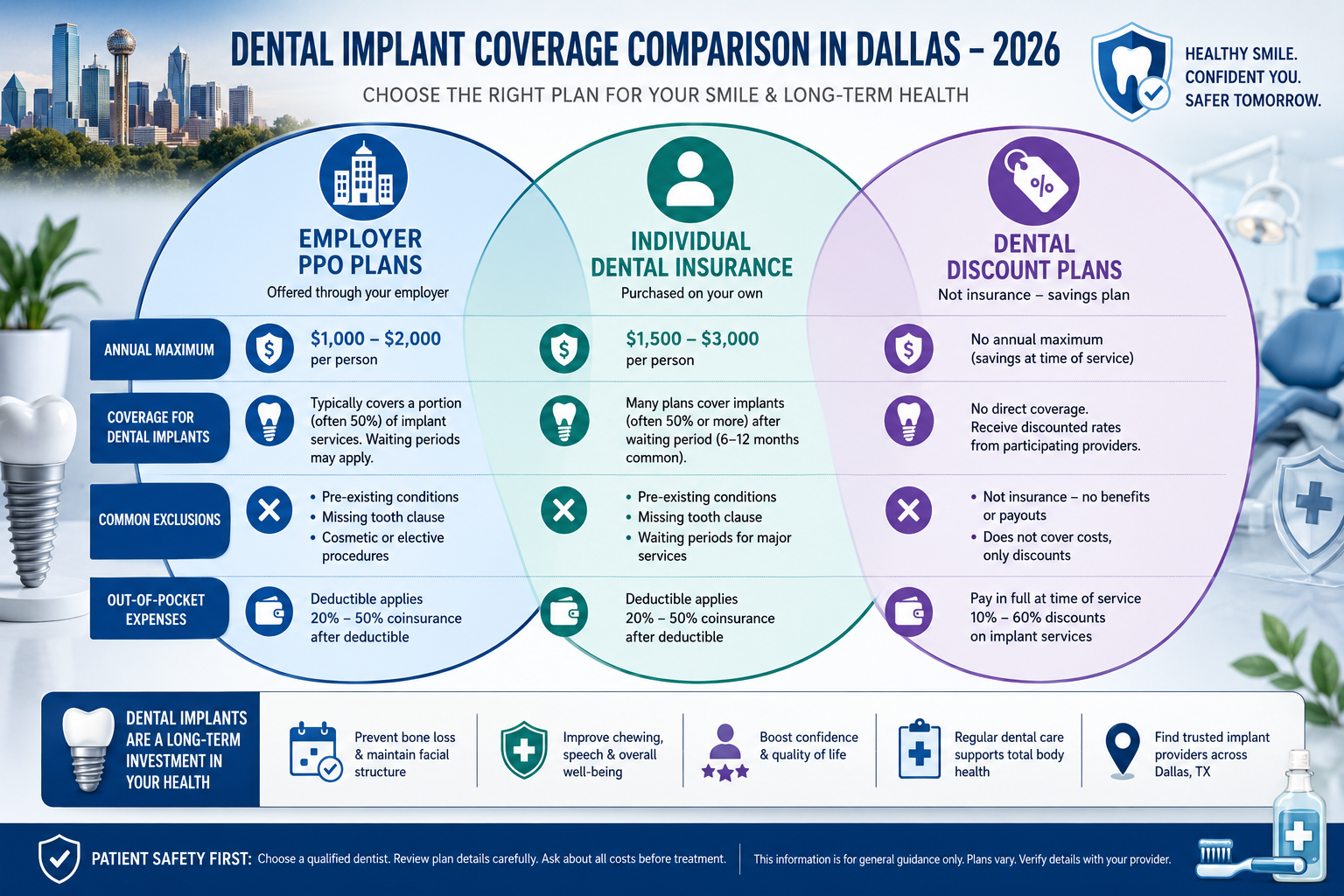
- Percentage-Based Coverage: Plans typically cover a percentage of the allowed amount for major procedures, usually ranging from 0% to 50%. This percentage applies only after deductibles are met.
- Annual Maximums: The most significant barrier is the annual maximum, which for many plans in 2026, still hovers around $1,000 to $2,000. Considering that a single dental implant in Dallas can cost several thousand dollars, this maximum is quickly depleted, leaving a substantial portion of the implant cost to the patient. For a deeper dive into the overall cost, you might find our article on single tooth implant cost in Dallas 2026 helpful.
- Waiting Periods: Many plans impose waiting periods, often 6 to 12 months, before major procedures like dental implants are covered. If you need an implant sooner, you might be out of luck for insurance assistance.
- Component-Specific Coverage: Some plans might cover only specific parts of the implant process. For instance, they might cover the initial extraction, but not the implant post itself. They might cover the implant crown (the visible tooth part) as a regular crown, but not the implant surgery or the abutment that connects the crown to the implant.
- Alternative Treatment Clauses: Insurers may only pay what they would have paid for the “least expensive adequate treatment.” If a dental bridge is deemed an adequate alternative to an implant, the plan might only cover the cost of a bridge, even if you choose an implant.
- Missing Tooth Clauses: A common exclusion is the “missing tooth clause,” which denies coverage for a tooth that was missing before you enrolled in the plan. This can be a major hurdle for many patients seeking to replace long-lost teeth.
Understanding these details is critical when evaluating your personal situation for dental implants in Dallas. It highlights the importance of a thorough review of your plan documents and direct communication with your insurance provider.
Navigating Different Dental Coverage Plan Types for Implants in Dallas in 2026
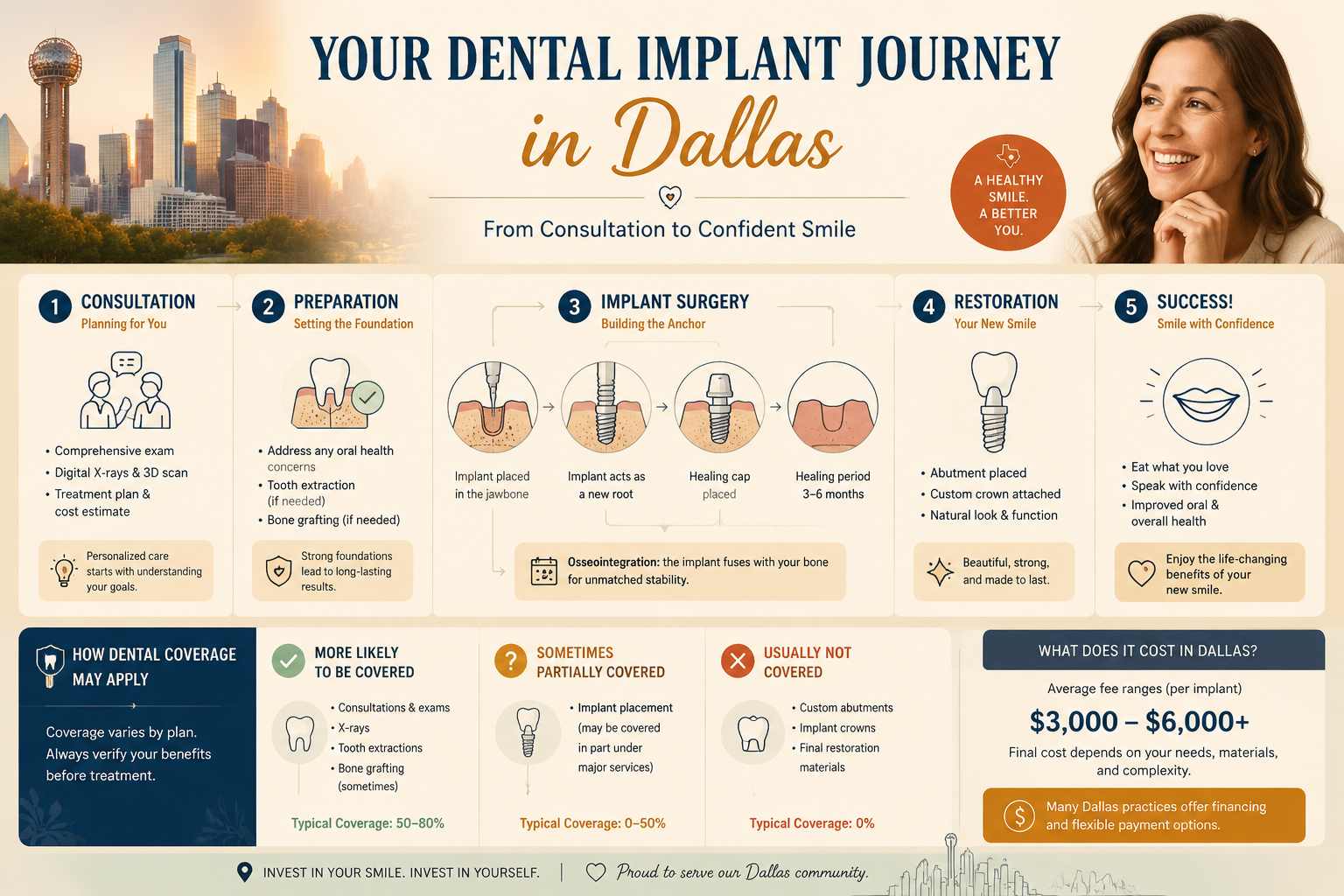
The type of dental coverage plan you have plays a significant role in determining how much, if anything, you might receive for dental implants in Dallas. While the general limitations described above apply broadly, there are differences based on whether your plan is an employer-sponsored PPO, an individual plan, or a dental discount program.
Employer-Sponsored PPO Plans
Preferred Provider Organization (PPO) plans are common for employer-provided dental benefits. They offer more flexibility than other types, allowing you to choose any licensed dentist, though you usually save money by staying within their network.
- Flexibility: PPO plans offer more choice of dentists, which is beneficial when seeking a specialist for implant surgery.
- Partial Coverage: They are most likely to offer some coverage for dental implants, typically at 30-50% of the allowed amount for major procedures. However, the annual maximum will still be a significant limiting factor.
- Negotiated Rates: In-network dentists agree to discounted fees, which can reduce your out-of-pocket costs even if your plan pays a small percentage.
- Challenges: The annual maximums remain a major hurdle, and waiting periods or missing tooth clauses are still common. For more insights on maximizing reimbursement, check our article on qualifying for dental implant insurance reimbursement in Dallas.
Individual Dental Insurance Plans
These plans are purchased directly by individuals, often if they are self-employed or their employer does not offer dental benefits.
- Higher Premiums/Fewer Benefits: Individual plans often have higher monthly premiums for less comprehensive coverage compared to group employer plans.
- Strict Limitations: Many individual plans have even stricter limitations on major restorative procedures like dental implants, with lower annual maximums or even outright exclusions.
- Longer Waiting Periods: Waiting periods for major services can be longer, sometimes up to two years.
- Cost vs. Benefit: It’s critical to calculate if the premium costs outweigh the potential benefits, especially if you anticipate needing an implant soon. For patients considering the overall investment, understanding dental implant warranties in Dallas clinics can be valuable.
Dental Discount Plans (Dental Savings Plans)
These are not insurance plans but rather membership programs where you pay an annual fee to get discounted rates from participating dentists.
- No Annual Maximums: One key advantage is that they typically have no annual maximums or deductibles.
- Immediate Discounts: Discounts often apply immediately, without waiting periods.
- Fixed Percentage Savings: You usually receive a fixed percentage discount (e.g., 10-50%) on all procedures from participating providers.
- Not Insurance: It’s important to remember these are not insurance, so they don’t “pay” for anything; they simply reduce the cost.
- Value for Implants: For significant procedures like dental implants, a discount plan can offer substantial savings, especially if you’re not eligible for or cannot wait for traditional insurance benefits.
When planning for implant surgery in Dallas, it’s always recommended to have a thorough consultation with a dentist. During this consultation, discuss all aspects of the dental implant procedure, potential costs, and financing options. For more information on what to expect during a consultation, refer to our guide on navigating the dental implant consultation in Dallas.
Maximizing Your Chances: What to Do in Dallas in 2026
Given the complexities of dental coverage plans, how can Texas patients best approach the financing of dental implants in Dallas in 2026? A proactive and informed strategy is key.
Comprehensive Pre-Treatment Planning and Research
- Detailed Treatment Plan and Cost Estimate: Before any procedure, ask your Dallas dentist for a detailed treatment plan that breaks down all costs, including the implant surgery process, abutment, and crown. This allows you to see the exact components for which you might seek coverage. For context on costs, you may want to review our article on 2026 dental implant price inflation in Dallas.
- Communicate with Your Dentist’s Office: Many dental offices in Dallas have staff experienced in working with insurance companies. They can often help you understand your benefits, submit pre-authorizations, and estimate your out-of-pocket expenses.
- Contact Your Insurance Provider Directly: Always call your dental coverage plan provider yourself. Ask specific questions about:
- Coverage for CPT or ADA codes related to dental implants (ask your dentist for these codes).
- Annual maximums and how much you have remaining.
- Deductibles and waiting periods.
- Exclusions like the “missing tooth clause” or “alternative treatment” clauses.
- Whether specific components (implant post, abutment, crown, bone grafting if needed) are covered. For information on related procedures, see bone graft costs for dental implants in Dallas.
Exploring Financial Alternatives Beyond Traditional Insurance
Since direct insurance coverage is often limited, considering other financing options for your dental implants in Dallas is practical.
- Payment Plans: Many dental offices offer in-house payment plans, allowing you to spread the cost over several months.
- Third-Party Financing: Companies like CareCredit or LendingClub specialize in medical and dental financing, often offering low or 0% interest for a promotional period. Explore different options through our guide on comparing dental implant payment plans in Dallas.
- Health Savings Accounts (HSAs) or Flexible Spending Accounts (FSAs): If you have an HSA or FSA, these tax-advantaged accounts are excellent for paying for dental implants and other qualified medical expenses.
- Medical Tax Deductions: While specific rules apply, dental implants can sometimes qualify as a medical expense for tax deductions. It’s wise to consult a tax professional. More details can be found in our article on 2026 Dallas dental implant tax deductions.
- Phased Treatment: For extensive cases, your dentist might be able to phase your treatment over two calendar years. This strategy could allow you to utilize two separate annual maximums from your dental coverage plan, potentially doubling your insurance contribution.
Understanding the Investment
Ultimately, dental implants in Dallas represent a significant investment in your long-term oral health. They are designed to be a permanent solution for missing teeth, offering benefits that often outweigh the initial cost over time, including improved chewing function, preservation of jaw bone, and a natural appearance. Even with limited insurance coverage, many patients find the value of implant surgery to be well worth the out-of-pocket expense. Patient safety and the success of the procedure are paramount, making the choice of a qualified dentist and a clear understanding of financial commitments essential.
Conclusion
The “2026 Reality Check for Texas Patients” regarding the question, “Do ‘Dental Coverage Plans’ Really Pay for Implants in Dallas?” reveals a nuanced truth: while some plans may offer partial assistance, comprehensive coverage is uncommon. Most dental insurance policies were not structured to fully absorb the cost of advanced procedures like dental implants, often due to annual maximums, waiting periods, and specific exclusions.
For Dallas residents considering dental implants as a solution for missing teeth, it is crucial to move beyond the assumption of full insurance coverage. Instead, adopt a proactive approach: thoroughly review your specific dental coverage plan benefits, communicate openly with your dentist and their administrative team, and explore various alternative financing options. By understanding the limitations of traditional insurance and leveraging other resources, you can confidently plan for your dental implant procedure and invest in your long-term oral health with clear expectations. Remember, a consultation with a dentist is the best first step to assess your needs and discuss all available options for your implant cost in Dallas.
References
- American Dental Association. (2025). Dental Insurance Basics. Retrieved from https://www.ada.org/resources/managing-your-practice/dental-insurance-basics (Note: While 2025 is cited, content pertains to general principles still relevant in 2026.)
- CareCredit. (2026). Dental Procedure Financing. Retrieved from https://www.carecredit.com/dentistry/
- National Association of Dental Plans. (2025). About Dental Benefits. Retrieved from https://www.nadp.org/AboutDentalPlans/Dental-Benefits-Basics (Note: While 2025 is cited, content pertains to general principles still relevant in 2026.)