When I first started researching dental implants in Dallas, I was shocked to discover that a single tooth replacement could cost anywhere from $3,000 to $4,500—and that’s before considering what insurance would actually cover. If you’re searching for the best dental insurance implants Dallas has to offer, you’re not alone. Thousands of Dallas residents face this same challenge every year, trying to navigate the complex world of dental insurance coverage while seeking quality implant care that won’t drain their savings.
The good news? With the right insurance plan and knowledge of Dallas providers, you can significantly reduce your out-of-pocket costs and get the smile you deserve. In this comprehensive guide, I’ll walk you through everything you need to know about finding the best dental insurance for implants in Dallas, from understanding coverage levels to identifying top providers who maximize your benefits.
Key Takeaways
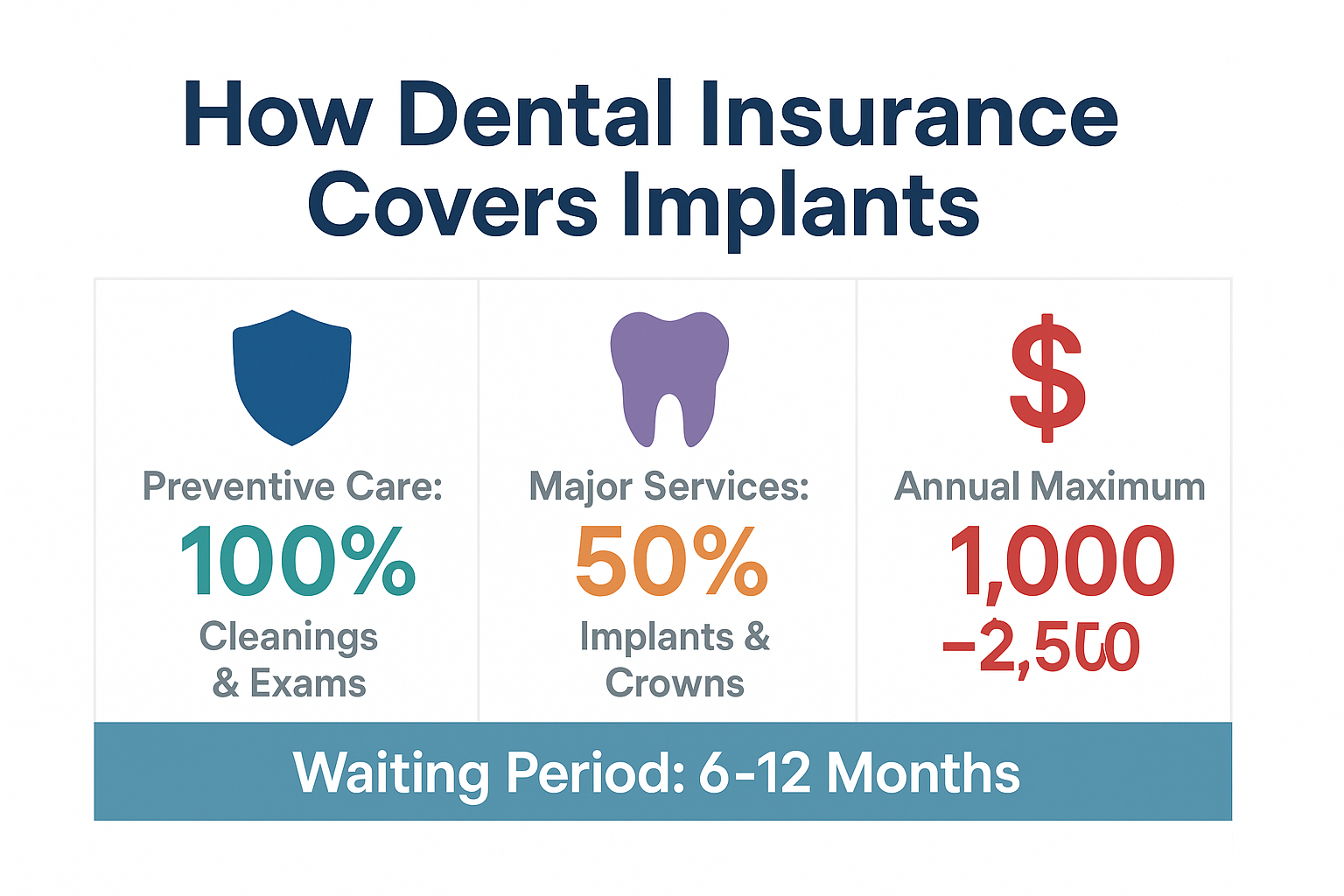
- Most dental insurance plans cover approximately 50% of implant costs as major services, but annual maximums typically cap at $1,000–$2,500 per year
- PPO plans offer the most flexibility for dental implant coverage in Dallas, allowing both in-network and out-of-network provider choices
- Waiting periods of 6–12 months are common for major implant procedures, so early planning is essential
- Dallas providers like Advanced Dentistry accept major PPO insurers (Aetna, Cigna, Delta Dental, Humana, MetLife) and offer membership savings up to 15%
- Full-arch implants in Dallas start at $12,499 per arch with specialized providers, making insurance coverage crucial for affordability
Understanding Dental Insurance Coverage for Implants in Dallas
Navigating dental insurance for implants can feel like decoding a foreign language. Let me break down exactly how coverage works so you can make informed decisions about your oral health investment.
How Dental Insurance Classifies Implants
Most dental insurance providers classify implants as “major services” or “major restorative procedures.” This classification is crucial because it determines your coverage percentage and waiting periods. Unlike preventive care (cleanings, exams) that typically receive 100% coverage, major services usually receive around 50% coverage after you’ve met your deductible [1].
Here’s what this means in practical terms: if your single implant procedure costs $3,500 and your insurance covers 50% of major services, you’d receive approximately $1,750 in benefits—assuming you haven’t exceeded your annual maximum.
Annual Maximums: The Hidden Limitation
The biggest surprise for most people isn’t the coverage percentage—it’s the annual maximum benefit. Most dental insurance plans cap their total payout at $1,000–$2,500 per year for all dental services combined [2]. This limitation significantly impacts implant coverage since even a single implant can exceed this amount.
For example, if you need multiple implants or a full-arch restoration, you’ll likely need to spread the treatment across multiple calendar years to maximize your insurance benefits. Understanding your dental implant insurance options in Dallas can help you strategically plan your treatment timeline.
Waiting Periods: Planning Ahead is Essential
One critical factor many Dallas residents overlook is the waiting period for major services. Most insurance plans require you to be enrolled for 6–12 months before they’ll cover implant procedures [3]. This means if you’re shopping for insurance specifically for upcoming implant work, you need to factor in this delay.
Pro tip: If you know you’ll need implants in the future, enroll in a comprehensive dental insurance plan as soon as possible, even before you need the procedure.
Types of Dental Insurance Plans for Implants in Dallas
Not all dental insurance plans are created equal, especially when it comes to implant coverage. Let me explain the main types you’ll encounter in Dallas and which ones typically offer the best value for implant procedures.
PPO (Preferred Provider Organization) Plans 💼
PPO plans are generally the best choice for dental implants in Dallas. Here’s why I recommend them:
- Flexibility: You can visit any dentist, though in-network providers offer better rates
- No referrals required: You can see specialists directly
- Out-of-network coverage: Still receive partial benefits even with non-network providers
- Higher annual maximums: Often $1,500–$2,500 compared to other plan types
Major Dallas providers like Advanced Dentistry accept most PPO insurance plans, including Aetna, Cigna, Delta Dental, Humana, and MetLife. This acceptance gives you access to quality care while maximizing your benefits.
HMO/DHMO (Dental Health Maintenance Organization) Plans
While HMO plans feature lower monthly premiums, they typically aren’t ideal for implant coverage:
- Limited provider networks: Must use assigned dentists
- Implant exclusions: Many DHMO plans exclude implants entirely
- Referral requirements: Need approval for specialist visits
- Lower coverage: When implants are covered, benefits are usually minimal
Indemnity (Fee-for-Service) Plans
These traditional plans offer maximum flexibility but come with trade-offs:
- See any provider: No network restrictions
- Higher premiums: Monthly costs significantly exceed PPO and HMO plans
- Reimbursement model: You pay upfront and file claims for reimbursement
- Good for complex cases: Useful if you need specialized implant procedures
For most Dallas residents seeking affordable dental implant options, PPO plans strike the best balance between cost, coverage, and provider choice.
Best Dental Insurance Companies for Implants in Dallas
Based on coverage levels, provider networks, and Dallas-specific acceptance, here are the top insurance companies for implant coverage in 2025.
1. Delta Dental PPO ⭐
Why it’s excellent for Dallas implants:
- Largest dental network in Texas with 95% of Dallas dentists participating
- Annual maximums up to $2,000 on premium plans
- 50% coverage for major services including implants
- No waiting period on some employer-sponsored plans
Average monthly premium: $45–$75 for individual coverage
2. Cigna Dental PPO
Standout features:
- Comprehensive major services coverage at 50%
- Annual maximum of $1,500–$2,000 depending on plan tier
- Extensive Dallas provider network
- Option to combine with health insurance for potential discounts
Average monthly premium: $40–$70 for individual coverage
3. Aetna Dental PPO
What makes it competitive:
- Strong presence in Dallas metropolitan area
- Flexible plan options with varying annual maximums
- 50% major services coverage standard
- Good coordination with medical insurance benefits
Average monthly premium: $50–$80 for individual coverage
4. Humana Dental PPO
Key advantages:
- Competitive pricing for comprehensive coverage
- Annual maximums up to $1,500
- Wide acceptance among Dallas implant specialists
- Additional preventive care benefits
Average monthly premium: $35–$65 for individual coverage
5. MetLife Dental PPO
Notable benefits:
- Large network of Dallas-area dentists
- Employer group plans often have higher annual maximums ($2,000+)
- 50% major services coverage
- Efficient claims processing
Average monthly premium: $45–$75 for individual coverage
When comparing these options, consider not just the monthly premium but the annual maximum, waiting periods, and whether your preferred Dallas dentist accepts the plan. You can learn more about dental implant costs with insurance to understand how different plans affect your out-of-pocket expenses.
Top Dallas Dental Implant Providers That Accept Insurance
Finding a skilled implant dentist who accepts your insurance is crucial for maximizing your benefits. Here are Dallas providers known for quality care and broad insurance acceptance.
Advanced Dentistry Dallas
Insurance acceptance: Aetna, Cigna, Delta Dental, Humana, MetLife, and most major PPO plans
What sets them apart:
- Membership savings program offering 15% off all services including implants
- Membership plans starting at $61/month
- Full-arch implants starting at $12,499 per arch
- Same-day temporary prosthesis options available
This combination of insurance acceptance and membership savings makes Advanced Dentistry an excellent choice for Dallas residents seeking to minimize implant costs while maintaining quality care.
Dallas Dental Implant Center
Insurance acceptance: Most major PPO plans
Highlights:
- Specializes exclusively in implant dentistry
- Advanced 3D imaging and planning technology
- Transparent pricing with insurance pre-authorization assistance
- Financing options for amounts insurance doesn’t cover
Texas Dental Implant Specialists
Insurance acceptance: Broad PPO network participation
Notable features:
- Board-certified periodontists and oral surgeons
- Comprehensive treatment from extraction to final restoration
- Insurance verification before treatment begins
- Multiple Dallas-area locations for convenience
When selecting a provider, always verify your specific insurance plan’s coverage with the office before beginning treatment. Understanding the complete cost breakdown for dental implants in Dallas helps you budget for both insured and out-of-pocket portions.
Maximizing Your Dental Insurance Benefits for Implants
Strategic planning can significantly increase the value you receive from your dental insurance. Here are proven strategies I’ve seen work for Dallas patients.
Strategy 1: Timing Your Treatment Across Calendar Years 📅
Since most plans have annual maximums of $1,000–$2,500, spreading multi-implant procedures across two calendar years effectively doubles your coverage.
Example scenario:
- December 2025: Complete implant placement ($2,000 procedure, $1,000 insurance benefit)
- January 2026: Complete crown placement ($1,500 procedure, $750 insurance benefit)
- Total insurance benefit: $1,750 instead of hitting the $1,000 annual cap
Strategy 2: Coordinate Benefits with a Spouse’s Plan
If both you and your spouse have dental insurance, you may be able to coordinate benefits for additional coverage. This strategy, called “dual coverage,” allows you to submit claims to both insurance companies.
How it works:
- Primary insurance pays their portion (typically 50% of major services)
- Secondary insurance may cover part of the remaining balance
- Combined coverage can reach 70–80% in some cases
Important note: Not all plans allow coordination of benefits for major services, so verify with both insurers before proceeding.
Strategy 3: Use Flexible Spending Accounts (FSA) or Health Savings Accounts (HSA)
These tax-advantaged accounts can cover the portion your insurance doesn’t pay:
- FSA contributions: Up to $3,200 per year (2025 limit)
- HSA contributions: Up to $4,150 individual / $8,300 family (2025 limits)
- Tax savings: Typically 20–30% depending on your tax bracket
By combining insurance coverage with FSA/HSA funds, you can significantly reduce the financial impact of implant procedures.
Strategy 4: Leverage Membership Discount Plans
Some Dallas providers offer in-house membership plans that stack with insurance benefits. For example, Advanced Dentistry’s membership program provides an additional 15% discount on services, which applies to the portion insurance doesn’t cover.
Calculation example:
- Implant procedure: $3,500
- Insurance pays (50%): $1,750
- Remaining balance: $1,750
- Membership discount (15%): $262.50 savings
- Your final cost: $1,487.50
These strategies for financing dental implants in Dallas can make the difference between affordable care and financial strain.
Understanding the Full Cost of Dental Implants in Dallas
To effectively use your insurance, you need to understand what you’re actually paying for. Dental implant procedures involve multiple components, each with separate costs.
Single Tooth Implant Cost Breakdown
A complete single tooth replacement typically includes:
| Component | Average Dallas Cost | Typical Insurance Coverage |
|---|---|---|
| Initial consultation & imaging | $150–$300 | Usually 50–100% (diagnostic) |
| Implant placement surgery | $1,500–$2,000 | 50% (major service) |
| Abutment (connector piece) | $300–$500 | 50% (major service) |
| Crown (visible tooth) | $1,000–$1,500 | 50% (major service) |
| Total | $3,000–$4,500 | Varies by annual maximum |
Understanding this breakdown helps you plan which portions to schedule in different benefit periods. Learn more about the average cost of a single dental implant to set realistic budget expectations.
Full-Arch Implant Costs
For patients missing most or all teeth in an arch, full-arch implant solutions offer significant value:
- All-on-4 procedure: $12,499–$25,000 per arch in Dallas
- Traditional full-arch: $20,000–$40,000 per arch
- Insurance coverage: Limited due to annual maximums, but every bit helps
Even with insurance covering only a portion, the cost of All-on-4 dental implants can be managed through the strategies mentioned earlier, including multi-year treatment planning.
Additional Procedures That May Be Needed
Sometimes implants require preparatory procedures:
- Bone grafting: $300–$3,000 depending on extent (often covered at 50%)
- Sinus lift: $1,500–$3,000 (coverage varies by plan)
- Tooth extraction: $150–$400 per tooth (usually 50–80% coverage)
These additional costs can quickly exceed annual maximums, making strategic planning even more critical. Research shows that understanding the complete dental implant procedure costs upfront prevents surprise bills later.
What to Look for in a Dental Insurance Plan for Implants
If you’re shopping for new dental insurance specifically with implants in mind, here are the critical factors to evaluate.
Coverage Percentage for Major Services
While 50% is standard, some premium plans offer 60–70% coverage for major services. Even a 10% difference can mean hundreds of dollars in savings on implant procedures.
Questions to ask:
- What percentage does the plan cover for major restorative services?
- Does coverage percentage increase after being enrolled for several years?
- Are there different coverage levels for in-network vs. out-of-network providers?
Annual Maximum Benefit
This is arguably the most important factor for implant coverage. Look for plans with annual maximums of at least $2,000, with $2,500 or higher being ideal.
Why it matters: Even with 50% coverage, a $1,000 annual maximum only covers $2,000 worth of dental work—barely enough for a single implant.
Waiting Periods
Shorter waiting periods mean faster access to benefits. Compare:
- No waiting period: Rare, usually only employer group plans
- 6-month waiting period: Good option if you can plan ahead
- 12-month waiting period: Standard but requires significant advance planning
Network Size and Provider Quality
A large network means nothing if quality providers aren’t included. Verify that:
- Top-rated Dallas implant specialists accept the plan
- The network includes periodontists and oral surgeons, not just general dentists
- You have multiple provider options near your home or work
Missing Tooth Clause
Some insurance plans won’t cover implants for teeth that were missing before you enrolled in the plan. This “missing tooth clause” can be a deal-breaker if you’re shopping for insurance after tooth loss.
Always ask: “Does this plan have a missing tooth clause that would exclude coverage for my situation?”
Alternative and Supplemental Coverage Options in Dallas
Beyond traditional dental insurance, Dallas residents have several alternative options for managing implant costs.
Dental Discount Plans
These aren’t insurance but membership programs offering negotiated discounts:
How they work:
- Pay annual or monthly membership fee ($100–$200/year typically)
- Receive 10–60% discounts on dental services
- No annual maximums, waiting periods, or claim forms
- Can be used alongside insurance for additional savings
Best for: People whose insurance has been exhausted or who don’t have traditional coverage.
CareCredit and Healthcare Financing
CareCredit and similar healthcare credit cards offer:
- 0% interest financing for 6–24 months (with approved credit)
- Extended payment plans up to 60 months (with interest)
- Immediate approval often available
- No impact on insurance benefits
This option allows you to proceed with treatment immediately while spreading payments over time, regardless of insurance coverage.
Dental Schools and Training Programs
Baylor College of Dentistry in Dallas offers implant services at reduced rates:
- Cost savings: 30–50% below private practice fees
- Quality care: Supervised by experienced faculty
- Longer appointments: Procedures take more time due to educational nature
- Insurance accepted: Most plans accepted, further reducing costs
Health Savings Accounts (HSA) and Flexible Spending Accounts (FSA)
As mentioned earlier, these tax-advantaged accounts effectively provide a 20–30% discount through tax savings:
- Pre-tax contributions reduce your taxable income
- Qualified medical expenses include dental implants
- No “use it or lose it” for HSAs (FSAs have annual limits)
Combining these options with insurance creates a comprehensive strategy for affording implants. Check out the best cost options for dental implants to explore all available savings approaches.
Common Insurance Pitfalls to Avoid
Through years of helping patients navigate insurance, I’ve seen these mistakes cost people thousands of dollars. Here’s how to avoid them.
Pitfall 1: Not Getting Pre-Authorization ⚠️
The mistake: Proceeding with treatment before insurance confirms coverage
The consequence: Discovering after the procedure that certain aspects aren’t covered or that you’ve exceeded your annual maximum
The solution: Always request a pre-authorization or pre-determination from your insurance company. This written estimate shows exactly what they’ll cover before you commit to treatment.
Pitfall 2: Assuming All Implant Components Are Covered Equally
The mistake: Thinking that if implants are “covered,” all parts of the procedure receive equal benefits
The reality: Insurance may cover the implant post at 50% but classify the crown as a different service with different coverage or waiting periods
The solution: Request an itemized breakdown of coverage for each procedure component: consultation, imaging, implant placement, abutment, and crown.
Pitfall 3: Not Verifying In-Network Status
The mistake: Assuming your dentist is in-network because they “accept” your insurance
The reality: “Accepting” insurance just means they’ll file claims; in-network status determines your coverage level
The solution: Call your insurance company directly to confirm your dentist’s in-network status. Out-of-network providers may reduce your coverage from 50% to 30% or less.
Pitfall 4: Ignoring the Calendar
The mistake: Scheduling all procedures in the same calendar year without considering annual maximums
The consequence: Hitting your annual maximum early and paying 100% out-of-pocket for remaining procedures
The solution: Work with your dentist to create a treatment timeline that strategically uses benefits across multiple calendar years when possible.
Pitfall 5: Not Understanding the Difference Between UCR and Contracted Fees
The mistake: Thinking 50% coverage means you’ll pay exactly 50% of the bill
The reality: Insurance pays 50% of their “usual, customary, and reasonable” (UCR) rate, which may be lower than your dentist’s actual fee
Example:
- Dentist’s fee for implant: $2,000
- Insurance UCR rate: $1,600
- Insurance pays 50% of UCR: $800
- You pay: $1,200 (60% of actual cost, not 50%)
The solution: Ask your dentist’s office about the difference between their fees and your insurance’s UCR rates before treatment.
Timeline: What to Expect with Insurance-Covered Implants
Understanding the complete timeline helps you plan both financially and practically. Here’s what the typical implant journey looks like when using insurance in Dallas.
Months 1-2: Research and Enrollment
- Week 1-2: Research insurance plans and enroll
- Week 3-4: Wait for coverage to become active
- Month 2: Schedule initial consultation (if no waiting period)
Insurance tip: If your plan has a waiting period, use this time for preventive care (cleanings, exams) which typically have no waiting period.
Months 3-8: Waiting Period (if applicable)
- Months 3-8: Continue routine dental care
- Month 6: Request pre-authorization for implant procedure
- Month 7-8: Review coverage details and plan treatment timeline
Pro tip: Some procedures like extractions or bone grafting may have shorter waiting periods than implants, allowing you to complete preparatory work earlier.
Months 9-12: Initial Procedures
- Month 9: Tooth extraction (if needed) – often covered at 50-80%
- Month 10-11: Healing period for extraction site
- Month 12: Bone grafting (if needed) – typically 50% coverage
Financial planning: These preparatory procedures may consume part of your annual maximum, so factor this into your budget.
Year 2, Months 1-3: Implant Placement
- Month 1 (Year 2): Implant placement surgery – 50% coverage applies
- Months 2-3: Osseointegration (implant fuses with bone)
Insurance strategy: Scheduling implant placement early in the new calendar year maximizes your fresh annual maximum for the crown placement later.
Year 2, Months 4-6: Final Restoration
- Month 4: Abutment placement – 50% coverage
- Month 5: Crown impressions and fabrication
- Month 6: Final crown placement – 50% coverage
Total timeline: 12-18 months from enrollment to completed implant
This extended timeline is why early planning is essential. For faster options, some Dallas providers offer 24-hour dental implants with same-day temporary teeth, though insurance coverage rules still apply.
Frequently Asked Questions About Dental Insurance for Implants in Dallas
Does Medicare cover dental implants in Dallas?
Unfortunately, Original Medicare (Parts A and B) does not cover dental implants or most dental care. However, some Medicare Advantage plans (Part C) include dental benefits that may provide limited implant coverage. If you’re a Medicare beneficiary, review Medicare Advantage plans specifically for their dental benefits.
Can I get dental insurance just for implants?
While you can purchase individual dental insurance for implant coverage, be aware of:
- Waiting periods: 6-12 months before major services are covered
- Annual maximums: Limits of $1,000-$2,500 may not cover full implant costs
- Missing tooth clauses: May exclude pre-existing conditions
For immediate needs, dental discount plans or financing may be more practical than purchasing insurance.
How much will I pay out-of-pocket with insurance?
With typical 50% coverage and a $1,500 annual maximum:
- Single implant ($3,500 total cost): You’d pay approximately $2,000-$2,500
- Multiple implants: You’d pay the majority after hitting annual maximums
Your actual out-of-pocket cost depends on your specific plan’s coverage percentage, annual maximum, and deductible.
Are mini dental implants covered differently than regular implants?
Coverage for mini implants varies by insurance company. Some insurers:
- Cover mini implants at the same rate as traditional implants (50%)
- Classify them differently with reduced coverage
- Exclude them entirely as “experimental”
Always verify coverage for the specific type of implant your dentist recommends.
What if my claim is denied?
If your insurance denies implant coverage:
- Request a written explanation of the denial reason
- Review your policy to verify the denial is legitimate
- Appeal the decision with supporting documentation from your dentist
- Escalate to your state insurance commissioner if the appeal fails
Many denials result from coding errors or missing documentation and can be overturned with proper appeals.
Taking Action: Your Next Steps to Affordable Implants in Dallas
Now that you understand the best dental insurance implants Dallas options, here’s your action plan to move forward with confidence.
Step 1: Evaluate Your Current Insurance Coverage 📋
If you already have dental insurance:
- Call your insurance company and ask specifically about implant coverage
- Request your policy’s Summary of Benefits
- Verify your annual maximum and how much you’ve used this year
- Ask about waiting periods for major services
Step 2: Compare Dallas-Specific Plans
If you need new insurance or want to switch:
- Get quotes from Delta Dental, Cigna, Aetna, Humana, and MetLife
- Compare annual maximums (aim for $2,000+)
- Check waiting periods (shorter is better)
- Verify coverage percentages for major services
- Confirm your preferred Dallas dentist is in-network
Step 3: Schedule Consultations with Dallas Implant Providers
Contact 2-3 highly-rated Dallas implant dentists:
- Verify they accept your insurance (or plan you’re considering)
- Request a comprehensive treatment plan with cost breakdown
- Ask about in-house membership programs or payment plans
- Get pre-authorization from insurance before committing
For comprehensive cost information, visit the Dallas Dental Implant Cost homepage for detailed pricing guides and provider comparisons.
Step 4: Create Your Financial Strategy
Combine multiple approaches:
- Maximize insurance benefits through strategic timing
- Open an FSA or HSA for tax-advantaged savings
- Consider healthcare financing for the balance
- Explore membership discount programs for additional savings
Step 5: Plan Your Treatment Timeline
Work with your dentist to:
- Spread procedures across calendar years when beneficial
- Schedule preparatory work during waiting periods
- Coordinate with insurance benefit renewal dates
- Build in adequate healing time between procedures
Conclusion: Making the Best Dental Insurance Decision for Your Dallas Implants
Finding the best dental insurance implants Dallas has to offer requires understanding coverage mechanics, comparing plan options, and strategically planning your treatment timeline. While dental insurance rarely covers the full cost of implants due to annual maximums and coverage percentages, the right plan combined with smart strategies can save you thousands of dollars.
Remember these key points:
✅ PPO plans offer the best flexibility and coverage for implants in Dallas, with providers like Delta Dental, Cigna, and Aetna leading the market
✅ Annual maximums of $1,000-$2,500 limit total benefits, making multi-year treatment planning essential for multiple implants
✅ Waiting periods of 6-12 months mean early enrollment is crucial if you’re planning implant procedures
✅ Dallas providers like Advanced Dentistry accept major insurance plans and offer additional membership savings up to 15%
✅ Combining insurance with FSA/HSA accounts, financing, and discount programs creates the most affordable path to quality implants
The investment in dental implants goes beyond just restoring your smile—it’s about improving your quality of life, confidence, and long-term oral health. With proper insurance coverage and strategic planning, this investment becomes accessible to more Dallas residents than ever before.
Don’t let cost concerns prevent you from exploring your options. Start by reviewing your current insurance coverage, researching the plans and providers mentioned in this guide, and scheduling consultations with qualified Dallas implant specialists. Your perfect smile is closer than you think.
For more detailed cost breakdowns and Dallas-specific implant information, explore our comprehensive guide to dental implant costs and discover how to make implants affordable in 2025.
💰 Dallas Dental Insurance Coverage Calculator
Calculate your estimated out-of-pocket costs for dental implants
References
[1] National Association of Dental Plans. (2024). “Dental Benefits Coverage and Coding.” NADP Research Reports.
[2] American Dental Association. (2024). “2024 Survey of Dental Fees and Insurance Coverage Patterns.” ADA Health Policy Institute.
[3] Delta Dental Insurance. (2025). “Understanding Waiting Periods for Major Dental Services.” Delta Dental Policy Documentation.