
Have you ever looked in the mirror and wished for a complete, confident smile again? Perhaps you’re missing a tooth or two, and the thought of speaking, eating, and laughing without worry feels like a distant dream. Dental implants are often the gold standard for replacing missing teeth, offering unparalleled stability and a natural look. But what if your jawbone isn’t quite ready for an implant? That’s where bone grafting comes in.
I understand that the idea of undergoing a significant dental procedure, especially one involving both implants and bone grafting, can bring up many questions, with “How much will this cost?” often being at the top of the list. It’s a complex question with many variables, and I’m here to help you navigate it. In 2025, understanding the financial investment required for two dental implants coupled with bone grafting is crucial for planning your journey to a restored smile. This comprehensive guide will break down every aspect of the cost, ensuring you’re well-informed and prepared.
Read Also:-Decoding the Smile Investment: What’s the Average Cost of Complete Dental Implants in 2025?
Key Takeaways
- Variable Costs: The total cost for 2 dental implants with bone grafting in 2025 can range significantly, typically from $8,000 to $20,000+, depending on numerous factors.
- Component Breakdown: The price includes not just the implants and graft, but also diagnostics, extractions, abutments, crowns, and surgical fees.
- Bone Grafting is Essential: Bone grafting is often necessary when there isn’t enough healthy bone to support an implant, adding to the overall cost but ensuring implant success.
- Investment in Health: While a significant upfront cost, dental implants offer long-term benefits for oral health, function, and aesthetics that often outweigh cheaper, less durable alternatives.
- Consultation is Key: The most accurate cost estimate comes from a personalized consultation with a qualified dental implant specialist, including a detailed examination and imaging.
Understanding Dental Implants: More Than Just a Tooth Replacement
When we talk about dental implants, we’re discussing one of the most advanced and effective solutions for missing teeth available today. It’s not just about filling a gap; it’s about restoring function, aesthetics, and even preserving your jawbone.
What Exactly Is a Dental Implant?
Think of a dental implant as a sophisticated, three-part system designed to mimic your natural tooth structure:
- The Implant Post (Fixture): This is a small, screw-shaped post, usually made of titanium or zirconia, that is surgically placed into your jawbone. It acts as the artificial tooth root, providing a stable foundation. Over time, your jawbone naturally fuses with this post in a process called osseointegration.
- The Abutment: Once the implant post has successfully integrated with the bone, a small connector piece called an abutment is attached to it. This piece extends above the gum line and serves as the anchor for your new tooth.
- The Crown (Prosthetic Tooth): This is the visible part of your new tooth, custom-made to match the color, shape, and size of your existing teeth. It’s typically made from durable materials like porcelain or ceramic and is cemented or screwed onto the abutment.
Why Are Dental Implants the Preferred Solution? 🌟
I often recommend dental implants because they offer several advantages over traditional tooth replacement options:
- Durability and Longevity: With proper care, dental implants can last a lifetime, far outliving bridges (typically 10-15 years) and dentures (5-7 years).
- Natural Look and Feel: Implants are designed to blend seamlessly with your natural teeth, both in appearance and function. You’ll often forget you even have them!
- Improved Chewing and Speech: Unlike dentures that can slip, implants are securely anchored, allowing you to eat all your favorite foods and speak clearly without worry.
- Bone Preservation: This is a huge benefit! When you lose a tooth, the jawbone beneath it can start to deteriorate. Implants stimulate the bone, preventing this bone loss and maintaining your facial structure.
- No Impact on Adjacent Teeth: Unlike dental bridges, which require altering healthy adjacent teeth, implants stand alone, preserving your natural tooth structure.
The process typically involves a few stages over several months, allowing for proper healing and integration. However, for some patients, an additional step is needed before the implant can even be considered: bone grafting.
The Crucial Role of Bone Grafting in Dental Implant Success
Imagine trying to build a strong house on a weak, sandy foundation. It wouldn’t last, right? The same principle applies to dental implants. For an implant to be successful and last for decades, it needs a strong, healthy foundation of bone to integrate with. Unfortunately, many patients don’t have enough natural bone density or volume in their jaw. This is where bone grafting becomes absolutely vital.
What Is Bone Grafting and Why Is It Necessary?
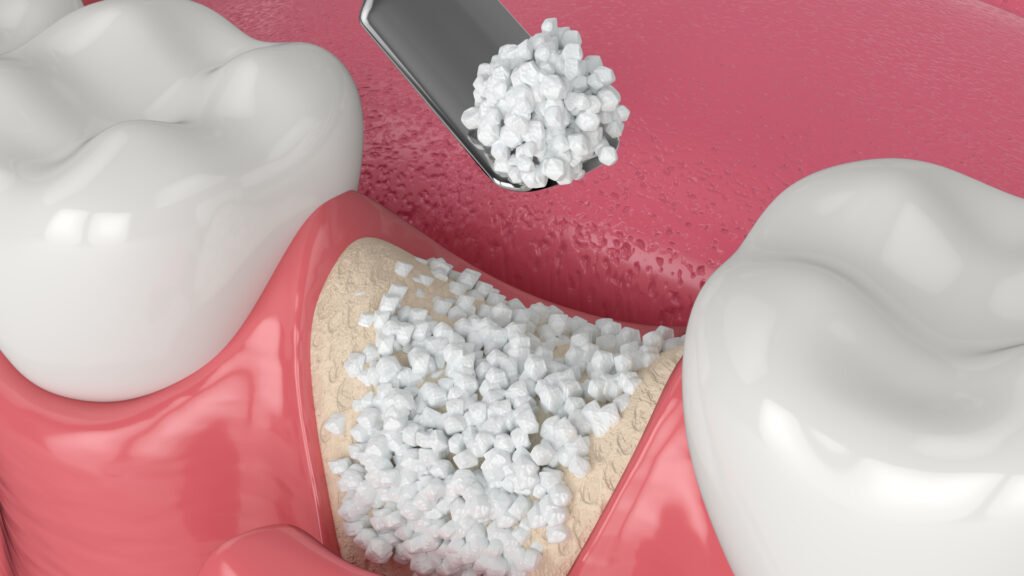
Bone grafting is a surgical procedure that involves adding bone material to your jaw where it’s needed. The goal is to rebuild and strengthen the jawbone so it can adequately support a dental implant.
Why might someone need a bone graft? Several reasons:
- Tooth Loss: When a tooth is lost or extracted, the bone that once supported it can resorb (shrink) over time because it’s no longer being stimulated.
- Gum Disease: Advanced periodontal disease can destroy the bone supporting teeth.
- Trauma or Injury: Accidents can lead to bone loss in the jaw.
- Congenital Defects: Some people naturally have insufficient bone in certain areas.
- Long-Term Denture Use: Dentures can accelerate bone loss over many years.
If your jawbone isn’t thick or dense enough, an implant might not have sufficient stability, leading to failure. Bone grafting creates the necessary volume and strength for successful osseointegration.
Types of Bone Grafts 🦴
I use different types of bone graft materials, each with its own advantages:
- Autogenous Graft (Autograft): This is considered the “gold standard” because it uses bone harvested from your own body (e.g., from your chin, hip, or tibia). It has the highest success rate as it contains living bone cells and growth factors.
- Pros: Best healing, no risk of rejection.
- Cons: Requires a second surgical site, which means more discomfort and recovery time.
- Allograft: This uses human bone material from a deceased donor, which has been processed and sterilized to ensure safety.
- Pros: No second surgical site, readily available.
- Cons: No living cells, relies on your body to remodel it.
- Xenograft: This material comes from an animal source, typically cow bone (bovine). It’s also highly processed to be safe for human use.
- Pros: Readily available, provides a scaffold for your own bone to grow into.
- Cons: No living cells, relies on your body to remodel.
- Alloplast: This is a synthetic bone graft material, often made from biocompatible ceramics like tricalcium phosphate or hydroxyapatite.
- Pros: No donor site needed, no risk of disease transmission.
- Cons: May not integrate as effectively as natural bone, primarily acts as a scaffold.
Sometimes, I might also use a membrane (a thin barrier) over the graft site to protect it and guide bone regeneration, along with growth factors to accelerate healing.
The Bone Grafting Procedure & Healing Time ⏳
The bone grafting procedure itself is typically performed under local anesthesia, sometimes with sedation. I’ll make an incision in your gum, place the graft material, and then close the incision.
The healing time for a bone graft is crucial and can vary significantly:
- Minor grafts (e.g., socket preservation): 3-4 months.
- Major grafts (e.g., sinus lift, block graft): 6-9 months, or even longer.
During this period, the graft material slowly integrates with your existing bone, creating new, strong bone tissue. Only after sufficient healing can the dental implant placement proceed. This extended timeline is an important factor to consider when planning your treatment.
The Core Question: What’s the Cost of 2 Dental Implants with Bone Grafting in 2025?
Now for the main event: the cost. I want to be upfront – providing an exact figure without a personal examination is impossible. The cost of two dental implants with bone grafting in 2025 is highly variable due to many factors I’ll detail shortly. However, I can give you a realistic range based on my experience and current market rates.
You can expect the total cost for two dental implants, including the necessary bone grafting, diagnostic procedures, and final restorations (crowns), to fall generally between $8,000 and $20,000 or more.
This is a wide range, I know. That’s because we’re talking about a complex medical and dental procedure that is highly customized to each individual’s needs. Think of it less as buying a product off a shelf and more like commissioning a custom-built solution for your oral health.
“Think of dental implants with bone grafting as a lifelong investment in your health and confidence. The upfront cost reflects the advanced technology, specialized skill, and durable materials used to restore your smile for decades.”
Let’s break down what contributes to this significant investment.
Deconstructing the Costs: A Detailed Breakdown of What You’re Paying For
To truly understand the total cost, we need to look at each component involved in the journey of getting two dental implants with bone grafting. Each step carries its own price tag, and understanding them helps demystify the final bill.
Component 1: The Dental Implants Themselves (x2) 🦷
This is the core of the procedure. For each implant, you’re paying for:
- The Implant Fixture: The titanium or zirconia screw placed into the bone.
- The Abutment: The connector piece.
- The Crown: The visible tooth.
The cost per single implant (fixture, abutment, and crown) can range from $3,000 to $6,000+. For two implants, you’re looking at $6,000 to $12,000+ just for the implant components and their placement.
Factors influencing this cost include:
- Brand and Material: Premium implant brands or specialized materials (like zirconia) can be more expensive.
- Type of Crown: Porcelain-fused-to-metal (PFM) is often less expensive than all-ceramic or Zirconia crowns.
- Lab Fees: Custom-made crowns involve skilled dental lab technicians.
Component 2: The Bone Grafting Procedure 🦴
This is the additional cost factor that makes your situation unique. The cost of bone grafting varies significantly based on the type, amount, and complexity of the graft needed.
- Minor Graft (e.g., socket preservation): If you just had a tooth extracted and need to preserve the bone for future implant placement, this might cost $300 – $800 per site.
- Moderate Graft (e.g., localized ridge augmentation): For areas needing more significant bone buildup, this could range from $800 – $2,000 per site.
- Major Graft (e.g., sinus lift, block graft): These are more complex procedures. A sinus lift (to add bone to the upper jaw where the sinuses are close) can cost $1,500 – $3,000+ per side. A block graft (using a piece of your own bone) can be even more.
Since you need two implants, you might need two separate bone graft sites, or one larger graft that covers the area for both. For two implant sites requiring grafting, you could be looking at an additional $600 to $6,000+ for the grafting alone, not including the implant cost. This also includes the cost of the graft material itself, membranes, and any growth factors.
Component 3: Diagnostic & Preparatory Procedures 📊
Before any surgery, I need to thoroughly assess your oral health. These are essential steps:
- Initial Consultation & Exam: This is where I review your medical history, discuss your goals, and perform an initial oral examination. (Typically $50 – $200)
- X-rays & CT Scans (3D Imaging): Crucial for planning. A 3D cone-beam computed tomography (CBCT) scan provides detailed images of your bone structure, nerve pathways, and sinus cavities, which is vital for safe and precise implant placement and bone graft planning. (Typically $200 – $600)
- Tooth Extractions: If you still have the teeth that need replacing, their extraction will be an additional cost. (Typically $150 – $400 per tooth, more for complex extractions)
- Periodontal Treatment: If you have gum disease, it needs to be treated before implant surgery. This cost can vary widely.
Component 4: Surgical Placement 🔪
This covers the actual surgical procedures:
- Anesthesia: Local anesthesia is standard and usually included. If you opt for sedation (oral, IV, or general anesthesia) for comfort, this will add to the cost. (Typically $300 – $1,000+ depending on type and duration)
- Surgeon’s Fees: The fee for the dental implant specialist (oral surgeon or periodontist) who performs the bone graft and implant placement. This accounts for their expertise, time, and the use of their surgical facility. This is often bundled into the overall implant cost but can be itemized.
Component 5: Abutments and Crowns (Prosthetics) ✨
While I mentioned these as part of the implant component, it’s worth noting their specific costs.
- Abutments (x2): The connector piece. Custom abutments, designed specifically for your mouth, offer better aesthetics and gum health but are more expensive than stock abutments. (Typically $300 – $800 per abutment)
- Dental Crowns (x2): The visible teeth. The material and complexity of the crown significantly impact the price. (Typically $800 – $2,000 per crown)
- Lab Fees: The cost associated with the dental laboratory that fabricates your custom abutments and crowns. These are often included in the crown/abutment price but are a significant underlying factor.
Component 6: Follow-up Appointments & Maintenance 🩺
- Post-operative Checks: Necessary visits to monitor healing after bone grafting and implant placement. (Often included in the overall fee)
- Regular Cleanings & Exams: Maintaining your implants with professional cleanings and check-ups is essential for their longevity, just like natural teeth. (Ongoing cost, typically $100 – $300 per visit)
Average Cost Ranges for 2 Dental Implants with Bone Grafting (2025 Estimates)
To help you visualize, here’s a simplified breakdown of estimated costs in 2025. Please remember these are broad averages and your specific quote will vary.
| Component | Estimated Cost Per Item (2025) | Cost for 2 Units / 2 Sites |
|---|---|---|
| Initial Consultation & X-rays/CT | $250 – $800 | $250 – $800 (one time) |
| Tooth Extraction (if needed) | $150 – $400 per tooth | $300 – $800 |
| Bone Grafting (per site) | ||
| Minor Graft (e.g., socket pres.) | $300 – $800 | $600 – $1,600 |
| Moderate Graft (e.g., ridge aug.) | $800 – $2,000 | $1,600 – $4,000 |
| Major Graft (e.g., sinus lift) | $1,500 – $3,000+ | $3,000 – $6,000+ |
| Implant Fixture & Placement (x1) | $1,500 – $3,000 | $3,000 – $6,000 |
| Abutment (x1) | $300 – $800 | $600 – $1,600 |
| Dental Crown (x1) | $800 – $2,000 | $1,600 – $4,000 |
| Sedation (if chosen) | $300 – $1,000+ | $300 – $1,000+ (one time) |
| Total Estimated Range (for 2 Implants with Bone Grafting) | $8,000 – $20,000+ |
Important Note: The “Cost for 2 Units / 2 Sites” column assumes that two separate bone graft procedures are needed for two distinct implant sites. If a larger, single graft can prepare both sites, the grafting cost might be slightly less than doubling the “per site” estimate. This table is a simplified guide; your actual treatment plan will be unique.
Factors That Significantly Influence the Final Price Tag
As you can see, the price can swing quite a bit. Here are the main factors I consider when estimating the cost for my patients:
Geographic Location 🌍
Dental costs vary significantly by region. Major metropolitan areas and coastal cities in the U.S. generally have higher dental fees compared to rural areas or the Midwest. This is due to differences in overhead costs, cost of living, and local market demand.
Dentist’s Experience & Specialization 👨⚕️
An highly experienced oral surgeon, periodontist, or prosthodontist who specializes in dental implants and complex bone grafting procedures will typically charge more than a general dentist. This higher fee reflects their advanced training, expertise, and success rates, which are invaluable for such intricate procedures. You’re paying for their skill and peace of mind.
Type of Materials Used ✨
- Implant Material: While titanium is standard, some patients opt for zirconia implants, which can be more expensive.
- Bone Graft Material: Autogenous grafts (using your own bone) may involve higher surgical fees due to the additional donor site procedure. Synthetic or donor grafts might have different material costs.
- Crown Material: Zirconia and E.max crowns are premium options that offer superior aesthetics and durability but come at a higher price than porcelain-fused-to-metal (PFM) crowns.
Complexity of the Case 🧩
This is a huge factor.
- Amount of Bone Loss: Extensive bone loss requiring large or multiple bone grafts (like a sinus lift or block graft) will significantly increase the cost compared to a small, localized graft.
- Number of Procedures: If multiple extractions are needed, or if existing infections need to be treated, these add to the overall complexity and cost.
- Patient’s Overall Health: Patients with underlying health conditions might require more complex care or longer healing times, potentially impacting the cost.
Additional Procedures Required ➕
Beyond the core implant and bone graft, you might need:
- Gum Grafts: To improve gum aesthetics or health around the implant.
- Temporary Restorations: If you need a temporary tooth while your implants heal.
- Guided Surgery: Using 3D-printed surgical guides for extremely precise implant placement, which adds a small cost but can improve outcomes.
Dental Insurance Coverage 🛡️
This is often a tricky area. Most dental insurance plans do not fully cover dental implants or bone grafting, as they are often classified as “major procedures” or “cosmetic.” However, some plans may cover:
- Diagnostic costs: X-rays, CT scans.
- Extractions: If needed.
- Bone Grafting: Sometimes, if it’s deemed medically necessary to prevent further jaw deterioration.
- Portion of the Crown: The prosthetic part might have some coverage, similar to a regular crown.
It’s absolutely essential to contact your insurance provider directly and understand what your specific plan covers in 2025. I can also help you with this by submitting pre-treatment estimates.
Technology Used 💡
Modern dental offices invest in advanced technology, such as:
- CBCT Scanners: For precise 3D imaging.
- Intraoral Scanners: For digital impressions, eliminating messy traditional molds.
- CAD/CAM Technology: For in-house milling of crowns, sometimes speeding up the process.
- Platelet-Rich Fibrin (PRF) or Plasma (PRP): Using your own blood components to accelerate healing, which is an added service.
These technologies enhance precision, safety, and patient comfort, but they also contribute to the overall cost of care.
Is the Investment Worth It? The Long-Term Value of Dental Implants
I know that the price tag for two dental implants with bone grafting can seem daunting. It’s a significant financial commitment. However, I consistently tell my patients that it’s an investment, not just an expense. Let’s look at the long-term value.
Unmatched Benefits for Your Health and Life 💖
- Restored Chewing Function: Eat what you love again! No more avoiding certain foods.
- Improved Speech: Missing teeth or ill-fitting dentures can affect how you speak. Implants provide stability.
- Enhanced Aesthetics & Confidence: A complete, natural-looking smile can dramatically boost your self-esteem and quality of life. You’ll want to smile, laugh, and socialize more.
- Preservation of Jawbone: This is critical. Implants stimulate the jawbone, preventing the bone loss that occurs with missing teeth. This helps maintain your facial structure and prevents a “sunken” appearance.
- Durability and Longevity: As mentioned, implants can last a lifetime with proper care, making them a one-time investment for many.
- Convenience: No adhesives, no removal for cleaning, just treat them like your natural teeth.
Comparing to Alternatives: The Hidden Costs
While alternatives like dentures or dental bridges might seem cheaper upfront, consider their long-term costs and drawbacks:
- Dental Bridges:
- Upfront Cost: $2,000 – $5,000 per bridge (for 3 units). So for 2 missing teeth, you might need two 3-unit bridges costing $4,000 – $10,000.
- Drawbacks: Requires grinding down healthy adjacent teeth, which can weaken them. Average lifespan is 10-15 years, meaning replacement costs down the line. Does not prevent bone loss.
- Removable Partial Dentures:
- Upfront Cost: $800 – $2,500.
- Drawbacks: Can be uncomfortable, may affect speech, can shift while eating, don’t prevent bone loss, often need relining or replacement every 5-7 years.
When you factor in the replacement costs, the potential for further dental issues (like bone loss or damage to adjacent teeth), and the impact on your quality of life, dental implants often prove to be the most cost-effective solution in the long run.
“Investing in dental implants is investing in your overall well-being. It’s about more than just teeth; it’s about restoring your ability to eat, speak, and smile with absolute confidence for years to come.”
Navigating Payment & Financing Options for Your Dental Implants
Understanding the cost is one thing; figuring out how to pay for it is another. I want to assure you that there are often several options available to make dental implants more accessible.
1. Dental Insurance 🛡️
As I mentioned, full coverage for implants is rare. However, always check your specific plan for 2025. Some plans might cover:
- Diagnostic Services: Initial consultation, X-rays, CT scans.
- Extractions: If needed before implant placement.
- Bone Grafting: Sometimes, if it’s considered a necessary medical procedure to maintain oral health rather than purely for implant support.
- Portion of the Crown: The final prosthetic might be covered at a similar rate to a traditional crown.
I recommend calling your insurance provider directly and asking for a detailed breakdown of what they cover for “dental implants,” “bone grafting,” and “major restorative procedures.” My office can also help you submit pre-treatment estimates.
2. Payment Plans & In-House Financing 🤝
Many dental offices, including mine, understand the financial commitment involved and offer flexible payment plans. This allows you to spread the cost over several months or even years, often interest-free or with low-interest rates. Don’t hesitate to ask about these options during your consultation.
3. Third-Party Dental Credit Cards 💳
Companies like CareCredit or LendingClub offer specialized healthcare credit cards with various financing options, including deferred interest plans if paid in full within a certain period (e.g., 6, 12, 18, or 24 months). These can be a good option if you need to pay for treatment over a longer period.
4. Health Savings Accounts (HSAs) & Flexible Spending Accounts (FSAs) 💰
If you have an HSA or FSA through your employer, you can use these tax-advantaged accounts to pay for qualified medical and dental expenses, including dental implants and bone grafting. This can effectively reduce your out-of-pocket costs by using pre-tax dollars. Remember to plan your contributions for 2025 accordingly!
5. Personal Loans 🏦
Some patients opt for a personal loan from a bank or credit union. While these typically have interest, they offer fixed monthly payments and a clear repayment schedule.
6. Dental Schools & Clinics 🎓
Dental schools often offer treatments at a reduced cost because they are teaching facilities. The procedures are performed by students under the close supervision of experienced faculty. While this can be a more affordable option, it might involve longer appointment times and a less personalized experience.
How to Get an Accurate Quote and Choose the Right Professional
Given the variability in cost, getting a precise estimate is crucial. Here’s my advice:
1. Schedule a Comprehensive Consultation 📞
This is the most important step. During your initial consultation, I will:
- Review Your Medical and Dental History: To understand your overall health.
- Perform a Thorough Oral Examination: To assess your current oral condition.
- Take X-rays and a 3D CT Scan: These images are essential for evaluating your bone density, identifying nerve pathways, and planning the exact placement of implants and the necessity of bone grafting.
- Discuss Your Goals and Concerns: I want to understand what you hope to achieve.
- Develop a Personalized Treatment Plan: This plan will detail every step, including the specific type of bone graft, implant system, and prosthetic (crown) that is best for you.
2. Ask Detailed Questions ❓
Don’t be shy! I encourage my patients to ask everything they need to know. Here are some questions you should ask:
- “What is the total estimated cost for my entire treatment plan, including all components?”
- “Can you provide a detailed, itemized breakdown of all costs?”
- “Are there any potential hidden costs or services not included in this estimate?”
- “What type of bone graft material will be used, and why?”
- “What brand of dental implant will you use?”
- “What are the payment options and financing plans available?”
- “How many years of experience do you have with dental implant and bone grafting procedures?”
- “What are the expected timelines for each stage of treatment?”
3. Get a Written Treatment Plan and Cost Estimate 📄
Always ask for a written document that outlines your proposed treatment plan, including all procedures, materials, and their associated costs. This ensures transparency and helps you compare options if you seek a second opinion.
4. Check Credentials and Reviews ⭐
Before committing, research the dentist’s qualifications, experience, and patient reviews. Look for a specialist (oral surgeon, periodontist, or prosthodontist) with extensive experience in dental implantology and bone grafting. Don’t base your decision solely on price; expertise and a proven track record are paramount for a successful outcome.
5. Don’t Just Focus on Price 📉
While cost is a significant factor, it shouldn’t be the only factor. A lower price might indicate less experienced practitioners, lower-quality materials, or a less comprehensive treatment plan. Remember, this is a complex surgical procedure that impacts your health and quality of life for decades. Prioritize quality, safety, and long-term success.
Conclusion
Embarking on the journey to restore your smile with two dental implants and bone grafting in 2025 is a significant decision, both personally and financially. I hope this comprehensive guide has shed light on the various cost factors involved, helping you understand why the price can range from $8,000 to $20,000 or more. From the initial diagnostics and essential bone grafting to the final placement of your custom crowns, each step contributes to the overall investment.
While the upfront cost may seem substantial, I firmly believe that the long-term benefits – improved oral health, restored chewing function, enhanced aesthetics, and a renewed sense of confidence – make dental implants a truly worthwhile investment. They offer a durable, natural-feeling solution that can last a lifetime, often proving more cost-effective than repeatedly replacing cheaper alternatives.
My strongest recommendation is to schedule a personalized consultation with a qualified dental implant specialist. This is the only way to get an accurate, detailed treatment plan and a precise cost estimate tailored specifically to your unique needs. Don’t let the numbers deter you from exploring this life-changing treatment. With proper planning and understanding, a healthy, confident smile can be well within your reach.