
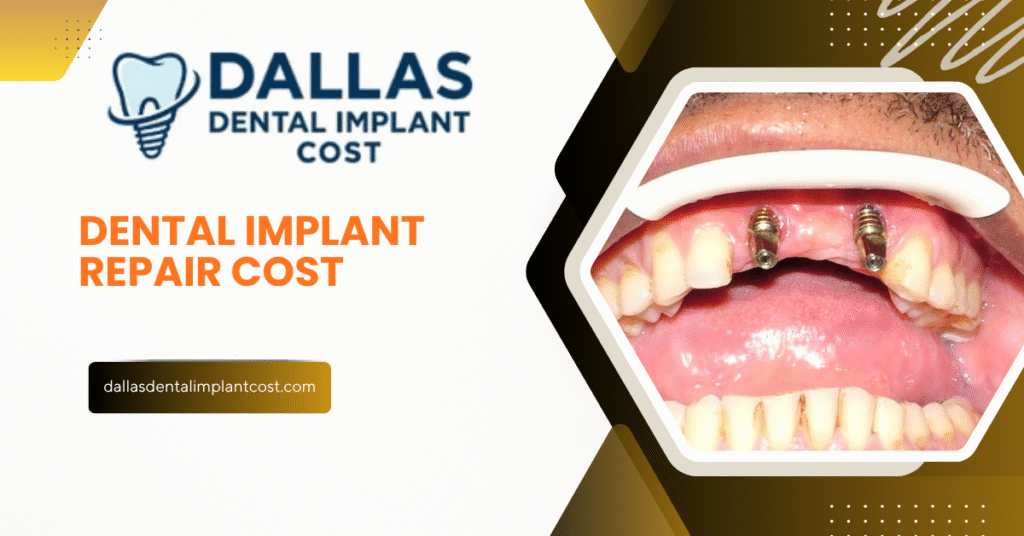
Getting dental implants can be a life-changing decision, offering a durable and aesthetically pleasing solution for missing teeth. I often see patients whose confidence has soared after getting their implants. However, like any sophisticated medical device, dental implants, while incredibly resilient, aren’t entirely immune to issues. Sometimes, they might need a little TLC – a repair. If you’ve found yourself wondering, “What’s the dental implant repair cost going to be?” you’re not alone. It’s a common concern, and understanding the potential expenses is a crucial part of maintaining your oral health and investment.
As a dental professional, I know that unexpected costs can be daunting. That’s why I’ve put together this comprehensive guide. My goal is to shed light on the various factors that influence dental implant repair costs in 2025, helping you feel more prepared and informed should an issue arise. We’ll explore common repair scenarios, delve into average costs, and discuss how you can manage these expenses.
Key Takeaways
- Cost Varies Widely: Dental implant repair costs are highly variable, ranging from a few hundred dollars for minor adjustments to several thousand for more complex issues, depending on the type and severity of the problem.
- Common Repairs & Costs: Issues like a loose crown or abutment are generally less expensive to fix than peri-implantitis or a rare implant fixture failure, which can involve surgical procedures.
- Influencing Factors: Key elements impacting cost include the specific repair needed, geographic location, the dentist’s expertise, and whether diagnostic procedures like X-rays or CT scans are required.
- Insurance & Financing: While dental insurance may offer some coverage for repairs, it’s essential to check your policy. Various financing options, including payment plans and medical credit cards, are available to help manage expenses.
- Prevention is Key: Maintaining excellent oral hygiene and attending regular dental check-ups are the best ways to prevent costly repairs and ensure the long-term success of your dental implants.
Read Also:- Cost of Upper Dental Implants in 2025.
Understanding Dental Implants and Why They Might Need Repair
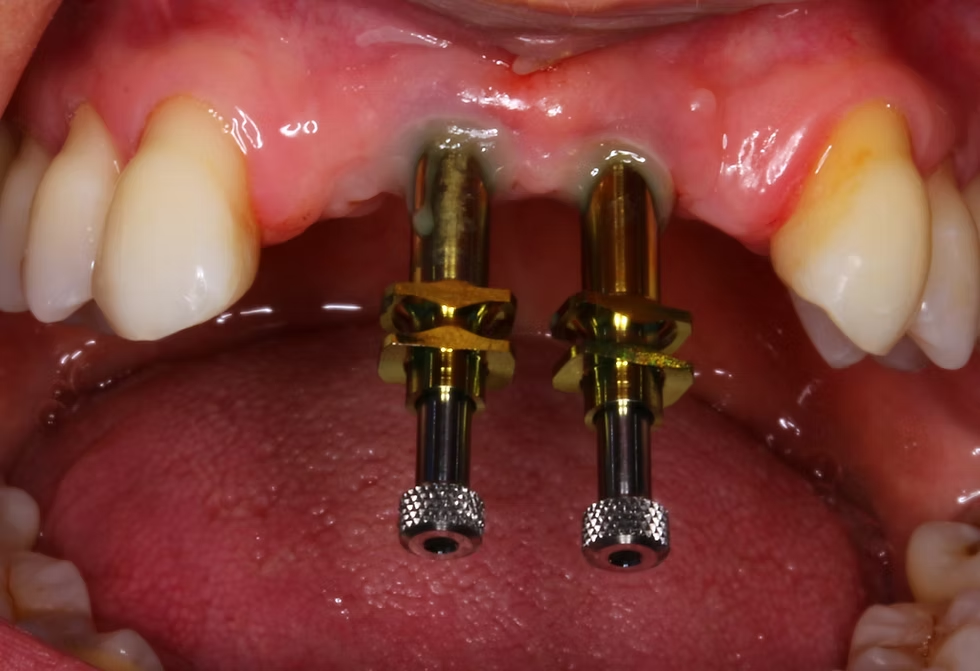
Before we dive into the costs, let’s briefly recap what dental implants are. Essentially, a dental implant consists of three main parts:
- The Implant Fixture: A small, screw-shaped post, usually made of titanium, that is surgically placed into your jawbone. This acts as the artificial tooth root.
- The Abutment: A connector piece that attaches to the implant fixture and extends above the gum line.
- The Prosthesis: The artificial tooth (crown, bridge, or denture) that is custom-made to match your natural teeth and is secured to the abutment.
While dental implants boast an impressive success rate, typically over 95%, they are not entirely maintenance-free or indestructible. Just like natural teeth, or even your car, issues can sometimes arise that necessitate repair. From my experience, the most common reasons implants might need attention include:
- Loose or Damaged Crown/Prosthesis: The visible part of your implant can chip, crack, or become loose due to chewing forces, accidents, or wear and tear over time.
- Abutment Issues: The abutment can loosen or, less commonly, fracture. This might be due to improper fitting, excessive force, or material fatigue.
- Peri-Implantitis: This is an inflammatory condition affecting the tissues surrounding a dental implant, similar to gum disease around a natural tooth. It can lead to bone loss around the implant if not treated. 🦠
- Screw Loosening or Fracture: The small screw connecting the abutment to the implant fixture can sometimes loosen or break.
- Implant Fixture Failure: Though rare, the implant fixture itself can fail to integrate with the bone (osseointegration) or, over many years, experience issues like fatigue fracture. This is the most serious and typically the most expensive repair.
- Damage from Trauma: Accidents or injuries can directly impact the implant or surrounding structures.
- Poor Oral Hygiene: Neglecting proper brushing and flossing can lead to plaque buildup and inflammation, increasing the risk of peri-implantitis.
It’s important to remember that early detection is key. If you notice any discomfort, looseness, or changes around your implant, contact your dentist immediately. Addressing problems early can often prevent more extensive and costly repairs down the line.
“A small problem ignored today can become a big, expensive problem tomorrow. Don’t hesitate to get your implant checked if something feels off!”
The Nuances of Dental Implant Repair Cost in 2025
When patients ask me about the dental implant repair cost, I always explain that there isn’t a single, fixed price. It’s truly a spectrum, influenced by a multitude of factors. Think of it like repairing a car – a flat tire costs significantly less than an engine overhaul. The same principle applies here.
In 2025, several key elements will shape the final bill for your dental implant repair:
1. Type and Severity of the Repair Needed
This is arguably the biggest determinant. Is it a simple re-cementing of a crown, or does it involve complex surgical intervention for peri-implantitis? The more intricate the procedure, the higher the cost.
2. Geographic Location
Dental costs can vary significantly depending on where you live. Major metropolitan areas or regions with a higher cost of living generally have higher dental fees compared to rural areas. For example, a repair in New York City might be pricier than in a smaller town in the Midwest. 🗺️
3. Dentist’s Expertise and Specialization
A highly experienced periodontist or oral surgeon specializing in implantology might charge more than a general dentist. While this might seem like an added expense, their specialized knowledge and skill can often lead to better outcomes and fewer complications, potentially saving you money in the long run.
4. Materials Used
The quality and type of materials used for the repair (e.g., a new crown, abutment, or bone graft material) will factor into the cost. Premium materials often come with a higher price tag but can offer superior longevity and aesthetics.
5. Diagnostic Procedures
Before any repair, your dentist will need to accurately diagnose the problem. This often involves X-rays, sometimes even 3D cone-beam CT scans, which add to the overall cost.
6. Anesthesia and Sedation
Depending on the complexity and your comfort level, local anesthesia is standard. However, if you opt for or require more advanced sedation (like oral sedation or IV sedation), this will be an additional charge.
7. Follow-up Care
Some repairs might require follow-up appointments to monitor healing or make adjustments. These might be included in the initial fee or billed separately.
Common Dental Implant Repair Scenarios and Their Estimated Costs (2025)
Let’s break down some of the most common issues I encounter and provide estimated cost ranges for 2025. Please remember these are estimates and can vary based on the factors mentioned above. Always get a detailed quote from your dentist.
| Repair Scenario | Description | Estimated Cost Range (USD, 2025) |
|---|---|---|
| Loose or Damaged Crown/Prosthesis | The visible artificial tooth chips, cracks, or detaches from the abutment. | $200 – $2,000+ |
| Re-cementing/Re-attaching | If the crown is intact but just loose. | $200 – $500 |
| New Crown Replacement | If the crown is fractured or severely damaged. | $1,000 – $2,000+ |
| Abutment Issues | The connector piece between the implant and crown loosens or fractures. | $300 – $1,500+ |
| Re-tightening | If the abutment is simply loose. | $100 – $300 |
| Abutment Replacement | If the abutment is damaged or fractured. | $500 – $1,500+ |
| Screw Loosening/Fracture | The small screw connecting the abutment to the implant fixture becomes loose or breaks. | $200 – $1,000+ |
| Screw Replacement | Replacing a loose or fractured screw. | $200 – $1,000 |
| Peri-Implantitis Treatment | Inflammation and bone loss around the implant due to infection. | $500 – $4,000+ |
| Non-Surgical Treatment | Deep cleaning, antibiotics, laser therapy. | $500 – $1,500 |
| Surgical Treatment | Gum flap surgery, bone grafting, debridement. | $1,500 – $4,000+ |
| Implant Fixture Failure | The implant itself fails to integrate or needs removal and replacement. (Rare) | $2,000 – $8,000+ |
| Implant Removal | Surgical extraction of the failed implant. | $500 – $1,500 |
| Bone Grafting | To rebuild bone before a new implant. | $500 – $2,500 |
| New Implant Placement | Cost of a new fixture, abutment, and crown. | $2,000 – $6,000+ |
As you can see, the range is significant. A simple re-tightening of a screw might be a relatively minor expense, while addressing peri-implantitis or replacing a failed implant fixture can be a substantial financial commitment. This is why preventative care is so vital!
Diagnostic Procedures: An Unseen Part of the Cost
Before your dentist can even begin to fix an implant problem, they need to know exactly what’s going on beneath the surface. This diagnostic phase is crucial and contributes to the overall dental implant repair cost.
- Initial Consultation: This is where your dentist examines your mouth, discusses your symptoms, and assesses the visible areas around the implant. This typically has a fee, which might be waived if you proceed with treatment, or applied towards it.
- X-rays: Standard periapical or panoramic X-rays provide a 2D view of the implant and surrounding bone. They can reveal bone loss, screw loosening, or integration issues. Costs for X-rays usually range from $25 to $150.
- 3D Cone-Beam CT (CBCT) Scan: For more complex cases, especially when peri-implantitis or fixture failure is suspected, a CBCT scan provides a detailed 3D image. This allows your dentist to precisely assess bone volume, nerve proximity, and the extent of any infection. A CBCT scan can add $200 to $600 to the diagnostic phase.
I always explain to my patients that these diagnostic tools are not optional extras; they are fundamental to accurate diagnosis and effective treatment planning. Without them, we’d be guessing, and that’s not how I operate when it comes to your oral health. 🧐
Geographical Variations in Dental Implant Repair Costs
As I mentioned earlier, where you live plays a significant role in the dental implant repair cost. Dental fees are influenced by:
- Cost of Living: Cities with a higher cost of living generally have higher overheads for dental practices (rent, staff salaries, utilities), which are reflected in their service fees.
- Competition: In areas with many dental practices, competition might drive prices down slightly, while in areas with fewer options, prices could be higher.
- Regulatory Costs: State-specific regulations and licensing fees can also indirectly influence pricing.
It’s common to see a 10-20% difference, or even more, in repair costs between different regions within the same country. This is why it’s always a good idea to research average costs in your specific area and get quotes from local dentists.
The Role of Your Dentist’s Expertise
The person performing your repair also has a direct impact on the cost and, more importantly, the outcome.
- General Dentist: Many general dentists are highly skilled in minor implant repairs, such as re-cementing crowns or re-tightening abutments. Their fees might be slightly lower for these procedures.
- Specialists: For more complex issues like peri-implantitis requiring surgical intervention, or if an implant fixture needs removal and replacement, a specialist such as a periodontist or an oral surgeon is often recommended. These specialists have advanced training and equipment, and their fees typically reflect their higher level of expertise.
While it might be tempting to choose the cheapest option, I always advise prioritizing expertise, especially for complex cases. A poorly executed repair can lead to further complications and even greater costs down the road. Investing in a skilled professional is an investment in the longevity of your implant and your overall oral health. 💪
Navigating Insurance and Financing Options for Dental Implant Repair
The thought of an unexpected dental implant repair cost can be stressful, but there are often ways to make it more manageable. Let’s explore your options in 2025.
Dental Insurance Coverage for Repairs
This is a big one, and it’s where things can get a bit tricky. While many dental insurance plans in the US do not cover the initial placement of dental implants (as they are often considered cosmetic or elective, although this is slowly changing), they are often more amenable to covering repairs.
- Check Your Policy: The absolute first step is to contact your insurance provider directly and review your policy details. Ask specific questions:
- “Does my plan cover dental implant repairs?”
- “What percentage of the repair cost is covered?”
- “Is there a waiting period for these types of procedures?”
- “What is my deductible, and what is my annual maximum?”
- Medical vs. Dental: Sometimes, if the repair is due to an accident or a medical condition (like severe infection), parts of the treatment might be covered under your medical insurance rather than your dental plan. This is less common but worth investigating with your dentist’s office.
- Limitations: Be aware of common limitations, such as coverage for specific materials or frequency of repairs.
Many dental offices will help you navigate your insurance benefits. My team, for example, is always ready to submit pre-authorizations to give patients a clear understanding of their out-of-pocket expenses before treatment begins.
Payment Plans and Financing
If insurance coverage is limited or non-existent, don’t despair! There are several financing avenues available:
- In-House Payment Plans: Many dental practices offer their own payment plans, allowing you to pay for the repair cost in installments over several months. These are often interest-free or have very low interest rates.
- Third-Party Medical Financing: Companies like CareCredit or LendingClub offer specialized healthcare credit cards or loans. These often come with promotional periods of 0% interest if the balance is paid within a certain timeframe, or fixed-rate installment plans.
- Personal Loans: You can also explore obtaining a personal loan from your bank or credit union. Interest rates will vary based on your credit score.
- Health Savings Accounts (HSAs) & Flexible Spending Accounts (FSAs): If you have an HSA or FSA through your employer, you can use these pre-tax dollars to pay for dental implant repairs. This is a fantastic way to save money, as you’re using funds that haven’t been taxed.
“Don’t let financial concerns deter you from getting necessary implant repairs. Explore all your options – your long-term oral health is worth it!”
Preventing Dental Implant Problems: Saving Money in the Long Run
Prevention is always better, and almost always cheaper, than cure! While some issues are unavoidable, many common dental implant problems that lead to costly repairs can be prevented with diligent care. Here’s what I advise my patients:
- Maintain Excellent Oral Hygiene: This is paramount. Brush twice a day with a soft-bristled toothbrush and fluoride toothpaste. Floss daily, making sure to clean around your implants. Special interdental brushes or water flossers can be particularly effective for cleaning around implant abutments and crowns. Think of your implants as natural teeth – they need the same, if not more, care. 🦷
- Regular Dental Check-ups and Professional Cleanings: Visit your dentist at least twice a year for professional cleanings and examinations. Your dental hygienist can remove plaque and tartar buildup that you might miss, and your dentist can spot potential problems early, often before they become painful or expensive.
- Avoid Hard and Sticky Foods: While implants are strong, excessive biting on extremely hard foods (like ice, hard candies, or unpopped popcorn kernels) can damage the crown or even loosen the abutment. Sticky foods can also put undue stress on the restoration.
- Address Bruxism (Teeth Grinding): If you grind or clench your teeth, especially at night, discuss this with your dentist. The excessive forces can put immense pressure on your implants, leading to complications like screw loosening or crown fracture. A custom-fitted nightguard can protect your implants (and natural teeth!) from this destructive habit.
- Stop Smoking: Smoking significantly increases the risk of peri-implantitis and can hinder healing, making it a major risk factor for implant failure. If you smoke, quitting is one of the best things you can do for your overall health and the longevity of your implants. 🚭
- Promptly Report Any Issues: If you feel any looseness, pain, swelling, or notice any changes around your implant, contact your dentist immediately. Early intervention is key to preventing minor issues from escalating into major, costly repairs.
By following these preventative measures, you significantly increase the chances of your dental implants lasting a lifetime, saving you from the stress and expense of future repairs.
What to Ask Your Dentist About Repair Costs
When you’re faced with a potential implant repair, don’t be afraid to ask questions. A good dentist will be transparent and happy to provide all the information you need. Here are some key questions I encourage my patients to ask:
- “What exactly is the problem with my implant, and why did it occur?”
- “What are all the treatment options, and what are the pros and cons of each?”
- “Please provide a detailed, itemized breakdown of all anticipated costs. This includes diagnostic fees, procedure costs, material costs, and any follow-up appointments.”
- “Are there any alternative, less costly treatments, and what are their long-term implications?”
- “How long is this repair expected to last?”
- “Does your office offer any payment plans or financing options?”
- “Will you help me submit a pre-authorization to my dental insurance so I know my out-of-pocket expense?”
- “Is there any warranty on the repair or the materials used?”
- “What steps can I take to prevent this issue from recurring?”
Asking these questions will not only help you understand the dental implant repair cost but also empower you to make an informed decision about your treatment.
Conclusion
Dental implants are a remarkable advancement in modern dentistry, offering a durable and aesthetic solution for missing teeth. While they are designed for longevity, occasional repairs can be necessary. Understanding the potential dental implant repair cost in 2025 is vital for managing your oral health investment.
As we’ve explored, costs can vary significantly based on the type and complexity of the repair, your geographic location, and the expertise of your dental professional. From a simple re-cementing of a crown to more intricate surgical interventions for peri-implantitis or, rarely, implant fixture failure, the price tag can range from a few hundred to several thousand dollars.
My primary advice is always to prioritize prevention through meticulous oral hygiene and regular dental check-ups. Should an issue arise, don’t delay seeking professional help. Early detection and treatment can often prevent minor problems from escalating into more extensive and expensive repairs. Be proactive in discussing all aspects of your treatment, including a detailed cost breakdown and available financing options, with your dental team.
Investing in the repair of your dental implant is an investment in your health, comfort, and confidence. By being informed and prepared, you can ensure your smile remains bright and healthy for years to come.