
Despite the significant advancements in modern dentistry, understanding how government healthcare programs cover sophisticated procedures like dental implants can be complex. For residents of Texas in 2026, the question “Does Medicare, Medicaid, or VA Cover Dental Implants in Texas 2026?” is crucial for informed decision-making regarding tooth replacement options. While dental implants offer a durable and effective solution for missing teeth, navigating the specifics of coverage under these programs often reveals limitations, with exceptions largely dependent on medical necessity, specific plan details, or veteran status. This article aims to clarify these distinctions, providing clear, patient-focused information.
Key Takeaways:
- Medicare: Original Medicare (Parts A & B) generally does not cover routine dental care, including dental implants, as they are often considered elective. Medicare Advantage plans (Part C) may offer some dental benefits, but comprehensive implant coverage is rare and varies by plan.
- Medicaid (Texas Medicaid): Texas Medicaid typically covers medically necessary dental services for children (under 21) through the Early and Periodic Screening, Diagnostic, and Treatment (EPSDT) program. For adults, coverage is very limited, generally restricted to emergency dental care or services deemed medically necessary, which rarely includes dental implants.
- VA Benefits: The U.S. Department of Veterans Affairs (VA) provides comprehensive dental care, including dental implants, but only to specific categories of eligible veterans. Eligibility often depends on service-connected disabilities or other specific criteria, making it the most likely government program to cover dental implants, albeit for a select group.
- Dallas Specifics: While government programs have broad guidelines, Dallas residents may find exceptions or additional resources through local dental schools, payment plans offered by clinics, or non-profit organizations.
- Actionable Steps: Always confirm coverage directly with your specific plan provider (Medicare Advantage, Texas Medicaid, or VA), consult with a dentist in Dallas, and explore alternative financing options for dental implants in Dallas.
Medicare Dental Implant Coverage in Texas 2026: What to Expect
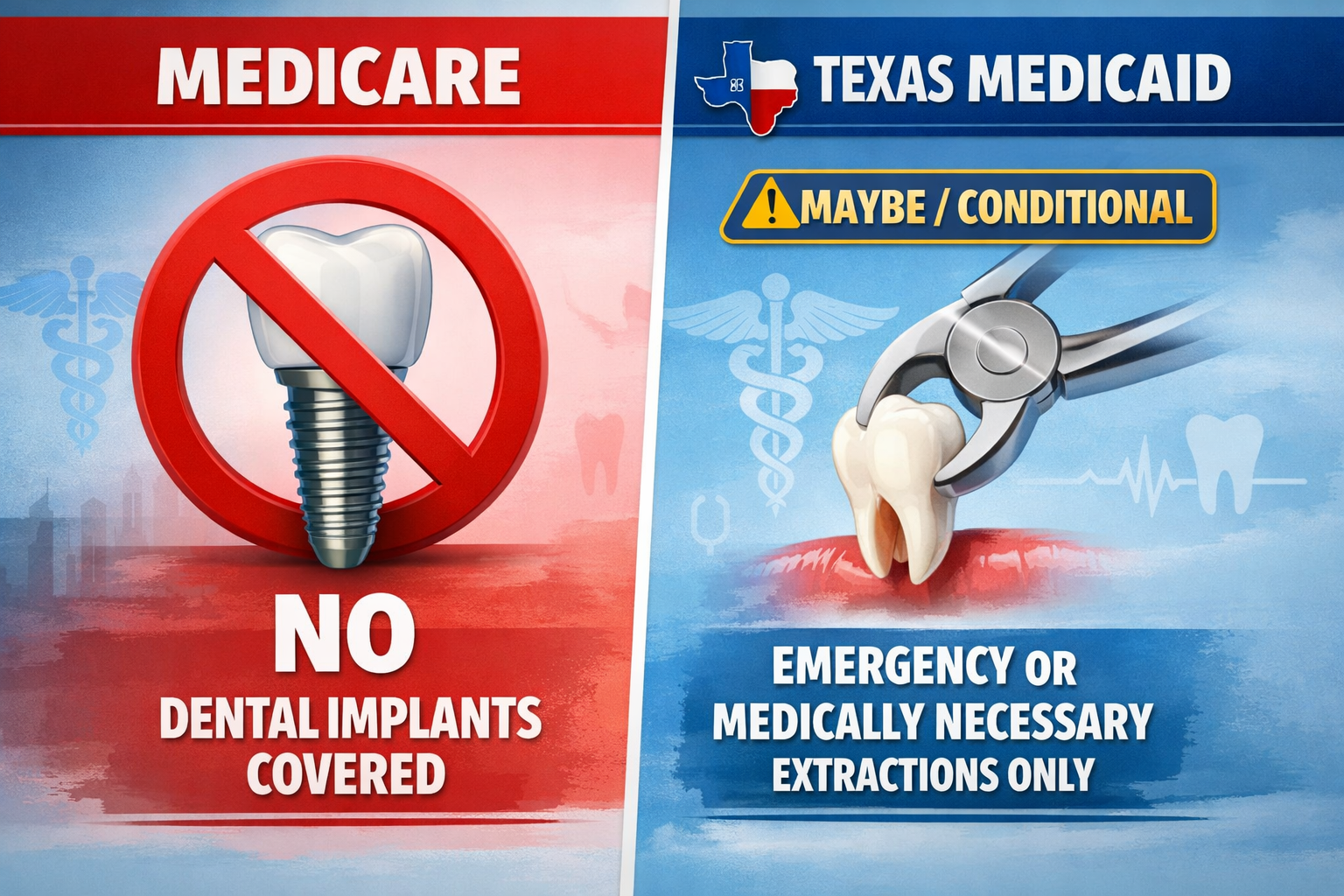
When considering dental implants as a solution for missing teeth, many Texas residents, particularly seniors, often inquire about Medicare coverage. The reality for 2026 is that Original Medicare (Part A and Part B) generally does not provide coverage for routine dental procedures, including the costs associated with dental implants. Medicare’s primary focus is on hospital care (Part A) and outpatient medical services (Part B), not routine dental health.
This means that for the majority of beneficiaries, the expenses for the dental implant procedure, including the implant surgery, abutment, and crown, would not be covered by Original Medicare. The rationale often cited is that dental care is typically not considered “medically necessary” in the same way other medical services are.
Medicare Advantage Plans (Part C) and Dental Implants
The landscape changes slightly when considering Medicare Advantage plans, also known as Part C. These plans are offered by private insurance companies approved by Medicare and often include additional benefits beyond what Original Medicare covers. Many Medicare Advantage plans do include some level of dental coverage.
However, it is crucial to understand that:
- Coverage Varies Widely: The extent of dental coverage, especially for major procedures like dental implants, differs significantly from one Medicare Advantage plan to another. Some plans might offer basic preventative care (cleanings, X-rays), while others might include partial coverage for more extensive services like fillings or extractions.
- Limited Implant Coverage: Comprehensive coverage for dental implants is relatively uncommon even within Medicare Advantage plans. If a plan does offer it, there might be strict limitations, high deductibles, significant co-pays, or annual spending caps that can still leave patients with substantial out-of-pocket costs.
- Medically Necessary Exceptions: In very rare cases, if a dental procedure, including components of an implant, is deemed “medically necessary” for a covered medical condition (e.g., jaw reconstruction after an injury or tumor removal), a portion might be covered. However, this is distinct from replacing missing teeth for functional or aesthetic reasons.
For Dallas residents specifically looking into dental implants, it is essential to:
- Review Your Plan’s Summary of Benefits: Carefully examine the dental benefits section of any Medicare Advantage plan you are considering or are currently enrolled in for 2026.
- Contact Your Plan Provider: Call the customer service number on your insurance card to ask direct questions about dental implant coverage, specific procedures included, and any associated costs or limitations.
- Consult with a Dentist: A local Dallas dentist can provide a treatment plan and help you understand what costs you might incur, which can then be cross-referenced with your insurance details.
Does Texas Medicaid Cover Dental Implants in 2026?
Texas Medicaid provides healthcare coverage for eligible low-income individuals and families. When it comes to dental care, particularly for a significant procedure like dental implants, the coverage structure is quite specific and often limited, especially for adults.
Medicaid Dental Coverage for Children (Under 21) in Texas
For children and adolescents under the age of 21, Texas Medicaid offers comprehensive dental benefits under the Early and Periodic Screening, Diagnostic, and Treatment (EPSDT) program. This program ensures that children receive all necessary healthcare services, including dental care, to correct or ameliorate defects and physical and mental illnesses and conditions.
Under EPSDT, dental care for children in Texas generally includes:
- Routine check-ups and cleanings
- Fluoride treatments and sealants
- Fillings and crowns
- Root canals
- Extractions
- Orthodontics (if medically necessary)
While the EPSDT program is robust for children, it’s important to note that even under this program, dental implants are typically not covered unless there is an extremely rare, severe medical necessity that cannot be addressed by other conventional means. The primary focus remains on maintaining basic oral health and function.
Medicaid Dental Coverage for Adults (21 and Over) in Texas
For adults aged 21 and over in Texas, Medicaid dental coverage is significantly more restricted. In most cases, adult Medicaid in Texas covers only emergency dental services and certain medically necessary procedures.
Generally, this limited adult coverage includes:
- Emergency dental services for pain relief or acute infection (e.g., emergency extractions).
- Certain routine dental services deemed medically necessary, which might include some fillings or examinations, but this is highly variable and depends on specific program rules and medical justification.
Dental implants are almost never covered by Texas Medicaid for adults in 2026. The program considers them a cosmetic or elective procedure, or a procedure that exceeds the basic level of care provided. Even if a dental implant could prevent further health issues, it typically falls outside the scope of adult Medicaid benefits.
If you are an adult on Texas Medicaid and require tooth replacement, you would likely need to explore other financing options for dental implants in Dallas. It is always recommended to:
- Contact Texas Medicaid: Reach out directly to confirm current dental benefits for adults in 2026.
- Discuss with a Dentist: A dentist in Dallas can assess your specific oral health needs and discuss all available tooth replacement options, helping you understand the cost implications if Medicaid does not cover them.
VA Dental Implant Coverage for Veterans in Texas 2026
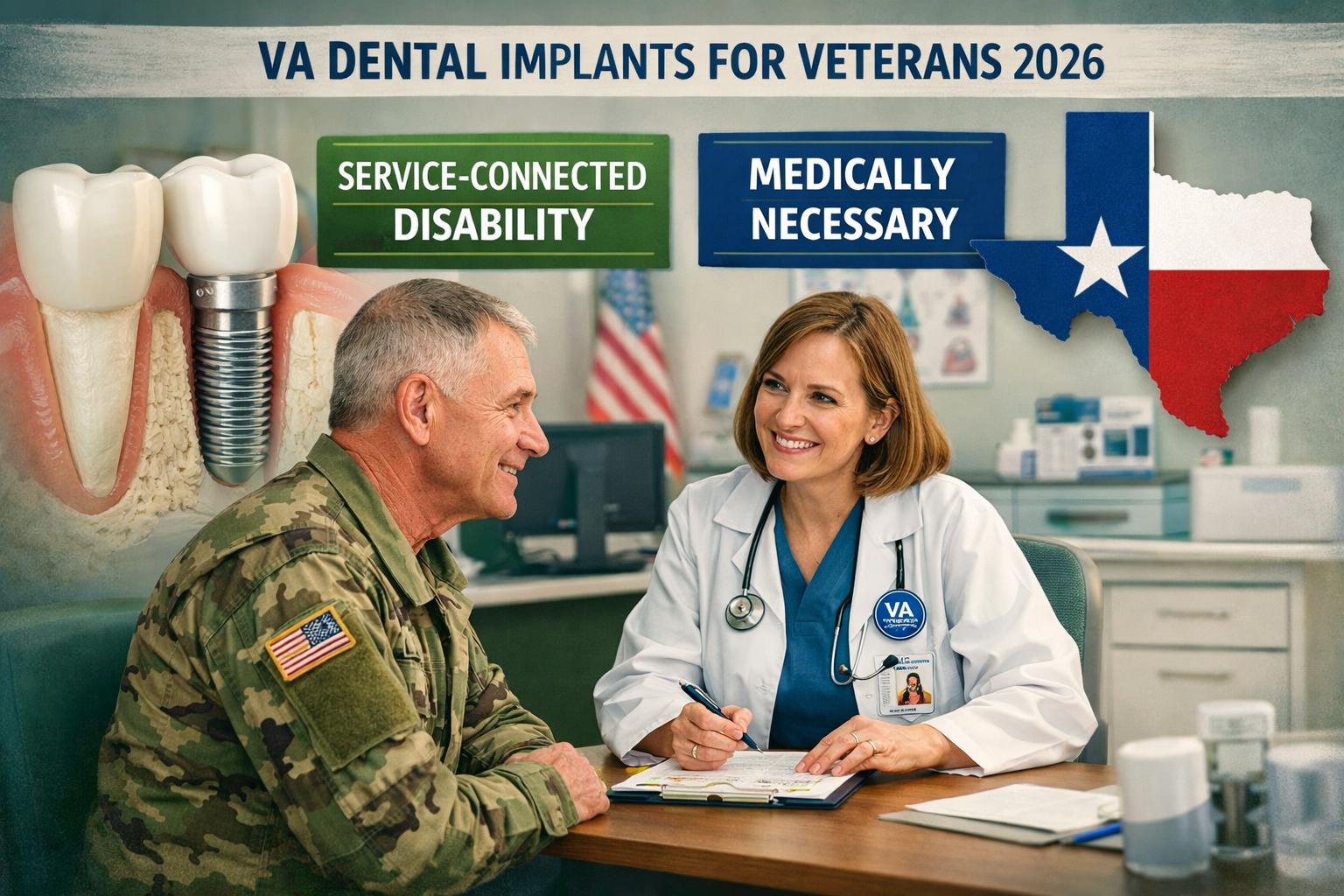
For eligible veterans in Texas, the U.S. Department of Veterans Affairs (VA) provides the most promising avenue for dental implant coverage among government programs. However, VA dental benefits are not universal, and specific eligibility criteria must be met.
General Eligibility for VA Dental Care
The VA offers comprehensive dental care, including dental implants, but typically only to veterans who meet one or more of the following conditions:
- Service-Connected Dental Disability: Veterans with a service-connected disability rating of 100% (or total and permanent unemployability due to a service-connected condition) are usually eligible for any necessary dental care.
- Service-Connected Dental Condition: Veterans whose dental condition is directly related to a service-connected injury or illness are eligible for treatment of that specific condition. This could include dental implants if the missing teeth resulted from a service-connected event.
- Prisoners of War (POWs): Former POWs are eligible for comprehensive dental care.
- Veterans with Other Medical Conditions: Veterans receiving care for a service-connected condition that aggravates an oral health condition, or veterans who are undergoing certain medical treatments (e.g., head and neck cancer, transplant surgery) where dental health is critical, may be eligible.
- Enrolled in VA Health Care: In certain circumstances, veterans enrolled in VA health care may receive limited dental care if they meet specific criteria, such as having a Class II or Class III dental classification upon discharge from active duty, or participating in a vocational rehabilitation program.
How VA Dental Implant Coverage Works
If a veteran meets the eligibility criteria, the VA can cover the full cost of dental implants and related procedures, including the implant surgery process, bone grafts, and the prosthetic crown or bridge. The key is demonstrating the medical necessity or service-connected origin of the missing teeth.
For veterans in Dallas, Texas, seeking dental implants, the process generally involves:
- Verifying Eligibility: Contact your local VA medical center or the VA Dental Services office to confirm your eligibility for dental benefits.
- Dental Examination and Treatment Plan: If eligible, you will undergo a comprehensive dental examination by a VA dentist. If dental implants are deemed medically appropriate for your condition, a treatment plan will be developed.
- Approval and Scheduling: Once the treatment plan is approved, the VA will arrange for the dental implant procedure, either at a VA facility or through an authorized community provider.
It is important for veterans to proactively investigate their VA dental benefits for 2026, as eligibility can be complex and rules may evolve. For more detailed information on eligibility and the process, visit the VA’s official website or contact their benefits helpline.
“The U.S. Department of Veterans Affairs offers the most comprehensive dental implant coverage among government programs, primarily for veterans with service-connected dental disabilities.”
Alternative Options and Resources for Dental Implants in Dallas 2026
Given the often-limited coverage for dental implants under Medicare and Medicaid in Texas, exploring alternative options and resources becomes essential for Dallas residents. Many individuals find creative ways to manage the implant cost in Dallas, ensuring they can still access this long-term solution for missing teeth.
Dental Schools and Teaching Hospitals
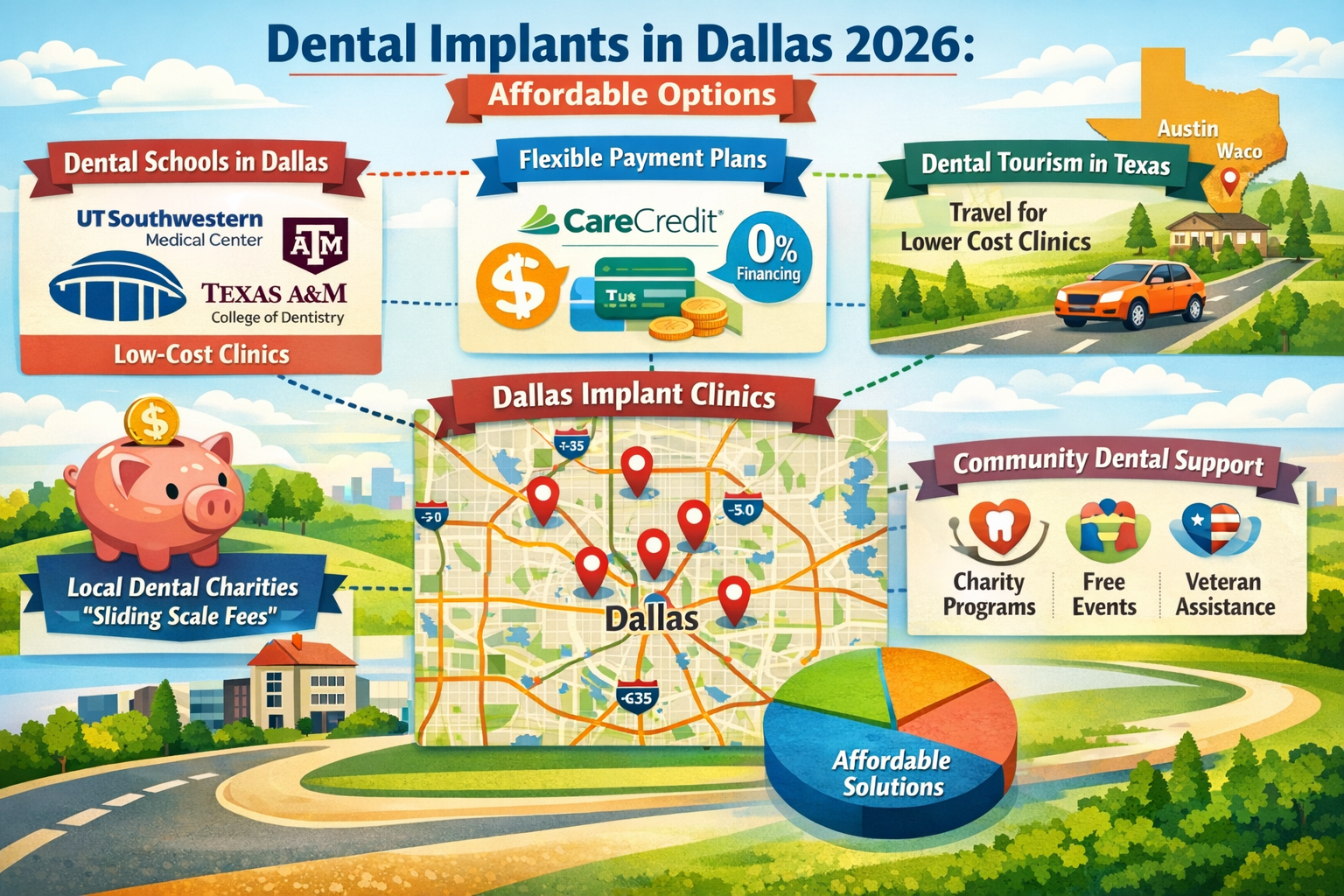
Dental schools and teaching hospitals, such as those associated with the Texas A&M College of Dentistry in Dallas, can offer high-quality dental care at reduced costs. Procedures are performed by supervised dental students or residents, providing excellent care while keeping expenses lower than private practices. These institutions are committed to patient safety and often have state-of-the-art equipment. For more information, consider reading our article on Traveling Within Texas for Cheaper Dental Implants 2026 if you’re open to exploring options beyond Dallas.
Payment Plans and Financing Options
Many dental implant clinics in Dallas understand the financial commitment involved and offer flexible payment plans or work with third-party financing companies. Options often include:
- In-house payment plans: Spreading the cost over several months or years directly with the clinic.
- Third-party financing: Companies like CareCredit or LendingClub specifically offer healthcare financing, sometimes with low-interest or even 0% APR options for a promotional period.
- Dental discount plans: These are not insurance but membership programs where you pay an annual fee for discounted rates on dental services.
Exploring Dental Implant Financing Dallas can provide a detailed comparison of these options.
Private Dental Insurance
While often overlooked, private dental insurance plans can offer better coverage for dental implants than government programs, though it varies significantly by policy. If you have access to a private plan through an employer or purchase one independently, thoroughly review its major restorative coverage limits and waiting periods.
Community Programs and Non-Profits
Some local community organizations or non-profit dental initiatives in the Dallas area may offer assistance or referrals for individuals who cannot afford dental care. While direct funding for dental implants might be rare, they can sometimes help with preliminary treatments or connect patients with low-cost providers.
Comparing Tooth Replacement Options
It is also important to consider that dental implants are one of several tooth replacement options. While they offer superior stability and longevity, other options like dental bridges or dentures might be more affordable if coverage is an issue. A consultation with a dentist in Dallas can help you weigh the pros and cons of each, considering your oral health needs and budget. For a comparison, you might find our guide on Full Mouth Implant Overdentures Dallas TX 2026 insightful.
Understanding the full scope of your situation, from your eligibility for government programs to available local resources, is key to making an informed decision about dental implants in Dallas for 2026.
Conclusion
Navigating the complexities of dental implant coverage under government programs like Medicare, Medicaid, and VA benefits in Texas for 2026 can be challenging. For the majority of Texas residents, Original Medicare and Texas Medicaid offer very limited, if any, coverage for dental implants, primarily due to their classification as elective or non-emergency procedures. While some Medicare Advantage plans may offer supplemental dental benefits, comprehensive implant coverage is rare and varies greatly.
Veterans, however, stand a better chance of receiving coverage for dental implants through VA benefits, provided they meet specific eligibility criteria, often related to service-connected conditions or disabilities.
For those in Dallas seeking dental implants, it’s crucial to acknowledge these limitations and proactively explore all available avenues. This includes thoroughly researching Medicare Advantage plans, understanding the strict criteria for VA benefits, and investigating alternative financing solutions such as dental schools, private dental insurance, payment plans offered by Dallas clinics, and community support programs.
Ultimately, achieving long-term oral health through dental implants involves careful planning and informed decision-making. We encourage you to schedule a consultation with a qualified dentist in Dallas to discuss your specific oral health education needs, explore all missing teeth solutions, and understand the full implant cost in Dallas. This professional consultation is the first critical step toward a healthy, confident smile.
References
- Centers for Medicare & Medicaid Services. (2026). Medicare & You 2026 Handbook. U.S. Department of Health and Human Services.
- Texas Health and Human Services Commission. (2026). Texas Medicaid Healthcare Partnership (TMHP) Dental Services Handbook.
- U.S. Department of Veterans Affairs. (2026). VA Dental Care Eligibility and Benefits.