Navigating the complexities of dental insurance, especially when considering a significant procedure like dental implants, can feel overwhelming. For residents of Dallas, Texas, understanding your options for employer-sponsored dental insurance for implants in 2026 is crucial for informed decision-making. This comprehensive guide will analyze top Dallas employer-sponsored plans, discuss typical reimbursement rates, address waiting periods, and offer strategies to negotiate better benefits before the 2026 open enrollment. We will compare group plans with individual PPO and HMO coverage options, providing a clear review to help you achieve long-term oral health.
Dental implants are widely recognized as a durable and effective solution for missing teeth. They offer a stable foundation for replacement teeth that look, feel, and function like natural teeth, significantly improving quality of life. However, the cost of dental implants in Dallas can be a concern, making comprehensive insurance coverage a top priority for many patients.
Key Takeaways
- Employer Group Plans Often Offer Better Value: These plans typically provide broader coverage, lower monthly premiums, and potentially higher annual maximums for dental implant procedures compared to individual plans.
- Waiting Periods Are Common: Most plans, especially for major restorative procedures like implants, impose waiting periods (often 6-12 months), which must be considered in your treatment timeline.
- PPO Plans Offer Flexibility, HMOs Offer Lower Costs: PPO plans allow you to choose any licensed dentist, while HMOs require you to select a primary dentist within their network, usually resulting in lower out-of-pocket expenses.
- Proactive Review and Negotiation are Key: Review your benefits package thoroughly before 2026 open enrollment. Consider advocating for improved implant coverage, especially if you anticipate needing this treatment.
- Understand Your Plan’s Limitations: Be aware of annual maximums, deductibles, co-insurance percentages, and what specific components of the dental implant procedure are covered.
Understanding Employer Dental Insurance for Implants in Dallas 2026: Group Plans
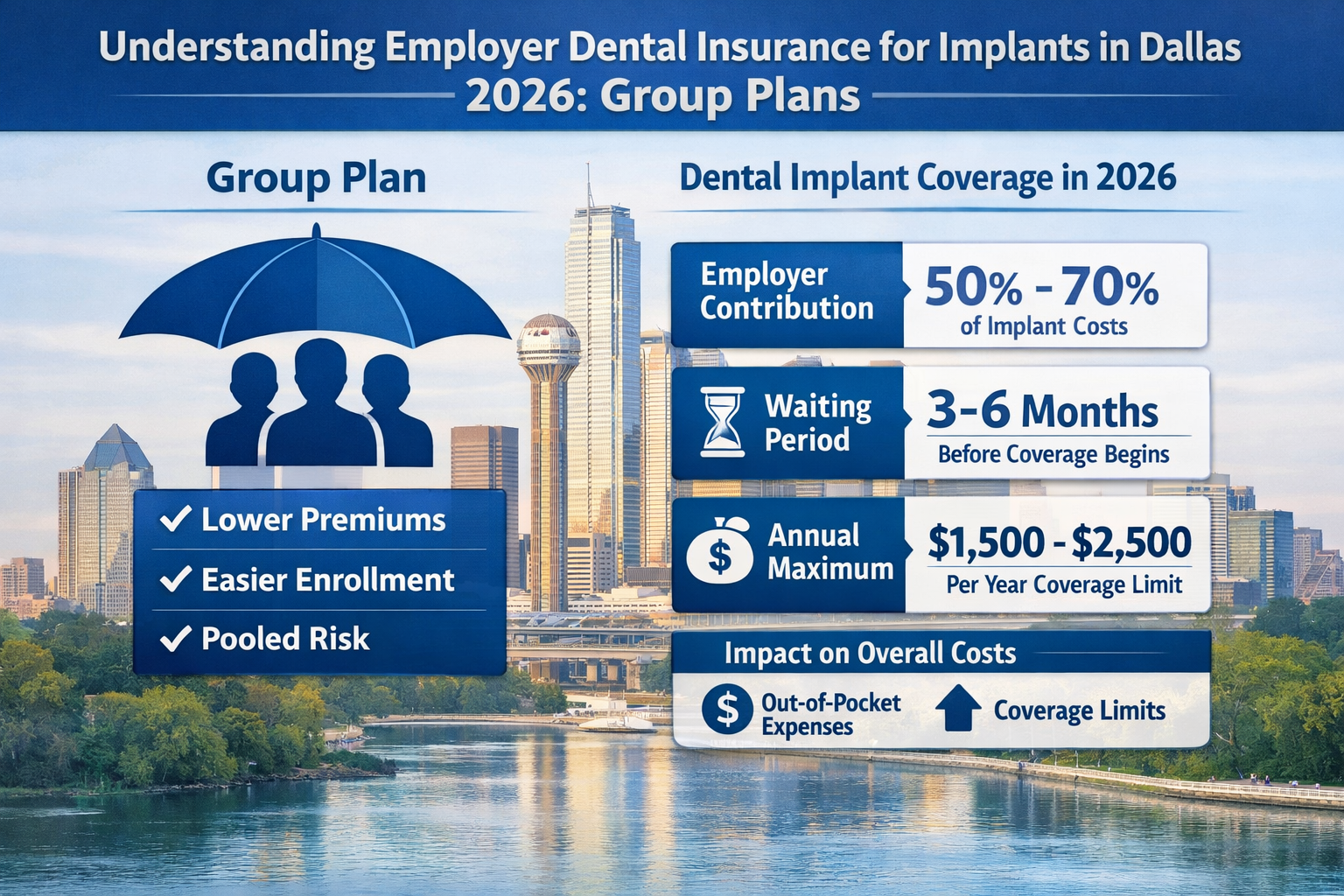
Employer-sponsored dental insurance, often referred to as group plans, is a cornerstone of benefits packages for many working professionals in Dallas. These plans are typically negotiated by an employer with an insurance provider on behalf of a group of employees. For those considering dental implants in Dallas in 2026, understanding the nuances of these group plans is essential.
Benefits and Characteristics of Group Plans
Group dental plans generally offer several advantages over individual plans:
- Lower Premiums: Because risk is spread across a larger pool of individuals, employers can often secure lower monthly premiums for their employees.
- Broader Coverage: Group plans tend to offer more comprehensive coverage, often including a higher percentage of coverage for major procedures like dental implants.
- Easier Enrollment: Enrollment is typically streamlined through the employer, often without extensive medical underwriting.
- Employer Contributions: Many employers contribute a significant portion of the premium, further reducing the out-of-pocket cost for the employee.
When evaluating your employer’s group dental plan for dental implants, several key aspects need careful attention:
- Annual Maximums: This is the maximum amount your insurance company will pay for your dental care within a plan year. For major procedures like dental implant surgery, a higher annual maximum is highly beneficial.
- Deductibles: The amount you must pay out-of-pocket before your insurance begins to cover costs.
- Co-insurance: After your deductible is met, co-insurance is the percentage of the cost you are still responsible for. For dental implants, coverage might typically be 50%, meaning the insurance pays half, and you pay half.
- Waiting Periods: A critical factor for dental implants. Most plans have waiting periods for major restorative procedures, ranging from 6 to 12 months, and sometimes even longer. This means you must be enrolled in the plan for a specified period before it will cover implant-related costs. Planning ahead is crucial if you anticipate needing a dental implant procedure.
Consider a typical scenario in Dallas in 2026: an employer-sponsored PPO plan might cover 80% of preventive care, 70% of basic procedures, and 50% of major procedures, including dental implants, after a 12-month waiting period and once the deductible is met. The annual maximum might range from $1,500 to $3,000, or sometimes higher. Given that the cost of a single tooth implant in Dallas can range from $3,000 to $5,500, it becomes clear why a higher annual maximum is advantageous. For more detailed insights into implant costs, see our guide on Single Tooth Implant Costs in Dallas 2026.
Pull Quote: “Understanding the annual maximum and waiting periods of your employer’s dental plan is paramount when planning for dental implants. These two factors significantly impact your out-of-pocket expenses and treatment timeline.”
Strategies for Pre-2026 Open Enrollment Negotiation
If you anticipate needing dental implants or believe your employer’s current dental plan for implants is insufficient, the period leading up to 2026 open enrollment presents a valuable opportunity.
- Gather Information: Research average dental implant costs in Dallas and compare your current plan’s coverage against industry standards. Understand what specific components of the dental implant procedure (e.g., bone grafting, abutment, crown) are covered.
- Form a Group Request: If other employees share similar concerns, approaching your HR department or benefits administrator as a collective can carry more weight.
- Highlight Benefits of Comprehensive Coverage: Emphasize how good dental health contributes to overall employee well-being, productivity, and reduced absenteeism. Dental implants are a long-term solution that prevents further oral health issues.
- Suggest Plan Alternatives: Research other dental insurance providers or plan structures that offer better implant coverage and present these as options. Your employer might be open to exploring different plans during their annual review.
- Understand Your Company’s Budget Cycle: Benefits managers often begin reviewing plans months before open enrollment. Engaging early can increase your chances of influencing decisions for 2026.
Individual PPO vs. HMO Dental Plans for Implants: A Dallas 2026 Comparison
Beyond employer-sponsored group plans, individuals in Dallas have the option of purchasing dental insurance directly. The two primary types of individual plans are Preferred Provider Organization (PPO) and Health Maintenance Organization (HMO) dental plans. Each has distinct characteristics that impact coverage for dental implants.
PPO Dental Plans
PPO plans offer flexibility and choice, which can be highly appealing, especially when seeking specialized treatment like dental implants.
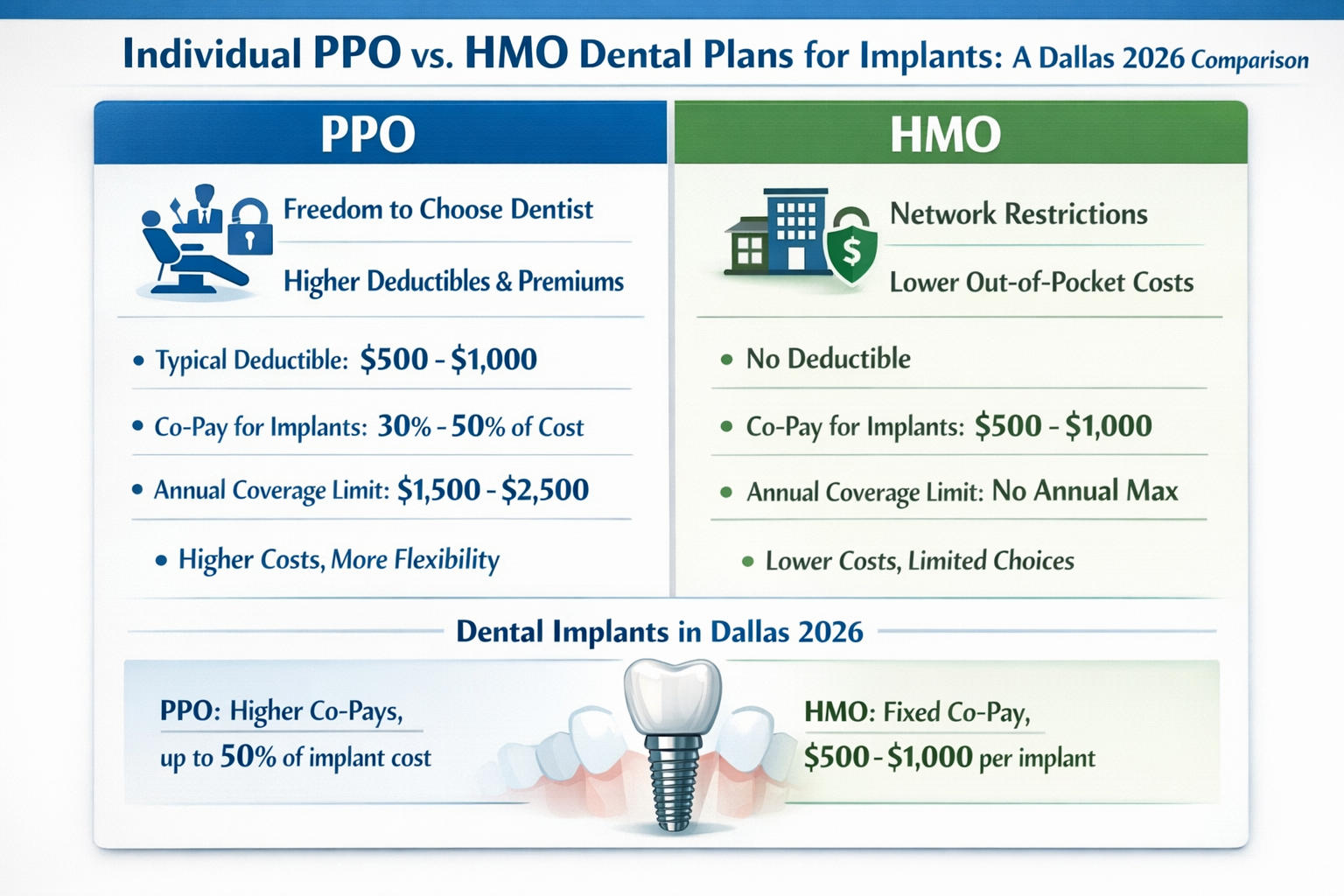
- Provider Choice: With a PPO, you can typically visit any licensed dentist or specialist without a referral. While you save money by staying within the plan’s network, you still have the option to see out-of-network providers, though at a higher cost. This flexibility is crucial when choosing a top dental implant specialist in Dallas TX whose expertise you trust.
- Coverage for Implants: PPO plans often provide reasonable coverage for dental implants, typically covering 50% of the cost after a deductible and waiting period. However, like group plans, they have annual maximums that can limit the total payout for expensive procedures.
- Cost Structure: PPO plans usually involve higher monthly premiums compared to HMOs, and often come with deductibles, co-insurance, and sometimes co-payments for certain services.
- Waiting Periods: Similar to group plans, individual PPO plans almost always have waiting periods for major procedures like implants, usually 6-12 months.
For someone planning to get dental implants in Dallas, a PPO offers the freedom to choose a dentist based on reputation and specialization rather than network restrictions. This can be particularly important for complex cases or if you have a preferred dentist for your implant surgery process.
HMO Dental Plans
HMO dental plans, also known as Dental Maintenance Organizations (DMOs), operate differently and focus on a managed care approach.
- Network Restrictions: With an HMO, you must choose a primary care dentist within the plan’s network. All your dental care, including referrals to specialists for procedures like dental implants, must be coordinated through this primary dentist. You typically cannot see out-of-network providers for covered services.
- Lower Costs: HMOs generally have lower monthly premiums and lower out-of-pocket costs (such as co-payments) compared to PPOs. There are often no deductibles or annual maximums, which can be a benefit for extensive treatment.
- Coverage for Implants: While some HMOs may cover dental implants, the extent of coverage can vary significantly. You might pay a fixed co-payment for the implant procedure, but you are restricted to in-network providers for all steps.
- No Waiting Periods (Often): A notable advantage of some HMO plans is the absence of waiting periods for major procedures, meaning coverage can begin almost immediately.
Choosing between an individual PPO and HMO in Dallas for 2026 dental implant coverage depends on your priorities. If you value flexibility in choosing your dentist and are comfortable with potentially higher premiums and out-of-pocket costs, a PPO might be suitable. If cost savings and minimal paperwork are your main concerns, and you are comfortable with network restrictions, an HMO could be a better fit. It is crucial to carefully review the specific details of any plan for its dental implant coverage before enrolling.
Maximizing Your Dental Implant Benefits: Strategies for Dallas Residents in 2026
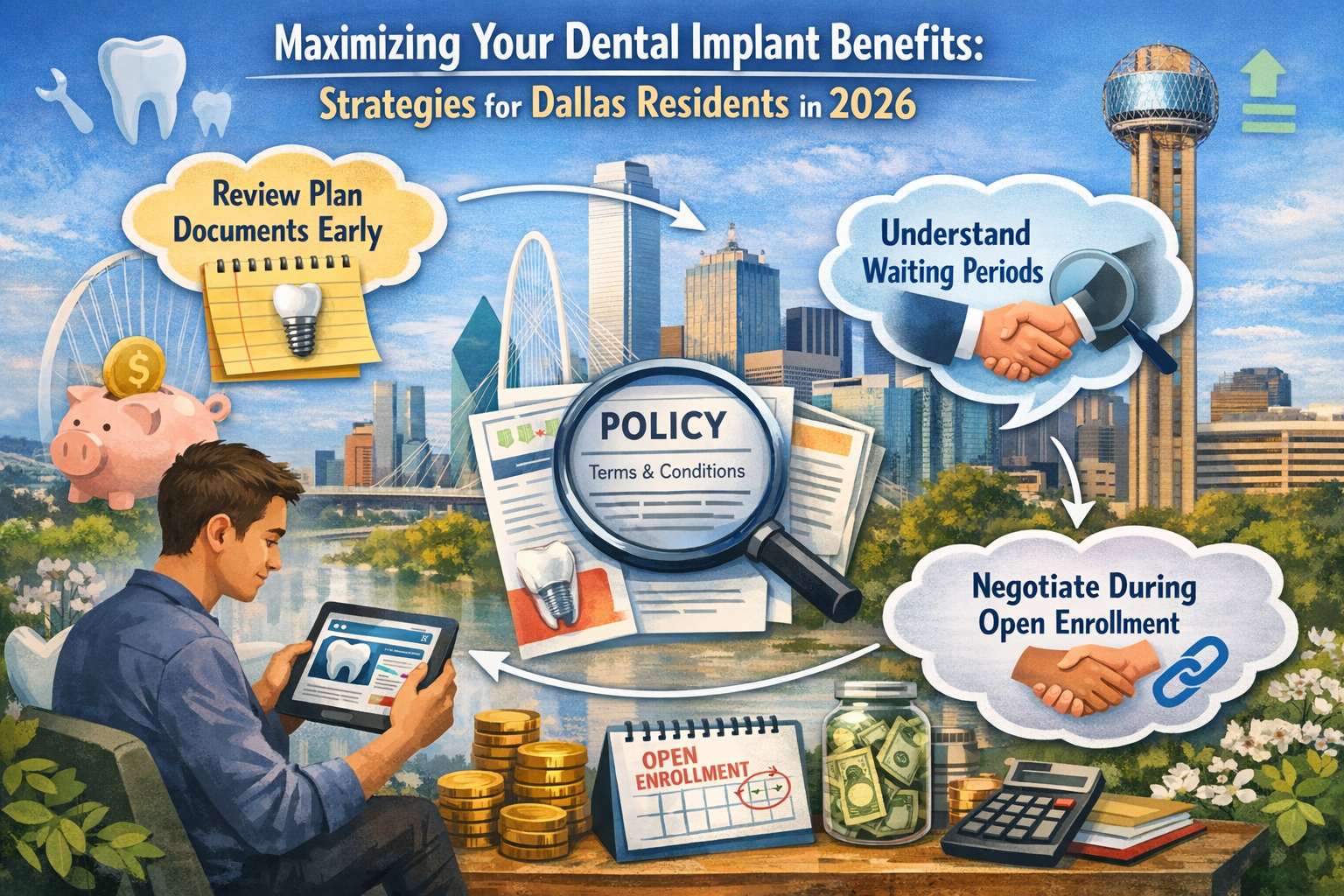
Securing comprehensive coverage for dental implants in Dallas requires more than just enrolling in a plan. Strategic planning and a thorough understanding of your policy can significantly impact your out-of-pocket expenses.
Understanding Your Plan Documents
The first and most critical step is to obtain and thoroughly review your Summary of Benefits and Coverage (SBC) document. This document outlines:
- Covered Services: Which parts of the dental implant procedure are covered (e.g., extraction, bone graft, implant placement, abutment, crown). Some plans may cover the surgical placement but not the crown, or vice versa. Bone grafting costs for dental implants can add significantly to the overall expense, so checking this specifically is important.
- Reimbursement Percentages: The percentage of the “allowable charge” the plan will pay for each covered service.
- Limitations and Exclusions: What is not covered. For example, some plans consider dental implants a cosmetic procedure and exclude them, although this is becoming less common.
- Annual Maximums and Deductibles: Reiterate these figures, as they directly impact how much the plan will contribute.
- Waiting Periods: Confirm the exact waiting period for major restorative services like dental implants.
Tip: Call your insurance provider directly and ask specific questions about dental implant coverage, including any pre-authorization requirements. Document these conversations, including the date, time, and representative’s name.
Phased Treatment Planning
For procedures like dental implants that can span several months, or even over a year, consider “spreading” the treatment across two calendar years if your annual maximum resets. For example:
- Year 1 (Late 2026): Complete initial stages like extractions and bone grafting, maximizing your annual maximum for 2026.
- Year 2 (Early 2027): Undergo implant placement and crown restoration, utilizing your renewed annual maximum for 2027.
This strategy can potentially double the insurance benefits you receive for the overall treatment, reducing your total out-of-pocket expenses for dental implants in Dallas. Discuss this option with your dentist during your consultation with a dentist to see if it’s medically advisable for your specific case.
Exploring Financing and Alternative Options
Even with insurance, dental implants can represent a significant investment. If your insurance coverage is limited, explore other avenues:
- Dental Implant Financing Options: Many dental offices in Dallas offer in-house payment plans or work with third-party financing companies like CareCredit. These can provide manageable monthly payments. Learn more about Dental Implant Financing Options Dallas.
- Health Savings Accounts (HSAs) and Flexible Spending Accounts (FSAs): These tax-advantaged accounts allow you to set aside pre-tax money for qualified medical and dental expenses, including dental implants.
- Dental Schools: In some cases, dental schools offer reduced rates for treatment performed by students under the supervision of experienced faculty.
- Review Plan Changes Annually: Your employer’s benefits package or individual plan offerings may change each year. Always review updates during open enrollment for 2026 and subsequent years to ensure your coverage still meets your needs.
Making an informed decision about employer dental insurance for implants in Dallas in 2026 involves a combination of understanding your plan, strategic timing, and exploring all available financial avenues. Prioritizing your long-term oral health is an investment that yields significant returns in comfort, function, and confidence.
Conclusion
Securing adequate dental insurance for implants in Dallas in 2026 is a critical step for anyone considering this life-changing tooth replacement option. Whether through an employer-sponsored group plan or an individual PPO or HMO policy, a thorough understanding of your coverage, waiting periods, annual maximums, and deductibles is essential.
Group plans often provide the most comprehensive benefits, but individual plans offer flexibility depending on your needs. By proactively reviewing your policy, understanding the differences between plan types, and strategically planning your treatment, Dallas residents can navigate the financial aspects of dental implants with greater confidence. Remember, a consultation with a dentist is always the first step to assess your oral health and determine the best course of action for your missing teeth solutions. Empower yourself with knowledge to ensure your journey towards a healthier, more confident smile is as smooth and financially manageable as possible.