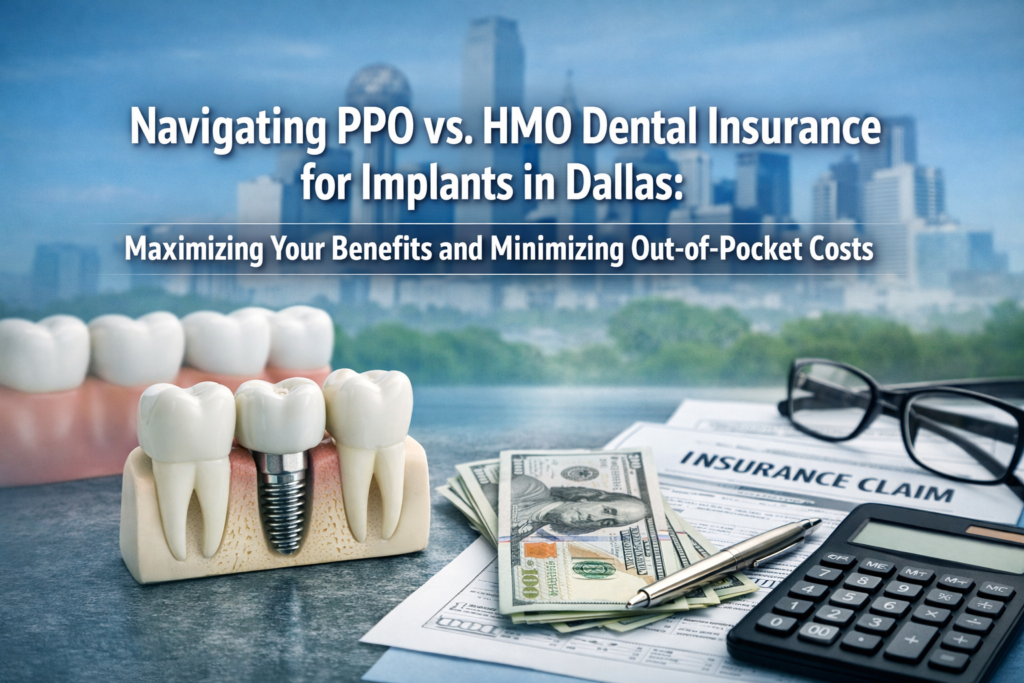
Experiencing missing teeth can significantly impact daily life, affecting everything from speaking and eating to self-confidence. For many in Dallas, dental implants offer a long-lasting, stable solution, but the financial aspect often raises questions. Understanding how your dental insurance factors into the total implant cost in Dallas is crucial for informed decision-making. This comprehensive guide is dedicated to Navigating PPO vs. HMO Dental Insurance for Implants in Dallas: Maximizing Your Benefits and Minimizing Out-of-Pocket Costs, helping you make sense of your options in 2026.
Dental implants are considered a significant investment in your long-term oral health, and while they offer unparalleled benefits, the upfront cost can be a concern. This article will clarify the distinctions between PPO and HMO dental insurance plans, specifically how they apply to the dental implant procedure, and provide actionable strategies to help Dallas residents effectively manage expenses.
Key Takeaways
- PPO plans offer flexibility to choose any dentist but often come with higher premiums and potentially higher out-of-pocket costs for dental implants, especially if your dentist isn’t in-network.
- HMO plans typically have lower premiums and out-of-pocket costs but require you to select a primary dentist within a specific network and may necessitate referrals for specialist dental implant surgery.
- Dental implant coverage varies widely between plans, with many treating implants as a major restorative procedure, subject to waiting periods, annual maximums, and deductibles.
- Pre-authorization is vital for dental implants to confirm coverage and estimated benefits before starting treatment, regardless of your plan type.
- Strategic financial planning involves thoroughly understanding your policy, negotiating with providers, exploring financing options, and considering dental schools or discount plans in Dallas to reduce overall expenses.
Understanding PPO vs. HMO Dental Insurance for Implants in Dallas
Choosing the right dental insurance plan can significantly influence your access to care and your financial burden when considering dental implants in Dallas. PPO (Preferred Provider Organization) and HMO (Health Maintenance Organization) are the two most common types of dental insurance, each with distinct features that impact implant coverage.
PPO Dental Insurance Plans
PPO plans offer greater flexibility in choosing your dental provider. With a PPO, you can typically see any licensed dentist, including specialists for your implant surgery process, without a referral.
- Network Flexibility: You are not restricted to a specific network of dentists. You can choose any dentist, though you will usually pay less if you visit an in-network provider. In-network dentists have an agreement with the insurance company to charge negotiated rates, which helps keep your costs lower.
- Out-of-Network Coverage: PPO plans usually offer some coverage for out-of-network dentists, but your reimbursement percentage will be lower, and your out-of-pocket costs will be higher. This means if you have a preferred dentist in Dallas who is not in your plan’s network, you still have the option to see them.
- Premiums and Deductibles: PPO plans generally have higher monthly premiums compared to HMOs. They also typically involve a deductible, which is the amount you must pay out of pocket before your insurance company begins to pay for services.
- Annual Maximums: Most PPO plans come with an annual maximum, which is the highest amount your insurance company will pay for your dental care within a policy year (e.g., $1,000 to $2,000). For costly procedures like dental implants, it’s common to exceed this maximum, meaning you will be responsible for the remaining balance.
For dental implants, PPO plans might cover a percentage of the cost, often considering them a “major restorative” procedure. This could mean your plan covers 30-50% after you meet your deductible, up to your annual maximum. It’s crucial to verify specific coverage details, as some plans may still exclude implants or have very limited benefits.
HMO Dental Insurance Plans
HMO plans, also known as Dental Maintenance Organizations (DMOs) in some regions, operate differently. They typically focus on providing care through a specific network of dentists.
- Restricted Network: With an HMO plan, you must choose a primary care dentist within the plan’s network. All your dental care, including referrals to specialists for procedures like a sinus lift procedure or the dental implant procedure, must be coordinated through this primary dentist.
- Referral Requirement: To see a specialist, even for something as specialized as implant surgery, your primary care dentist must provide a referral. Without a referral, the services may not be covered.
- Lower Costs: HMO plans generally have lower monthly premiums and often require smaller co-payments or no deductible for in-network services. This can translate to lower out-of-pocket costs for many basic dental services.
- Limited Implant Coverage: While some HMO plans are beginning to offer more robust coverage, many still provide very limited, if any, benefits for dental implants. If covered, it will almost certainly require you to use an in-network specialist and adhere strictly to the plan’s procedures.
For those considering missing teeth solutions like dental implants, an HMO plan might be more challenging due to network restrictions and potentially less coverage for major procedures. However, the lower premiums can be appealing for routine care.
It’s clear that understanding these fundamental differences is the first step in Navigating PPO vs. HMO Dental Insurance for Implants in Dallas: Maximizing Your Benefits and Minimizing Out-of-Pocket Costs. Each plan type presents unique opportunities and challenges when it comes to covering a significant investment like dental implants.
Maximizing Your Benefits and Minimizing Out-of-Pocket Costs for Dental Implants
Regardless of whether you have a PPO or HMO plan, strategic planning is essential to make dental implants more affordable in Dallas. Here are concrete steps to maximize your insurance benefits and reduce your personal expenses.
1. Understand Your Policy Inside and Out 🧐
This is perhaps the most critical step. Dental insurance policies can be complex, especially concerning advanced procedures like dental implants.
- Review Your Summary of Benefits: Obtain a detailed summary of your plan’s benefits. Look specifically for coverage categories like “Major Restorative,” “Oral Surgery,” or “Prosthodontics.”
- Identify Exclusions and Limitations: Some plans explicitly exclude dental implants or treat them differently than traditional bridges or dentures. Check for waiting periods, which are common for major procedures, meaning you must be enrolled in the plan for a certain period (e.g., 6-12 months) before implant coverage kicks in.
- Know Your Annual Maximum and Deductible: These figures directly impact your out-of-pocket expenses. Once you hit your annual maximum, you are responsible for 100% of subsequent costs for the year.
- “Least Expensive Alternative Treatment” Clause: Be aware of policies that only cover the “least expensive alternative treatment.” For example, if a bridge could also address your missing tooth, the insurance might only pay what they would for a bridge, leaving you to cover the difference for an implant. For more on comparing options, see our guide on Single Tooth Implant vs. Bridge vs. Crown in Dallas.
2. Get a Detailed Treatment Plan and Pre-Authorization 📝
Before any work begins, especially for a complex dental implant procedure, a thorough consultation with a dentist in Dallas is vital.
- Request a Detailed Estimate: Your dentist should provide a comprehensive treatment plan outlining all steps, associated costs (including the implant, abutment, and crown), and estimated insurance coverage.
- Submit for Pre-Authorization/Pre-Determination: This is crucial. Your dental office will submit your proposed treatment plan to your insurance company. The insurer will then review it and inform you (and your dentist) of the services they estimate will be covered and your estimated out-of-pocket responsibility. This is not a guarantee of payment but provides a clear expectation.
- Pro-Tip: Some plans may cover parts of the implant procedure (e.g., extraction, bone graft) but not the implant itself or the crown. Pre-authorization helps break down what is covered.
3. Consider Staging Treatment Over Calendar Years 📅
If your implant treatment is extensive and exceeds your annual maximum, strategically planning the phases over two calendar years can potentially double your insurance benefits.
- Example: If your annual maximum is $1,500 and your total implant cost is $4,000, you might have the implant placement surgery done in late 2026, maximizing your 2026 benefits. Then, the healing period and final crown placement can occur in early 2027, tapping into your new 2027 annual maximum. This requires careful coordination with your dental office.
4. Explore All Financing Options 💲
Even with insurance, a significant portion of the implant cost in Dallas may be out-of-pocket.
- Payment Plans: Many dental offices offer in-house payment plans, allowing you to pay for your treatment in installments.
- Third-Party Financing: Options like CareCredit or Alphaeon Credit offer special financing for healthcare expenses, often with interest-free periods if paid in full within a certain timeframe. Learn more about Dental Implant Financing Dallas TX.
- Flexible Spending Accounts (FSAs) or Health Savings Accounts (HSAs): If you have an FSA or HSA through your employer, you can use these tax-advantaged accounts to pay for qualified dental expenses, including implants.
5. Negotiate and Inquire About Discounts ✨
Don’t hesitate to discuss costs with your chosen dental provider.
- Cash Discounts: Some practices offer a discount for patients who pay in full with cash, especially if it reduces their administrative burden of processing insurance claims.
- Package Deals: For multiple implants or full-mouth solutions like All-on-4 implants, ask if there are any package deals available.
- Dental Schools or Discount Plans: While not insurance, dental schools (if available and accredited in the Dallas area) often offer reduced fees for treatments performed by students under supervision. Dental discount plans (membership plans) can also provide reduced rates for a yearly fee.
By actively engaging in these strategies, Dallas residents can navigate the complexities of dental insurance and make missing teeth solutions like dental implants a more accessible and affordable reality.
The Importance of Consultation with a Dentist in Dallas
The journey to restoring your smile with dental implants begins with a thorough consultation with a dentist. This initial step is paramount, not only for assessing your oral health and suitability for the dental implant procedure but also for understanding the financial implications specific to your situation in Dallas.
During your consultation, the dentist will conduct a comprehensive examination, which may include X-rays, 3D imaging, and a review of your medical and dental history. This allows them to determine if dental implants are the best tooth replacement option for you and to identify any preparatory procedures that might be needed, such as bone grafting or extractions.
What to Discuss During Your Consultation:
- Treatment Suitability: Ask about your eligibility for dental implants and any alternative missing teeth solutions. Discuss the potential benefits and risks of the implant surgery process.
- Detailed Treatment Plan: Request a step-by-step breakdown of the recommended implant procedure, including the number of implants, the type of restoration (e.g., single crown, bridge, or All-on-X implants), and the timeline.
- Comprehensive Cost Estimate: Insist on a written estimate that itemizes all costs associated with the procedure. This should include the implant post, abutment, crown, any necessary preparatory work (like extractions or bone grafts), and follow-up appointments. Understanding the full implant cost in Dallas upfront is crucial. For an overview of current costs, refer to our 2026 Dallas Dental Implant Cost Update.
- Insurance Verification and Pre-Authorization: Provide your dental insurance information during your consultation. A reputable dental office will have staff dedicated to helping you verify your benefits and initiating the pre-authorization process. They can explain how your PPO or HMO plan specifically applies to your estimated costs. This ensures you’re actively Navigating PPO vs. HMO Dental Insurance for Implants in Dallas: Maximizing Your Benefits and Minimizing Out-of-Pocket Costs.
- Payment and Financing Options: Discuss available payment plans, third-party financing solutions, and any potential discounts (e.g., for cash payments). Understanding these options can significantly ease the financial burden.
Choosing a dental practice that prioritizes clear communication, patient education, and transparent billing is fundamental. A compassionate dental team will help you understand your insurance benefits, guide you through the pre-authorization process, and explore all avenues to make your dental implant journey as smooth and affordable as possible. This commitment to patient safety and long-term oral health is a hallmark of quality dental care.
Conclusion
Navigating the landscape of dental insurance for implants in Dallas can feel complex, but with the right knowledge and proactive steps, it is entirely manageable. Whether you have a PPO or HMO plan, understanding its specifics, utilizing pre-authorization, and exploring all available financial avenues are key to maximizing your benefits and minimizing your out-of-pocket expenses.
Dental implants represent a significant investment in your long-term oral health, offering a durable and aesthetically pleasing solution for missing teeth. By taking the time to educate yourself and engaging in a thorough consultation with a dentist who can guide you through the process, you can confidently pursue the dental implant procedure and achieve a healthier, more confident smile in Dallas.
Don’t let the intricacies of insurance deter you from exploring missing teeth solutions that can vastly improve your quality of life. Start with a conversation with a trusted dental professional today to understand your options and begin your journey towards restored oral health.