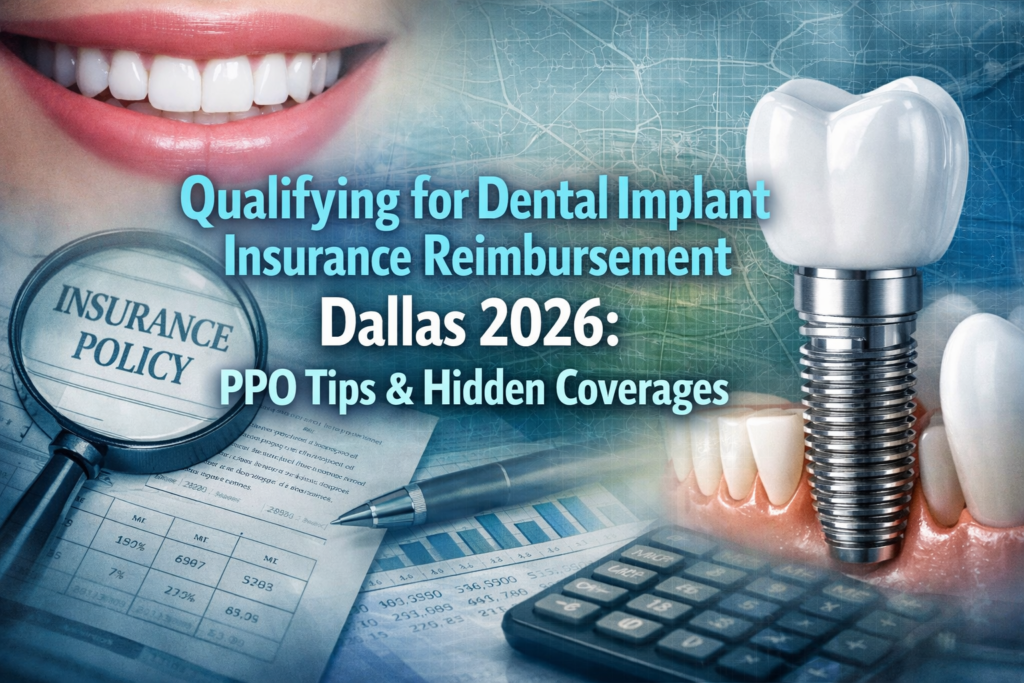
Navigating the complexities of dental insurance can be daunting, especially when considering a significant investment in your oral health like dental implants. For residents in Dallas looking to restore their smiles in 2026, understanding how to maximize your insurance benefits, particularly with PPO plans, is crucial. This comprehensive guide, “Qualifying for Dental Implant Insurance Reimbursement Dallas 2026: PPO Tips & Hidden Coverages,” will explore strategies to maximize partial coverage for crowns and abutments, shed light on Dallas-specific PPO plans, and uncover hidden avenues for reimbursement. Dental implants offer a superior, long-term solution for missing teeth, and with the right approach, managing the cost can become significantly more accessible.
Key Takeaways
- PPO Plans and Reimbursement: PPO dental plans often offer partial coverage for dental implants, typically for the restorative components (crown, abutment) rather than the implant post itself.
- Pre-Treatment Estimates are Vital: Always obtain a pre-treatment estimate from your dentist and submit it to your insurance provider to understand your expected out-of-pocket costs and avoid surprises.
- Strategic Staging of Treatment: Consider staging your dental implant procedure across two calendar years to maximize annual maximums, especially if your plan resets in January.
- Uncover Medical Coverage: In certain situations, dental implant surgery may be covered under your medical insurance, particularly if deemed medically necessary due to injury or disease.
- Leverage HSAs/FSAs: Health Savings Accounts (HSAs) and Flexible Spending Accounts (FSAs) offer tax-advantaged ways to pay for dental implant costs not covered by insurance.
Understanding PPO Dental Plans and Dental Implant Coverage in Dallas 2026
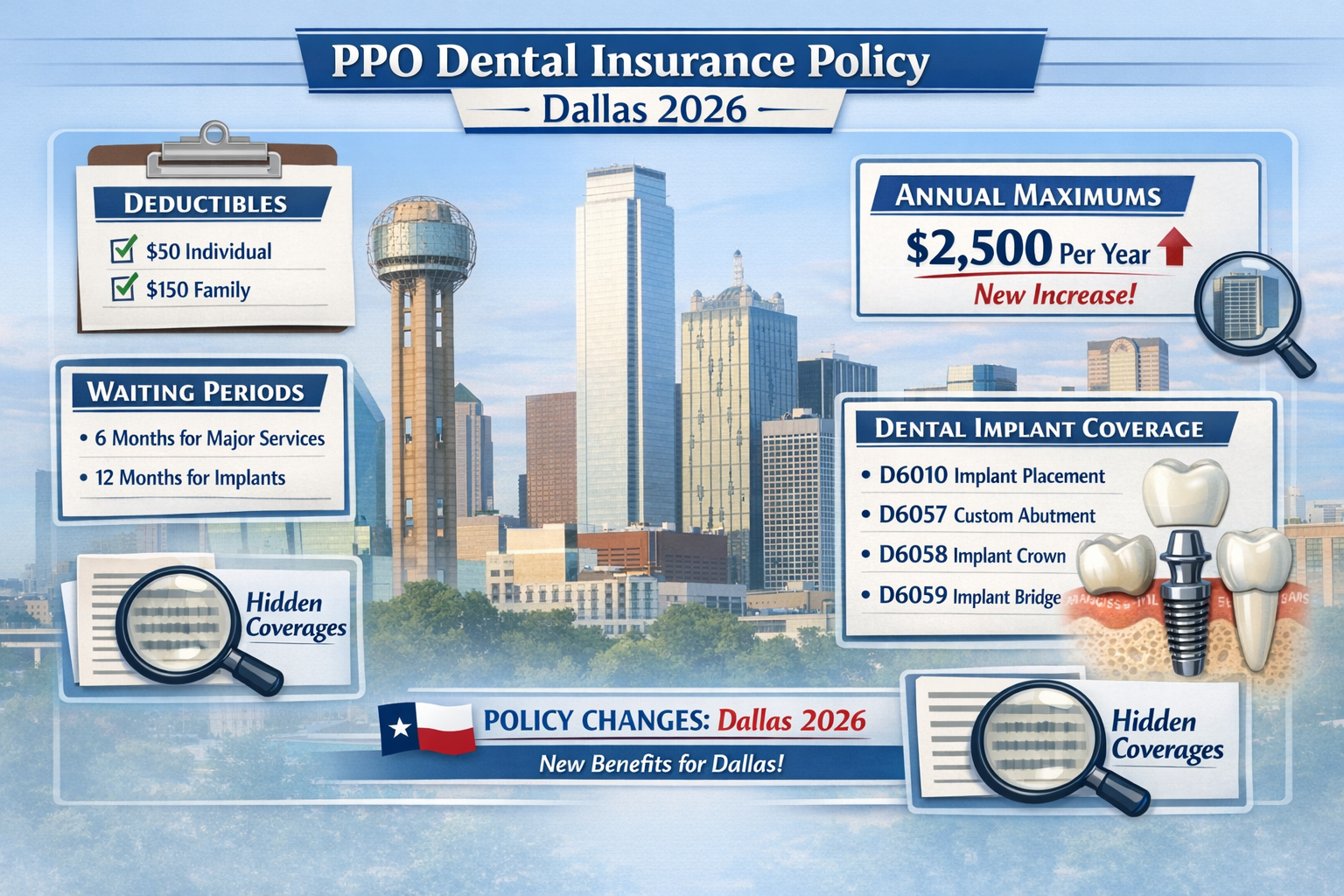
For many Dallas residents, a Preferred Provider Organization (PPO) dental plan is the most common form of insurance. PPO plans offer flexibility, allowing you to choose any licensed dentist, though you typically pay less when you visit a dentist within the plan’s network. When it comes to dental implants, PPO coverage can be a bit nuanced.
Historically, dental insurance policies often classified dental implants as a cosmetic procedure, leading to limited or no coverage. However, as the medical community increasingly recognizes dental implants as a medically necessary and superior tooth replacement option for long-term oral health, many insurance carriers are adapting their policies. By 2026, while full coverage for the entire dental implant procedure is still rare, partial reimbursement for specific components is becoming more common.
What PPO Plans Typically Cover
Most PPO plans, when they cover dental implants, tend to categorize the procedure into its various components:
- Extraction: If a tooth needs to be removed before implant placement, this is usually covered under basic services.
- Bone Grafting: Often considered a major procedure, bone grafting might receive 50-80% coverage if deemed necessary for implant success.
- Dental Implant Placement (D6010): The actual surgical placement of the implant post into the jawbone is often the most challenging part to get covered. Some plans may offer a small percentage (e.g., 10-20%), while others classify it as an exclusion.
- Abutment (D6057, D6058): The abutment, which connects the implant post to the crown, frequently receives 50% coverage, similar to major restorative services.
- Crown (D6059) / Prosthetic: The visible crown or prosthetic that attaches to the abutment is usually covered at the same rate as a traditional crown (e.g., 50%).
It is important to remember that these are general guidelines. Each PPO plan is unique, and coverage can vary significantly based on your specific policy, employer benefits, and the year the policy was issued. Always review your benefits booklet or contact your insurance provider directly to understand your individual coverage for dental implants in Dallas. For detailed information on costs, explore our guide on Single Tooth Implant Cost Dallas 2026: What $1,500-$5,500 Really Buys.
Strategies for Maximizing Reimbursement with PPO Plans
- Obtain a Pre-Treatment Estimate (Pre-Auth): This is perhaps the most crucial step. Before any work begins, have your Dallas dentist submit a detailed treatment plan and X-rays to your insurance company for a pre-treatment estimate. This document will outline exactly what your plan is expected to cover and your estimated out-of-pocket expenses for dental implants.
- Understand Procedure Codes (CDT Codes): Dental procedures are classified using Current Dental Terminology (CDT) codes. Familiarize yourself with the codes related to dental implants (e.g., D6010 for implant placement, D6057/D6058 for abutment, D6059 for implant crown). Your dentist’s office will be familiar with these and can help ensure the correct codes are submitted for optimal reimbursement.
- Split Treatment Across Calendar Years: Many PPO plans have annual maximums that reset at the beginning of a new year. If your dental implant procedure involves multiple stages (e.g., extraction and bone graft in one year, implant placement and crown in the next), you might be able to utilize two annual maximums, effectively doubling your potential reimbursement. For instance, if your plan’s annual maximum is $1,500 and you stage your treatment correctly, you could potentially get up to $3,000 in coverage over two years.
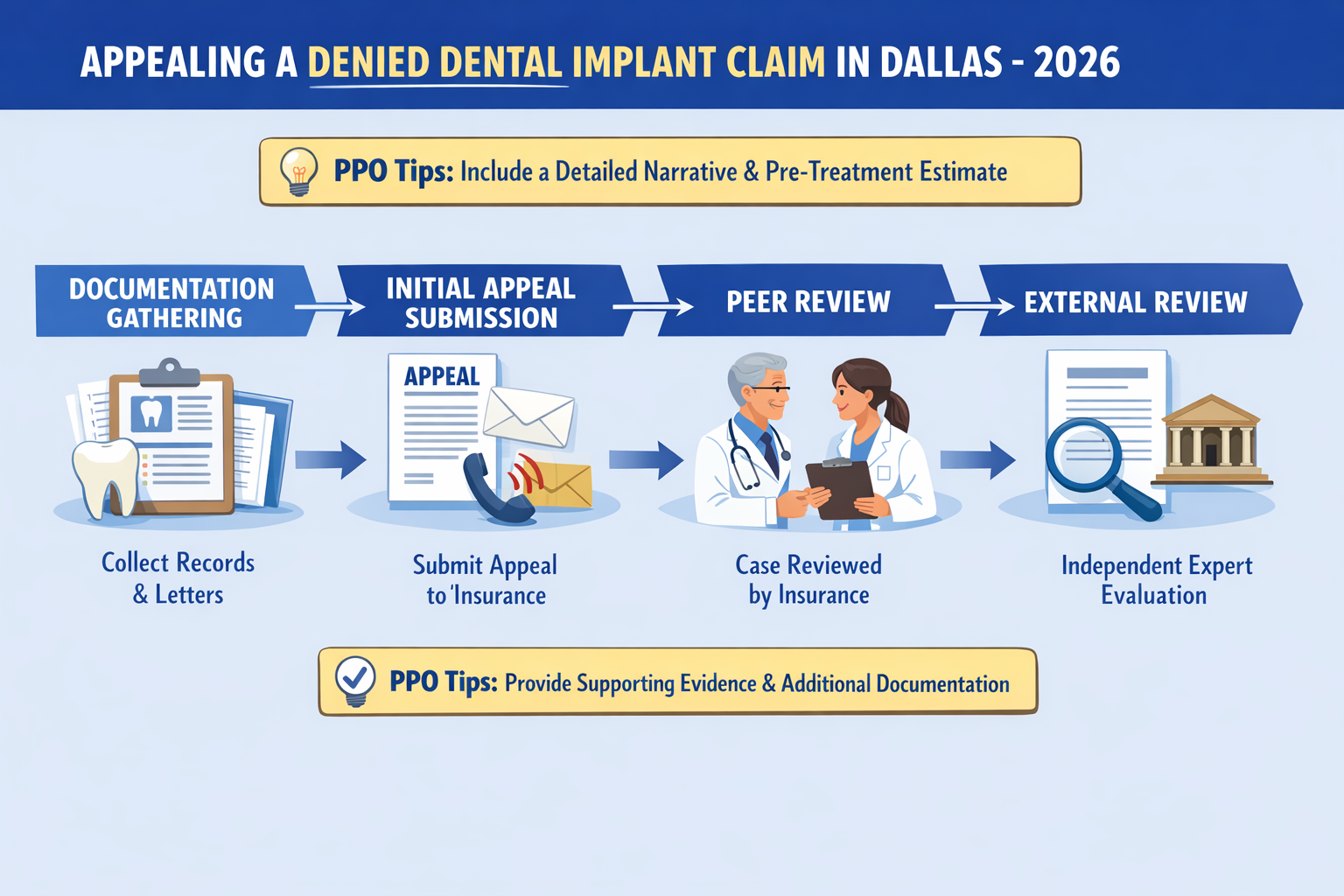
- Appeal Denied Claims: If your claim for dental implant reimbursement is initially denied, do not give up. You have the right to appeal. Your dentist’s office can often assist by providing a narrative explaining the medical necessity of the procedure, X-rays, and other supporting documentation. Understanding the reasons for denial is the first step toward a successful appeal.
“Many patients in Dallas overlook the power of a pre-treatment estimate. It’s your roadmap to understanding coverage and avoiding unexpected costs for dental implants.”
Uncovering Hidden Coverages: Beyond Standard PPO Benefits
While direct dental implant coverage through PPO plans may be limited, several “hidden” avenues and alternative strategies can help reduce your out-of-pocket implant cost in Dallas.
Medical Insurance for Oral Surgery
In specific scenarios, your medical insurance might cover portions of your dental implant procedure. This is typically the case when:
- Accident or Injury: If the missing tooth is a result of an accident or injury (e.g., a car accident, sports injury), the reconstructive surgery, including dental implant placement, may fall under your medical plan’s benefits.
- Underlying Medical Condition: If a missing tooth or the need for an implant is directly related to a medical condition or its treatment (e.g., certain cancers requiring jawbone reconstruction), medical insurance might offer coverage.
- Hospitalization: If the dental implant surgery requires general anesthesia and is performed in a hospital setting due to a complex medical history or severe anxiety, the facility fees and anesthesia costs might be covered by your medical insurance.
Your dentist or oral surgeon’s office in Dallas can help you determine if your specific situation warrants a claim with your medical insurance. They may need to submit a comprehensive letter of medical necessity.
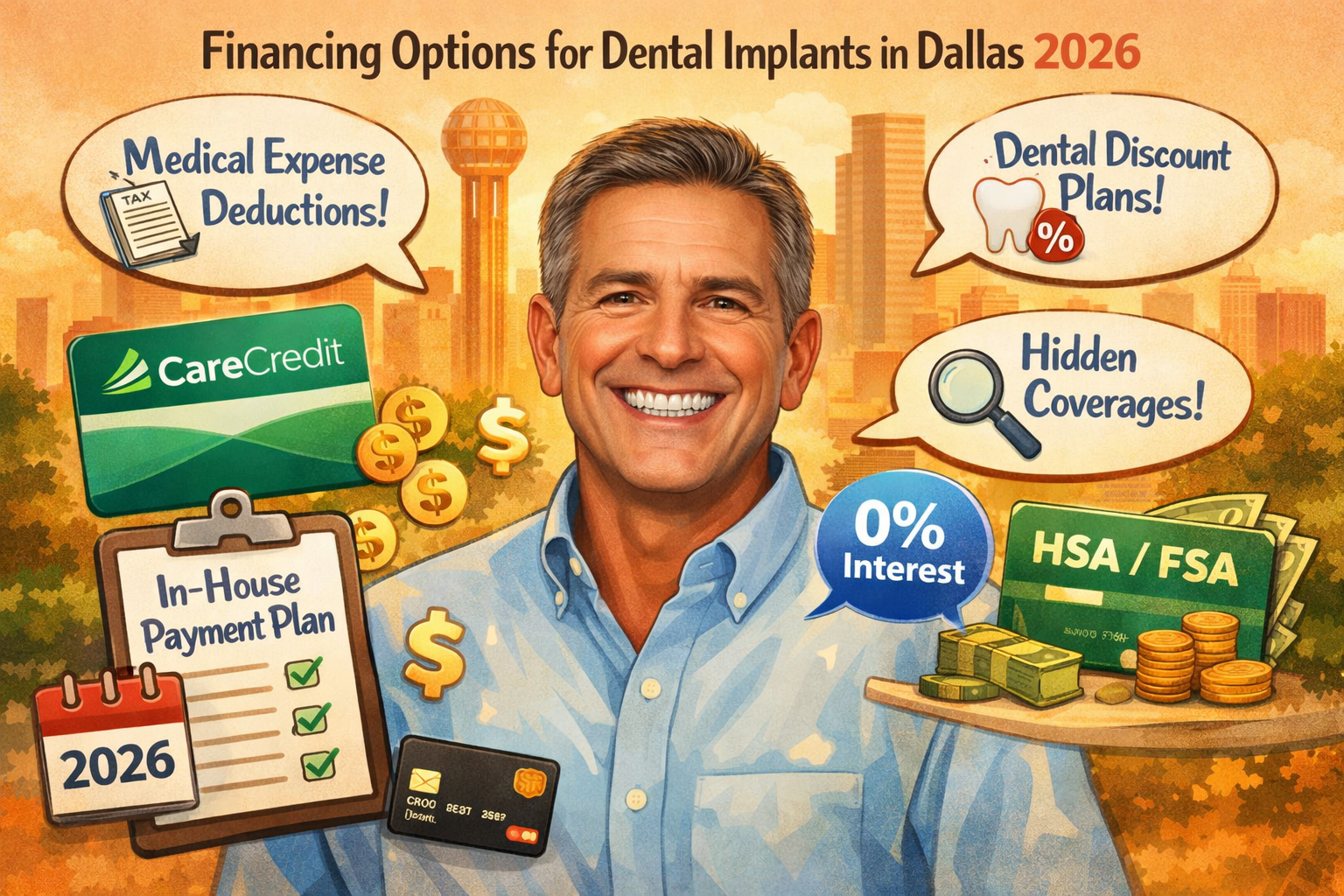
Health Savings Accounts (HSAs) and Flexible Spending Accounts (FSAs)
These employer-sponsored accounts are excellent resources for covering healthcare costs, including dental implants, with pre-tax dollars.
- HSAs: If you have a high-deductible health plan, you might be eligible for an HSA. Funds contributed to an HSA are tax-deductible, grow tax-free, and withdrawals for qualified medical expenses (including dental care) are tax-free. This offers a significant savings opportunity.
- FSAs: FSAs allow you to set aside pre-tax money from your paycheck to pay for eligible healthcare expenses. While typically a “use it or lose it” fund within the calendar year, some plans offer a grace period or allow a small rollover amount. Plan carefully to ensure you use your FSA funds.
Utilizing an HSA or FSA can effectively reduce the overall cost of your dental implants by saving you money on taxes.
Dental Discount Plans and Financing Options
While not insurance reimbursement, these options can significantly make dental implants more affordable.
- Dental Discount Plans: These plans are not insurance but offer members discounted rates on dental procedures from participating dentists. They can provide substantial savings if your PPO coverage is minimal or if you’ve exhausted your annual maximum.
- Dental Implant Financing Dallas TX: Many dental practices in Dallas offer flexible financing options, such as in-house payment plans or third-party medical financing like CareCredit. These plans can break down the total cost into manageable monthly payments, often with low or 0% interest for a promotional period. Exploring Dental Implant Financing Dallas TX: 0% Plans, CareCredit, and No Credit Check Options can open up affordable possibilities.
- Provider Discounts: Some dental practices in Dallas may offer discounts for paying in full or for multiple implants. Always inquire about any available specials or cost-saving programs.
- University Dental Schools: While less common for direct implant procedures, some university dental schools in Texas offer services at reduced rates, often performed by supervised students.
By combining savvy PPO utilization with these hidden coverages and financial strategies, you can make the dream of dental implants in Dallas a reality in 2026. Understanding all your options is a key part of informed decision-making for your long-term oral health.
Navigating the Reimbursement Process in Dallas 2026
Successfully Qualifying for Dental Implant Insurance Reimbursement Dallas 2026: PPO Tips & Hidden Coverages requires careful attention to detail and proactive communication with your dental provider and insurance company. Here’s a step-by-step guide to help you navigate the process effectively:
Before Treatment: The Foundation of Reimbursement
- Comprehensive Consultation: Schedule a consultation with a dentist specializing in dental implants in Dallas. During this visit, discuss your tooth replacement options and receive a thorough examination. Your dentist will determine if you are a suitable candidate for the dental implant procedure and create a detailed treatment plan.
- Detailed Treatment Plan and Cost Breakdown: Request a comprehensive breakdown of all anticipated costs, including individual procedure codes (CDT codes), from your dentist’s office. This should clearly itemize each component: consultation, extraction, bone graft, implant placement (D6010), abutment (D6057/D6058), and crown (D6059).
- Pre-Treatment Authorization/Estimate: Have your dental office submit the detailed treatment plan, X-rays, and any supporting documentation (e.g., periodontal charting, oral pathology reports) to your PPO insurance provider for a pre-treatment estimate. This step is critical as it provides a written estimate of what your insurance will cover before you commit to the procedure. Review this document carefully for any exclusions or limitations.
- Understand Your Policy: While waiting for the pre-treatment estimate, take the time to review your dental insurance policy booklet. Look for sections on “major restorative services,” “implants,” and “exclusions.” Pay attention to deductibles, annual maximums, waiting periods, and any limitations on specific procedures.
During and After Treatment: Submitting Claims and Appeals
- Staged Treatment (If Applicable): If your treatment plan allows and your annual maximum is a concern, discuss with your dentist the possibility of staging procedures across two calendar years. This could mean placing the implant post in late 2026 and the abutment and crown in early 2027, maximizing two annual benefit cycles.
- Claim Submission: Your dentist’s office will typically submit the claims to your insurance company on your behalf. Ensure they are using the most appropriate CDT codes and include all necessary supporting documentation.
- Review Explanation of Benefits (EOB): After your claim is processed, you will receive an Explanation of Benefits (EOB) from your insurance company. This document will detail what was covered, what was denied, and why. Compare the EOB with your pre-treatment estimate. If there are discrepancies, contact your insurance provider and your dental office for clarification.
- Appealing Denied Claims: If a portion of your dental implant claim is denied, especially if it was expected to be covered based on a pre-treatment estimate, you have the right to appeal.
- Gather Information: Understand the specific reason for denial from the EOB.
- Consult Your Dentist: Your Dallas dentist can provide a letter of medical necessity, clinical notes, X-rays, and other diagnostic materials to support your appeal. This narrative should explain why the implant is not merely cosmetic but essential for your oral health and function.
- Submit a Written Appeal: Follow your insurance company’s appeal process. This usually involves a written letter detailing why you believe the decision should be overturned, accompanied by all supporting documentation. Be polite, factual, and thorough.
- Internal vs. External Review: If your initial appeal is denied, you may have the option for further internal reviews or, ultimately, an external review by an independent third party.
For more information on the overall costs and how insurance plays a role, our article on How to Save Money on Dental Implants in Dallas | Cost Guide 2025 can provide additional valuable insights. Remember, patient advocacy is a powerful tool in Qualifying for Dental Implant Insurance Reimbursement Dallas 2026: PPO Tips & Hidden Coverages. Do not hesitate to ask questions and seek assistance from your dental team.
Conclusion
Qualifying for Dental Implant Insurance Reimbursement Dallas 2026: PPO Tips & Hidden Coverages requires a proactive and informed approach. While dental implants represent a significant investment in your long-term oral health, understanding the nuances of PPO plans, leveraging hidden coverages, and strategically navigating the reimbursement process can significantly alleviate the financial burden. For residents of Dallas considering dental implants, the journey towards a restored smile can be made smoother by obtaining pre-treatment estimates, appealing denials when necessary, and exploring alternative financial solutions.
We encourage you to prioritize a consultation with a dentist experienced in dental implants in Dallas. During this consultation, discuss your individual needs, explore tooth replacement options, and openly address all financial aspects. Your dental team can be your strongest advocate in helping you maximize your insurance benefits and achieve the healthy, confident smile you deserve.
Actionable Next Steps:
- Schedule a Consultation: Contact a reputable dental implant provider in Dallas to discuss your suitability for the procedure and get a personalized treatment plan.
- Request a Pre-Treatment Estimate: Insist on having your dental office submit a pre-treatment authorization to your PPO insurance to understand your specific coverage for 2026.
- Review Your Policy: Familiarize yourself with your dental insurance benefits booklet to identify deductibles, annual maximums, and any specific implant-related exclusions or coverages.
- Explore Financing: Discuss available financing options with your dental office, such as CareCredit or in-house payment plans, to manage any uncovered costs.
Remember, taking the time to understand your options and working closely with your dental team are the best ways to ensure a successful and financially manageable dental implant experience in Dallas.