Losing a tooth can be a real bummer. It affects your smile, how you chew, and even your confidence. For many years, dental implants have become the gold standard for replacing missing teeth, offering a strong, natural-looking, and long-lasting solution. But let’s be honest, one of the first questions that pops into everyone’s mind is, “How much does this actually cost?”
As your trusted guide in understanding dental procedures, I’m here to unpack the average cost of one tooth dental implant in 2025. We’ll explore what makes up the price, what you should expect, and how you can make this important investment in your oral health more manageable. Rest assured, by the end of this article, you’ll have a much clearer picture of what to expect when considering a single tooth dental implant.
Single Tooth Dental Implant Costs
Read Also:-Unveiling the Cost of 2 Dental Implants with Bone Grafting in 2025: Your Comprehensive Guide.
Key Takeaways
- Average Cost Range: In 2025, the average cost for a single tooth dental implant (including the implant post, abutment, and crown) typically ranges from $3,000 to $6,500. However, this can vary greatly.
- Many Factors Influence Price: The final cost depends on your location, the dentist’s experience, the materials used, and whether you need extra procedures like tooth extraction or bone grafting.
- What’s Included: The average cost usually covers the implant placement surgery, the abutment (connector), and the custom dental crown. Initial consultations and necessary scans might be separate.
- Potential Hidden Costs: Always ask for a detailed quote that includes all potential procedures, such as extractions, bone grafts, or sedation, to avoid surprises.
- Financing Options Exist: Don’t let the upfront cost deter you. Many clinics offer payment plans, and third-party financing, dental insurance, and HSAs/FSAs can help make implants more affordable.
Understanding Dental Implants: More Than Just a Tooth
Before we dive into the numbers, let’s quickly recap what a dental implant is. It’s not just a replacement tooth; it’s a sophisticated solution designed to mimic your natural tooth structure.
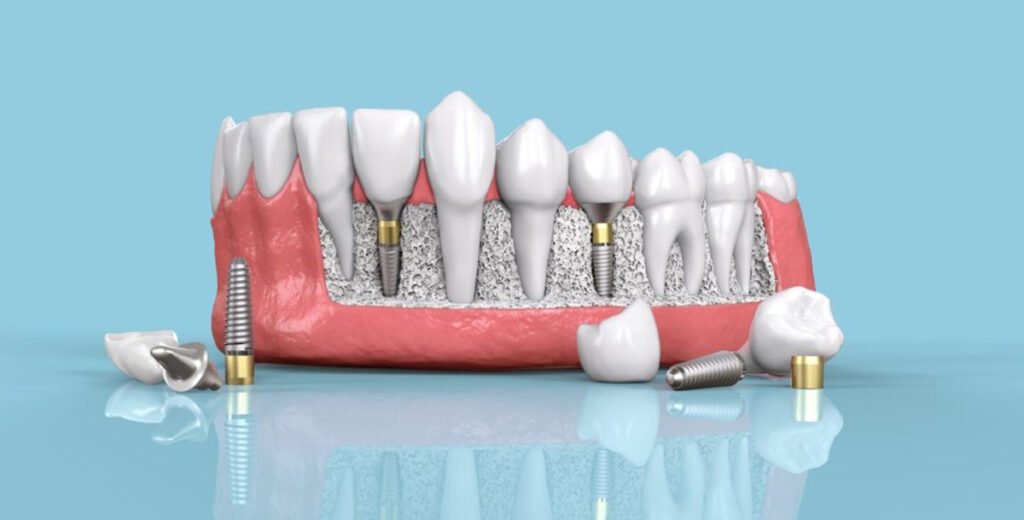
A single tooth dental implant has three main parts:
- The Implant Post (Fixture): This is a small, screw-shaped post, usually made of titanium or zirconia, that your dentist surgically places into your jawbone. It acts like the root of your natural tooth. Over time, it fuses with your bone in a process called osseointegration, providing a strong foundation.
- The Abutment: This is a connector piece that attaches to the implant post. It extends above the gum line and serves as the base for your new tooth.
- The Dental Crown: This is the visible part of your new tooth, custom-made to match the color, shape, and size of your other teeth. It’s usually made of porcelain, ceramic, or a combination of materials.
Together, these three parts create a stable, functional, and aesthetically pleasing replacement for a missing tooth. Think of it as rebuilding your tooth from the ground up! 🌱
The Average Cost of One Tooth Dental Implant in 2025
Now, let’s get to the burning question: “What is the average cost of one tooth dental implant in 2025?”
Based on data and trends I’ve observed across the industry, you can generally expect the total cost for a single tooth dental implant, including the implant post, abutment, and crown, to fall within the range of $3,000 to $6,500.
It’s crucial to understand that this is an average range. Your specific cost could be lower or higher depending on a variety of factors we’ll discuss in detail. It’s not a one-size-fits-all price tag. Think of it like buying a car – there’s an average cost for a sedan, but luxury models or those with special features will cost more.
“A single tooth dental implant is an investment in your long-term oral health and quality of life. Understanding the components of its cost is the first step towards making an informed decision.”
What’s Typically Included in the Average Cost?
When we talk about the average cost of $3,000 to $6,500, it usually covers these core components:
- The Dental Implant Post: The cost of the titanium or zirconia screw that goes into your jawbone.
- The Abutment: The connector piece that links the implant post to the crown.
- The Custom Dental Crown: The visible “tooth” portion, designed to blend seamlessly with your natural teeth.
- The Surgical Placement: The procedure to place the implant post into your jawbone.
- Restorative Phase: The process of attaching the abutment and crown.
However, it’s very important to note that many other factors and potential additional procedures can significantly impact the final price. This is where the variability comes in! Let’s explore those factors.
Factors Influencing the Cost of a Single Tooth Dental Implant
The price you pay for a single dental implant isn’t just pulled out of thin air. Many variables contribute to the final bill. Understanding these can help you anticipate costs and ask the right questions during your consultation.
1. Geographic Location
Where you live makes a big difference. Dental costs, like many other services, vary based on the cost of living and competition in a particular area:
- Major Metropolitan Areas: Cities like New York, Los Angeles, or Boston tend to have higher dental costs compared to smaller towns or rural areas.
- Regional Differences: Even within the same state, prices can fluctuate. For example, dental implants in a high-rent downtown office might be more expensive than in a suburban practice.
2. Dentist’s Expertise and Experience
Just like in any profession, experience comes at a price.
- General Dentist: A general dentist who performs implant procedures might charge less than a specialist.
- Specialist (Oral Surgeon, Periodontist, Prosthodontist): These specialists have advanced training and often more experience in complex implant cases. Their fees might be higher, but you’re paying for their specialized skills and potentially a higher success rate, especially for challenging situations. I always recommend choosing a dentist with extensive experience in implant dentistry.
3. Type of Implant Material and Brand
Not all implants are created equal. The materials and brand chosen can affect the cost.
- Titanium Implants: These are the most common and have a long track record of success. They are biocompatible and integrate well with bone.
- Zirconia Implants: A newer, metal-free option that some patients prefer for aesthetic reasons or if they have metal sensitivities. They can sometimes be more expensive.
- Implant Brand: There are many implant manufacturers (e.g., Nobel Biocare, Straumann, Zimmer Biomet). Premium brands with extensive research and development might cost more than generic or lesser-known brands. Your dentist will choose the best brand for your specific needs.
4. Additional Procedures That Might Be Needed
This is often where the “hidden” costs emerge. Not everyone has enough healthy bone or gum tissue to support an implant right away. These extra steps are crucial for the long-term success of your implant.
a. Initial Consultation & Diagnostic Imaging
Before anything else, your dentist needs to assess your oral health.
- Consultation Fee: This might be a separate charge.
- X-rays (2D): Standard dental X-rays.
- 3D CT Scans (Cone Beam CT – CBCT): These provide detailed images of your jawbone, nerves, and sinuses, which are essential for precise implant planning. A CBCT scan can add anywhere from $250 to $600 to the initial diagnostic phase.
b. Tooth Extraction (If Necessary) 🦷➡️🗑️
If the missing tooth is still present but damaged or decayed beyond repair, it will need to be extracted first.
- Cost: A simple extraction can range from $75 to $300, while a more complex surgical extraction (e.g., if the tooth is impacted or broken) could be $150 to $650 or more.
c. Bone Grafting 🦴
This is one of the most common additional procedures. If you don’t have enough jawbone to securely hold the implant (perhaps due to long-term tooth loss, gum disease, or trauma), bone grafting will be necessary.
- Process: Bone material (from your body, a donor, an animal, or synthetic) is added to the area to stimulate new bone growth.
- Cost: Bone grafting can significantly increase the total cost, ranging from $200 for a minor graft to $3,000 or more for extensive procedures. This price depends on the amount of bone needed and the type of graft material used.
d. Sinus Lift 👃
If you’re getting an implant in your upper jaw, especially for back teeth, and your sinus cavity is too close to your jawbone, a sinus lift might be required. This procedure raises the sinus floor and adds bone material to create enough space for the implant.
- Cost: A sinus lift is a more complex bone grafting procedure and can range from $1,500 to $3,000 per side.
e. Soft Tissue Grafting (Gum Graft) 👄
Sometimes, there isn’t enough healthy gum tissue around the implant site, or the gums have receded. A gum graft can improve aesthetics and protect the implant.
- Cost: A soft tissue graft can cost $300 to $1,000 or more per site.
f. Sedation Options 😴
While implant surgery is often done with local anesthesia, some patients prefer additional sedation to ease anxiety or for longer procedures.
- Nitrous Oxide (Laughing Gas): Relatively inexpensive, often $50 to $150.
- Oral Sedation (Pill): Typically $150 to $400.
- IV Sedation (Intravenous): Administered by an anesthesiologist, this provides deeper relaxation and can range from $500 to $1,500 or more, depending on the duration.
g. Temporary Tooth Replacement 🎭
While you wait for your implant to heal, you might want a temporary solution to fill the gap, especially if it’s a visible front tooth.
- Options: A temporary crown, a flipper (removable partial denture), or a temporary bridge.
- Cost: This can range from $200 to $1,000 depending on the type and complexity.
5. Type of Dental Crown Material 👑
The final crown (the visible tooth) also has different cost levels based on its material.
- Porcelain Fused to Metal (PFM): Strong and durable, but the metal base can sometimes show through, especially as gums recede. Generally less expensive than all-ceramic.
- All-Ceramic/Porcelain: Offers excellent aesthetics, mimicking natural tooth translucency. A popular choice for front teeth.
- Zirconia: Extremely strong and durable, and also highly aesthetic. Often considered a premium option.
Here’s a simplified breakdown of how these components might add up:
| Component | Typical Cost Range (2025) | Notes |
|---|---|---|
| Initial Consultation & X-rays | $50 – $300 | May be included in overall fee by some practices. |
| 3D CT Scan (CBCT) | $250 – $600 | Often essential for precise planning. |
| Implant Post & Placement | $1,500 – $3,000 | This is the surgical part, for the screw itself. |
| Abutment | $300 – $600 | The connector piece. |
| Dental Crown | $1,000 – $2,000 | Cost varies by material (porcelain, zirconia). |
| Subtotal (Basic Implant) | $2,850 – $6,500 | This is the core average range for the implant system. |
| Potential Additional Costs: | ||
| Tooth Extraction | $75 – $650 | If the tooth needs to be removed. |
| Bone Grafting | $200 – $3,000+ | If jawbone density is insufficient. |
| Sinus Lift | $1,500 – $3,000+ | For upper jaw implants with low sinus floor. |
| Soft Tissue Grafting | $300 – $1,000+ | For gum health and aesthetics. |
| Sedation (IV) | $500 – $1,500+ | If you opt for deeper relaxation during surgery. |
| Temporary Tooth | $200 – $1,000 | Optional, for aesthetic purposes during healing. |
Total Estimated Range (with potential additional procedures): $3,000 – $10,000+
As you can see, these additional procedures can add thousands of dollars to the total cost. This is why a thorough initial examination and detailed quote are so important.
Is a Dental Implant Worth the Investment? 🤔
When you look at the price tag, it’s natural to wonder if it’s truly worth it. From my perspective, and considering the numerous benefits, a dental implant is often an excellent long-term investment in your health and well-being.
Here’s why:
- Durability and Longevity: With proper care, dental implants can last a lifetime. This is a significant advantage over bridges (which typically last 5-15 years) or dentures (which need frequent adjustments and replacements). You’re likely saving money in the long run by avoiding repeated replacements.
- Natural Look and Feel: Implants are designed to look, feel, and function just like your natural teeth. You won’t even notice it’s there!
- Preserves Bone Health: When you lose a tooth, the jawbone underneath can start to shrink or resorb. An implant stimulates the bone, preventing this bone loss and maintaining your facial structure. This is a huge benefit that bridges and dentures don’t offer.
- Protects Neighboring Teeth: Unlike a dental bridge, an implant doesn’t require grinding down adjacent healthy teeth for support. This means your other teeth remain untouched and stronger.
- Improved Chewing and Speech: You can eat all your favorite foods without worry and speak clearly, just as you would with natural teeth. No more embarrassing slips or discomfort from dentures!
- Enhanced Confidence: A complete, beautiful smile can significantly boost your self-esteem. You won’t have to hide your smile anymore. 😊
“Considering the long-term benefits of bone preservation, durability, and natural feel, a dental implant often proves to be the most cost-effective solution for tooth replacement over your lifetime.”
Financing Options and Making Implants Affordable 💰
The upfront cost of a dental implant can feel daunting, but there are several ways to make it more manageable. Don’t let the price deter you from exploring this excellent solution.
1. Dental Insurance Coverage 🛡️
This is often the first place people look, but it can be tricky.
- Limited Coverage: Many dental insurance plans offer limited or no coverage for the implant post itself, as it’s often classified as a “cosmetic” or “major” procedure.
- Partial Coverage: However, your insurance might cover parts of the procedure, such as:
- The initial consultation and X-rays.
- Tooth extraction.
- Bone grafting (if deemed medically necessary).
- The dental crown (often covered like a regular crown).
- Check Your Plan: Always contact your insurance provider directly and ask for a detailed breakdown of what they cover for “dental implants” and related procedures. My team and I are always happy to help you navigate your insurance benefits.
2. Payment Plans Directly with Your Dentist 💳
Many dental practices understand the financial burden and offer in-house payment plans.
- Interest-Free Options: Some clinics provide interest-free payment plans for a certain period, allowing you to spread the cost over several months or even a year.
- Flexible Terms: Discuss your financial situation with your dentist’s office. They might be able to work out a plan that fits your budget.
3. Third-Party Medical Financing 🏦
Companies like CareCredit, LendingClub, or Alphaeon Credit specialize in healthcare financing.
- Low or No-Interest Promotions: These programs often offer promotional periods with low or 0% interest if you pay off the balance within a specified timeframe (e.g., 6, 12, or 18 months).
- Extended Payment Plans: If you need more time, they also offer longer-term payment plans, though these usually come with interest.
4. Health Savings Accounts (HSAs) and Flexible Spending Accounts (FSAs) 💼
If you have an HSA or FSA through your employer, you can use these tax-advantaged accounts to pay for dental implants.
- Tax Benefits: Contributions to these accounts are pre-tax, meaning you save money on taxes while saving for healthcare expenses.
- Use It or Lose It (FSA): Remember that FSAs typically have a “use it or lose it” rule, so it’s wise to plan your implant procedure within the year if you have FSA funds. HSAs roll over year to year.
5. Dental Schools 🎓
For a potentially lower cost, you might consider having your implant placed at a university dental school.
- Supervised Care: Procedures are performed by dental students under the close supervision of experienced professors and specialists.
- Lower Fees: Costs are generally lower than private practices because it’s a teaching environment.
- Longer Appointments: Be prepared for appointments to take longer than in a private practice.
6. Medical Tourism (Caution Advised) ✈️
Some people consider traveling to other countries for dental work, where costs can be significantly lower.
- Pros: Potentially much cheaper.
- Cons: Risks include language barriers, different quality standards, lack of follow-up care, and difficulty if complications arise once you return home. I generally advise against this unless you have thoroughly researched the facility and doctor, and understand all the risks.
Comparing Dental Implants to Other Options: Cost vs. Value
It’s helpful to compare dental implants to other tooth replacement options to understand their value proposition.
| Feature | Dental Implant (Single Tooth) | Dental Bridge (Traditional) | Partial Denture (Removable) |
|---|---|---|---|
| Cost Range (2025) | $3,000 – $6,500+ (for one tooth, including crown) | $2,000 – $5,000 (for one missing tooth, usually 3-unit bridge) | $800 – $2,500 (for one or more missing teeth) |
| Longevity | 15-25+ years, often lifetime with proper care | 5-15 years, requires replacement | 5-10 years, requires adjustments and replacement |
| Bone Health | Preserves jawbone by stimulating it | Does not prevent bone loss in the missing tooth area | Does not prevent bone loss; can accelerate it in some cases |
| Neighboring Teeth | Does not affect adjacent teeth | Requires grinding down adjacent healthy teeth for support | Puts stress on adjacent teeth, potentially loosening them |
| Function/Feel | Acts like a natural tooth; full chewing power | Good chewing function, but can feel less stable than natural teeth | Can shift, may affect chewing and speech; less stable |
| Maintenance | Brush and floss like natural teeth | Requires special tools to clean under the bridge | Needs to be removed and cleaned daily; can accumulate food |
| Aesthetics | Excellent, looks and feels natural | Good, but can sometimes show metal or gum recession | Can be noticeable; may look less natural |
As you can see, while the initial cost of a dental implant might be higher, its long-term benefits, durability, and positive impact on your oral health often make it the most cost-effective and beneficial choice in the long run. You’re paying for a permanent solution, not just a temporary fix.
Tips for Finding an Affordable Yet Quality Dental Implant Provider
Finding the right dentist for your implant procedure is just as important as understanding the costs. Here are my tips:
- Seek Multiple Consultations: Don’t settle for the first quote you receive. Visit 2-3 different dentists (an oral surgeon, periodontist, or prosthodontist, and possibly a general dentist experienced in implants). This allows you to compare costs, treatment plans, and dentist’s demeanor.
- Ask for a Detailed Written Quote: Ensure the quote breaks down every single cost: implant post, abutment, crown, surgical fees, diagnostic imaging, and any potential additional procedures (like bone grafting or extraction). Ask what’s not included.
- Inquire About All-Inclusive Pricing: Some practices offer “all-inclusive” pricing packages for implants. While this can seem higher initially, it might cover everything from start to finish, preventing unexpected add-ons. Make sure you understand exactly what “all-inclusive” means for their practice.
- Check Credentials and Experience: Look for dentists with extensive training and experience in dental implantology. Ask about their success rates and how many implant procedures they perform annually.
- Read Reviews and Testimonials: Online reviews can give you insight into other patients’ experiences with the dentist and their office staff.
- Don’t Just Go for the Cheapest Option: While affordability is important, quality and experience are paramount for a successful, long-lasting implant. A poorly placed implant can lead to costly complications down the road.
What to Expect During the Dental Implant Process
To help you feel more prepared, here’s a simplified overview of the typical single tooth dental implant process:
- Initial Consultation & Planning: Your dentist will examine your mouth, take X-rays and 3D scans, and discuss your medical history. They’ll create a personalized treatment plan and provide a detailed cost estimate. 📝
- Tooth Extraction (If Needed): If the damaged tooth is still in place, it will be carefully removed. Sometimes, a bone graft is placed immediately after extraction to prepare the site.
- Implant Placement Surgery: The dental implant post is surgically placed into your jawbone. This is typically done under local anesthesia, sometimes with additional sedation.
- Healing Period (Osseointegration): This is the crucial waiting period, usually 3-6 months, during which the implant fuses with your jawbone. You might have a temporary tooth replacement during this time.
- Abutment Placement: Once the implant has fully integrated, a small connector piece (the abutment) is attached to the implant post. Sometimes, the abutment is placed at the same time as the implant.
- Crown Fabrication & Placement: Impressions of your mouth are taken to create your custom dental crown. Once ready, the crown is securely attached to the abutment. And voilà! Your new tooth is complete. ✨
- Follow-up Care: Regular dental check-ups and good oral hygiene are essential to ensure the long-term success of your implant.
My Personal Take on Dental Implant Investment
Having seen countless patients benefit from dental implants, I can confidently say that they are a transformative solution. While the cost of one tooth dental implant in 2025 might seem substantial at first glance, I encourage you to view it as an investment in your health, comfort, and confidence that will pay dividends for decades to come.
I believe in providing transparent information so you can make the best decision for your oral health. Don’t hesitate to ask your dentist every question you have about the costs, the process, and the long-term benefits. Your smile is worth it!
Meta Title: Single Tooth Dental Implant Cost 2025: Your Price Guide
Meta Description: Curious about the average cost of one tooth dental implant in 2025? Our detailed guide breaks down prices, factors, and financing options for your smile. Get informed!