
Losing a tooth can be a significant concern, not just for your appearance but for your overall oral health. If you’re in Dallas and facing the decision of how to replace a missing or severely damaged tooth, you’re likely weighing several options: a single tooth implant, a dental bridge, or a dental crown. Understanding the nuances of each—especially in terms of Single Tooth Implant vs. Bridge vs. Crown in Dallas: Cost & Longevity Comparison—is crucial for making an informed choice that aligns with your long-term oral health goals and budget. This comprehensive guide will break down these common tooth replacement options, providing a side-by-side comparison of their initial costs, 10-year cost projections, and expected longevity, all within the context of receiving care in Dallas, Texas.
Our goal at Dental Implant Education – Dallas TX is to empower you with factual, patient-first information. We believe that by understanding the benefits, risks, and financial considerations of each solution, you can have a more productive consultation with a dentist and confidently choose the best path for your smile.
Key Takeaways
- Single tooth implants offer the longest-lasting solution (often lifetime with proper care) and preserve jawbone health, but have a higher initial cost ($3,000 – $5,500 in Dallas for the complete procedure, including crown).
- Dental bridges are a more traditional, less invasive option with a moderate initial cost ($2,000 – $5,000 in Dallas for a 3-unit bridge) and typically last 5-15 years, but require altering adjacent healthy teeth.
- Dental crowns are used to restore damaged teeth, not replace missing ones. Their cost ($1,000 – $3,000 per crown in Dallas) and longevity (5-15 years) are comparable to bridges, but they don’t address a missing tooth gap.
- Long-term costs often favor implants due to their durability and minimal need for future replacements or repairs compared to bridges, which may need replacement every 5-15 years.
- A consultation with a dentist in Dallas is essential to determine the most suitable missing teeth solutions based on your individual oral health, bone density, and financial situation.
Understanding Your Tooth Replacement Options in Dallas
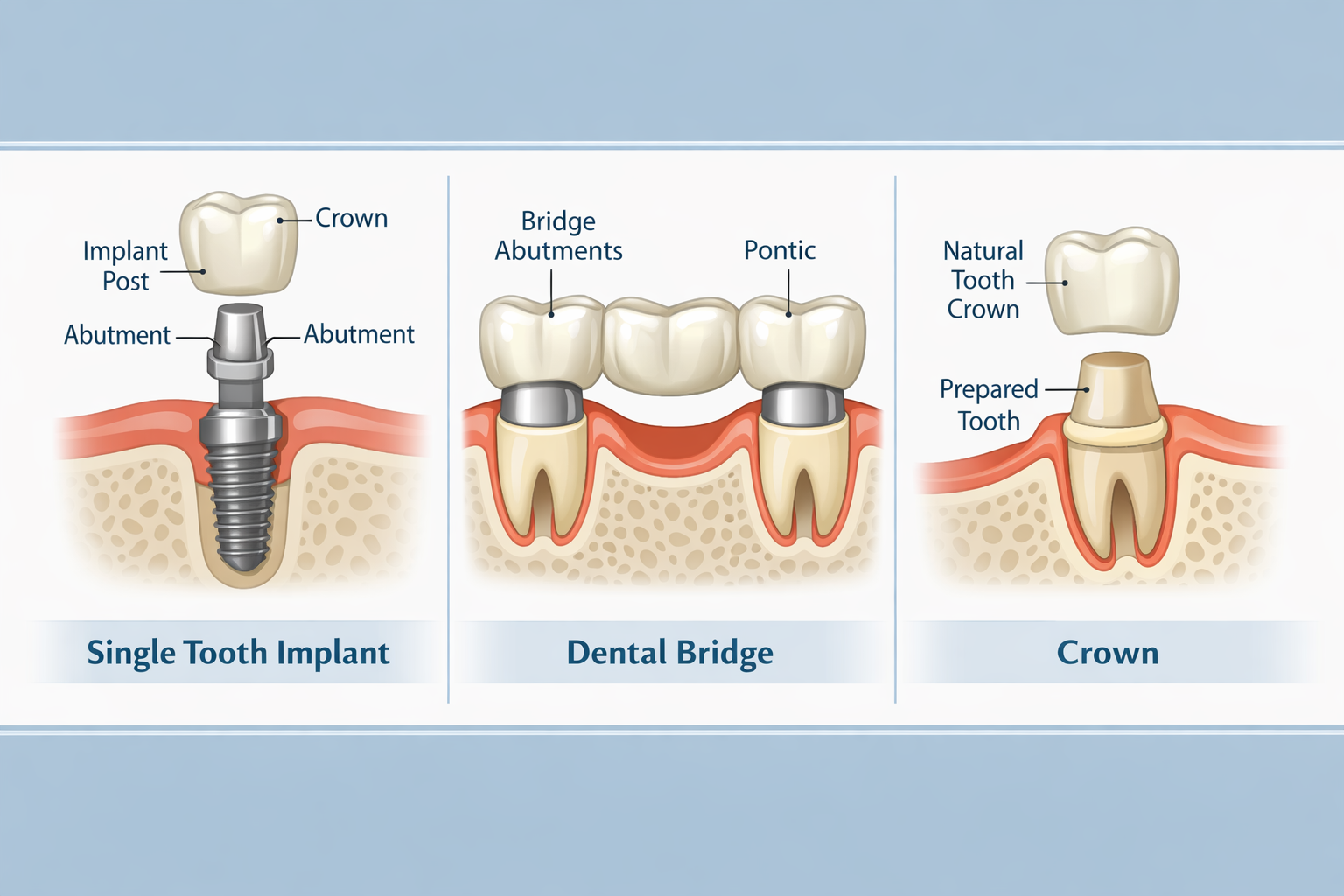
When considering tooth replacement options, it’s important to differentiate between solutions for a missing tooth and solutions for a damaged tooth that is still present. A single tooth implant and a dental bridge are primarily used to replace a missing tooth, while a dental crown is typically used to cap and protect a compromised natural tooth. Let’s delve into each option to understand its components, procedure, and general application.
The Single Tooth Implant: The Modern Standard for Missing Teeth Solutions
A dental implant is a sophisticated and highly effective solution for replacing a single missing tooth. It mimics the structure of a natural tooth, consisting of three main parts:
- The Implant Post (Fixture): A small, screw-shaped post, usually made of titanium, that is surgically placed into the jawbone. This acts as an artificial tooth root.
- The Abutment: A connector piece that attaches to the implant post and extends above the gum line.
- The Dental Crown: A custom-made, natural-looking porcelain or ceramic tooth that is secured to the abutment, restoring the visible part of your tooth.
The dental implant procedure involves several steps, typically spread over a few months to allow for healing and osseointegration—the process where the implant fuses with the jawbone. This fusion provides unparalleled stability, mimicking the natural root system and helping to preserve the surrounding jawbone, which is crucial for long-term oral health. For more detailed information on the implant process, you can explore our guide on How Long Does Dental Implant Process Take? 2026 Guide.
The Dental Bridge: A Traditional Approach
A dental bridge is a traditional method for replacing one or more missing teeth by “bridging” the gap created by the missing tooth. It consists of one or more artificial teeth (called pontics) that are held in place by dental crowns cemented onto the natural teeth adjacent to the gap. These adjacent teeth are called abutment teeth.
The process for a dental bridge involves preparing the abutment teeth by removing a small amount of enamel to make space for the crowns. An impression is then taken, and the bridge is custom-fabricated. While effective, a key consideration with a bridge is that it requires the modification of healthy adjacent teeth, which can potentially weaken them over time. Our article on Dental Bridge vs. Implant Cost in 2025 offers a deeper dive into this comparison.
The Dental Crown: Restoring a Damaged Tooth
A dental crown, often referred to as a “cap,” is a custom-made covering that fits over a damaged or weakened natural tooth. Unlike an implant or bridge, a crown does not replace a missing tooth; rather, it restores the shape, size, strength, and appearance of an existing tooth.
Crowns are recommended in cases where:
- A tooth has a very large filling and there isn’t enough natural tooth structure left.
- A tooth is weak and needs protection from fracturing.
- A tooth is broken or severely worn down.
- A tooth has undergone root canal treatment.
- To cover a discolored or misshapen tooth.
The procedure involves shaping the existing tooth, taking an impression, and then cementing the custom crown into place. It’s important to note that while a crown is part of a single tooth implant, a standalone dental crown serves a different purpose for a natural tooth. You can learn more about costs related to crowns in our Dental Implant Crown Replacement Cost Dallas 2026 Guide.
Single Tooth Implant vs. Bridge vs. Crown in Dallas: Cost Comparison (2026)
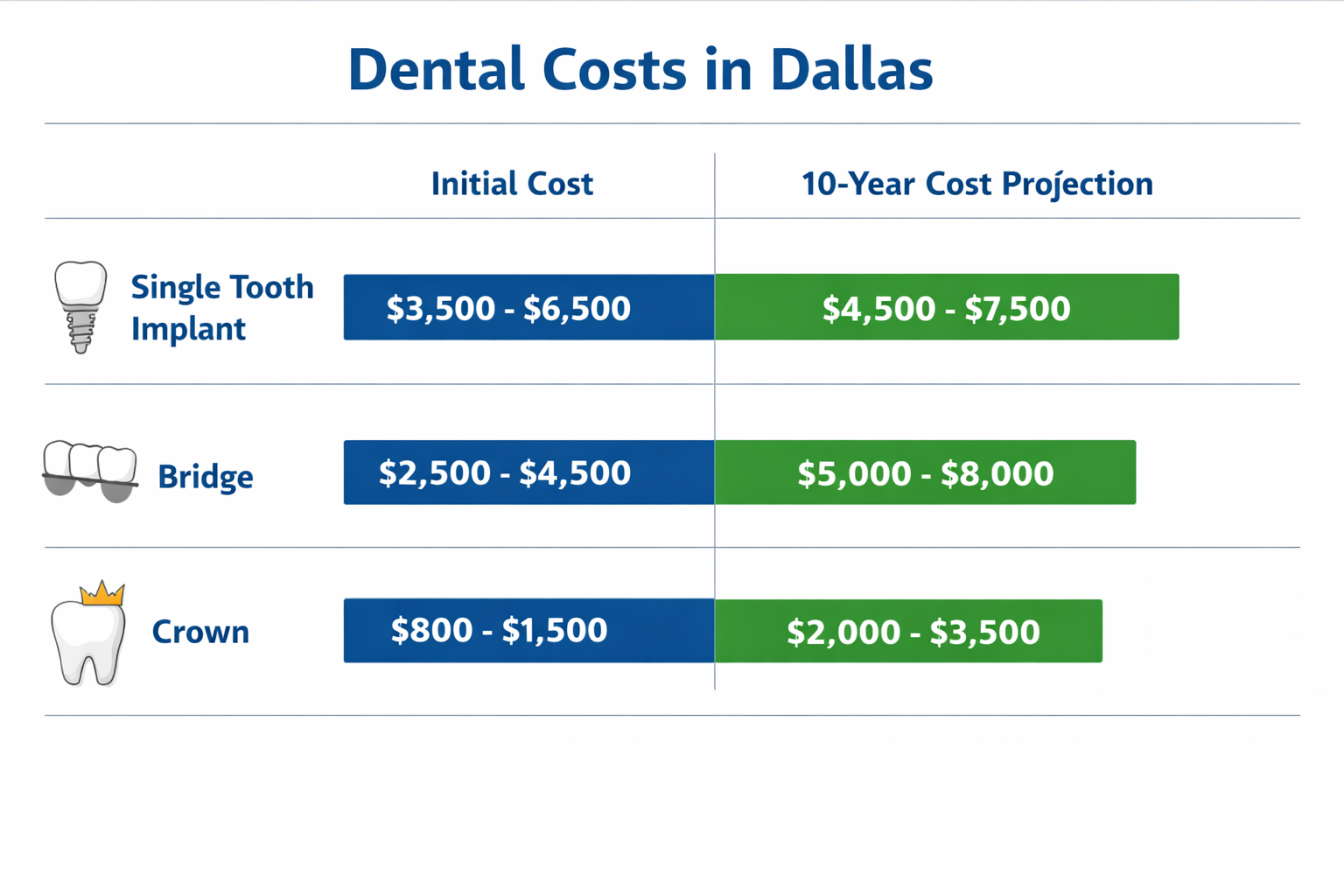
One of the most significant factors in deciding on a tooth replacement or restoration option is the cost. It’s important to look beyond the initial price tag and consider the long-term investment, including potential maintenance and replacement costs. The prices provided here are estimates for Dallas, Texas, in 2026 and can vary widely based on the complexity of the case, the materials used, the specific dental practice, and any necessary preparatory procedures.
Estimated Initial Costs in Dallas (2026)
| Option | Estimated Cost Range (Per Unit/Procedure) | What’s Included (General) | Key Cost Factors |
|---|---|---|---|
| Single Tooth Implant | $3,000 – $5,500 (complete) | Implant post, abutment, custom crown, surgical placement, follow-up appointments. | Bone grafting needs, type of implant material, specialist fees, location in Dallas. |
| Dental Bridge | $2,000 – $5,000 (3-unit bridge) | Preparation of adjacent teeth, pontic (artificial tooth), two crowns, lab fees, placement. | Number of missing teeth, material (porcelain, metal-ceramic), complexity of preparation. |
| Dental Crown | $1,000 – $3,000 (per crown) | Tooth preparation, custom crown fabrication, placement. | Material (porcelain, ceramic, gold), lab fees, complexity of tooth damage. |
Note: These ranges are estimates for Dallas in 2026. A consultation with a dentist is necessary for an accurate quote.
When considering the implant cost in Dallas, it’s helpful to understand that the initial investment often covers multiple stages: the surgical placement of the implant, the healing period, and the final restoration with a crown. Sometimes, additional procedures like bone grafting or tooth extraction may be required, which would add to the overall cost. For a comprehensive overview of dental implant costs, please refer to our article, Dallas Dental Implant Cost Guide 2025.
10-Year Cost Projection and Longevity Comparison (2026)
Understanding the long-term cost is vital for truly comparing these options. A lower initial cost doesn’t always translate to the most economical choice over a decade or more.
Single Tooth Implant
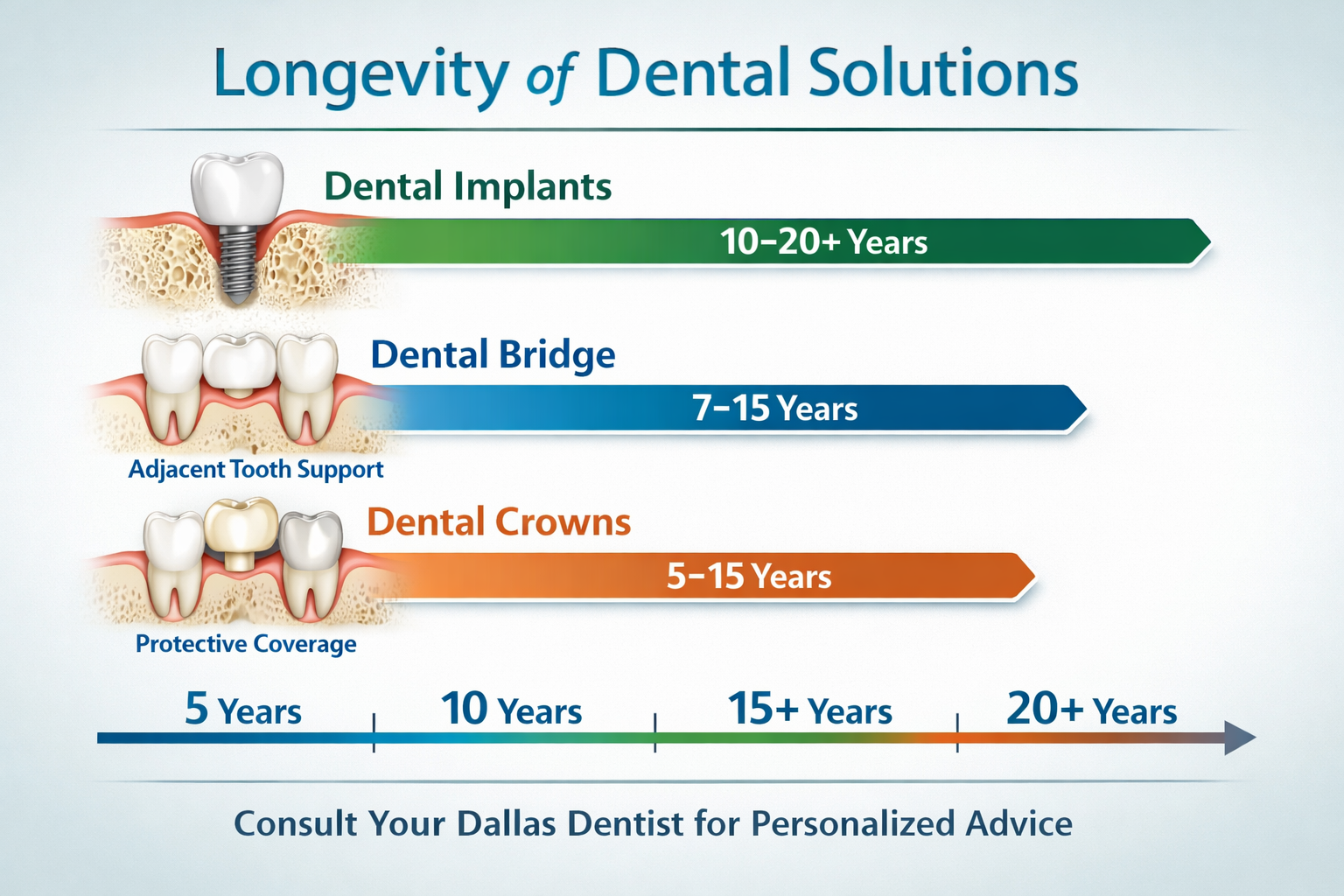
- Longevity: With proper care, a single dental implant can last a lifetime. The implant post itself is incredibly durable. The crown attached to it may need replacement after 10-15 years, similar to a natural tooth crown.
- 10-Year Cost Projection: Beyond the initial cost, maintenance typically involves routine dental check-ups, cleanings, and good oral hygiene. Assuming the crown might need replacement around the 10-15 year mark, you might budget for a crown replacement.
- Initial Cost: $3,000 – $5,500
- Maintenance/Potential Crown Replacement (within 10-15 yrs): $0 – $1,500 (if crown needs replacement after 10 years, it costs less than initial full implant procedure, see: Dental Implant Crown Replacement Cost Dallas | 2026 Guide)
- Total 10-Year Estimated Cost: $3,000 – $7,000
Dental Bridge
- Longevity: Dental bridges typically last 5 to 15 years, with the average being around 7-10 years. Their lifespan is often limited by the health of the supporting natural teeth, which can be susceptible to decay or gum disease around the crowns.
- 10-Year Cost Projection: It is highly likely that a dental bridge will need to be replaced within a 10-year period. This means incurring the initial cost of a new bridge, potentially more if the supporting teeth have further deteriorated.
- Initial Cost: $2,000 – $5,000
- Replacement Cost (within 10 years): $2,000 – $5,000 (estimated for one replacement)
- Total 10-Year Estimated Cost: $4,000 – $10,000+ (potentially more if supporting teeth need additional treatment)
Dental Crown
- Longevity: A single dental crown on a natural tooth can also last 5 to 15 years, with 10 years being a common expectation. Factors like bite forces, oral hygiene, and the presence of teeth grinding can influence its lifespan.
- 10-Year Cost Projection: Similar to bridges, a dental crown may need replacement within 10 years.
- Initial Cost: $1,000 – $3,000
- Replacement Cost (within 10 years): $1,000 – $3,000 (estimated for one replacement)
- Total 10-Year Estimated Cost: $2,000 – $6,000+
Why Long-Term Oral Health Matters More Than Just Initial Cost
While a dental implant may have a higher upfront cost, its exceptional longevity and benefits to long-term oral health often make it the most cost-effective choice over several decades. Implants prevent bone loss in the jaw, which can occur when a tooth is missing. This bone preservation helps maintain the natural structure of your face and prevents adjacent teeth from shifting. Dental bridges, while restoring the aesthetics of your smile, do not prevent bone loss and can put strain on the adjacent healthy teeth. This is a critical factor for patient safety and long-term oral health.
Factors Influencing Your Choice in Dallas
Choosing between a single tooth implant, a bridge, or a crown involves considering more than just cost and longevity. Several other factors play a crucial role in determining the best missing teeth solutions for your unique situation.
Oral Health and Bone Density
For a successful dental implant, sufficient jawbone density is critical. The implant needs a strong foundation to integrate with the bone. If you have been missing a tooth for a while, bone loss may have occurred, requiring a bone graft procedure before implant placement. This would add to the cost and treatment time. Dental bridges do not require specific bone density, as they rely on existing healthy teeth for support. Crowns require the existing tooth to have a healthy root and sufficient remaining structure. A comprehensive assessment during a consultation with a dentist will determine your bone health.
Impact on Adjacent Teeth
This is a key differentiator between implants and bridges.
- Single Tooth Implant: This option stands alone, meaning adjacent healthy teeth are not affected or altered. It preserves their integrity, which is a significant advantage for long-term dental health.
- Dental Bridge: For a bridge, the healthy teeth on either side of the gap must be prepared (filed down) to support the crowns that hold the artificial tooth in place. This irreversible process can weaken these teeth and make them more susceptible to decay or the need for future root canals, which can add to future costs and complications.
Maintenance and Care
All dental restorations require good oral hygiene, but there are differences in daily care:
- Single Tooth Implant: Implants are cared for just like natural teeth—brushing, flossing, and regular dental check-ups. Specialized brushes or floss may be recommended around the implant site.
- Dental Bridge: Bridges require meticulous cleaning underneath the pontic (the artificial tooth) to prevent plaque buildup and gum disease in the supporting teeth. Special floss threaders or interdental brushes are often necessary.
- Dental Crown: Crowns on natural teeth are brushed and flossed like any other tooth. Regular check-ups are essential to monitor the crown and the underlying tooth.
Aesthetics and Natural Feel
- Single Tooth Implant: Dental implants are renowned for their natural appearance and feel. Because they are anchored in the jawbone, they offer stability and comfort that closely mimics natural teeth. The custom-made crown is designed to match your existing teeth in color, shape, and size.
- Dental Bridge: While bridges can be aesthetically pleasing, some patients report a slightly less natural feel compared to implants, as they rest on the gums rather than being integrated into the bone.
- Dental Crown: A well-made crown on a natural tooth can be virtually indistinguishable from your other teeth, fully restoring its aesthetic appeal.
Treatment Time
The dental implant procedure generally takes longer, typically several months from start to finish, due to the healing period required for osseointegration. A temporary tooth while waiting for implant may be provided to maintain aesthetics. Temporary Tooth While Waiting for Implant: Your 2026 Guide explains this in more detail. Dental bridges and crowns can often be completed in a few weeks, usually across two dental appointments.
Patient Safety and Risks
Every dental procedure carries some risks.
- Single Tooth Implant: Risks are generally low but can include infection, nerve damage (rare), or implant failure. However, success rates are very high (over 95%).
- Dental Bridge: Risks include potential decay or damage to the abutment teeth, gum inflammation around the bridge, and the bridge becoming loose.
- Dental Crown: Risks include nerve irritation, potential for the crown to chip or break, or sensitivity of the underlying tooth.
Your dentist will discuss all potential risks and benefits during your initial consultation, ensuring patient safety is a top priority.
Making an Informed Decision in Dallas
Choosing the right tooth replacement or restoration option is a highly personal decision. While this article provides a detailed Single Tooth Implant vs. Bridge vs. Crown in Dallas: Cost & Longevity Comparison, it is not a substitute for professional medical advice.
The Importance of a Professional Consultation
The most crucial step is to schedule a comprehensive consultation with a dentist in Dallas. During this appointment, your dentist will:
- Perform a thorough oral examination.
- Take X-rays and possibly 3D scans to assess bone density and overall oral health.
- Discuss your medical history and lifestyle factors.
- Explain all suitable tooth replacement options tailored to your specific needs.
- Provide a detailed treatment plan, including an accurate breakdown of costs, potential insurance coverage, and financing options.
This personalized approach ensures that you receive recommendations based on your unique oral health situation, not just general guidelines.
Questions to Ask Your Dallas Dentist
When you have your consultation with a dentist, consider asking:
- “Based on my oral health, which option do you recommend and why?”
- “What are the precise costs for each option, including any potential additional procedures like bone grafting?”
- “What is the estimated lifespan of each option for my specific case?”
- “What are the maintenance requirements for each option?”
- “How will each option impact my adjacent teeth and overall long-term oral health?”
- “Do you offer financing options or payment plans for these procedures?” (You can learn more about Dallas Dental Implant Financing Options | Payment Plans 2025)
By asking these questions, you ensure a thorough understanding of your choices and can make a decision with confidence.
Conclusion
Navigating the options for replacing a missing tooth or restoring a damaged one can feel overwhelming. However, understanding the distinctions between a single tooth implant, a dental bridge, and a dental crown, particularly concerning their costs and longevity in Dallas, empowers you to make the best choice for your smile and long-term oral health.
While a dental implant often represents a higher initial investment, its unparalleled benefits in terms of stability, bone preservation, and long-term durability typically make it the most cost-effective and beneficial solution over time. Dental bridges offer a traditional alternative, but they require the modification of healthy adjacent teeth and have a shorter lifespan. Dental crowns are excellent for restoring compromised natural teeth but do not address missing tooth gaps.
For residents of Dallas seeking solutions for missing teeth, we encourage you to prioritize a thorough consultation with a dentist. An experienced professional can provide a personalized assessment, discuss the specifics of the dental implant procedure, and offer clear guidance on the optimal path for your unique needs. Investing in your oral health is investing in your overall well-being.