
Embarking on the journey to restore your smile with dental implants in Dallas is a significant decision, offering a durable and aesthetically pleasing solution for missing teeth. However, many individuals are surprised to discover that the initial quote for a dental implant procedure often doesn’t encompass all the necessary expenses. Understanding The ‘Hidden’ Costs of Dental Implants in Dallas: What to Expect Beyond the Initial Quote (Consultations, X-rays, Medications) is crucial for accurate budgeting and to avoid unexpected financial burdens. This comprehensive guide aims to shed light on these often-unmentioned expenses, from initial diagnostic fees to post-operative care, empowering you to make informed decisions about your long-term oral health.
Dental implants are a superior tooth replacement option, providing stability, preserving jawbone health, and mimicking the look and feel of natural teeth. Yet, the path to a successful implant involves several steps, each with its associated costs. From the moment you consider dental implants, various diagnostic, preparatory, and follow-up services contribute to the overall investment. This article will break down these components, ensuring you have a clear picture of what to expect financially in 2026.
Key Takeaways
- Initial dental implant quotes often exclude vital diagnostic, preparatory, and follow-up expenses.
- Consultation fees, advanced imaging (X-rays, CBCT scans), and preliminary treatments (extractions, bone grafts) are common hidden costs.
- Medications (antibiotics, pain relievers) and sedation options contribute significantly to the total cost.
- Understanding these additional expenses is essential for accurate budgeting and informed decision-making regarding dental implants in Dallas.
- Always request a comprehensive, itemized treatment plan to reveal all potential costs upfront.
Decoding Initial Assessment and Preparatory Procedures for Dental Implants in Dallas
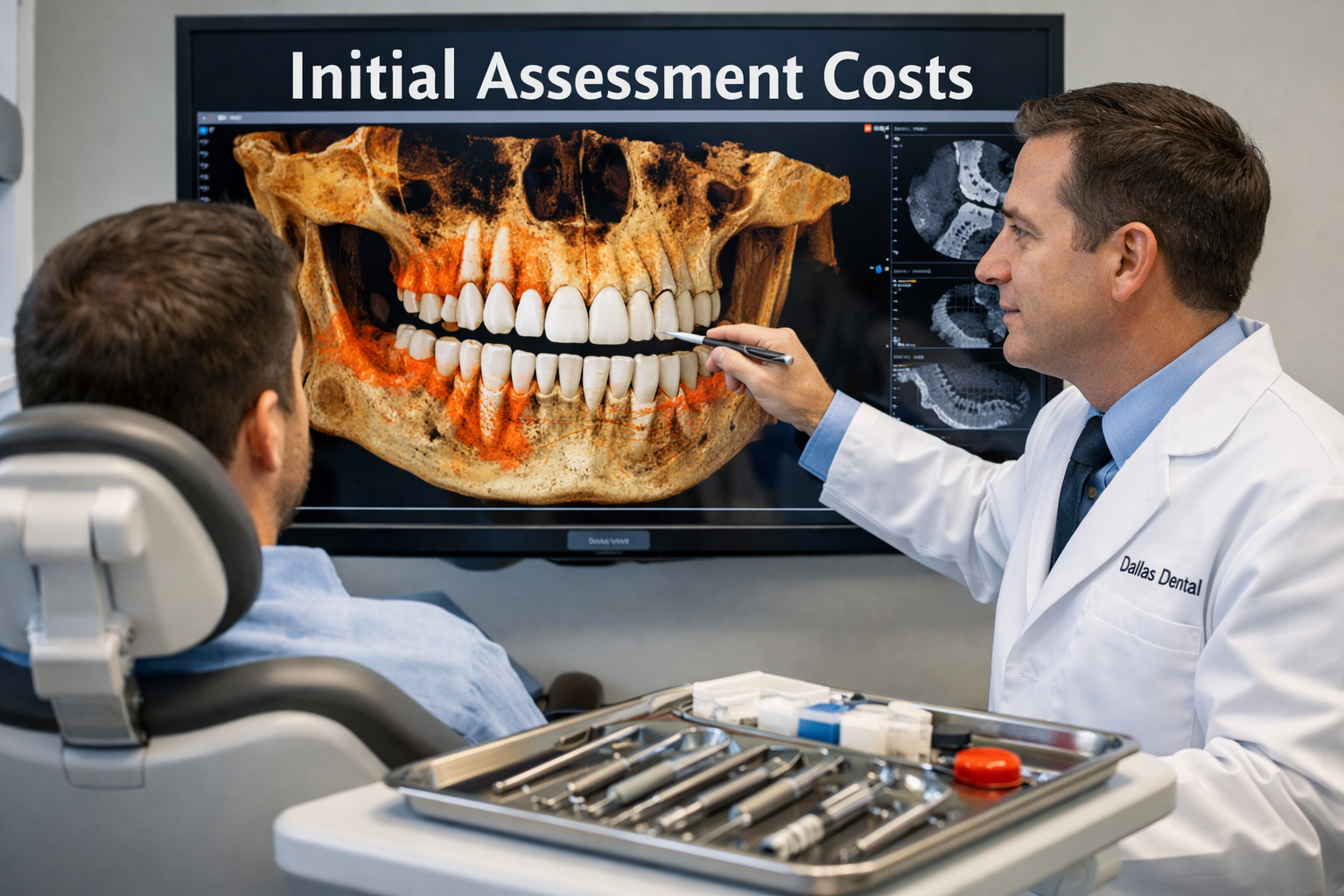
The first step in considering dental implants is a thorough evaluation by a qualified dental professional. This initial assessment is paramount to determine your suitability for the procedure and to formulate a precise treatment plan. While some clinics might offer a complimentary initial consultation, many charge a fee for this crucial diagnostic phase. These fees often cover more than just a brief chat.
Consultation Fees
A comprehensive consultation involves a detailed review of your oral health history, a physical examination of your mouth, and a discussion about your treatment goals. This initial meeting allows the dentist to assess your general oral health, identify any underlying issues, and determine if dental implants are the right solution for your specific needs. The cost of this consultation can vary widely depending on the clinic’s location, the dentist’s expertise, and the complexity of the initial assessment.
Diagnostic Imaging: X-rays and CBCT Scans
Beyond a visual examination, advanced imaging is indispensable for planning successful dental implant surgery. Standard X-rays provide a two-dimensional view of your teeth and jawbone, but for dental implants, a more detailed three-dimensional perspective is often required. This is where Cone Beam Computed Tomography (CBCT) scans become vital.
- Traditional X-rays: These help identify existing dental problems, assess bone density, and visualize the structure of your jaw.
- CBCT Scans: These provide highly detailed 3D images of your bone structure, nerve pathways, and soft tissues. This level of detail is critical for precise implant placement, helping to avoid nerve damage and ensuring adequate bone support. The cost of a CBCT scan is typically higher than traditional X-rays due to the advanced technology and specialized equipment involved. This diagnostic step is a cornerstone of patient safety and successful outcomes, especially when considering 3D Guided Dental Implants Dallas 2026: Precision Benefits, C.
Preliminary Treatments
Not everyone is immediately ready for dental implant placement. Several preparatory procedures might be necessary to ensure the long-term success of your implant. These can include:
- Tooth Extractions: If a damaged or diseased tooth needs to be removed before an implant can be placed, the cost of extraction will be an additional expense.
- Bone Grafting: Adequate bone density is crucial for dental implant stability. If you have experienced bone loss due to missing teeth, gum disease, or trauma, a bone graft may be required to build up the jawbone. This procedure involves placing bone material (from your own body, a donor, or synthetic sources) into the area where the implant will be placed. Bone grafting can significantly increase the overall cost and add several months to the treatment timeline, as the graft needs time to heal and integrate with your existing bone.
- Sinus Lifts: For implants in the upper jaw, especially in the back, the sinus cavity may be too close to the jawbone for safe implant placement. A sinus lift, a specific type of bone grafting procedure, raises the sinus floor to create more bone height.
- Gum Disease Treatment: Active gum disease must be treated and controlled before any implant surgery can proceed, as it can compromise the implant’s success. The costs associated with periodontal therapy would also be considered a preliminary expense.
These preparatory treatments, while essential for the longevity of your dental implants, are frequently not included in the initial quote you receive. It’s crucial to discuss all potential preliminary procedures and their associated costs during your initial consultation with a dentist.
“A comprehensive upfront assessment, including advanced imaging and a discussion of any necessary preliminary treatments, is the foundation of transparent dental implant costing. Never proceed without a full understanding of these initial expenses.”
– Dental Implant Education – Dallas TX
Beyond Surgery: Medications, Sedation, and Post-Operative Care Costs
The financial aspect of dental implants extends well beyond the surgical procedure itself. A complete understanding of the implant cost in Dallas requires factoring in expenses related to comfort, infection prevention, and ensuring a smooth recovery. These elements contribute significantly to The ‘Hidden’ Costs of Dental Implants in Dallas: What to Expect Beyond the Initial Quote (Consultations, X-rays, Medications).
Medications
Post-operative care is crucial for the healing process and preventing complications. This often involves a regimen of prescribed medications, which typically include:
- Antibiotics: These are frequently prescribed before and/or after surgery to prevent infection at the implant site.
- Pain Relievers: Over-the-counter or prescription-strength pain medications are usually recommended to manage discomfort during the initial recovery phase.
- Anti-inflammatory Drugs: These can help reduce swelling and inflammation, contributing to a more comfortable recovery.
While individual medication costs might seem minor, they add up and are rarely part of the initial procedure quote. Patients should anticipate these pharmacy expenses.
Sedation Options
Undergoing oral surgery can be a source of anxiety for many. Fortunately, various sedation options are available to ensure your comfort during the dental implant procedure. The type of sedation chosen can significantly impact the overall cost.
- Local Anesthesia: This is always used to numb the surgical area, and its cost is typically integrated into the procedure fee.
- Nitrous Oxide (Laughing Gas): A mild form of sedation that helps you relax. It’s relatively inexpensive and wears off quickly.
- Oral Sedation: Involves taking a pill before the procedure to induce a state of relaxation. The cost is moderate.
- IV Sedation (Conscious Sedation): Administered intravenously, this provides a deeper level of relaxation, often making patients feel like they’ve slept through the procedure. This option requires an anesthesiologist or a specially trained dental professional to administer and monitor, making it a more significant additional cost. For a detailed breakdown, explore Dental Implant Sedation Options Dallas: Costs, Safety & Types.
- General Anesthesia: In some complex cases or for highly anxious patients, general anesthesia may be recommended, where you are completely unconscious. This is the most expensive sedation option, requiring an anesthesiologist and specialized facilities.
When discussing your treatment plan, it is essential to inquire about all available sedation options and their respective costs to help you budget accurately.
Post-Operative Follow-up Appointments
After the implant surgery, several follow-up appointments are necessary to monitor healing, remove sutures, and ensure the implant is integrating properly with the jawbone. These appointments are critical for ensuring the long-term success of your implant and may incur separate fees or be partially covered depending on the clinic’s policy. Additionally, should any dental implant recovery complications Dallas arise, further visits and treatments would entail additional expenses.
Temporary Restorations
In some cases, especially for implants in visible areas, a temporary crown or bridge might be placed while the implant site heals and integrates. This temporary restoration allows you to maintain aesthetics and function during the healing period but comes with its own cost, which is separate from the final crown. This is particularly relevant for those exploring single tooth implant vs. bridge vs. crown in Dallas: cost & options.
The ‘Hidden’ Costs of Dental Implants in Dallas: The Full Financial Picture
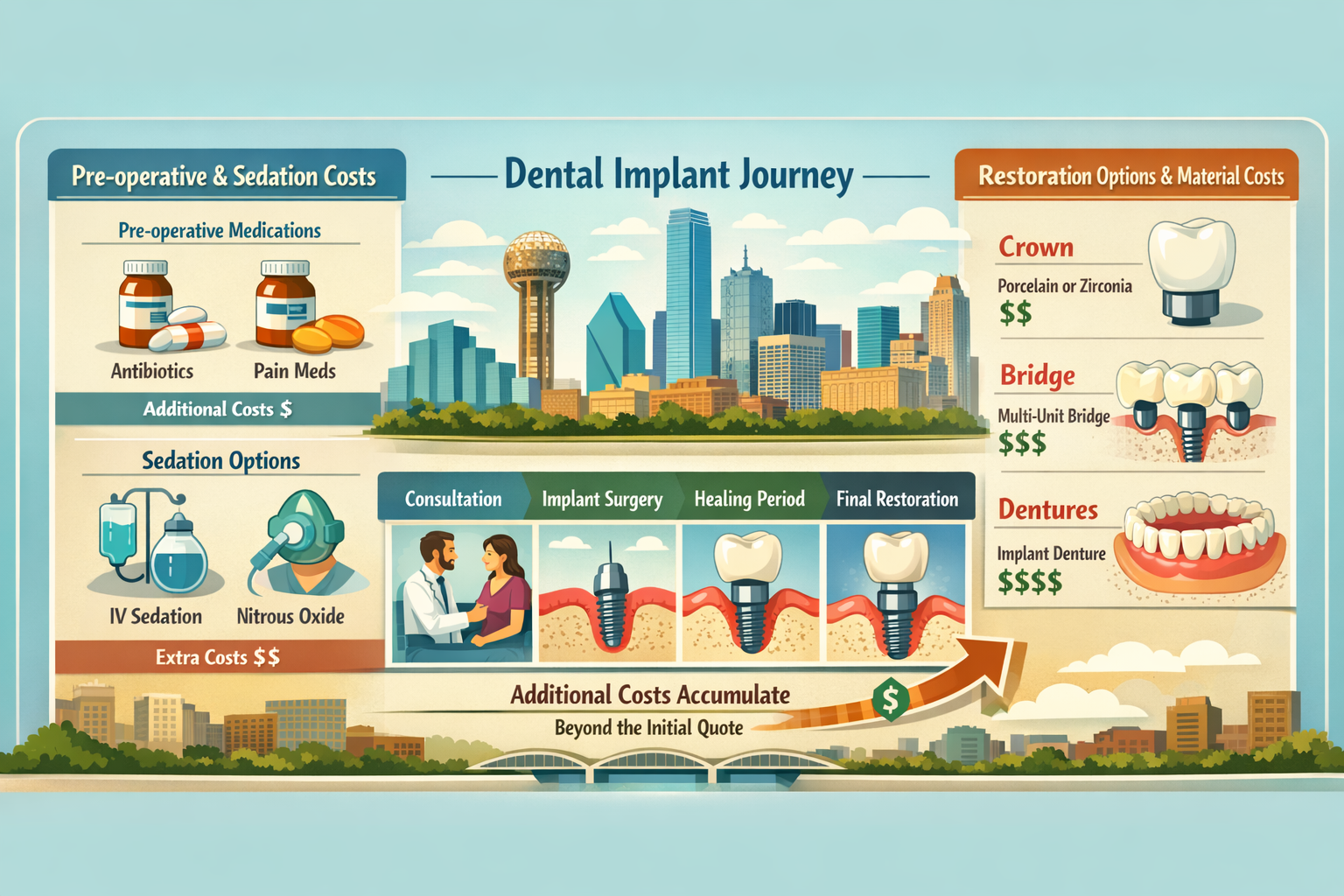
Understanding the complete financial landscape of dental implants goes beyond the immediate procedures and medications. Several other factors contribute to the overall investment, some of which may not be immediately apparent in an initial quote. Fully grasping The ‘Hidden’ Costs of Dental Implants in Dallas: What to Expect Beyond the Initial Quote (Consultations, X-rays, Medications) is key to confident decision-making.
Material and Lab Fees for the Final Restoration
The actual implant fixture (the screw placed in the bone) is only one component. The final restoration – the crown, bridge, or denture that attaches to the implant – carries its own significant costs. These costs are influenced by several factors:
- Type of Restoration: A single crown will differ in price from an implant-supported bridge or a full arch denture. For instance, comparing All-on-6 vs All-on-4 Implants Dallas TX: 2026 Cost Compariso or Full Mouth Implant Overdentures Dallas TX 2026: Snap-In Cost reveals distinct pricing structures.
- Material: Crowns can be made from various materials, including porcelain-fused-to-metal (PFM), zirconia, or full ceramic. Zirconia and full ceramic crowns generally offer superior aesthetics and durability but come at a higher price. For more on this, see Why Zirconia Implants Cost More in Dallas: Material Comparis.
- Lab Fees: Dental labs fabricate these custom restorations, and their fees are a substantial part of the total cost. Quality labs using advanced technology and skilled technicians ensure a precise fit and natural appearance. Some clinics may have partnerships that offer 2026 Lab Cost Reductions for Dallas Dental Implants, which could influence your overall expenditure.
Maintenance and Long-Term Care
Dental implants, while durable, require diligent oral hygiene and regular professional maintenance to ensure their longevity.
- Routine Cleanings: Just like natural teeth, implants need regular cleanings to prevent peri-implantitis, a condition similar to gum disease that can affect implants. While routine cleanings are standard, specialized cleaning tools or techniques might be required for implants, which could incur specific fees. Understanding Peri-Implantitis Prevention Dallas: Early Signs, Treatment C is important for protecting your investment.
- Potential Adjustments or Repairs: Over time, the crown or abutment (the connector between the implant and the crown) might need adjustments or repairs due to wear and tear. While implants themselves are designed to last decades, the prosthetic components may need periodic attention.
Provider Expertise and Technology
The expertise of the dental professional performing the procedure and the technology used play a significant role in the overall cost and success rate. Highly experienced implant dentists in Dallas who utilize advanced technologies like 3D Guided Dental Implants Dallas 2026: Precision Tech Boosti may have higher fees, but this investment often translates into greater precision, safety, and predictability of outcomes. The clinic’s overhead, location, and the range of services offered also influence pricing. This helps explain Why Dallas Dental Implant Prices Vary So Widely.
Insurance Coverage and Financing
Many patients overlook the intricacies of dental insurance when planning for implants. While some insurance plans may offer partial coverage for certain aspects of the procedure (like extractions or basic X-rays), full coverage for the implant itself is rare. It’s crucial to thoroughly check your policy or consult with your insurance provider regarding Qualifying for Dental Implant Insurance Reimbursement Dallas. For uncovered costs, many dental offices offer financing options or payment plans to make the investment more manageable.
By thoroughly investigating these “hidden” costs, patients seeking dental implants in Dallas can better prepare financially, ensuring a smooth and stress-free journey to a restored smile.
Conclusion
Navigating the financial aspects of dental implants in Dallas requires a comprehensive understanding that goes beyond the initial quoted price. As we’ve explored, The ‘Hidden’ Costs of Dental Implants in Dallas: What to Expect Beyond the Initial Quote (Consultations, X-rays, Medications) encompass a range of essential services and products, including detailed diagnostic imaging, necessary preparatory procedures like bone grafts, various sedation options, post-operative medications, and the selection of materials for your final restoration. These elements, while often overlooked, are critical for the success, comfort, and longevity of your dental implants.
For patients researching tooth replacement options, it is vital to engage in an open and detailed discussion with your dental professional. Always request a comprehensive, itemized treatment plan that clearly outlines all potential costs, from the initial consultation to the final restoration and aftercare. This patient-first approach ensures transparency and allows for accurate budgeting, eliminating surprises along the way.
Choosing dental implants is an investment in your long-term oral health and quality of life. By being fully informed about all potential expenses, you can confidently proceed with a clear understanding of the full financial commitment. Remember to prioritize thorough evaluation, discuss all options, and ensure you receive a complete picture of your investment in a healthier, more confident smile in 2026.