

For many seniors in Dallas, the prospect of restoring a healthy, functional smile with dental implants often comes with a significant question: Does Medicare Cover Dental Implants in Dallas? Navigating Benefits and Supplement Plans for Seniors 2026 can feel like a complex puzzle. While dental implants offer a durable and effective solution for missing teeth, understanding how they fit into the Medicare landscape is crucial for informed decision-making. This article aims to clarify the general rules of Medicare regarding dental services and explore the various avenues available to Dallas seniors seeking coverage for dental implant procedures in 2026.
Dental implants are more than just cosmetic enhancements; they are essential for maintaining oral health, proper chewing function, and preventing further bone loss. As you navigate the specifics of Medicare, it’s important to differentiate between Original Medicare (Parts A and B) and other plans that can offer more comprehensive dental benefits.
Key Takeaways
- Original Medicare (Parts A & B) generally does not cover routine dental care or most dental implant procedures.
- Medicare Advantage (Part C) plans often include dental benefits, which may extend to partial or full coverage for dental implants in Dallas, depending on the specific plan.
- Stand-alone dental insurance policies and dental discount plans are additional options for seniors seeking financial assistance for dental implants.
- Understanding the specifics of your chosen plan, including deductibles, co-payments, and annual maximums, is crucial.
- A consultation with a dentist in Dallas and a Medicare plan expert can help clarify individual eligibility and costs for dental implant procedures in 2026.
Original Medicare and Dental Implants in Dallas: The Baseline for 2026
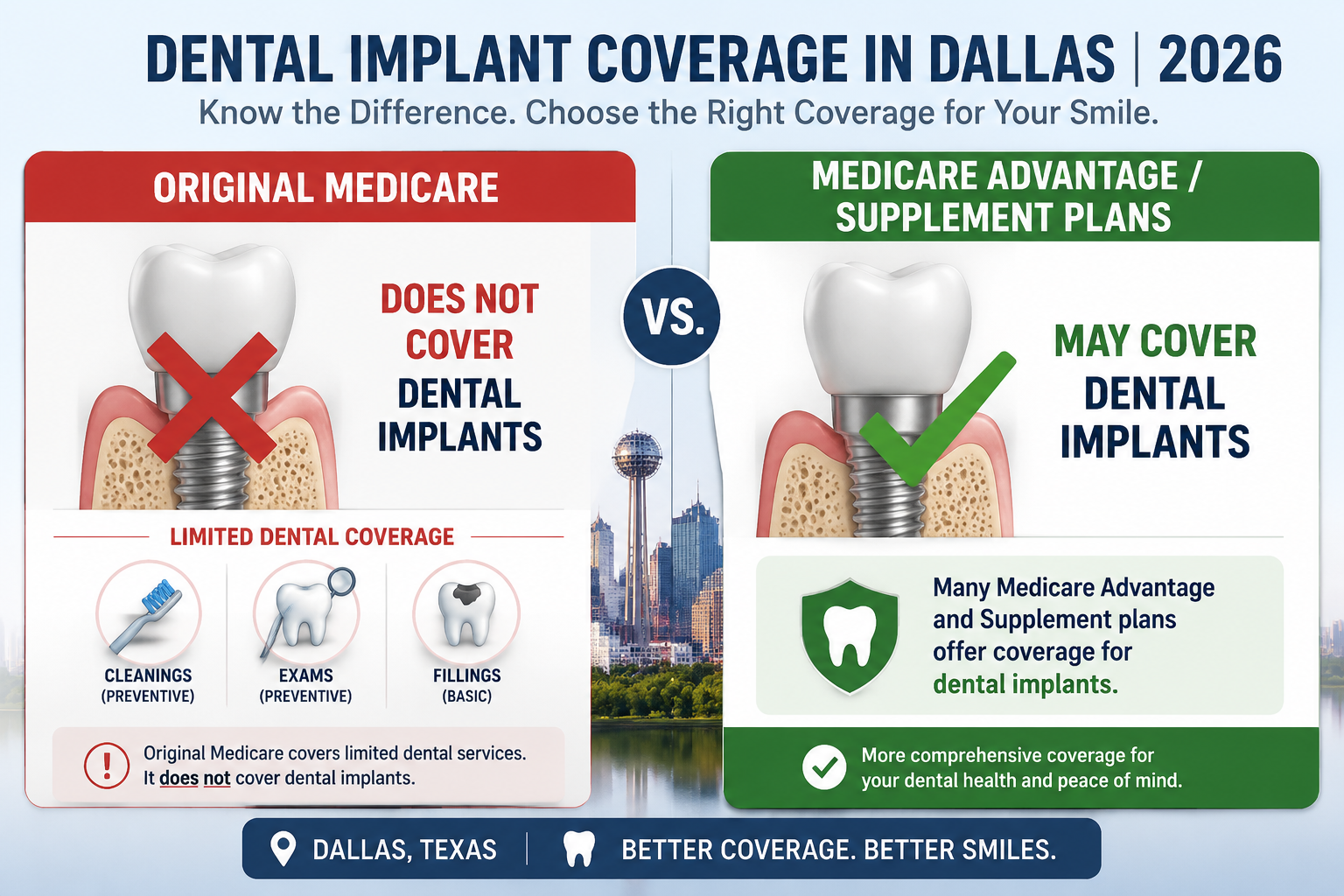
Original Medicare, comprising Part A (Hospital Insurance) and Part B (Medical Insurance), is the foundation of Medicare coverage. However, when it comes to dental care, its scope is quite limited. Generally, Original Medicare does not cover routine dental services, such as cleanings, fillings, extractions, dentures, or most importantly, dental implants.
The guiding principle for Original Medicare coverage is “medically necessary” services. This means that if a dental service is intricately linked to a medical procedure covered by Medicare Part A or Part B, there might be limited coverage for that specific dental aspect. For example, if you require a tooth extraction as part of a preparation for radiation treatment for oral cancer, or if you need an oral exam prior to a kidney transplant, Medicare Part B might cover the oral exam. However, the dental implant itself, or the restoration of missing teeth, is typically not considered a medical necessity by Original Medicare standards.
This often comes as a surprise to many seniors who rely on Medicare for their healthcare needs. For those considering dental implants in Dallas in 2026, it’s vital to understand that Original Medicare will not be the primary source of financial support for this type of tooth replacement option.

Navigating Beyond Original Medicare: Supplement Plans and Dental Coverage for Seniors
Since Original Medicare offers minimal to no coverage for dental implants, seniors in Dallas often need to explore alternative options. These typically fall into a few categories: Medicare Advantage Plans (Part C), stand-alone dental insurance policies, and dental discount plans.
Medicare Advantage Plans (Part C)
Medicare Advantage plans are offered by private insurance companies approved by Medicare. These plans bundle your Part A, Part B, and often Part D (prescription drug) coverage, and they frequently include additional benefits that Original Medicare does not, such as vision, hearing, and—critically for this discussion—dental coverage.
Many Medicare Advantage plans available to Dallas residents in 2026 do offer dental benefits that could potentially cover a portion of the cost for a dental implant procedure. However, the extent of this coverage varies significantly from plan to plan. Some plans may cover routine preventive care, while others might offer a broader range of services, including restorative procedures like crowns, bridges, and even some coverage for dental implants.
When considering a Medicare Advantage plan for dental implant coverage, it’s essential to:
- Review the Summary of Benefits: This document outlines exactly what dental services are covered, including specific limitations, deductibles, co-payments, and annual maximums.
- Check the Provider Network: Ensure that your preferred Dallas dentist or a qualified oral surgeon who performs implant surgery is within the plan’s network.
- Understand the Cost-Sharing: Be aware of the out-of-pocket expenses you’ll be responsible for, even with coverage.
- Look for Specific Implant Coverage: Not all dental benefits within Advantage plans cover major procedures like dental implants. Some may only cover a percentage after a waiting period, or up to a certain dollar amount.
For example, a plan might cover 50% of major dental services after a $500 deductible, up to an annual maximum of $2,000. If your dental implant cost in Dallas is $4,000, and you’ve met your deductible, the plan might cover $1,750 ($3,500 * 50%), leaving you with a significant out-of-pocket expense. It’s important to compare Dallas Dental Implant Cost vs National Averages 2026 to understand the potential expenses.
Stand-Alone Dental Insurance Plans
Another popular option for seniors is purchasing a separate, stand-alone dental insurance policy. These plans are designed specifically for dental care and are not tied to your Medicare benefits. Many insurance companies offer policies that cover a percentage of major restorative procedures, including dental implants.
When researching stand-alone dental insurance for dental implants in Dallas in 2026, consider these factors:
- Waiting Periods: Most plans have waiting periods (e.g., 6-12 months) before they will cover major procedures like implants.
- Annual Maximums: There’s usually a cap on how much the insurance company will pay out in a year.
- Deductibles and Co-insurance: You’ll typically pay a deductible before coverage kicks in, and then a percentage of the remaining cost (co-insurance).
- Types of Coverage: Some plans may cover all aspects of the dental implant procedure, including the implant surgery process, abutment, and crown, while others might exclude certain components.
For more information on dedicated dental insurance, you might find our article on Best Dental Insurance for Implants in Texas 2026: PPO vs HMO helpful.
Dental Discount Plans
Dental discount plans are not insurance, but rather membership programs where you pay an annual fee to get reduced rates on dental services from participating dentists. These plans can offer significant savings on the overall implant cost in Dallas, often reducing prices by 10-60%. Unlike insurance, there are typically no deductibles, annual maximums, or waiting periods. You simply show your membership card to the participating dentist and pay the discounted rate directly.
While they don’t cover costs in the same way insurance does, they can make dental implants more affordable for seniors without extensive insurance coverage.

Making an Informed Decision for Your Dental Implants in Dallas 2026
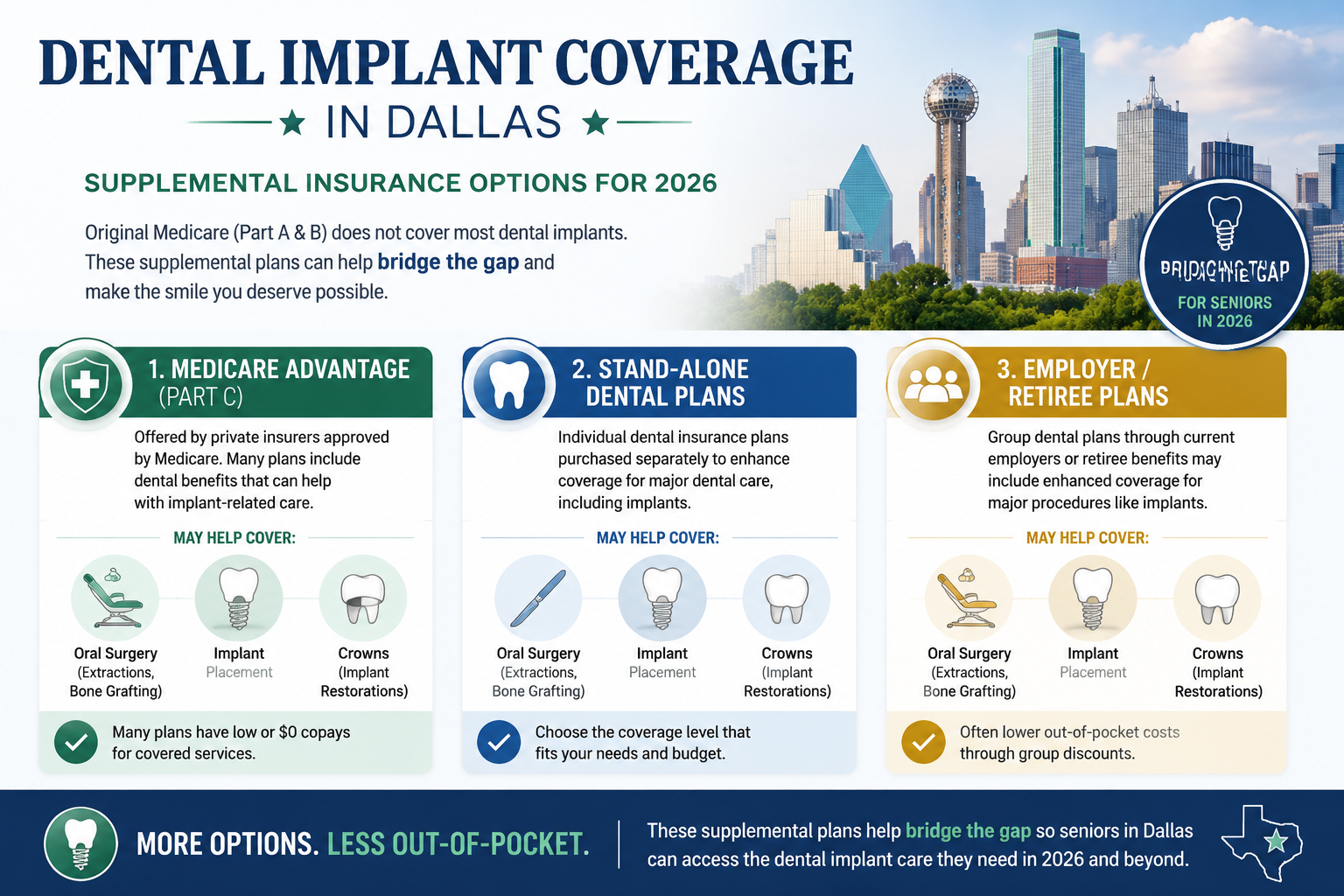
Choosing the right path for financing your dental implants requires careful consideration of your oral health needs, budget, and existing Medicare coverage. Given that Original Medicare does not cover dental implants, exploring Medicare Advantage plans or stand-alone dental insurance is often a necessary step for Dallas seniors.
Here are some actionable steps to help you navigate this process in 2026:
- Assess Your Current Coverage: Understand exactly what your current Medicare (Original or Advantage) plan offers for dental care. Don’t assume anything; read your plan documents carefully or contact your plan provider directly.
- Consult a Dentist: The first step should always be a consultation with a qualified dentist in Dallas. They can assess your oral health, determine if dental implants are the right tooth replacement option for you, and provide a detailed estimate of the dental implant cost in Dallas for your specific case. This estimate should include all components, from the implant surgery process to the final restoration. For single tooth implant costs in Dallas, see our guide on Single Tooth Implant Costs in Dallas 2026.
- Research Medicare Advantage Plans: If you don’t have a Medicare Advantage plan or are looking to switch, compare plans available in Dallas that offer robust dental benefits, specifically looking for coverage of major restorative procedures like implants. Pay close attention to limitations and annual maximums.
- Explore Stand-Alone Dental Insurance: Obtain quotes from several dental insurance providers. Compare premiums, deductibles, co-insurance, waiting periods, and annual maximums. Ensure the plan covers the type of dental implant procedure you need.
- Consider Dental Discount Plans: If insurance options are too expensive or have too many restrictions, a dental discount plan might offer a viable alternative for reducing your out-of-pocket costs.
- Discuss Financing Options: Many dental clinics in Dallas offer in-house financing plans or work with third-party medical financing companies like CareCredit. These can help break down the cost into manageable monthly payments. Our article on Dental Implant Financing in Dallas provides more details.
- Seek Multiple Opinions: Don’t hesitate to get a second opinion on both your treatment plan and cost estimates. This can help you compare dental implant clinics in Dallas and ensure patient safety and quality of care.
- Understand “Hidden” Costs: Beyond the basic implant cost, there can be additional expenses like bone grafting (if needed), imaging, and post-operative medications. Be sure to ask for a comprehensive breakdown. Our guide on The ‘Hidden’ Costs of Dental Implants in Dallas can help you prepare.
Making an informed decision about your dental implant treatment and financing is crucial for your long-term oral health. Don’t rush the process; take the time to gather all the necessary information and consult with professionals.

Conclusion
Understanding whether Medicare covers dental implants in Dallas in 2026 requires a clear distinction between Original Medicare and supplemental options. While Original Medicare (Parts A and B) generally does not cover the cost of dental implants, seniors have several pathways to explore for financial assistance. Medicare Advantage (Part C) plans, stand-alone dental insurance policies, and dental discount plans can significantly reduce the out-of-pocket expenses associated with these advanced tooth replacement options.
For Dallas seniors considering dental implants, the journey begins with thorough research of available plans and a detailed consultation with a trusted local dentist. By carefully evaluating your needs, comparing various coverage options, and understanding the financial implications, you can make an informed decision that supports your oral health and overall well-being. Remember, proactive oral health education and professional consultation are key to achieving a lasting, confident smile.