
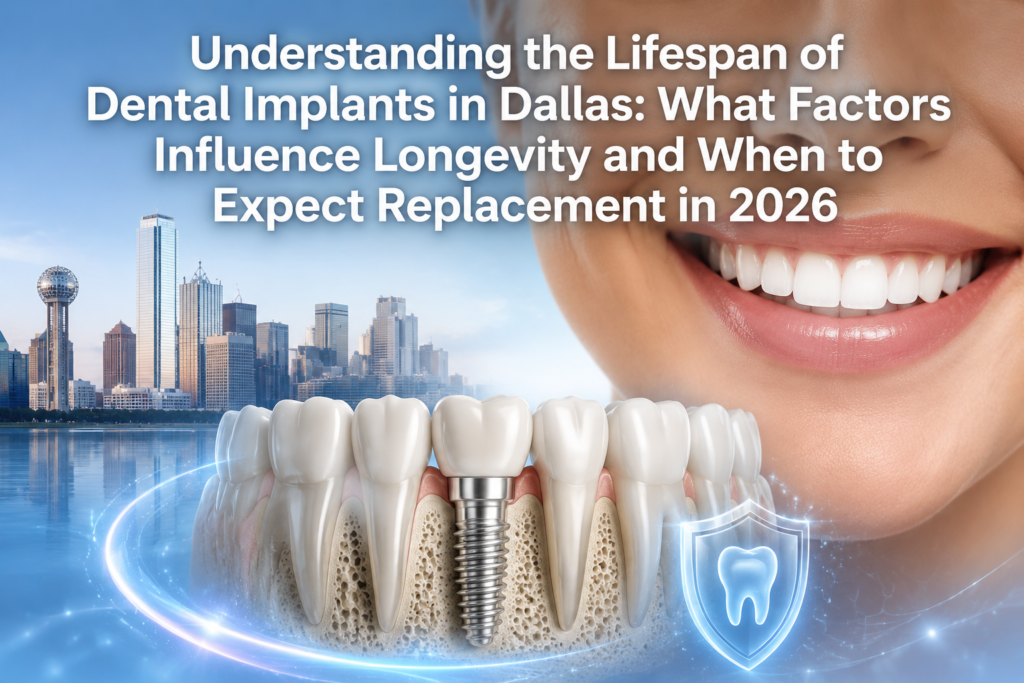
Many patients in Dallas consider dental implants a significant investment, often asking: “How long will my dental implants truly last?” While dental implants are renowned for their durability and potential to last a lifetime, their longevity isn’t guaranteed. Several key factors influence how long these modern tooth replacement solutions will serve you. This comprehensive guide will break down the elements affecting implant longevity, from material quality and oral hygiene to lifestyle choices, providing a realistic understanding of when you might expect maintenance or replacement in 2026.
Key Takeaways
- Dental implants can last 20 years or more, often a lifetime, but the crown usually needs replacement sooner.
- Excellent oral hygiene and regular dental check-ups are the most crucial factors for longevity.
- Smoking, uncontrolled diabetes, and teeth grinding can significantly reduce implant lifespan.
- The quality of the implant material and the skill of the dental professional play a vital role.
- Replacement of the crown is more common than replacing the implant screw itself.
Factors Influencing the Longevity of Dental Implants in Dallas
The success and long-term viability of dental implants are a testament to advancements in modern dentistry. However, several interconnected factors determine just how long your new smile will last. Understanding these can empower Dallas patients to make informed decisions and take proactive steps for their long-term oral health.
1. Oral Hygiene and Maintenance
This is arguably the most critical factor. Just like natural teeth, dental implants require meticulous daily care. Regular brushing, flossing, and using an antimicrobial mouthwash help prevent plaque buildup around the implant, which can lead to complications. Neglecting oral hygiene can result in peri-implantitis, an inflammatory condition similar to gum disease that affects the tissues surrounding the implant. If left untreated, peri-implantitis can lead to bone loss around the implant, ultimately causing it to loosen and fail.
For patients in Dallas, maintaining a consistent oral hygiene routine is non-negotiable for maximizing implant lifespan. This includes:
- Brushing twice daily with a soft-bristled brush.
- Flossing daily, using specialized floss or interdental brushes designed for implants.
- Regular dental check-ups and professional cleanings (typically twice a year).
2. General Health and Lifestyle Choices
Your overall health profoundly impacts the success and longevity of dental implants. Certain medical conditions and lifestyle habits can increase the risk of implant failure.
- Smoking: Smoking is a major risk factor for implant failure. It constricts blood vessels, reducing blood flow to the gums and bone, which impairs healing and increases the risk of infection and peri-implantitis. Patients who smoke should discuss this with their dentist, as it significantly affects the success rate of the dental implant procedure. For specific guidance, you can explore resources like Dallas TX Dental Implants for Smokers 2026: Quit Tips, Success Rates, and Cost-Effective Protocols.
- Diabetes: Uncontrolled diabetes can compromise the body’s ability to heal and fight infection, increasing the risk of implant complications. Proper management of blood sugar levels is crucial for successful implant integration and long-term health.
- Osteoporosis: This condition can affect bone density, potentially impacting the strength of the jawbone where the implant is placed. Bone density is a key factor in initial implant stability.
- Teeth Grinding (Bruxism): Chronic teeth grinding or clenching puts excessive stress on dental implants, which can lead to implant failure, fracture of the crown, or even loosening of the implant over time. Patients with bruxism may need to wear a night guard to protect their implants.
- Diet: A balanced diet supports overall oral health. Avoiding excessive consumption of hard or sticky foods can also protect implant crowns from damage.
3. Quality of the Implant Material and Prosthetic
The materials used for the implant itself and the attached crown or bridge play a role in longevity.
- Implant Post (Fixture): Most dental implants are made from titanium, a biocompatible metal that fuses naturally with bone in a process called osseointegration. Titanium is highly durable and resistant to corrosion. Some newer implants are made from zirconia, which is metal-free and offers excellent aesthetics. Both materials are designed for long-term stability.
- Crown/Prosthesis: The visible part of the implant, the crown, bridge, or denture, is typically made from porcelain, ceramic, or a combination of materials. While the implant post can last for decades, the prosthetic attached to it might need replacement sooner due to wear and tear, chipping, or aesthetic concerns. On average, crowns may last 10-15 years, but with proper care, they can last longer. Patients considering full-mouth options might look into choices like Zirconia vs PMMA Full Mouth Implants Dallas: 2026 Cost Difference, Durability Breakdown.
4. Skill of the Dental Professional and Surgical Precision
The expertise of the dental professional performing the implant surgery is paramount. Proper placement of the implant, considering bone density, nerve locations, and bite alignment, directly influences its long-term success.
- Experience: An experienced implant dentist or oral surgeon understands the intricacies of bone structure and surgical techniques, minimizing complications.
- Technology: Advanced technology, such as 3D imaging and computer-guided surgery, can enhance precision and predictability. Many Dallas TX dentists are now using 3D Guided Dental Implant Surgery Dallas: How Tech Cuts Costs, Boosts Precision in 2026, leading to better outcomes.
- Bone Health: Adequate bone volume and density are essential for successful osseointegration. If a patient lacks sufficient bone, procedures like bone grafting may be necessary before implant placement. Learn more about Bone Graft Costs for Dental Implants in Dallas: When You Need It and Pricing 2026.
5. Location of the Implant in the Mouth
Implants placed in different areas of the mouth can experience varying levels of stress. Molars, for instance, endure more biting force than front teeth. While implants are designed to withstand these forces, an implant in a high-stress area might be subject to more wear on its prosthetic crown over time. For dental implants for missing front teeth in Dallas, aesthetic considerations often take precedence, and materials might be chosen to maximize natural appearance.
 image illustrating various factors influencing dental implant longevity, specifically for patients in Dallas.](https://zsxkvszxbhpwnvzxdydv.supabase.co/storage/v1/object/public/generated-images/kie/90a32a4f-676a-4ce3-b212-303e79a7224e/slot-1-1779109661725.png) )
)
Understanding the Lifespan of Dental Implants in Dallas: What to Expect in 2026
While the implant post itself has an excellent track record for longevity, it’s important to distinguish between the lifespan of the titanium screw (the implant fixture) and the prosthetic restoration (the crown, bridge, or denture) it supports.
The Implant Fixture (Screw)
With proper care and ideal conditions, the titanium or zirconia implant post that is surgically placed into the jawbone is designed to last a lifetime. Studies show that dental implant success rates are very high, often exceeding 95% over 10 years and remaining high for 20 years or more (Misch, C. E., 2015). The key to this longevity is successful osseointegration, where the implant fuses with the surrounding bone, creating a stable foundation.
The Implant Restoration (Crown, Bridge, Denture)
The visible part of the dental implant, which functions as your new tooth, is subject to daily wear and tear. These restorations have a more predictable lifespan that is generally shorter than the implant post:
- Crowns: Typically last 10-15 years, but can last longer with excellent care. They may need replacement due to chipping, cracking, wear, or aesthetic reasons (e.g., changes in gum line exposing the implant collar).
- Bridges and Dentures (Implant-Supported): These larger prosthetics also have a lifespan of approximately 10-15 years, depending on materials and patient habits. Components like screws or clips might need periodic adjustment or replacement. For instance, implant-supported overdentures in Dallas offer stability but still require maintenance of the denture itself.
This means that while the core foundation of your dental implant is likely to remain intact, you should anticipate that the visible “tooth” portion might require attention or replacement at some point in the future.
When to Expect Replacement in 2026
Given current dental technologies and best practices, Dallas patients can have high expectations for their dental implants in 2026. Here’s a realistic outlook:
- Long-Term Functionality: The implant fixture is expected to function for many decades, potentially for life.
- Prosthetic Refresh: Plan for the possibility of replacing the crown or prosthetic every 10-15 years. This is a normal part of maintaining your dental investment, much like replacing a worn-out car tire.
- Early Detection: Regular dental check-ups are crucial. Your dentist can monitor the health of your implants, gums, and bone, detecting any issues like peri-implantitis or micro-fractures in the crown early, before they become major problems. Prompt treatment can often extend the life of your implant system. For instance, addressing peri-implantitis prevention in Dallas can save your implant.
- Cost Considerations: While the initial implant cost in Dallas is a significant factor, consider the long-term value. Replacement of a crown is typically less expensive than the initial implant procedure.
- Advancements: Ongoing research in materials and techniques continues to improve implant longevity and success rates. Patients receiving implants in 2026 benefit from these cumulative advancements.
 image presenting a clear visual timeline or flowchart demonstrating the dental implant process and factors](https://zsxkvszxbhpwnvzxdydv.supabase.co/storage/v1/object/public/generated-images/kie/90a32a4f-676a-4ce3-b212-303e79a7224e/slot-2-1779109668391.png) )
)
Maintaining Your Dental Implants for Optimal Longevity
To ensure your dental implants in Dallas provide the longest possible service, a proactive approach to care is essential. This combines diligent at-home hygiene with professional dental support.
1. Consistent Oral Hygiene Routine
This cannot be stressed enough. Treat your dental implants like your natural teeth, or even better.
- Brush: Use a soft-bristled toothbrush and non-abrasive toothpaste twice a day. Electric toothbrushes with soft heads can be very effective.
- Floss: Daily flossing is crucial to remove food particles and plaque from around the implant and gum line. Specialized implant floss, water flossers, or interdental brushes can be particularly helpful.
- Mouthwash: An antiseptic or antimicrobial mouthwash can help control bacteria and reduce the risk of gum inflammation.
2. Regular Dental Check-ups and Professional Cleanings
Even with excellent home care, professional oversight is vital. Your dentist in Dallas will monitor your implants and overall oral health.
- Frequency: Most dentists recommend check-ups and cleanings every six months, but this might be more frequent for patients with specific risk factors.
- Specialized Tools: Dental hygienists use specialized tools that are safe for cleaning around implants, preventing damage to the implant surface or surrounding gums.
- Early Problem Detection: Your dentist will check for signs of peri-implantitis, bone loss, or issues with the prosthetic components, allowing for early intervention. This is part of responsible long-term oral health management.
3. Lifestyle Adjustments
Making conscious choices about your lifestyle can directly impact implant longevity.
- Quit Smoking: If you smoke, quitting is the single most impactful step you can take to protect your dental implants.
- Manage Health Conditions: Work closely with your doctor to manage chronic conditions like diabetes or osteoporosis.
- Wear a Night Guard: If you grind or clench your teeth, a custom-fitted night guard can protect your implants and natural teeth from excessive forces.
- Mindful Eating: Avoid habitually chewing on ice, hard candies, or using your teeth as tools, which can chip or fracture implant crowns.
4. Prompt Attention to Issues
Do not ignore any signs of problems, such as discomfort, swelling, bleeding around the implant, or a loose feeling. Contact your Dallas dentist immediately if you experience any of these symptoms. Early intervention can often prevent minor issues from becoming major problems that could jeopardize the implant.
By understanding the factors influencing the lifespan of dental implants in Dallas and committing to proper maintenance, patients can significantly extend the life of their investment and enjoy the benefits of a healthy, functional smile for many years.
 image illustrating the comparison between natural teeth and dental implants in terms of expected lifespan and](https://zsxkvszxbhpwnvzxdydv.supabase.co/storage/v1/object/public/generated-images/kie/90a32a4f-676a-4ce3-b212-303e79a7224e/slot-3-1779109619787.png) )
)
Conclusion
Dental implants offer a durable and effective solution for missing teeth, providing excellent long-term value for patients in Dallas. While the implant post itself boasts a remarkably long lifespan, often extending for decades or even a lifetime, the prosthetic crown or bridge typically requires replacement after 10-15 years due to normal wear and tear. The ultimate longevity of your dental implants hinges on a combination of factors: diligent oral hygiene, a healthy lifestyle, the skill of your dental team, and the quality of materials used.
By committing to regular brushing and flossing, attending routine dental check-ups, and addressing any lifestyle habits that could compromise your oral health, you can maximize the lifespan of your dental implants. For anyone considering dental implants in Dallas as a tooth replacement option, understanding these factors is key to achieving lasting success. We encourage you to schedule a consultation with a dentist to discuss your specific needs and develop a personalized plan for your long-term oral health.
References
Misch, C. E. (2015). Dental Implant Prosthetics (2nd ed.). Elsevier Mosby.