
For many Dallas residents considering tooth replacement options, a primary concern is the durability of their investment. Patients frequently ask, “How long do implants last?” The answer, while varying based on individual circumstances, often exceeds expectations, with many dental implants in Dallas offering a lifespan well beyond a decade, often lasting a lifetime with proper care. This article provides a realistic overview of dental implant longevity, discussing the factors that contribute to their impressive lifespan and what patients can do to ensure durability for many years to come. Understanding the long-term prospects of dental implants is key to making an informed decision about this effective solution for missing teeth.
Key Takeaways
- Dental implants can last a lifetime with proper care, with success rates over 95% for 10 years and often exceeding 20-30 years for the implant post itself.
- The implant crown typically needs replacement every 10-15 years, while the titanium post remains stable.
- Factors like oral hygiene, general health, lifestyle choices (e.g., smoking), and the skill of the implant surgeon significantly impact longevity.
- Regular dental check-ups and professional cleanings are crucial for protecting your investment in dental implants.
- In Dallas, choosing an experienced dental professional and committing to post-operative care are vital for maximizing implant lifespan.
Understanding Dental Implant Longevity: How Long Do Implants Last in Dallas?
When considering dental implants in Dallas, it’s natural to wonder about their lifespan. Unlike traditional tooth replacement options such as dentures or bridges, dental implants are designed to be a permanent solution. The implant itself, a small titanium post surgically placed into the jawbone, is highly durable. The success rates for dental implant procedures are remarkably high, often cited at 95% or more over a 10-year period, with many implants lasting much longer (The American Academy of Implant Dentistry, n.d.).
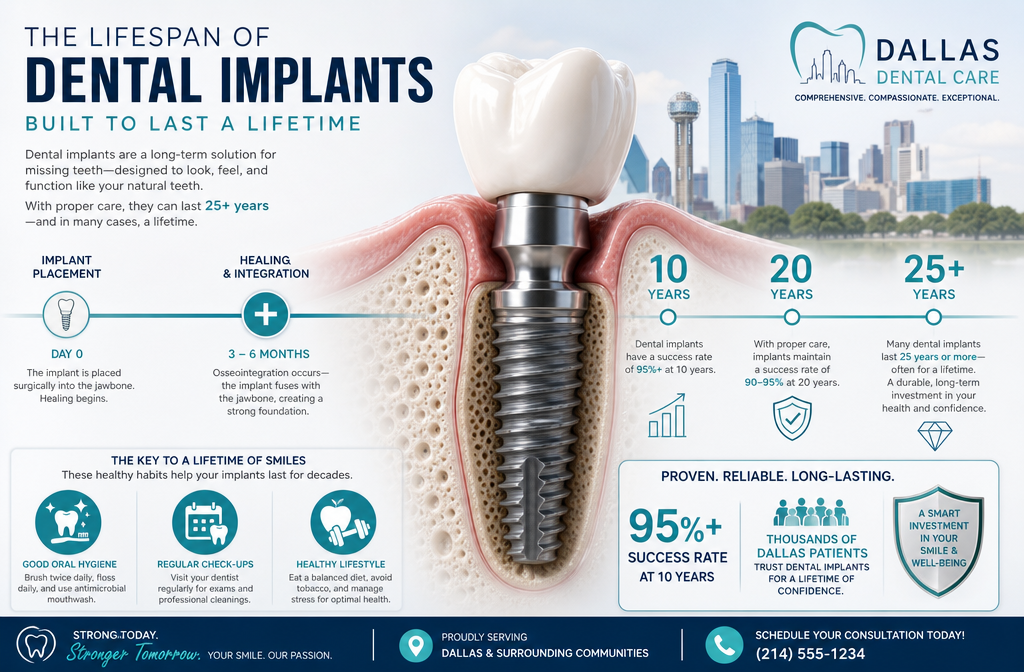 Image: Dental implant longevity timeline
However, it’s important to differentiate between the implant post and the implant restoration (the crown, bridge, or denture attached to it).
- Implant Post (Fixture): Made from biocompatible titanium, this part integrates with your jawbone through a process called osseointegration. With good oral health and proper care, the implant post itself can often last a lifetime, securely anchored in your bone.
- Implant Restoration (Crown, Bridge, Denture): The visible part of the implant, typically a ceramic or porcelain crown, is subject to the same wear and tear as natural teeth. While very durable, these restorations may need replacement every 10 to 15 years, or sometimes longer, depending on materials, biting forces, and personal habits.
This distinction is critical for Dallas patients to understand. The core of your dental implant investment—the titanium post—is built for the long haul. The crown, while durable, is the component most likely to require future attention or replacement, similar to how fillings or crowns on natural teeth may eventually need to be redone.
The Components of a Dental Implant
To better understand longevity, let’s briefly review the three main parts of a standard dental implant:
- The Implant Post/Fixture: This is the small, screw-shaped titanium rod that functions as the tooth root. It’s placed into the jawbone during implant surgery.
- The Abutment: This is a connector piece that sits on top of the implant and extends above the gum line. It provides the attachment point for the final restoration.
- The Crown/Restoration: This is the custom-made prosthetic tooth (or bridge/denture) that is secured to the abutment, designed to look and function like a natural tooth.
Each component contributes to the overall stability and function of the dental implant system, and their individual lifespans collectively determine how long your implants last as a complete tooth replacement solution. For a deeper dive into the procedure, consider exploring our guide on the dental implant procedure.
Factors Influencing Dental Implant Longevity Beyond a Decade
While dental implants are designed for exceptional durability, several factors can influence how long they ultimately last. For patients in Dallas, understanding these elements is crucial for maximizing their investment and ensuring long-term oral health.
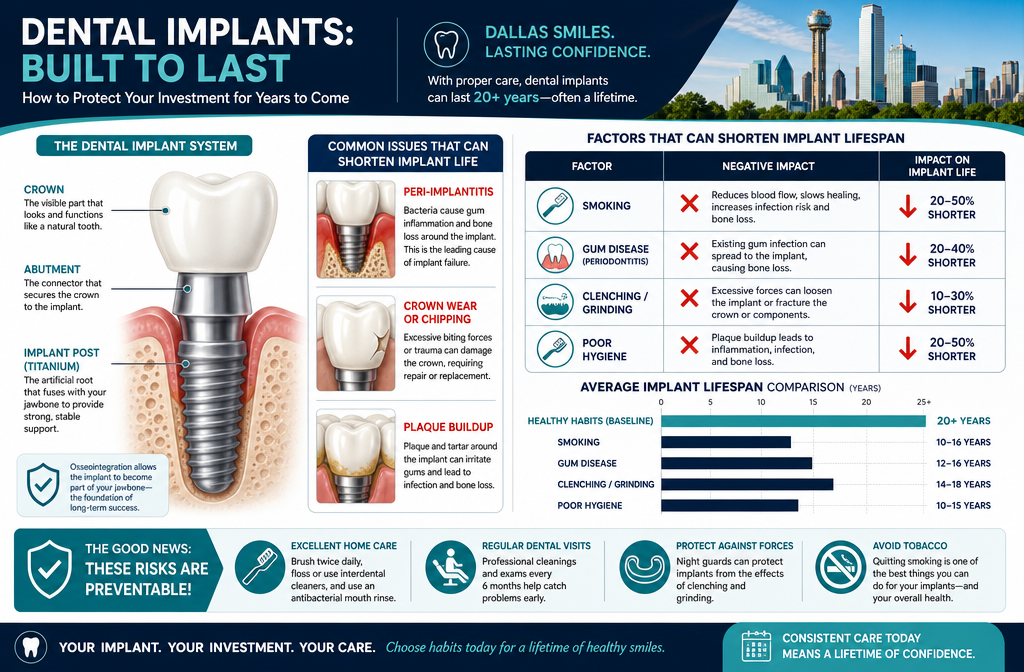 Image: Factors affecting implant lifespan infographic
1. Oral Hygiene Practices
This is arguably the most significant factor. Just like natural teeth, dental implants require diligent daily brushing and flossing. Poor oral hygiene can lead to peri-implantitis, a gum disease similar to periodontitis that affects the tissues around the implant. If left untreated, peri-implantitis can cause bone loss around the implant, potentially leading to implant failure (Renvert et al., 2018).
Best Practices:
- Brush twice daily with a soft-bristled toothbrush.
- Floss daily, paying special attention to the area around the implant.
- Use interdental brushes or water flossers as recommended by your dentist.
2. Regular Dental Check-ups and Professional Cleanings
Even with excellent home care, routine visits to your Dallas dentist are essential. Dental professionals can identify early signs of potential issues, perform thorough cleanings, and remove plaque and tartar buildup that regular brushing might miss. These check-ups allow for timely intervention, protecting your long-term oral health and prolonging the life of your implants. For details on post-op care, see our guide on Dental Implant Post-Op Care & Maintenance Costs in Dallas.
3. General Health and Medical Conditions
Your overall health plays a role in implant longevity. Conditions such as uncontrolled diabetes, autoimmune diseases, or certain medications can impact the body’s ability to heal and maintain bone health, potentially affecting the success and lifespan of implants.
4. Smoking and Vaping
Smoking is a well-documented risk factor for dental implant failure. It constricts blood vessels, reducing blood flow to the gums and bone, which can hinder healing and increase the risk of infection and peri-implantitis. Patients who smoke have significantly lower implant success rates. For more information, read about Dallas TX Dental Implants for Smokers 2026.
5. Bruxism (Teeth Grinding or Clenching)
Excessive force from teeth grinding or clenching can place undue stress on dental implants and their restorations, leading to fractures, loosening, or premature wear. If you grind your teeth, your dentist might recommend a nightguard to protect your implants.
6. Quality of Bone and Implant Placement
The quantity and quality of your jawbone are critical for successful osseointegration. Insufficient bone may require bone grafting procedures before implant placement. The skill and experience of your dental implant surgeon in Dallas, as well as the precise placement of the implant, are also paramount to long-term success. Modern techniques like 3D guided implant surgery enhance precision and long-term outcomes.
7. Material Quality
The quality of the implant components—the titanium post, abutment, and crown—can influence their durability. Reputable dental implant manufacturers produce high-quality, scientifically tested components designed for long-term use. Your dentist in Dallas will typically use materials from trusted brands.
By being aware of these factors and actively managing them, Dallas patients can significantly improve the chances of their dental implants lasting well beyond a decade, providing a stable and functional smile for many years.
Maximizing the Lifespan of Your Dental Implants in 2026
Ensuring your dental implants last as long as possible is a shared responsibility between you and your dental care team. By adopting proactive habits and staying informed, Dallas patients can protect their investment for decades.
 Image: Patient receiving dental check-up with focus on healthy teeth and implants
A Proactive Approach to Implant Care
- Commit to Excellent Oral Hygiene: This cannot be overstressed. Treat your implants like your natural teeth. Brush thoroughly twice a day, floss daily, and consider using an antibacterial mouthwash recommended by your dentist. Special brushes or flosses may be advised for cleaning around implants.
- Attend Regular Dental Appointments: Schedule routine check-ups and professional cleanings every six months, or as advised by your dentist. These visits are crucial for monitoring the health of your implants, gums, and surrounding bone. Your dentist can identify and address any issues early, such as signs of peri-implantitis. Learn more about Peri-Implantitis Prevention Dallas.
- Address Bruxism (Teeth Grinding): If you grind or clench your teeth, especially at night, discuss this with your dentist. A custom-made nightguard can protect your implants and natural teeth from excessive force, preventing fractures or loosening of components.
- Avoid Harmful Habits: Refrain from biting on extremely hard objects like ice, hard candies, or using your teeth as tools. This can damage both natural teeth and implant crowns. If you smoke or vape, consider quitting. This is one of the most impactful steps you can take to ensure the long-term success of your dental implants.
- Maintain a Healthy Diet: A balanced diet supports overall health, including bone health, which is vital for the stability of your implants. Ensure adequate intake of calcium and vitamin D.
- Choose an Experienced Dental Professional: The initial success and long-term viability of your dental implants are heavily influenced by the expertise of the dental implant surgeon and the restorative dentist. In Dallas, seek out clinics with a strong track record and dentists who specialize in implantology. Ask about their experience, success rates, and the technology they use. A thorough consultation with a dentist is invaluable.
Understanding Warranties and Guarantees
When discussing dental implants in Dallas, it’s also wise to inquire about any warranties or guarantees provided by the clinic or the implant manufacturer. While warranties typically cover material defects, they often require patients to adhere to strict maintenance schedules. Understanding these terms can offer peace of mind regarding your investment. For more information, see our guide on Understanding the Dental Implant Warranty.
By integrating these practices into your routine, you are not just getting a tooth replacement; you are making a commitment to long-term oral health. With proper care, your dental implants in Dallas can indeed last a lifetime, providing a beautiful, functional smile that supports your quality of life for many years.
Conclusion
The question “How long do implants last?” is a crucial one for anyone considering dental implants in Dallas. The good news is that with modern advancements in dental technology and surgical techniques, dental implants offer an incredibly durable and long-lasting solution for missing teeth. While the implant post itself has the potential to last a lifetime, the attached crown typically provides a decade or more of service before needing replacement.
Achieving this longevity, however, is not passive. It requires a commitment to excellent oral hygiene, regular dental check-ups, and a healthy lifestyle. Factors such as smoking, uncontrolled medical conditions, and teeth grinding can significantly impact how long your implants last. By taking a proactive approach to care and partnering with an experienced dental professional in Dallas, you can protect your investment and enjoy the benefits of a stable, functional, and aesthetically pleasing smile for many years beyond a decade.
If you are exploring tooth replacement options, a consultation with a dentist specializing in dental implants is the best next step. They can assess your specific oral health needs, discuss the dental implant procedure, and provide a personalized plan to ensure your long-term oral health success.