
The decision to pursue dental implants for younger patients, specifically teens and young adults, often involves complex considerations that differ significantly from adult cases. While dental implants are widely recognized as a durable solution for missing teeth, their application in growing individuals necessitates a thorough understanding of unique factors. This article will delve into Pediatric Dental Implants in Dallas: Age Limits, Safety, and Cost Considerations for Teens and Young Adults, providing essential information for families in the Dallas area.
Key Takeaways
- Dental implants are generally not recommended for adolescents until jawbone growth is complete, typically in the late teens or early twenties.
- Careful assessment of skeletal maturity is crucial for safe and successful implant placement in younger patients.
- Safety protocols for pediatric dental implant procedures focus on minimizing risks and ensuring long-term oral health.
- Cost for pediatric dental implants in Dallas can vary based on complexity, requiring specific considerations for insurance and financing for dependents.
- A comprehensive consultation with an experienced Dallas dentist is essential to determine the most appropriate tooth replacement options for younger individuals.
Understanding Age Limits for Pediatric Dental Implants in Dallas
The primary factor determining eligibility for dental implants in younger individuals is skeletal maturity, specifically the completion of jawbone growth. Unlike adults, whose jawbones have stopped growing, teens and young adults are still undergoing significant developmental changes. Placing a dental implant, which is a fixed structure, into a still-growing jaw can lead to complications such as the implant becoming submerged, appearing shorter than adjacent natural teeth, or causing misalignment as the surrounding bone continues to develop.
The American Academy of Pediatric Dentistry (AAPD) and other dental organizations generally recommend delaying dental implant placement until a patient’s jaw development is complete (American Academy of Pediatric Dentistry, 2014). This typically occurs around:
- 16-18 years old for females
- 18-22 years old for males
However, these are general guidelines. Individual growth patterns vary, and a comprehensive assessment is always necessary. Dentists in Dallas utilize several methods to determine skeletal maturity, including:
- Clinical Examination: Visual assessment of facial development and dental occlusion.
- Radiographic Imaging: X-rays, including panoramic X-rays and cephalometric X-rays, help visualize growth plates in the hand and wrist, as well as the jawbones, to estimate the completion of growth (Güngör et al., 2018).
- Serial Radiographs: Taking X-rays over a period to observe if growth has ceased.
For younger patients with missing teeth due to trauma, congenital absence, or severe decay, temporary solutions like removable partial dentures, space maintainers, or adhesive bridges may be considered until they are old enough for dental implants. These temporary measures help maintain proper bite, prevent adjacent teeth from shifting, and support speech and chewing function, preparing the patient for long-term solutions.

A crucial aspect of Pediatric Dental Implants in Dallas: Age Limits, Safety, and Cost Considerations for Teens and Young Adults is the importance of a multidisciplinary approach. Oral surgeons, periodontists, orthodontists, and pediatric dentists often collaborate to create a treatment plan that addresses both immediate needs and future oral health goals for younger patients. This ensures that the timing of implant placement aligns with optimal growth and development.
Safety Considerations for Dental Implant Procedures in Young Patients
Patient safety is paramount in any dental procedure, especially when involving younger individuals. For Pediatric Dental Implants in Dallas: Age Limits, Safety, and Cost Considerations for Teens and Young Adults, specific safety protocols are in place to minimize risks and ensure favorable long-term outcomes.
When a young patient is deemed ready for a dental implant, the procedure itself follows a similar methodology to adult implant surgery but with heightened vigilance for factors unique to younger anatomy. Key safety considerations include:
- Thorough Pre-surgical Assessment: This involves not only assessing jawbone maturity but also evaluating overall health, medical history, and existing dental conditions. Any underlying health issues, such as those that might affect bone healing or immune response (e.g., certain autoimmune conditions or uncontrolled diabetes), must be carefully managed. For information on dental implants for patients with specific health considerations, refer to Dental Implants for Diabetics in Dallas: Special Considerations.
- Advanced Imaging and Planning: Utilizing 3D guided implant surgery with cone-beam computed tomography (CBCT) allows Dallas dentists to precisely map the patient’s jawbone structure, identify critical anatomical structures (like nerves and sinuses), and plan the exact placement, angle, and depth of the implant. This minimizes surgical risks and enhances predictable outcomes. For more on this, see Dallas TX Dentists Using 3D Guided Implant Surgery 2026: Precision, Cost, Faster Recovery.
- Sedation Options: Anxiety can be a significant concern for young patients undergoing dental procedures. Dallas clinics offer various sedation options, from nitrous oxide (laughing gas) to oral sedation or IV sedation, to ensure the patient’s comfort and reduce stress during the implant surgery process. Learn more about Dental Implant Sedation Options Dallas: Costs, Safety & Type.
- Sterile Environment and Infection Control: Strict adherence to sterilization protocols is critical to prevent post-operative infections, which could compromise implant success.
- Post-Operative Care and Monitoring: Detailed instructions for post-op care, including pain management, oral hygiene, and dietary restrictions, are provided. Regular follow-up appointments are crucial to monitor healing, identify any complications early, and ensure the implant integrates successfully with the bone. Consistent long-term care is vital to protect the investment, as discussed in Dental Implant Post-Op Care & Maintenance Costs in Dallas: Protecting.
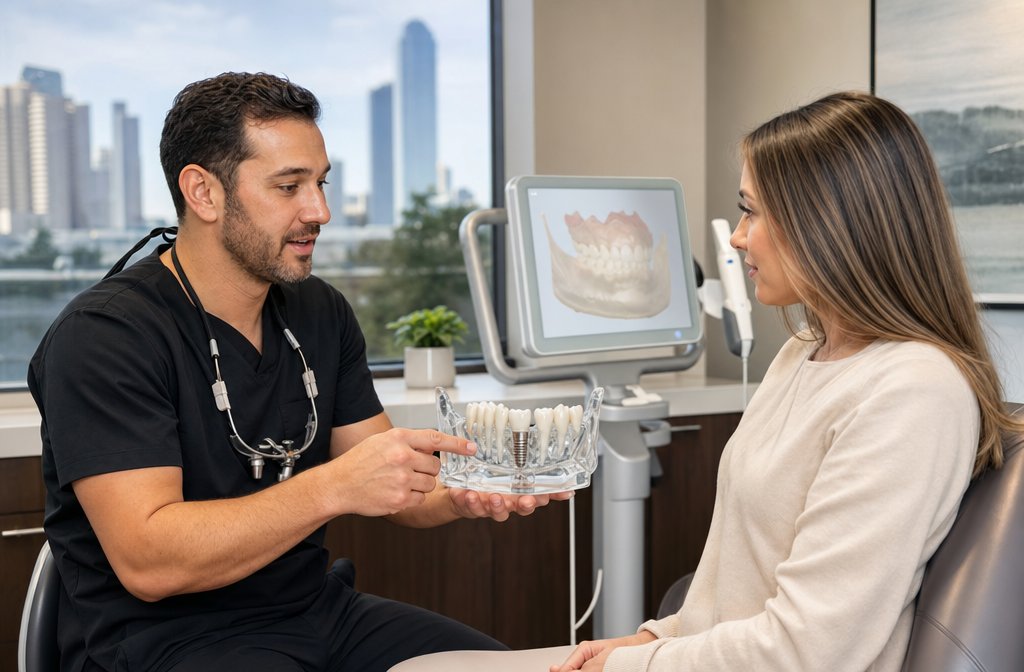
While dental implant surgery is generally safe, potential risks include infection, nerve damage, sinus perforation (for upper jaw implants), and implant failure. However, with experienced dental professionals, advanced planning, and proper patient selection, the success rate for dental implants is remarkably high, often exceeding 95% (Albrektsson et al., 1986). The non-promotional, patient-first approach in Dallas ensures that all risks and benefits are thoroughly discussed, allowing families to make informed decisions about their teen’s long-term oral health.
Cost Considerations for Pediatric Dental Implants in Dallas
Understanding the financial aspect is a significant part of researching Pediatric Dental Implants in Dallas: Age Limits, Safety, and Cost Considerations for Teens and Young Adults. The total cost can vary widely depending on several factors unique to a younger patient’s needs and the complexity of the case.
Components of Dental Implant Cost:
The overall implant cost in Dallas typically includes several distinct elements:
- Initial Consultation and Diagnostics: This involves examinations, X-rays, and potentially 3D imaging (CBCT scan) to assess bone structure and plan the procedure.
- Surgical Placement of the Implant Post: This is the cost for the implant itself (a titanium or zirconia screw) and the surgical procedure to place it into the jawbone.
- Abutment: This is the connector piece that attaches to the implant post and extends above the gum line.
- Dental Crown: The visible part of the tooth, custom-made to match natural teeth.
- Ancillary Procedures: These are often necessary, especially for younger patients who might have experienced tooth loss earlier. They can include:
- Bone Grafting: If insufficient bone density is present due to early tooth loss or trauma, a bone graft may be needed to create a stable foundation for the implant. This can add significantly to the cost.
- Tooth Extraction: If a damaged tooth needs to be removed before implant placement.
- Temporary Restorations: As mentioned, temporary solutions may be required while waiting for jawbone maturity.
For a single dental implant in Dallas, the total cost including the implant, abutment, and crown can range from approximately $3,000 to $6,000 or more, especially when additional procedures like bone grafting are necessary. This range aligns with Dallas dental implant cost vs national averages for single implants. For detailed single tooth implant costs, explore Single Tooth Implant Costs in Dallas 2026: What Patients Pay at Top Clinics.
Insurance and Financing for Dependents:
Navigating insurance coverage for dental implants for teens and young adults can be challenging.
- Dental Insurance: Many standard dental insurance plans consider implants a “major procedure” and may offer limited coverage, often 15-50% after deductibles. Some plans may view implants as cosmetic, especially for younger patients, and deny coverage. It’s crucial for parents to check their specific plan’s benefits for dependents. Understanding the differences between PPO and HMO plans is vital, as discussed in Navigating PPO vs. HMO Dental Insurance for Implants in Dallas.
- Medical Insurance: In cases where tooth loss is due to trauma or a congenital condition, medical insurance might offer some coverage, particularly for the surgical component. A thorough review of policy terms is recommended.
- Financing Options: Most Dallas dental implant clinics offer various financing solutions to help make treatment more affordable. These can include:
- Payment Plans: In-house plans or third-party medical credit options (e.g., CareCredit) that allow payments to be spread out over time, often with low or no interest for an introductory period.
- Flexible Spending Accounts (FSAs) and Health Savings Accounts (HSAs): These tax-advantaged accounts can be used to pay for qualified dental expenses, including implants.

When considering costs, it’s important to obtain a detailed, itemized treatment plan from your Dallas dentist. This transparency helps families understand all associated expenses and plan accordingly. Remember that prioritizing long-term oral health for a young person can prevent more complex and costly issues down the line.
Conclusion
The decision to pursue Pediatric Dental Implants in Dallas: Age Limits, Safety, and Cost Considerations for Teens and Young Adults is a significant one, requiring careful evaluation and comprehensive planning. While dental implants offer an exceptional, durable solution for missing teeth, their timing is critical for younger patients due to ongoing jawbone development. Typically, waiting until late teens or early twenties ensures optimal integration and aesthetic outcomes.
Patient safety is always the highest priority, with Dallas dental professionals employing advanced diagnostics, meticulous surgical techniques, and supportive post-operative care. Understanding the various components of implant cost, along with exploring insurance coverage and flexible financing options, is essential for families navigating this important tooth replacement journey.
For any family in Dallas considering dental implants for a teen or young adult, the first and most crucial step is a consultation with an experienced dental implant specialist. A professional, patient-focused discussion will provide personalized guidance, address specific concerns, and help determine the most appropriate path forward for long-term oral health.
References
American Academy of Pediatric Dentistry. (2014). Guideline on pulp therapy for primary and immature permanent teeth. The American Academy of Pediatric Dentistry Reference Manual, 36(6), 253-261.
Albrektsson, T., Zarb, G., Worthington, P., & Eriksson, A. R. (1986). The long-term efficacy of currently used dental implants: a review and proposed criteria of success. International Journal of Oral and Maxillofacial Implants, 1(1), 11-25.
Güngör, H. C., Akbulut, B., & Akdemir, A. (2018). Skeletal maturity assessment using hand-wrist radiographs: a comparison of methods. Journal of Clinical Pediatric Dentistry, 42(2), 108-115.
SEO Meta Title: Dallas Pediatric Dental Implants: Age, Safety & Cost for Teens SEO Meta Description: Explore pediatric dental implants in Dallas: age limits, safety protocols, and cost considerations for teens and young adults. Get expert insights for informed decisions.