Navigating dental insurance can often feel like deciphering a complex code, especially when it comes to significant procedures like dental implants. Given Delta Dental’s prominent position in the dental insurance market, many Dallas residents naturally turn to their plans when considering tooth replacement options. However, understanding the specifics of Delta Dental Coverage for Implants in Dallas 2026: What’s Actually Covered and What Still Comes Out-of-Pocket requires a careful look beyond general assumptions. This article aims to provide a clear, medically responsible breakdown of how different Delta Dental plans approach dental implant coverage in Dallas for the current year, including crucial details like waiting periods, annual maximums, and the often-overlooked “missing tooth clause.” We will also explore strategies for managing costs when insurance coverage reaches its limits, empowering you to make informed decisions about your long-term oral health.
Key Takeaways
- Delta Dental plans for dental implants in Dallas for 2026 vary significantly, with PPO plans generally offering more flexibility and potentially better coverage than HMOs.
- Most Delta Dental plans categorize dental implants as a major restorative service, which often means higher patient co-pays, deductibles, and annual maximum limitations.
- Common restrictions like waiting periods (typically 6-12 months for major services) and the “missing tooth clause” can impact immediate coverage eligibility.
- Even with Delta Dental coverage, patients in Dallas should anticipate significant out-of-pocket expenses for dental implant procedures, including potential costs for bone grafts, surgical guides, and the implant crown.
- Beyond insurance, exploring in-house discounts, payment plans, and third-party financing options at local Dallas dental clinics can help manage the overall implant cost.
Understanding Delta Dental Coverage for Implants in Dallas 2026: Plan Variations
When considering dental implants in Dallas, the first step is to thoroughly understand your specific Delta Dental plan. Delta Dental offers a range of plans, and their coverage for major procedures like dental implants can differ substantially. Generally, these plans fall into a few broad categories: Preferred Provider Organization (PPO), Health Maintenance Organization (HMO) or DHMO, and Fee-for-Service (FFS).
Delta Dental PPO Plans and Dental Implants
Delta Dental PPO plans are typically the most common choice for individuals seeking dental implant coverage. These plans offer more flexibility, allowing you to choose any licensed dentist, though you’ll generally save money by visiting a dentist within the Delta Dental network.
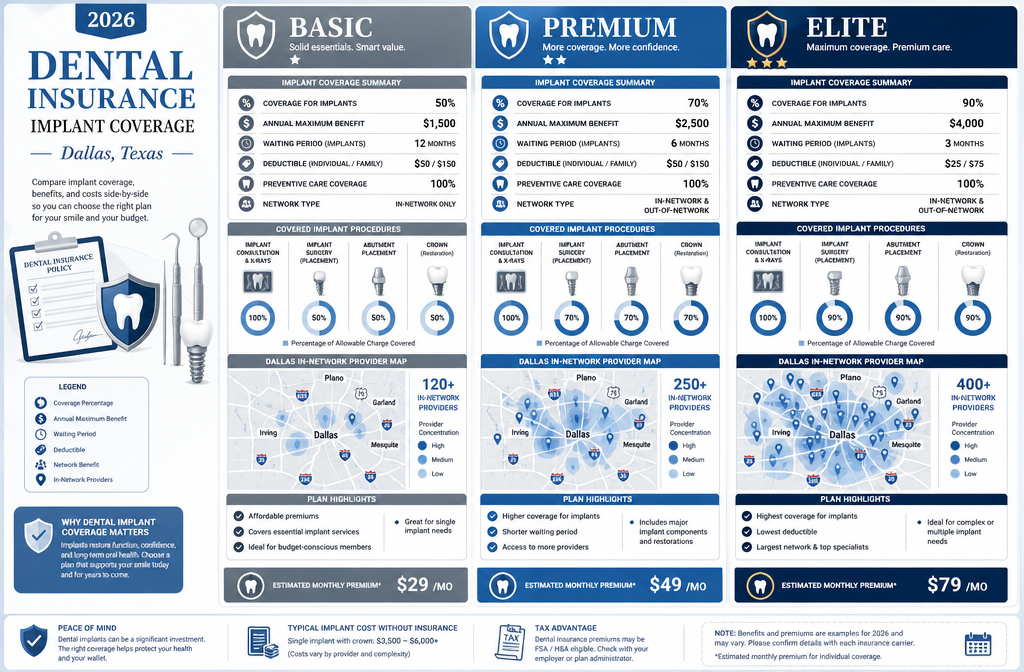
For dental implants, PPO plans usually cover a percentage of the cost after you meet your deductible. This percentage often ranges from 50% to 80% for major restorative services. However, it’s crucial to understand that “major restorative services” can be broad. While the implant placement might be partially covered, other components, such as the initial extraction, bone grafting, or the final crown, might fall under different coverage categories or have different reimbursement rates.
Most PPO plans will have an annual maximum benefit, which is the total amount your insurance will pay for dental care within a plan year. For dental implants, which can be a significant investment, it’s common for the total cost to exceed this annual maximum, even with partial coverage. Therefore, careful financial planning and understanding your annual limits are essential.
DeltaCare USA (HMO/DHMO) Plans and Implants
DeltaCare USA plans, which are HMO or DHMO plans, operate differently. With these plans, you typically select a primary care dentist within a specific network. All your dental care, including referrals to specialists, must go through this assigned dentist.
Coverage for dental implants under DeltaCare USA can be more restrictive. Some DHMO plans might cover a very limited portion of implant services, while others may not cover them at all, considering them a cosmetic procedure or an exclusion. When there is coverage, it often involves a fixed co-payment for each step of the procedure rather than a percentage. Before proceeding, it is vital to contact Delta Dental directly and speak with your assigned DeltaCare USA dentist to confirm any available benefits for dental implants in Dallas.
Fee-for-Service (FFS) and Other Plans
Less common now, Fee-for-Service plans offer the most freedom in choosing a dentist but often require you to pay for services upfront and then submit claims for reimbursement. Their coverage for dental implants varies widely depending on the specific policy.
Some employer-sponsored group plans, available to Dallas residents through their workplaces, might offer enhanced dental benefits, including better coverage for dental implants. It’s always advisable to review your employer’s specific plan details carefully. For those researching employer dental insurance for implants in Dallas for 2026, understanding the differences between group plans and individual PPO/HMO options is key. Employer Dental Insurance for Implants Dallas 2026: Group Pl can provide further insights.
What’s Actually Covered and What Still Comes Out-of-Pocket with Delta Dental in Dallas 2026
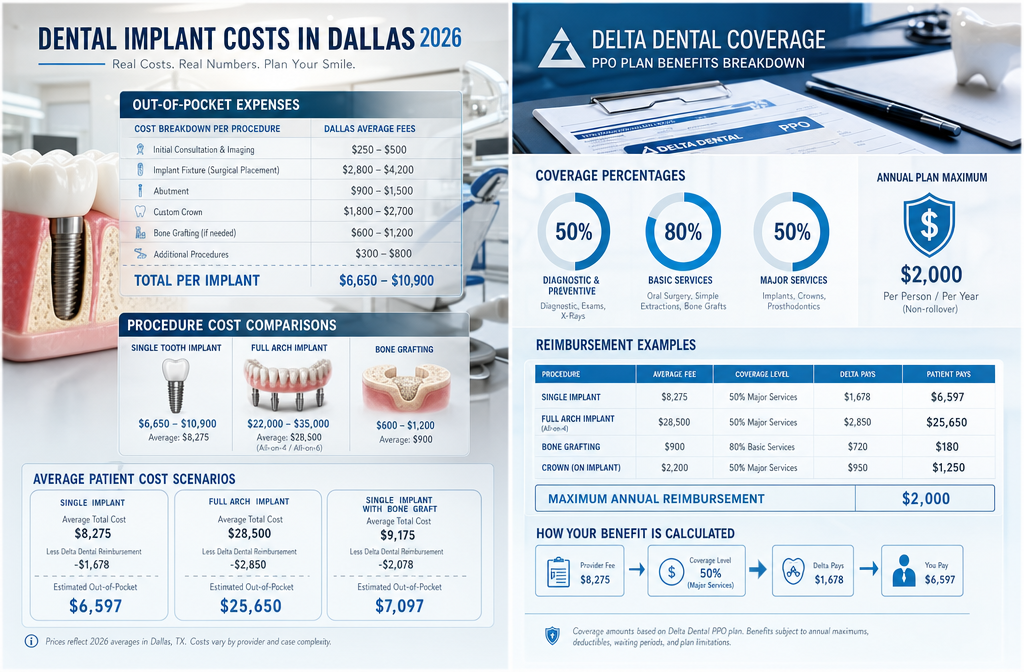
Even with a Delta Dental plan that includes coverage for major restorative services, it is important to understand that the term “coverage” does not equate to “free.” Dental implants involve multiple stages and components, and various aspects may be covered differently or not at all.
Typically Covered Components (Partially)
- Initial Consultation and X-rays: Many Delta Dental plans will cover a significant portion of diagnostic services like your initial consultation with a dentist and necessary X-rays (including 3D scans) to assess your oral health and determine candidacy for dental implants.
- Tooth Extraction: If the tooth needing replacement requires extraction, this procedure is often covered as a basic service, though it may be subject to your deductible and co-pay.
- Implant Placement Surgery: This is often the primary component covered under “major restorative services.” Delta Dental may pay a percentage (e.g., 50%) of the surgical placement of the implant post into the jawbone.
- Abutment: The abutment, which connects the implant post to the crown, may also be partially covered.
Common Out-of-Pocket Expenses
Despite coverage for the core implant components, patients should prepare for several out-of-pocket costs when getting dental implants in Dallas.
- Deductibles and Co-pays: Before your insurance begins to pay, you will need to meet your annual deductible. Additionally, a co-payment percentage will apply to the covered services.
- Annual Maximums: As mentioned, most plans have an annual maximum. Once you reach this limit, you are responsible for 100% of any further costs until the next plan year. Dental implant procedures often span multiple appointments and can easily exceed a typical annual maximum of $1,000-$2,500.
- Bone Grafting: If you have insufficient jawbone density to support an implant, a bone graft may be necessary. Many Delta Dental plans consider bone grafting a separate procedure and may offer limited or no coverage, deeming it part of a pre-prosthetic service rather than the implant itself. This can add a significant cost. For more information on bone graft costs, see Bone Graft Costs for Dental Implants in Dallas: When You Need It and Pricing 2026.
- Sinus Lifts/Ridge Augmentation: Similar to bone grafts, these preparatory surgeries are often not fully covered.
- Implant Crown/Restoration: While the implant post is a major part of the procedure, the visible crown that caps the implant may be covered under a different category (e.g., major restorative, but with different percentages) or have specific material exclusions. High-quality aesthetic crowns, especially those made from specific materials like zirconia, might lead to additional out-of-pocket expenses. For understanding material choices and their costs, consider Understanding Dental Implant Materials in Dallas: Zirconia vs..
- Sedation: Anesthesia or sedation options, which can significantly improve patient comfort during implant surgery, are often not covered by dental insurance or are only partially covered. Learn more about options at Painless Dental Implant Techniques Dallas TX: Sedation Optio.
- “Missing Tooth Clause”: This is a critical clause to be aware of. Many Delta Dental plans include a provision that excludes coverage for a tooth that was missing before you enrolled in the plan or before your coverage for major services began. This can be a major unexpected barrier to coverage for individuals in Dallas with long-standing missing teeth. Always verify if this clause applies to your specific plan.
- Waiting Periods: Most Delta Dental plans have waiting periods for major restorative services, including dental implants. This typically means you must be enrolled in the plan for 6 to 12 months before any coverage for implants becomes active. Planning ahead is crucial.
It’s important to remember that these are general guidelines. The exact coverage and out-of-pocket costs will depend on your specific Delta Dental plan, the dentist’s fees in Dallas, and the complexity of your individual case. Always get a detailed treatment plan and cost estimate from your Dallas dentist, along with a pre-treatment estimate from Delta Dental, before starting any implant procedure.
Maximizing Your Delta Dental Benefits and Managing Costs in Dallas 2026
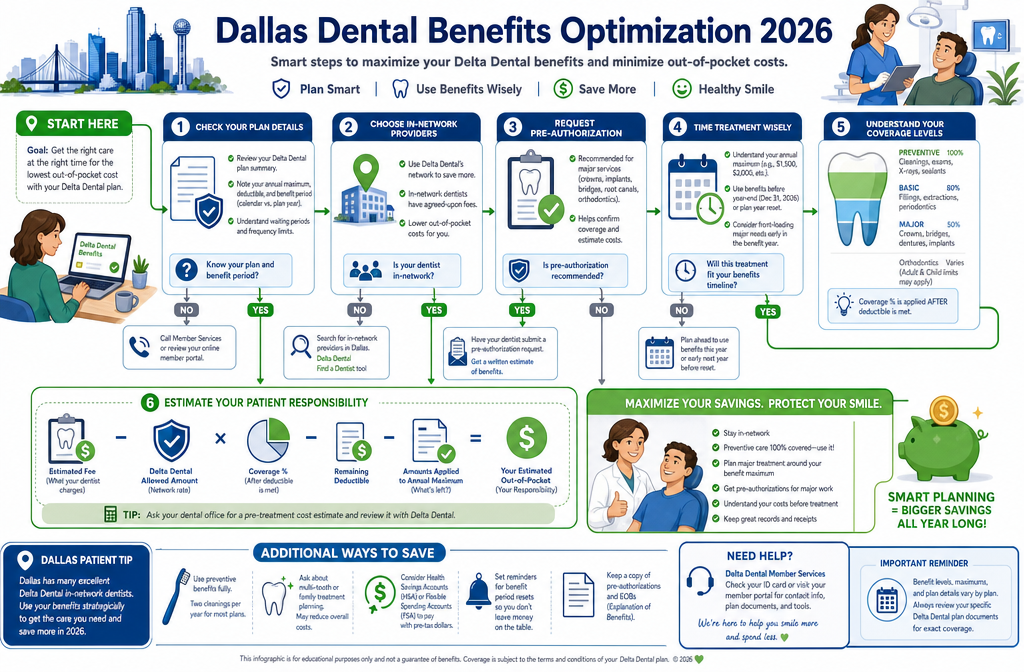
Even with the complexities of insurance coverage, there are proactive steps Dallas residents can take to make the most of their Delta Dental benefits and manage the overall cost of dental implants in 2026.
Review Your Plan Annually
Dental insurance plans, including Delta Dental, can change their terms, benefits, and exclusions each year. Make it a practice to review your plan documents annually, especially around enrollment periods, to understand any updates to implant coverage, annual maximums, or waiting periods. If you have questions, contact Delta Dental’s customer service directly.
Understand Annual Maximums and Staggered Treatment
Dental implant procedures can be extensive. If your annual maximum is a limiting factor, discuss with your Dallas dentist the possibility of staggering parts of your treatment across two plan years. For example, the surgical placement might occur in one year, and the placement of the abutment and crown in the subsequent year. This strategy can allow you to utilize two separate annual maximums, potentially reducing your immediate out-of-pocket expense.
The Power of a Pre-Treatment Estimate
Before committing to a dental implant procedure, ask your Dallas dentist to submit a pre-treatment estimate (sometimes called a pre-determination) to Delta Dental. This formal request will provide you with a detailed breakdown of what Delta Dental expects to cover and what your estimated out-of-pocket expenses will be. This is a critical step to avoid financial surprises.
In-Network vs. Out-of-Network Dentists
While Delta Dental PPO plans allow you to see any dentist, visiting an in-network provider often results in lower costs. In-network dentists have agreed to specific fee schedules with Delta Dental, which can mean reduced fees for services and less balance billing for you. Always verify your dentist’s network status.
Exploring Alternative Funding and Discounts Beyond Delta Dental
When Delta Dental coverage is limited or exhausted, other options exist to make dental implants in Dallas more affordable:
- In-House Discounts and Payment Plans: Many dental implant clinics in Dallas offer their own discounts for uninsured patients or those whose insurance doesn’t cover the full cost. They may also provide interest-free payment plans or extended financing options directly through their office or a third-party provider like CareCredit. For more information, explore Dallas Dental Implant Financing Options.
- Flexible Spending Accounts (FSAs) and Health Savings Accounts (HSAs): If you have an FSA or HSA through your employer, these tax-advantaged accounts can be used to pay for qualified medical and dental expenses, including dental implants. This can effectively reduce your out-of-pocket costs by using pre-tax dollars. You may also be able to claim dental implant costs as tax deductions. For details, consult 2026 Dallas Dental Implant Tax Deductions: IRS Rules for Med.
- Dental Schools: Dental schools in Texas may offer services at a reduced cost, as procedures are performed by students under the supervision of experienced faculty. This can be a viable option for those on a tighter budget, though it may involve longer appointment times.
- Third-Party Financing: Companies specializing in healthcare financing offer payment plans for larger dental expenses. Be sure to understand interest rates and repayment terms before committing.
- Consultation with a Dentist: A thorough consultation with a dentist in Dallas is crucial. During this consultation, discuss all costs transparently and explore all available financing and payment options. They can help you understand the full scope of your implant cost in Dallas and how to best approach it financially.
By combining a clear understanding of your Delta Dental benefits with proactive financial planning and exploring all available payment solutions, Dallas residents can navigate the cost of dental implants more effectively in 2026.
Conclusion
Obtaining dental implants is a significant investment in your oral health, offering a long-term solution for missing teeth. While Delta Dental is a major provider, its coverage for dental implants in Dallas for 2026 is not always straightforward. Plans vary widely, with PPOs typically offering some coverage for major services, while DHMOs may be more restrictive. Critical factors like waiting periods, annual maximums, and the “missing tooth clause” can significantly impact what’s actually covered and what still comes out-of-pocket.
Patients in Dallas should anticipate that even with Delta Dental, substantial out-of-pocket expenses are likely, especially for procedures such as bone grafts, advanced imaging, and the final implant crown. The key to navigating this landscape is informed decision-making. We encourage you to thoroughly review your specific Delta Dental policy, engage in open discussions with your Dallas dentist, and request a detailed pre-treatment estimate. Furthermore, exploring alternative payment options, such as in-house discounts, payment plans, and health savings accounts, can make the path to a restored smile more accessible. Your long-term oral health is worth the effort of careful planning and understanding all available options.