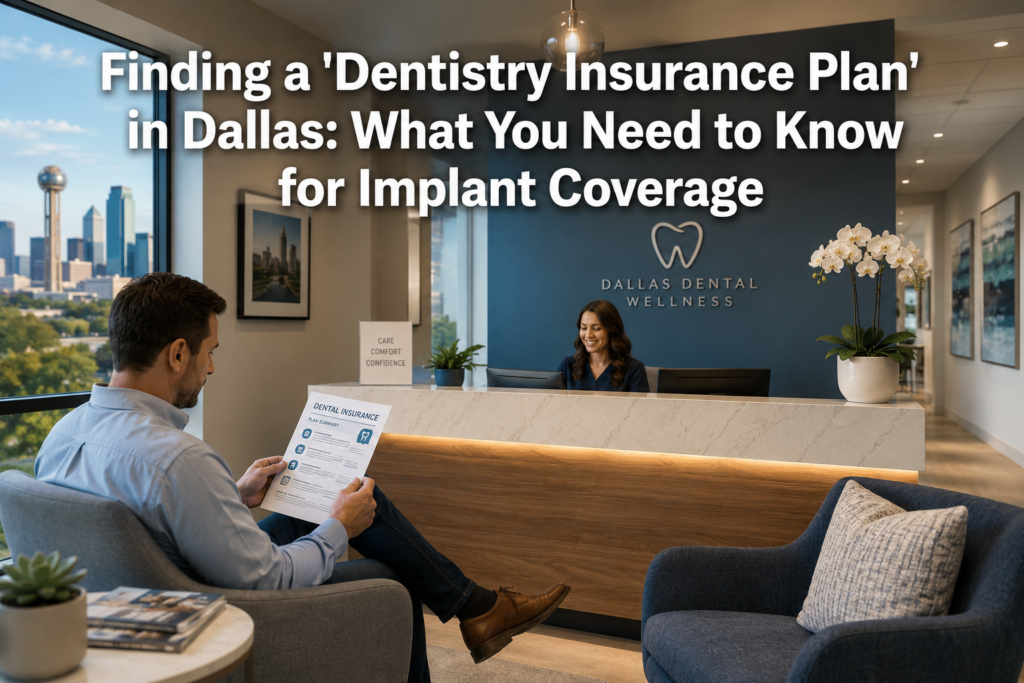
For many Dallas residents experiencing tooth loss, dental implants represent a gold standard among tooth replacement options, offering a durable and natural-looking solution. However, the cost associated with this advanced procedure often leads to questions about insurance coverage. Navigating the complexities of dental insurance, especially when it comes to major restorative work like dental implants, can be challenging. This article aims to provide clear, factual information about finding a ‘dentistry insurance plan’ in Dallas and what you need to know for implant coverage in 2026. Understanding your options is a critical step in making informed decisions for your long-term oral health.
Key Takeaways
- Most traditional dental insurance plans in Dallas offer limited or no coverage for dental implants, often classifying them as cosmetic or excluding them entirely.
- PPO plans generally offer more flexibility and a higher likelihood of partial coverage for major restorative procedures compared to DHMOs.
- Thoroughly review policy documents, specifically focusing on “major restorative services” and any exclusions related to dental implants or prosthetics.
- Be aware of waiting periods, annual maximums, and deductibles, as these significantly impact out-of-pocket costs for implant procedures.
- Explore alternative payment options like financing, HSAs, and FSAs to help manage the cost of dental implants, even with insurance.
Understanding Dental Insurance in Dallas: Types and Coverage Levels
When embarking on the journey of finding a ‘dentistry insurance plan’ in Dallas, it is essential to first understand the different types of plans available and what they typically cover. Not all dental insurance is created equal, especially concerning complex procedures like dental implants.
Common Types of Dental Insurance Plans
In Dallas, as in many parts of the country, several types of dental insurance plans are prevalent:
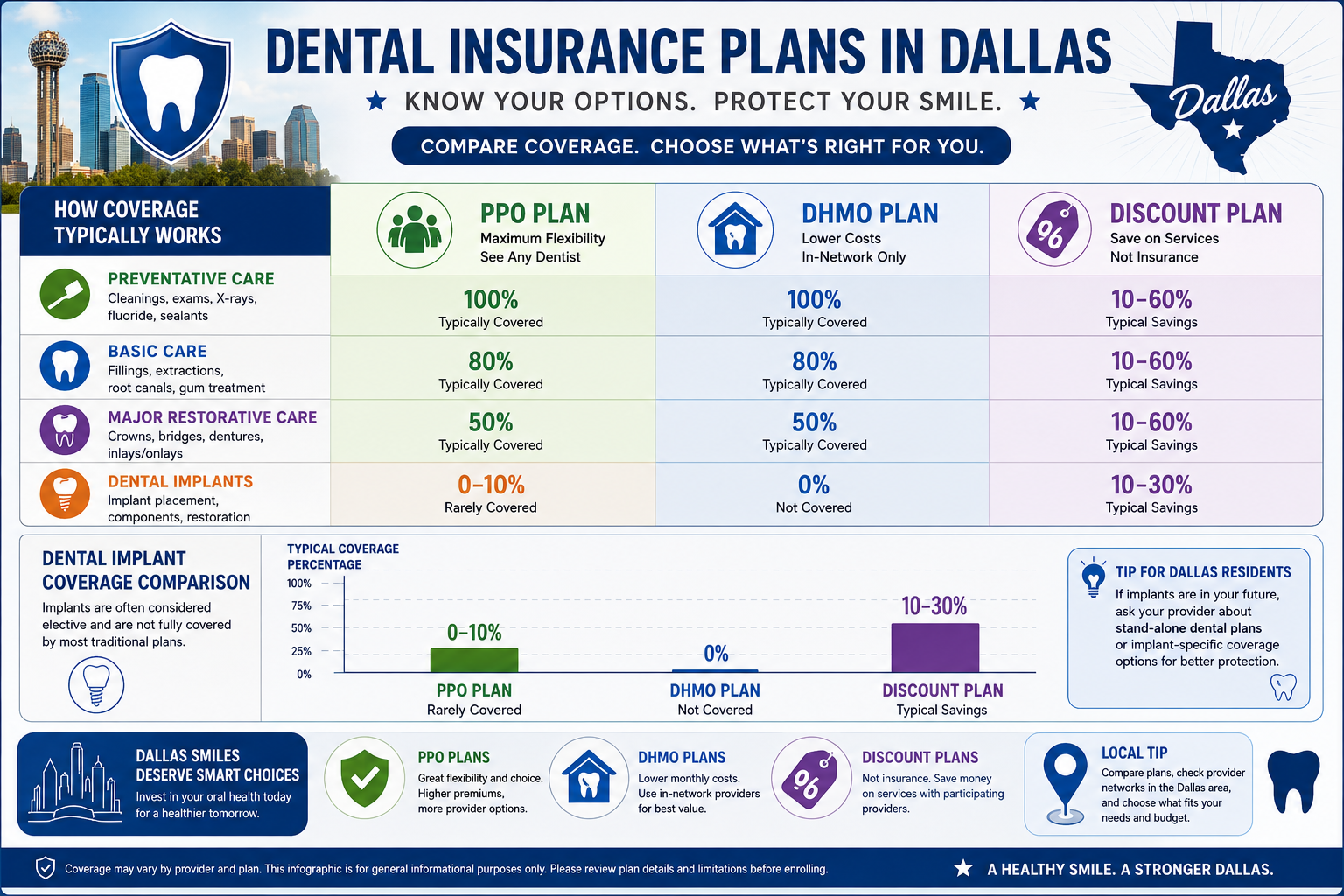
- Preferred Provider Organization (PPO) Plans: These plans offer the most flexibility. You can choose any dentist, but you’ll usually pay less if you choose an in-network provider. PPO plans often provide some level of coverage for a wider range of services, including major restorative work, though coverage for implants can still be limited.
- Dental Health Maintenance Organization (DHMO) Plans: With a DHMO, you must select a primary care dentist within the plan’s network. All care, including specialist referrals, must be coordinated through this dentist. While DHMOs typically have lower premiums and no deductibles, they generally do not cover dental implants, or if they do, the coverage is very minimal and restricted to specific providers.
- Discount Dental Plans: These are not insurance but membership plans that offer discounts on dental services from participating providers. They can be a cost-effective option for uninsured individuals, but the discount for dental implants in Dallas can vary significantly and may not cover a substantial portion of the total cost.
- Indemnity Plans (Traditional Insurance): Less common today, these plans allow you to choose any dentist and then submit a claim for reimbursement. They may offer some coverage for major procedures, but like PPOs, implant coverage is not guaranteed and often capped.
General Coverage for Dental Implants
The reality for many Dallas residents is that traditional dental insurance plans often do not provide extensive coverage for dental implants. Historically, implants have been categorized as cosmetic procedures, or as an alternative to less expensive options like bridges or dentures, leading to exclusions.
However, as dental implants become more recognized for their long-term oral health benefits and functional superiority in treating missing teeth solutions, some plans are beginning to offer partial coverage. Typically, if covered, dental implants in Dallas fall under “major restorative services” and might be covered at 20% to 50% after a deductible and waiting period. It is rare for a standard plan to cover the full cost. Understanding this general landscape is crucial when you are Finding a ‘Dentistry Insurance Plan’ in Dallas: What You Need to Know for Implant Coverage.
Decoding Your Dental Plan: Specifics of Implant Coverage
Once you have a dental insurance plan, or if you are considering one, the next critical step is to carefully decode its policy details regarding dental implants. This involves looking beyond general descriptions and examining the fine print.
Key Policy Components to Investigate
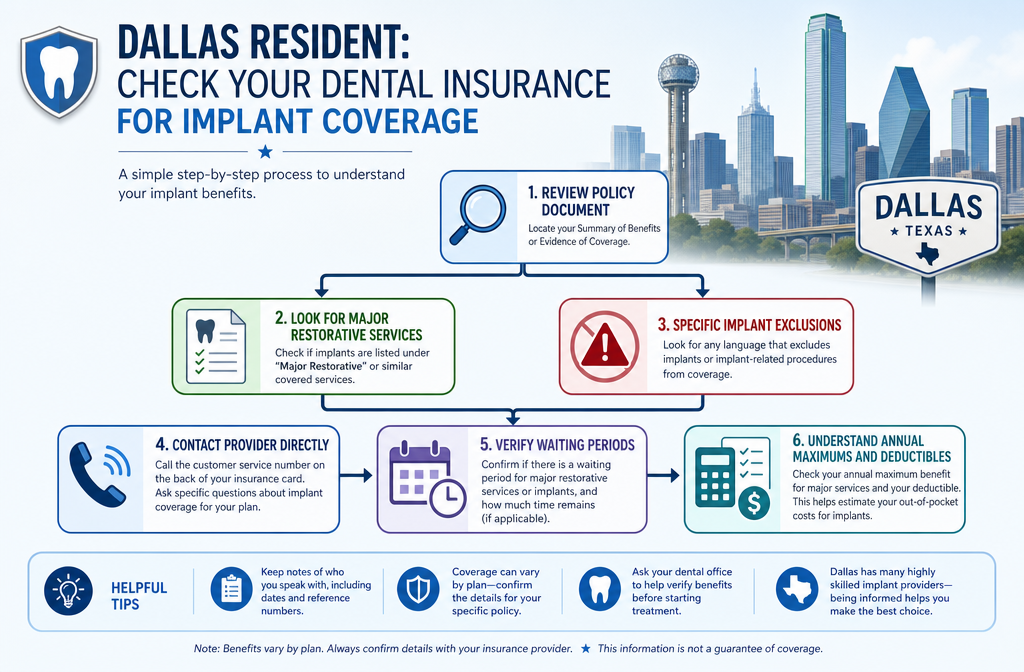
When assessing your plan for dental implant coverage in 2026, focus on these specific areas:
- Major Restorative Services: Check the percentage of coverage for major services. Dental implants are almost always classified here. Typical coverage can range from 0% to 50%.
- Exclusions List: This is perhaps the most important section. Many policies have explicit exclusions for dental implants, bone grafting, or the prosthetic crowns that attach to implants. Look for terms like “implants not covered,” “cosmetic exclusion,” or “replacement of missing teeth by implant prosthetics not covered.”
- Waiting Periods: Most major restorative services, including implants, come with waiting periods, often 6 to 12 months, or even longer. This means you must have had the policy for that duration before coverage kicks in.
- Annual Maximums: Dental insurance plans have an annual maximum benefit, which is the total amount the insurance company will pay out in a calendar year. For dental implants, which can be costly, this maximum (often $1,000 to $2,000) may only cover a small portion of the overall implant cost in Dallas.
- Deductibles: This is the amount you must pay out-of-pocket before your insurance begins to cover costs.
- Pre-authorization: Many plans require pre-authorization for major procedures. Your dental office will submit a treatment plan to the insurance company to determine what will be covered before treatment begins. This is a crucial step to avoid unexpected costs. For those preparing for this, our guide on preparing for your dental implant consultation in Dallas can be very helpful.
Communicating with Your Provider
The most reliable way to understand your coverage is to contact your dental insurance provider directly. Be prepared with specific questions:
- Does my plan cover dental implants (D6010, D6058, D6059, etc.)?
- What percentage of the procedure is covered?
- Is there a waiting period for major restorative services, and if so, how long?
- What is my annual maximum, and how much have I used this year?
- What is my deductible, and has it been met?
- Are there any in-network specialists for dental implants in Dallas that I must use?
“Understanding your policy’s specifics for dental implants is not just about finding a plan; it’s about finding the right plan that truly supports your oral health needs.”
Your dental office in Dallas can often assist with verifying benefits and submitting pre-authorizations, as they regularly deal with diverse insurance plans.
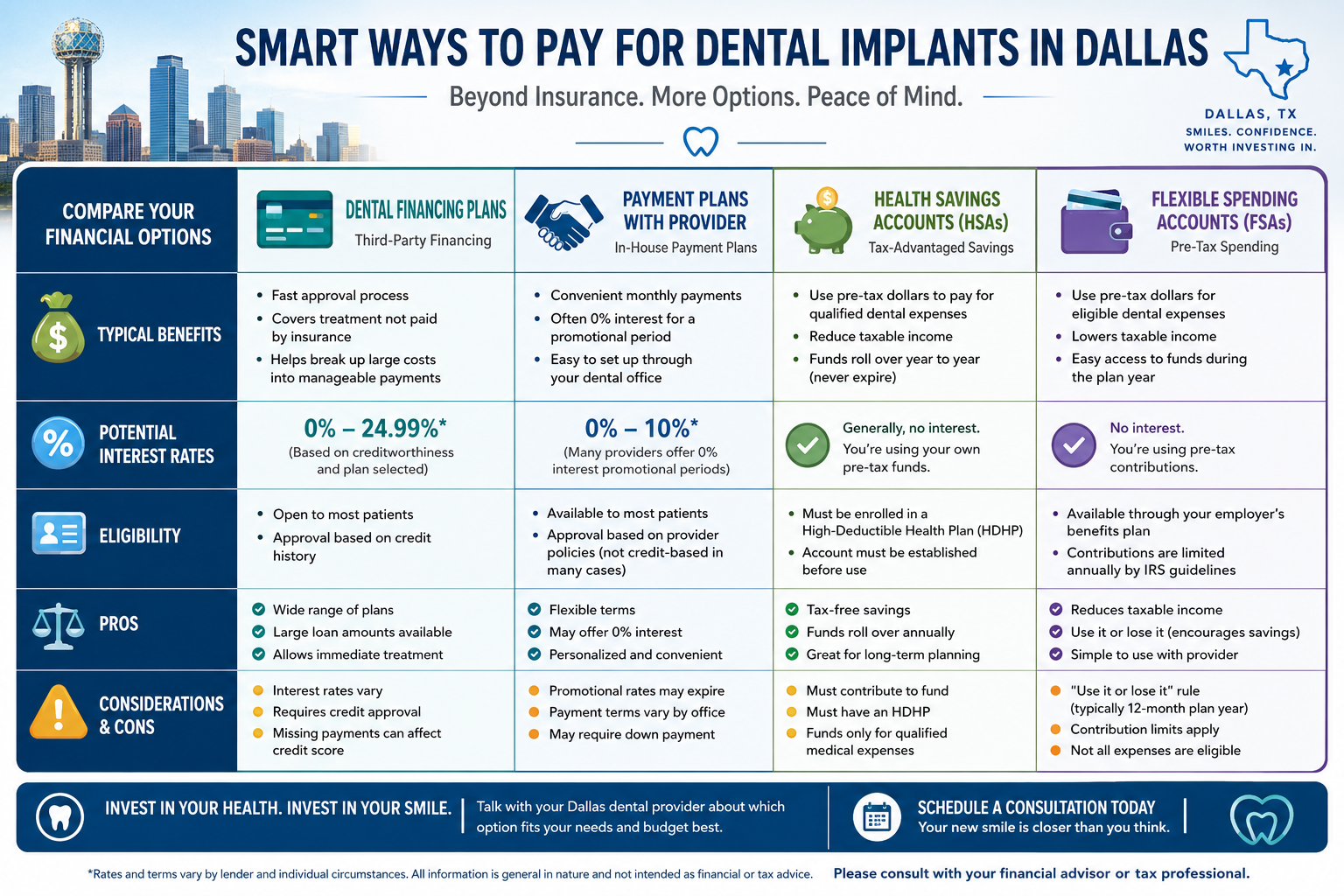
Alternative Solutions for Financing Dental Implants in Dallas
Even with the best ‘dentistry insurance plan,’ many Dallas residents will find that their out-of-pocket expenses for dental implants remain substantial. Fortunately, several alternative financing options can make this vital tooth replacement option more accessible.
Dental Financing Plans and Payment Options
Many dental practices in Dallas offer flexible payment plans directly or through third-party financing companies. These options can help spread the cost of the dental implant procedure over several months or years.
- In-Office Payment Plans: Some dentists allow patients to pay for their treatment in installments, often without interest, especially for the initial phases of the procedure.
- Third-Party Medical Financing: Companies like CareCredit or LendingClub offer specialized healthcare financing. These typically provide various plans, including interest-free options for a set period, followed by standard interest rates.
- Credit Cards: While not ideal for large expenses due to high interest rates, credit cards can be an option for smaller portions of the cost, particularly if you can pay off the balance quickly.
Utilizing Health Savings Accounts (HSAs) and Flexible Spending Accounts (FSAs)
For those with these types of accounts, HSAs and FSAs are excellent ways to pay for dental implants with pre-tax dollars.
- Health Savings Accounts (HSAs): If you have a high-deductible health plan (HDHP), you may be eligible for an HSA. Contributions are tax-deductible, growth is tax-free, and withdrawals for qualified medical expenses (which include dental implants) are also tax-free. This creates a triple-tax advantage.
- Flexible Spending Accounts (FSAs): Offered through employers, FSAs allow you to set aside pre-tax money for healthcare expenses. Like HSAs, dental implants are considered a qualified expense. The main difference is that FSA funds typically operate on a “use it or lose it” basis each year.
Exploring Other Avenues
- Dental Schools: Major universities with dental schools, often located in larger cities, sometimes offer services at a reduced cost. While Dallas may not have a prominent one offering full implant services, it’s worth exploring nearby major cities if distance is not a significant barrier.
- Negotiation with Providers: It may be possible to discuss pricing and payment options directly with your chosen dental clinic. Some practices offer discounts for upfront payment or for specific multi-implant procedures like All-on-4 implant costs in Dallas TX or full mouth dental implants.
- Understanding Cost Factors: Being informed about what influences implant cost can help. Factors like the type of implant (e.g., mini implants vs standard implants), materials (e.g., Zirconia vs. Titanium), and any necessary preliminary procedures like bone grafting all impact the total expense.
By combining a partial ‘dentistry insurance plan’ with one or more of these alternative financing strategies, Dallas residents can significantly reduce their financial burden and make dental implants a reality for improving their long-term oral health.
Conclusion
Finding a ‘dentistry insurance plan’ in Dallas that offers substantial coverage for dental implants can be a complex endeavor in 2026. While traditional dental insurance may provide some assistance, it rarely covers the entire cost of dental implants, which are widely recognized as a superior solution for missing teeth. It is crucial for Dallas residents to thoroughly review their policy documents, understand terms like annual maximums, deductibles, and waiting periods, and directly communicate with their insurance provider.
Beyond insurance, numerous financial strategies are available to help manage the cost of dental implants in Dallas. Exploring options such as dental financing plans, HSAs, and FSAs can provide significant relief. The ultimate goal is to ensure that financial considerations do not prevent you from accessing high-quality tooth replacement options that contribute to your overall well-being and long-term oral health. Always engage in a thorough consultation with a dentist specializing in dental implants to discuss both treatment plans and financial arrangements. Making an informed decision is paramount for a confident and healthy smile.
References
- American Dental Association. (2023). Dental insurance definitions. Retrieved from https://www.ada.org/resources/research/health-policy-institute/dental-insurance-definitions
- CareCredit. (n.d.). How CareCredit works. Retrieved from https://www.carecredit.com/howcarecreditworks/
- Internal Revenue Service. (2022). Publication 502, Medical and Dental Expenses. Retrieved from https://www.irs.gov/publications/p502