The average cost of full-mouth dental implants in Dallas can easily exceed $30,000, presenting a significant financial consideration for many individuals. However, savvy financial planning can transform this expense into a more manageable one. Understanding how to leverage Health Savings Accounts (HSAs) and Flexible Spending Accounts (FSAs) is crucial for those seeking dental implants in Dallas. For the 2026 tax year, these powerful tax-advantaged accounts offer a unique opportunity to pay for extensive dental work, including high-cost procedures like full-mouth restorations or multiple single tooth replacements, with tax-free dollars, effectively reducing the overall burden.
This article will delve into the mechanics of HSAs and FSAs, outlining their benefits, contribution limits, and how they specifically apply to covering the significant costs associated with dental implants. We aim to provide Dallas residents with clear, actionable information to help them maximize their tax-free savings for treatments that can genuinely restore their oral health and quality of life.
Key Takeaways
- Tax-Free Savings: Both HSAs and FSAs allow you to pay for qualified dental implant expenses with pre-tax or tax-deductible dollars, leading to significant savings on your overall treatment cost.
- High Cost Coverage: These accounts are particularly beneficial for costly procedures like full-mouth dental implants, which can exceed $30,000, making advanced treatments more accessible.
- HSA Benefits: HSAs offer triple tax advantages (tax-deductible contributions, tax-free growth, tax-free withdrawals for qualified expenses), are portable, and have no “use-it-or-lose-it” rule, making them excellent long-term savings vehicles.
- FSA Benefits: FSAs provide immediate tax savings through pre-tax contributions and can be used for dental implant costs. While typically subject to a “use-it-or-lose-it” rule, many plans offer grace periods or limited rollovers for 2026.
- Eligible Expenses: Most components of a dental implant procedure, including the implant, abutment, crown, bone grafts, and anesthesia, are considered eligible medical expenses by the IRS.
Understanding HSAs and FSAs: Your Tax-Free Pathway to Dental Implants in Dallas 2026
 Navigating the financial landscape of significant dental procedures like dental implants can feel complex. In Dallas, patients considering tooth replacement options that may cost $30,000 or more often seek ways to mitigate the expense. Health Savings Accounts (HSAs) and Flexible Spending Accounts (FSAs) stand out as two of the most effective tools for this purpose, offering tax benefits that can substantially lower your out-of-pocket costs. For the 2026 tax year, understanding the nuances of these accounts is essential for maximizing your savings on dental implants.
Health Savings Accounts (HSAs)
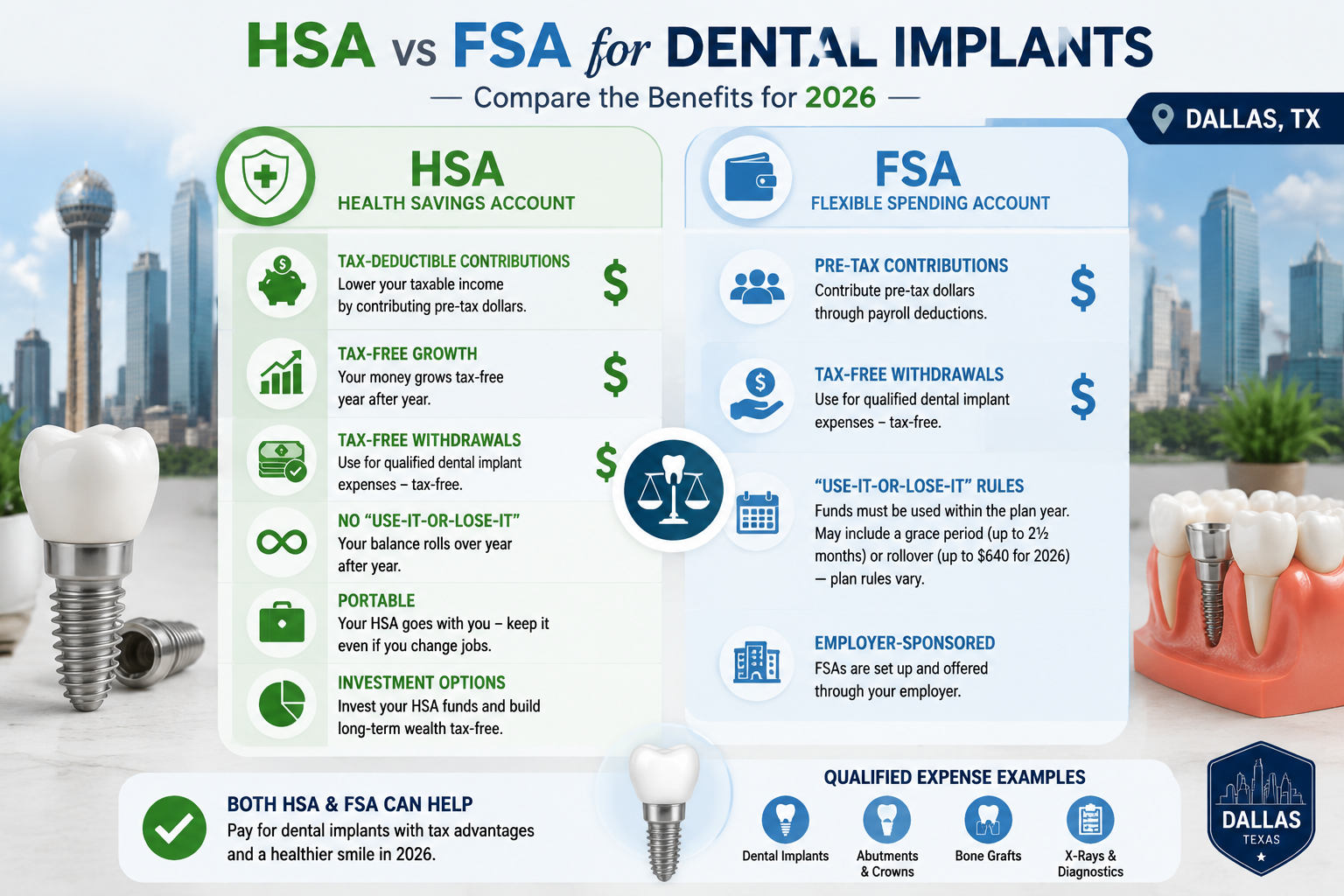
An HSA is a personal savings account that can be used for qualified medical expenses. To be eligible for an HSA, you must be enrolled in a High-Deductible Health Plan (HDHP) and not be covered by any other non-HDHP health insurance plan (with some exceptions). HSAs offer a unique “triple tax advantage”:
- Tax-Deductible Contributions: Money you contribute to your HSA is tax-deductible.
- Tax-Free Growth: Funds in your HSA grow tax-free. Many HSAs allow you to invest the money, similar to a 401(k) or IRA.
- Tax-Free Withdrawals: Withdrawals are tax-free when used for qualified medical expenses, which include the full dental implant procedure.
Unlike FSAs, HSAs are portable (they belong to you, not your employer) and have no “use-it-or-lose-it” rule. This means the funds roll over year after year, making them an excellent long-term savings and investment vehicle for future healthcare needs.
HSA Contribution Limits for 2026 (projected):
- Individual: Typically around $4,150 (actual limits are subject to IRS announcements, these are projections).
- Family: Typically around $8,300.
- Catch-up contributions (age 55 and older): An additional $1,000.
These limits can cover a significant portion, if not all, of a single dental implant cost, and when accumulated over years, can easily address the full cost of full mouth dental implants Dallas or other extensive treatments.
Flexible Spending Accounts (FSAs)
An FSA is an employer-sponsored benefit that allows you to set aside pre-tax money from your paycheck to pay for qualified medical expenses. The primary benefit of an FSA is the immediate tax savings on the money you contribute. Since contributions are made before taxes are withheld, your taxable income is reduced.
FSA Contribution Limits for 2026 (projected):
- Typically around $3,200 per employee (actual limits are subject to IRS announcements, these are projections).
The main difference from an HSA is the “use-it-or-lose-it” rule. Historically, any money left in an FSA at the end of the plan year was forfeited. However, many employers now offer one of two exceptions:
- Grace Period: An extension of up to 2.5 months to use the funds.
- Rollover: The ability to roll over a limited amount (e.g., $610 for 2025, subject to 2026 adjustments) into the next plan year.
While less flexible than HSAs, FSAs still provide substantial tax savings for planned expenses like dental implants. It’s crucial to understand your employer’s specific FSA rules for 2026 to ensure you utilize your funds effectively for your dental implants in Dallas.
Maximizing Tax-Free Savings on $30k+ Treatments: HSAs & FSAs for Dental Implants Dallas 2026
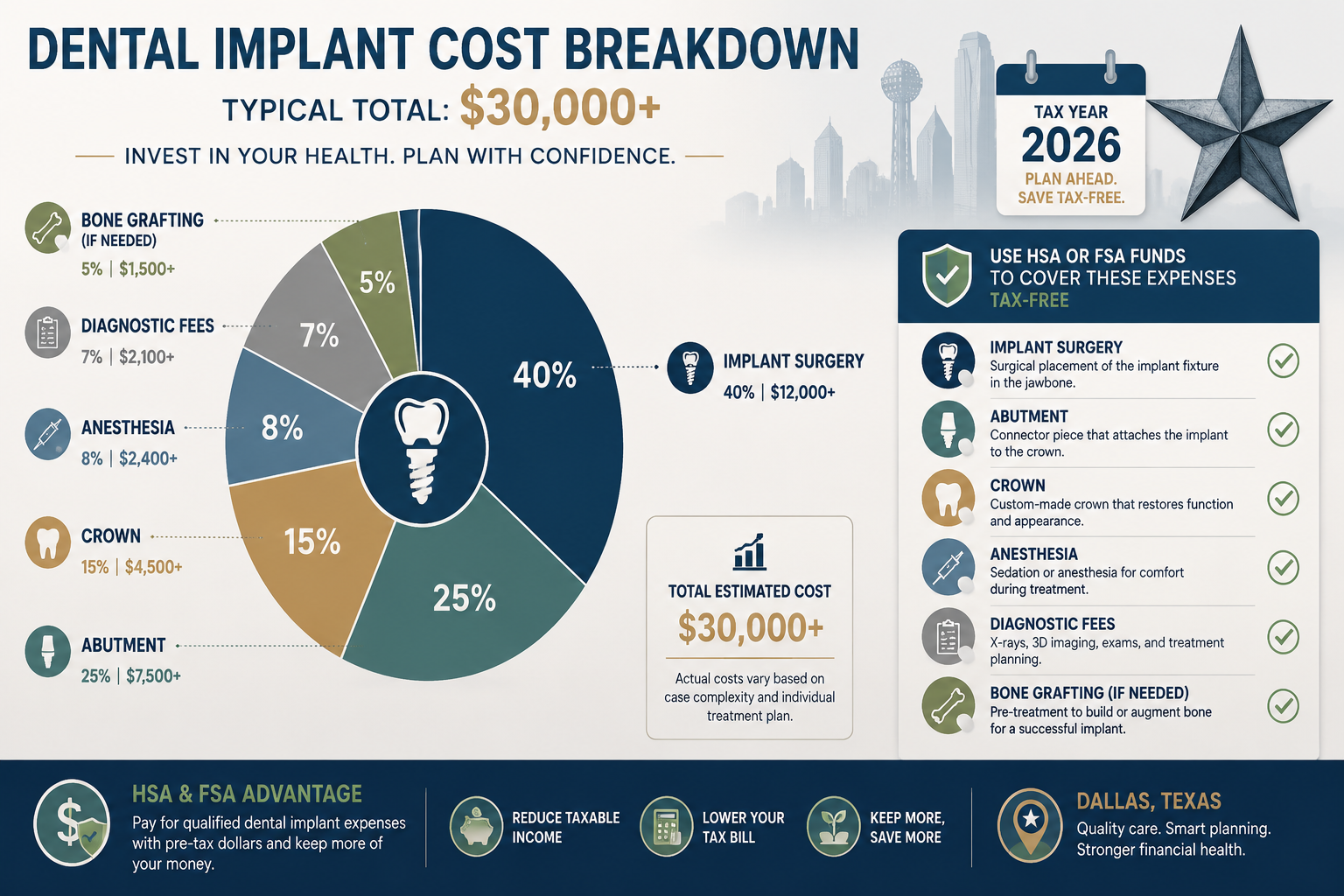 When facing a dental implant treatment plan that could cost $30,000 or more, such as full arch restorations (like All-on-4 or All-on-6 implants) or complex individual implant cases requiring bone grafts and multiple procedures, the tax advantages of HSAs and FSAs become incredibly valuable. These accounts enable patients in Dallas to pay for their oral health investments with dollars that have never been taxed, directly reducing the true cost of care.
What Dental Implant Expenses are Eligible?
The good news is that most components of a dental implant procedure are considered eligible medical expenses by the IRS. This includes:
- The Dental Implant: The titanium post surgically placed into the jawbone.
- Abutment: The connector piece between the implant and the crown.
- Dental Crown or Prosthetic: The visible tooth replacement (or bridge/denture for full arch solutions).
- Diagnostic Procedures: X-rays, 3D scans, and consultations required for treatment planning.
- Anesthesia and Sedation: Costs associated with local or general anesthesia, or conscious sedation options Dental Implant Sedation Options Dallas.
- Ancillary Procedures: This often includes essential treatments like bone grafting or sinus lifts, which can add significantly to the overall cost, especially for complex cases Sinus Lift & Bone Graft Necessity in Dallas.
- Post-Operative Care: Medications, follow-up visits, and certain Dental Implant Post-Op Care & Maintenance Costs in Dallas.
By using HSA or FSA funds, you avoid paying federal income tax, Social Security tax, and Medicare tax on the money used for these expenses. Depending on your tax bracket, this can represent a savings of 20-40% on your dental implant costs. For a $30,000 treatment, this could mean saving $6,000 to $12,000—a substantial amount that makes high-quality dental care more affordable.
Strategic Use for Large Expenses
For extensive treatments, such as All-on-4 implants in Dallas or full mouth implant overdentures that can reach the upper end of the $30,000+ range, a multi-year strategy may be beneficial.
- HSA Accumulation: Because HSA funds roll over, you can contribute to your HSA over several years, allowing the balance to grow and be ready when you need to cover a large expense. This is particularly advantageous for individuals who plan their dental implant procedure in advance.
- FSA Planning: If you have an FSA, it’s crucial to estimate your dental implant expenses for the upcoming 2026 plan year and contribute accordingly. If your employer offers a grace period or rollover, factor that into your spending plan. For large, multi-stage procedures, you might allocate funds across two plan years.
- Combined Approach: Some individuals may have access to both an HSA (if enrolled in an HDHP) and a Limited Purpose FSA (LPFSA), which typically covers only dental and vision expenses. An LPFSA can allow you to use pre-tax dollars for dental needs while preserving your HSA for other medical expenses or long-term growth.
Always consult with your dental provider in Dallas to get a detailed breakdown of costs and a timeline for your implant surgery process. This will help you plan your contributions and withdrawals effectively for 2026.
Dallas Clinic Reimbursement Processes and Planning for 2026
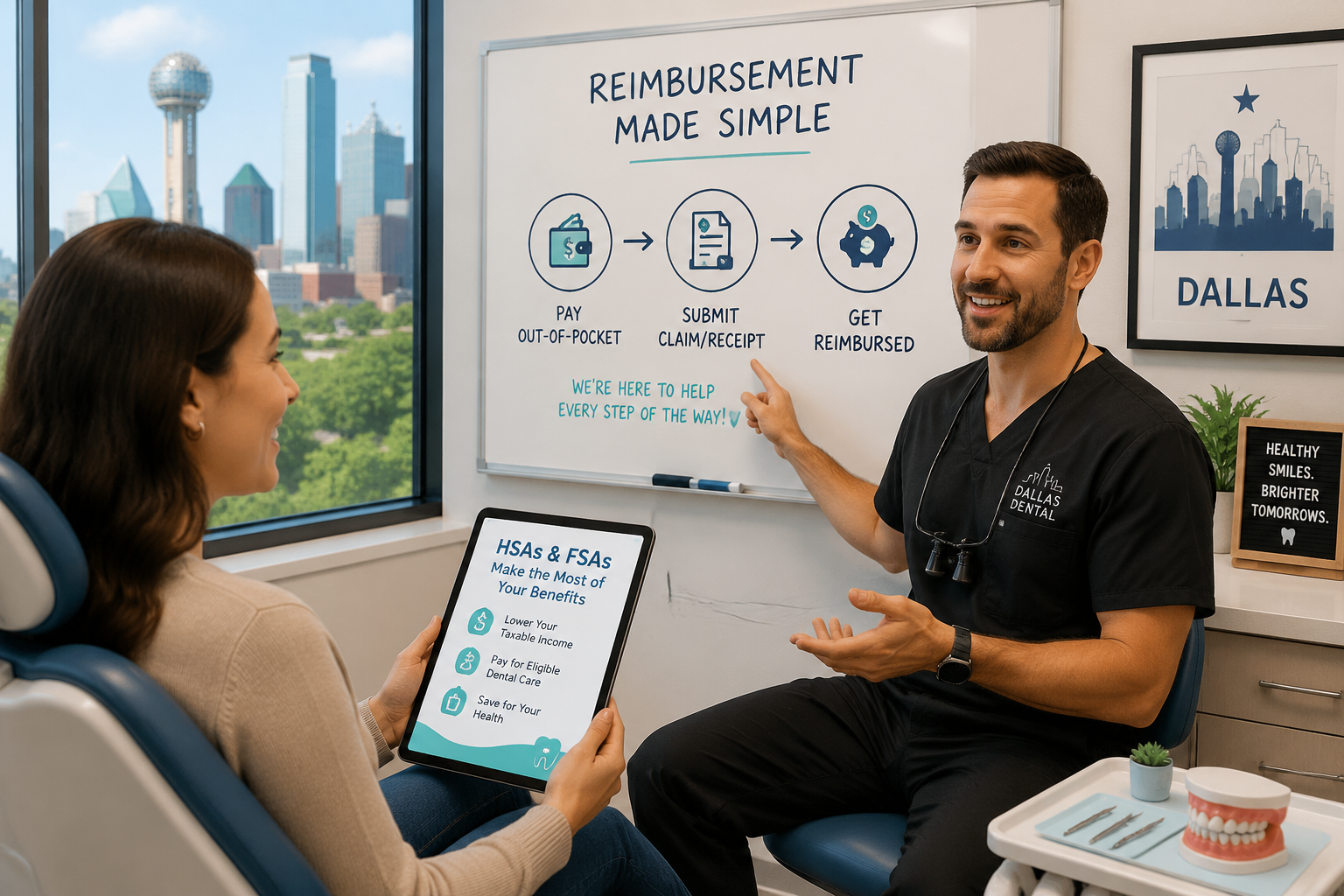 Once you’ve decided to proceed with dental implants in Dallas and understand the benefits of HSAs and FSAs, the next step involves navigating the practical aspects of payment and reimbursement. Dallas dental implant clinics are familiar with these payment methods and typically have straightforward processes to assist patients.
How Reimbursement Works
Generally, there are two primary ways to use your HSA or FSA for dental implants:
- Pay Out-of-Pocket and Get Reimbursed: This is the most common method. You pay for your dental implant procedure using your personal funds (e.g., credit card, personal check) and then submit your receipt and/or Explanation of Benefits (EOB) from your dental provider to your HSA or FSA administrator for reimbursement. The reimbursement will be tax-free.
- Use a Debit Card: Many HSA and FSA plans issue a debit card that can be used directly at the time of service. When you pay for your dental implants with this card, the funds are automatically deducted from your account. While convenient, some administrators may still request receipts to verify eligibility, so it’s always wise to keep detailed records.
Important Tip: Always request an itemized statement from your Dallas dental clinic that clearly lists all charges for your dental implant procedure. This statement should include details such as the implant, abutment, crown, bone grafting, and anesthesia. This documentation is crucial for your HSA/FSA administrator to verify that the expenses are qualified.
Planning Your Dental Implant Journey in 2026
For residents of Dallas seeking missing teeth solutions, careful planning can make a significant difference.
- Consultation with a Dentist: Start by scheduling a consultation with a dentist who specializes in dental implants. During this visit, discuss your oral health needs, available tooth replacement options, and get a detailed treatment plan and cost estimate. This is particularly important for understanding the implant cost in Dallas for your specific situation.
- Verify Eligibility: Confirm with your HSA/FSA administrator what documentation they require for dental implant reimbursement. While dental implants are generally eligible, specific administrators might have unique submission requirements.
- Monitor Contribution Limits: Stay informed about the official IRS contribution limits for HSAs and FSAs for 2026, which are typically announced towards the end of the preceding year. This ensures you contribute the maximum allowable amount to fund your treatment.
- Consider Timing: If your dental implant procedure spans multiple months or even years, plan your HSA/FSA contributions and withdrawals accordingly. For FSAs, be mindful of the plan year end date and any grace period or rollover rules.
- Explore Other Payment Options: While HSAs and FSAs are excellent for tax-free savings, they might not cover 100% of a $30k+ treatment immediately. Explore comparing dental implant payment plans in Dallas or financing options offered by clinics. You might also look into whether your employer dental insurance for implants in Dallas provides any coverage, though it’s often limited.
Investing in dental implants is an investment in your long-term oral health and quality of life. By strategically using HSAs and FSAs, Dallas patients can significantly reduce the financial impact of these advanced, life-changing procedures. Always prioritize patient safety and consult with a qualified dental professional to ensure informed decision-making regarding your dental implant procedure.
Conclusion
The journey to restoring a complete and healthy smile with dental implants in Dallas, especially for treatments exceeding $30,000, becomes considerably more achievable when utilizing the power of Health Savings Accounts (HSAs) and Flexible Spending Accounts (FSAs). For 2026, these tax-advantaged tools offer Dallas residents a direct pathway to significantly reduce the out-of-pocket costs associated with dental implant procedures by allowing payments with tax-free dollars.
Whether you benefit from the triple tax advantage and long-term savings potential of an HSA or the immediate pre-tax savings of an FSA, strategic financial planning is key. We encourage individuals considering dental implants to thoroughly understand their plan’s specifics, contribution limits, and eligible expenses. A detailed consultation with a local dental professional in Dallas will provide an accurate cost estimate and treatment plan, which is essential for effective financial planning. By taking these proactive steps, you can make informed decisions that maximize your savings and confidently invest in your long-term oral health.