
Considering dental implants in Dallas for missing teeth can be a life-changing decision, offering a durable and aesthetic solution to restore your smile and chewing function. However, like any surgical procedure, understanding the Pain Level & Recovery Timeline After Dental Implant Surgery Dallas: A Patient’s Expectations Guide is crucial for a smooth and successful experience. This comprehensive guide aims to prepare patients in Dallas for what to expect, from managing immediate post-operative discomfort to navigating the full recovery journey.
Dental implant surgery involves placing a titanium post into the jawbone, which then fuses with the bone over several months. While the thought of surgery might cause apprehension, advancements in dental technology and sedation options have made the procedure more comfortable than ever before. Our goal is to provide clear, factual information to help you feel confident and informed every step of the way.
Key Takeaways
- Pain levels are generally manageable with prescribed medication and tend to decrease significantly within a few days after dental implant surgery.
- The initial recovery period involves managing swelling, bruising, and minor discomfort, lasting about 1-2 weeks.
- Full integration of the dental implant with the jawbone (osseointegration) can take 3-6 months, during which careful oral hygiene is essential.
- Following post-operative instructions diligently is vital for minimizing complications and ensuring a successful long-term outcome.
- Open communication with your Dallas dental professional about any concerns is key to a comfortable and effective recovery.
Understanding Pain Levels After Dental Implant Surgery in Dallas
One of the most common concerns for patients considering dental implant surgery is the potential for pain. It’s important to differentiate between discomfort and severe pain. While some level of discomfort is expected after any surgical procedure, severe pain is not typical and should be reported to your dental professional.
Immediate Post-Operative Pain (Days 1-3)
Immediately after the procedure, local anesthesia will still be active, meaning you might feel little to no pain. As the anesthesia wears off, you can expect to experience some discomfort. The intensity of this discomfort can vary widely among individuals and depends on several factors:
- Number of implants placed: A single implant procedure typically results in less discomfort than multiple implants or full mouth dental implants in Dallas.
- Location of the implant: Implants placed in the front of the mouth might feel different than those in the back.
- Complexity of the surgery: If bone grafting or tooth extraction was also performed, discomfort levels might be higher.
- Individual pain tolerance: Everyone experiences pain differently.
Typically, patients describe the pain as a dull ache or throbbing sensation. This is usually managed effectively with a combination of over-the-counter pain relievers (like ibuprofen or acetaminophen) and prescribed pain medication, if necessary. Many dentists in Dallas also offer painless dental implant techniques with various sedation options to enhance comfort during and after the procedure.
Expected Discomforts:
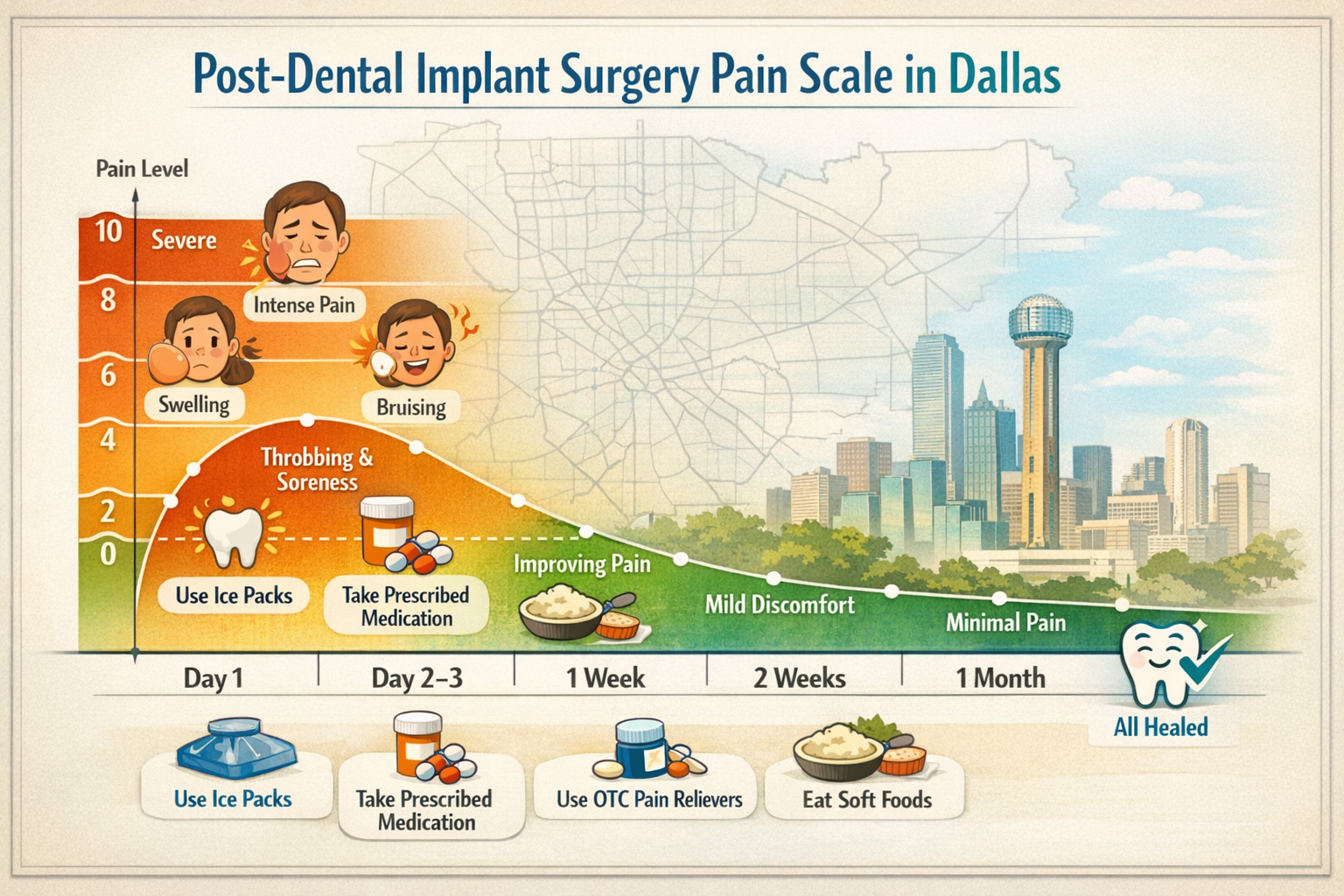
- Mild to Moderate Pain: Most patients report pain levels ranging from 3-6 on a 10-point scale during the first 24-48 hours.
- Swelling: This is a very common and normal reaction. Swelling usually peaks 2-3 days after surgery.
- Bruising: Some bruising on the face or gums is possible, especially with more extensive procedures.
- Minor Bleeding: Slight oozing or bleeding is normal for the first day.
- Stiffness: Jaw stiffness can occur, making it a bit challenging to open your mouth wide.
Managing Discomfort: Tips for Patients in Dallas
Your dental professional will provide specific post-operative instructions, but here are general tips to help manage pain and discomfort:
- Medication Adherence: Take prescribed pain medication and antibiotics as directed. Do not wait for pain to become severe before taking your pain relievers.
- Ice Packs: Apply ice packs to the outside of your face, over the surgical area, for 15-20 minutes on, 15-20 minutes off, during the first 24-48 hours to minimize swelling.
- Soft Diet: Stick to soft foods that require minimal chewing. Avoid hot, spicy, crunchy, or acidic foods.
- Oral Hygiene: Gently rinse your mouth with a prescribed mouthwash or warm salt water after 24 hours (do not rinse vigorously). Avoid brushing directly on the surgical site initially.
- Rest: Get plenty of rest. Avoid strenuous activities for the first few days.
- Head Elevation: Keep your head elevated, even while sleeping, to help reduce swelling.
- Avoid Smoking and Alcohol: These can significantly hinder healing and increase the risk of complications.
If you experience severe pain that is not managed by medication, excessive bleeding, or signs of infection (like fever or pus), contact your Dallas dentist immediately.
The Dental Implant Recovery Timeline: A Patient’s Expectations Guide
The recovery process after dental implant surgery can be broken down into several phases. While initial healing is relatively quick, the full integration of the implant with your jawbone takes several months.
Phase 1: Initial Healing (Days 1-7)
This is the immediate post-operative period where the most noticeable symptoms occur.
- Day 1-3: Peak swelling and discomfort. Manageable with medication and ice. Rest is crucial.
- Day 4-7: Swelling and bruising should begin to subside. Discomfort lessens significantly, and many patients can transition to over-the-counter pain relievers. You might be able to return to light daily activities, but avoid strenuous exercise. Continue with soft foods.
Phase 2: Soft Tissue Healing (Weeks 1-2)
By the end of the first week, any sutures may be removed (if non-dissolvable) and the soft tissues (gums) around the implant site will be largely healed.
- Week 1-2: Most visible swelling and bruising should be gone. You can gradually reintroduce more solid foods, avoiding anything excessively hard or chewy near the implant site. Gentle brushing around the area can usually resume. Maintaining excellent oral hygiene is paramount to prevent infection. This phase highlights the importance of patient safety in the implant surgery process.
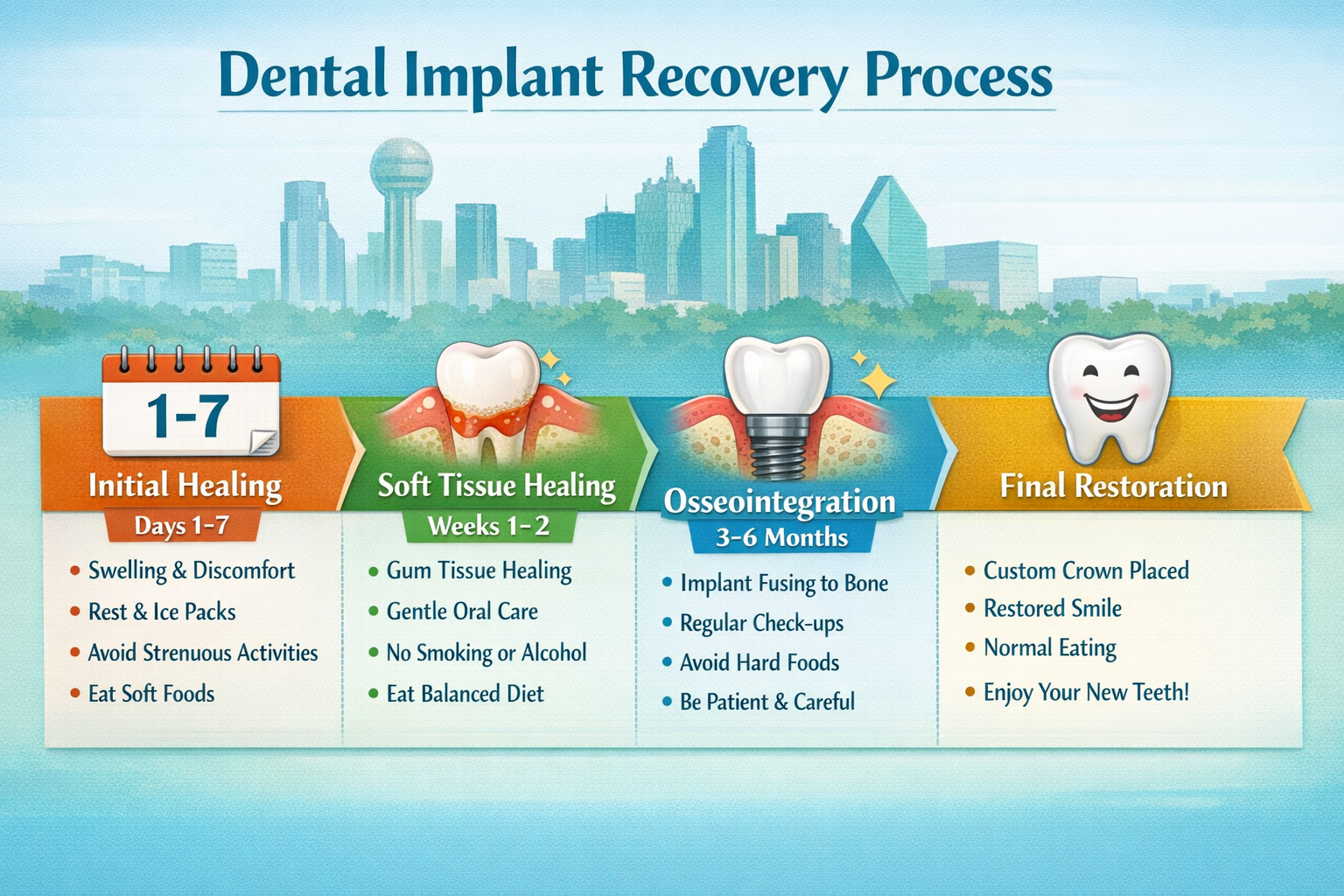
Phase 3: Osseointegration (3-6 Months)
This is the most critical phase for the long-term success of your dental implant. Osseointegration is the process where the titanium implant post fuses directly with your jawbone. This biological process requires time and stability.
- Months 1-6: During this period, the implant is beneath the gum line, and you typically won’t experience pain related to the implant itself unless there’s a complication. It’s essential to avoid putting pressure on the implant site to allow for undisturbed healing. This means no chewing directly on the area where the implant was placed.
- For single dental implants in Dallas, a temporary crown might be placed that does not engage in chewing, or you may simply have a gap.
- For immediate load dental implants in Dallas, a temporary crown or bridge is placed on the same day, but patients are still advised to eat a soft diet to protect the integrating implants.
Regular follow-up appointments with your Dallas dental professional are crucial during this phase to monitor healing and ensure proper osseointegration.
Phase 4: Final Restoration Placement (After Osseointegration)
Once osseointegration is complete and your jawbone has securely bonded with the implant, the final restoration (crown, bridge, or denture) can be placed.
- After 3-6 Months: This involves a minor procedure to expose the top of the implant (if it was submerged) and attach an abutment, which serves as a connector for the final prosthetic. Impressions are then taken to custom-fabricate your permanent crown, bridge, or denture.
- Subsequent Weeks: Once the final restoration is ready, it will be securely attached to the abutment. At this point, the dental implant process is complete, and you can enjoy the full benefits of your new tooth replacement.
Factors Influencing Recovery and Pain Levels
Several factors can influence the Pain Level & Recovery Timeline After Dental Implant Surgery Dallas: A Patient’s Expectations Guide. Understanding these can help set realistic expectations.
- Overall Health: Patients with good general health and a strong immune system tend to heal faster. Certain medical conditions, like uncontrolled diabetes or autoimmune disorders, can slow down healing.
- Bone Density: Adequate bone density is crucial for successful osseointegration. If bone grafting was required due to insufficient bone, the recovery timeline might be extended.
- Oral Hygiene: Diligent oral hygiene post-surgery is essential to prevent infection, which can significantly impact pain levels and delay recovery.
- Adherence to Post-Operative Instructions: Following your dentist’s instructions regarding medication, diet, and activity restrictions is paramount for a smooth recovery.
- Smoking: Smoking is a major risk factor for implant failure and can severely delay healing. It constricts blood vessels, reducing blood flow to the surgical site.
- Minimally Invasive Techniques: Some Dallas dental practices utilize minimally invasive dental implant techniques that can potentially lead to lower pain and a faster initial recovery.
- Experience of the Surgeon: A highly experienced dental surgeon can often perform the procedure with greater precision, potentially reducing post-operative trauma and improving recovery.
Consultation with a dentist is the first step to assess your individual case and determine the most appropriate tooth replacement options. This initial discussion will also provide a clearer picture of your specific implant cost in Dallas.
Long-Term Oral Health and Maintenance
Once your dental implants are fully restored, maintaining long-term oral health is crucial for their longevity. While dental implants are highly durable, they still require the same care as natural teeth.
- Daily Brushing and Flossing: Brush twice a day and floss daily to remove plaque and food debris from around your implants and natural teeth. Special brushes or flosses may be recommended by your dental professional.
- Regular Dental Check-ups: Schedule routine check-ups and professional cleanings with your Dallas dentist every six months. These visits allow your dentist to monitor the health of your implants, gums, and remaining teeth, addressing any issues early.
- Avoid Damaging Habits: Refrain from chewing on ice, hard candies, or using your teeth as tools, as this can damage your implants and natural teeth. If you grind your teeth, a nightguard might be recommended.

By following these guidelines, you can ensure your dental implants in Dallas provide a stable, beautiful, and functional smile for many years to come. Investing in your oral health education is key to making informed decisions about missing teeth solutions and maintaining the benefits of your implant surgery process. For more information on the financial aspects, you might explore resources like the Dallas Dental Implant Cost Guide 2025.
Conclusion
Navigating the Pain Level & Recovery Timeline After Dental Implant Surgery Dallas: A Patient’s Expectations Guide can seem daunting, but with proper preparation and understanding, the journey to a restored smile can be a smooth one. While some discomfort is a normal part of the healing process, it is typically manageable with medication and tends to subside quickly. The longer-term recovery, involving osseointegration, is crucial for the stability and success of your dental implants.
Remember, every patient’s experience is unique. Open communication with your Dallas dental professional, diligent adherence to post-operative instructions, and a commitment to excellent oral hygiene are your best allies for a successful recovery and long-term oral health. If you are considering dental implants, a consultation with a dentist specializing in implantology is the essential first step to discuss your specific needs, understand the full dental implant procedure, and receive a personalized recovery plan.
Actionable Next Steps:
- Schedule a Consultation: Contact a reputable dental implant specialist in Dallas to discuss your eligibility and personalize your treatment plan.
- Ask Questions: Prepare a list of questions regarding pain management, recovery expectations, and potential costs.
- Understand Sedation Options: Inquire about available sedation techniques to ensure a comfortable experience during surgery.
- Plan for Recovery: Arrange for time off work or assistance at home, especially for the first few days post-surgery.