
Missing teeth can impact quality of life, from difficulty eating and speaking to self-confidence. For many Dallas residents considering durable tooth replacement options, the question often arises: Does Medicare, Medicaid, or VA Cover Dental Implants in Texas? 2026 Guide for Dallas Patients. Understanding the nuances of these major government-funded health programs is crucial, as their dental implant coverage is generally limited and tied to specific medical necessities rather than routine care. Navigating these policies can be complex, but this guide aims to clarify what patients in Dallas can expect in 2026.
Key Takeaways
- Medicare: Original Medicare (Parts A & B) does not cover routine dental care, including most dental implants. Medicare Advantage plans (Part C) may offer some supplemental dental benefits, but coverage for implants is typically limited to cases deemed medically necessary or for specific plans with expanded benefits.
- Texas Medicaid: Traditional Texas Medicaid (specifically through programs like Texas Health Steps for children) offers limited dental benefits, primarily for children and adolescents. For adults, coverage for dental implants is rare and almost exclusively tied to dire medical necessity or specific disability waivers.
- VA Benefits: The Department of Veterans Affairs (VA) provides comprehensive dental care, including dental implants, but generally only for veterans with service-connected dental conditions, former prisoners of war, or those with specific disabilities. Eligibility is strict.
- Financial Responsibility: Most Dallas patients will find that dental implants are an out-of-pocket expense or covered only partially by private dental insurance plans, requiring careful financial planning.
- Consultation is Key: The best approach for Dallas patients is to consult with both their healthcare provider (Medicare, Medicaid, or VA representative) and a local dental implant specialist to understand eligibility and explore all available financing options.
Does Medicare Cover Dental Implants in Texas? 2026 Overview for Dallas Patients
Understanding Medicare’s stance on dental implants is essential for older adults in Dallas. Original Medicare, which includes Part A (hospital insurance) and Part B (medical insurance), generally does not cover routine dental care, including dental implants, cleanings, fillings, or dentures. This is a common misconception, as many assume comprehensive health coverage would extend to significant dental procedures. Medicare’s focus is primarily on medical services and hospital stays.
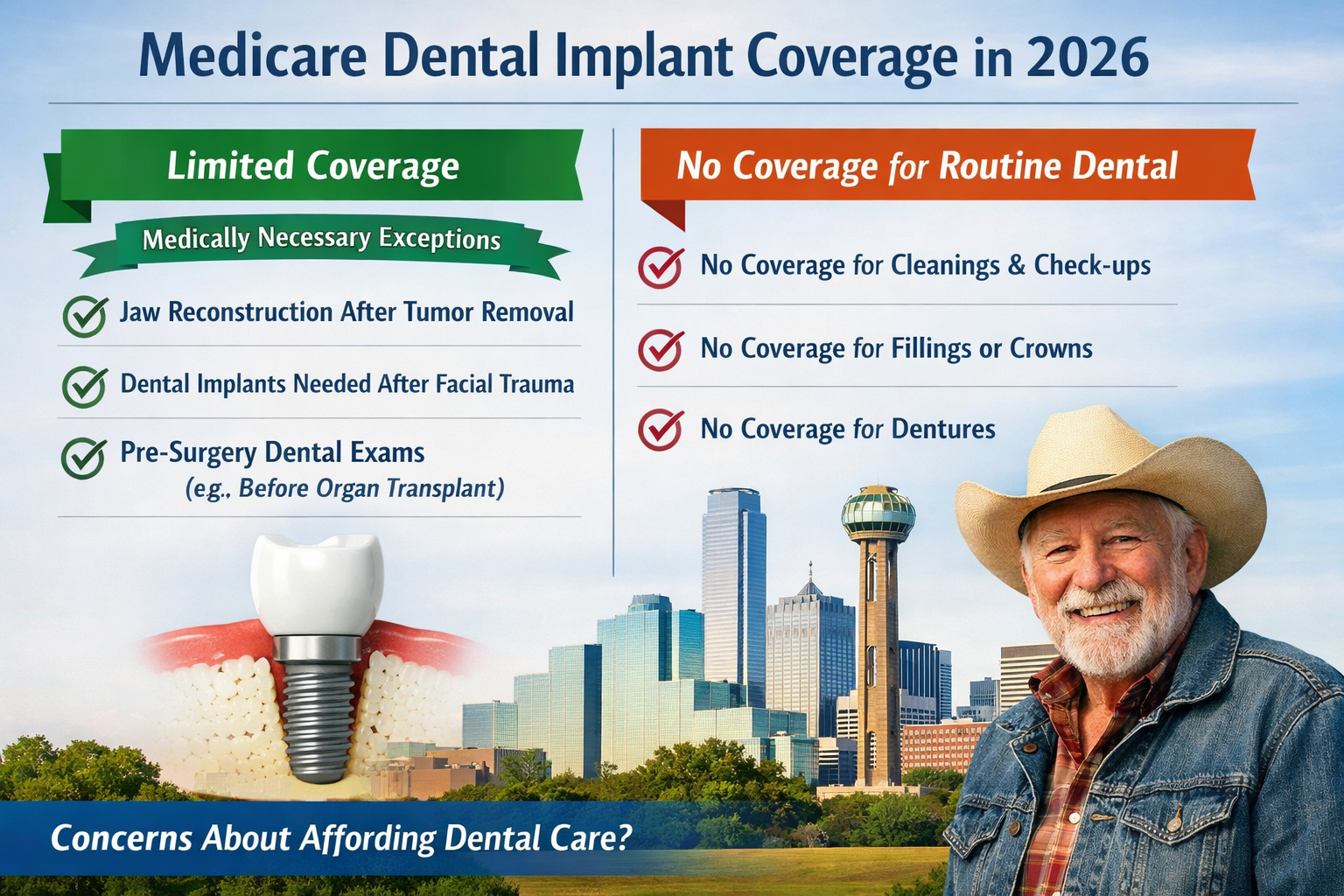
However, there are very specific and limited exceptions. Medicare Part A might cover dental services if they are considered an integral part of a covered hospital stay or a medical procedure. For example, if a patient needs a tooth extraction performed in a hospital setting immediately before a major organ transplant, the hospitalization associated with the dental procedure might be covered. Still, the dental implant itself, which is typically an elective restorative procedure, would likely not be.
Medicare Advantage Plans (Part C) and Dental Implant Coverage
For Dallas patients seeking dental implant coverage through Medicare, Medicare Advantage plans (Part C) offer a more promising, albeit still limited, avenue. These plans are offered by private companies approved by Medicare and often bundle additional benefits not covered by Original Medicare. Many Medicare Advantage plans include some form of dental coverage.
The extent of dental implant coverage varies significantly from plan to plan. Some plans may offer:
- Discount Programs: Simply provide a discount on dental services.
- Limited Coverage: Cover a small percentage of the cost, often after a waiting period and up to an annual maximum benefit.
- Medically Necessary Coverage: In rare cases, if a dental implant is deemed absolutely medically necessary to treat an injury or illness (e.g., related to oral cancer treatment, or severe facial trauma not purely cosmetic), some plans might offer coverage. This is typically a high bar to meet.
What to Do: If you are enrolled in a Medicare Advantage plan in Dallas, it is crucial to:
- Review Your Plan’s Summary of Benefits: This document outlines exactly what dental services are covered and under what conditions.
- Contact Your Plan Provider Directly: Speak with a representative to specifically ask about dental implant coverage, waiting periods, annual maximums, and any medical necessity criteria.
- Consult with a Dallas Dental Implant Specialist: They can help assess your needs and provide documentation that may be required by your plan. For more detailed insights, you can review our guide on “Does Medicare Cover Dental Implants in Dallas TX? 2026 Coverage Guide“.
Does Medicaid Cover Dental Implants in Texas? 2026 Policy for Dallas Residents
Medicaid, a joint federal and state program, provides health coverage to low-income individuals and families. In Texas, Medicaid is administered by the Texas Health and Human Services Commission (HHSC). When it comes to dental implants, Texas Medicaid’s coverage for adults is typically extremely limited or non-existent.
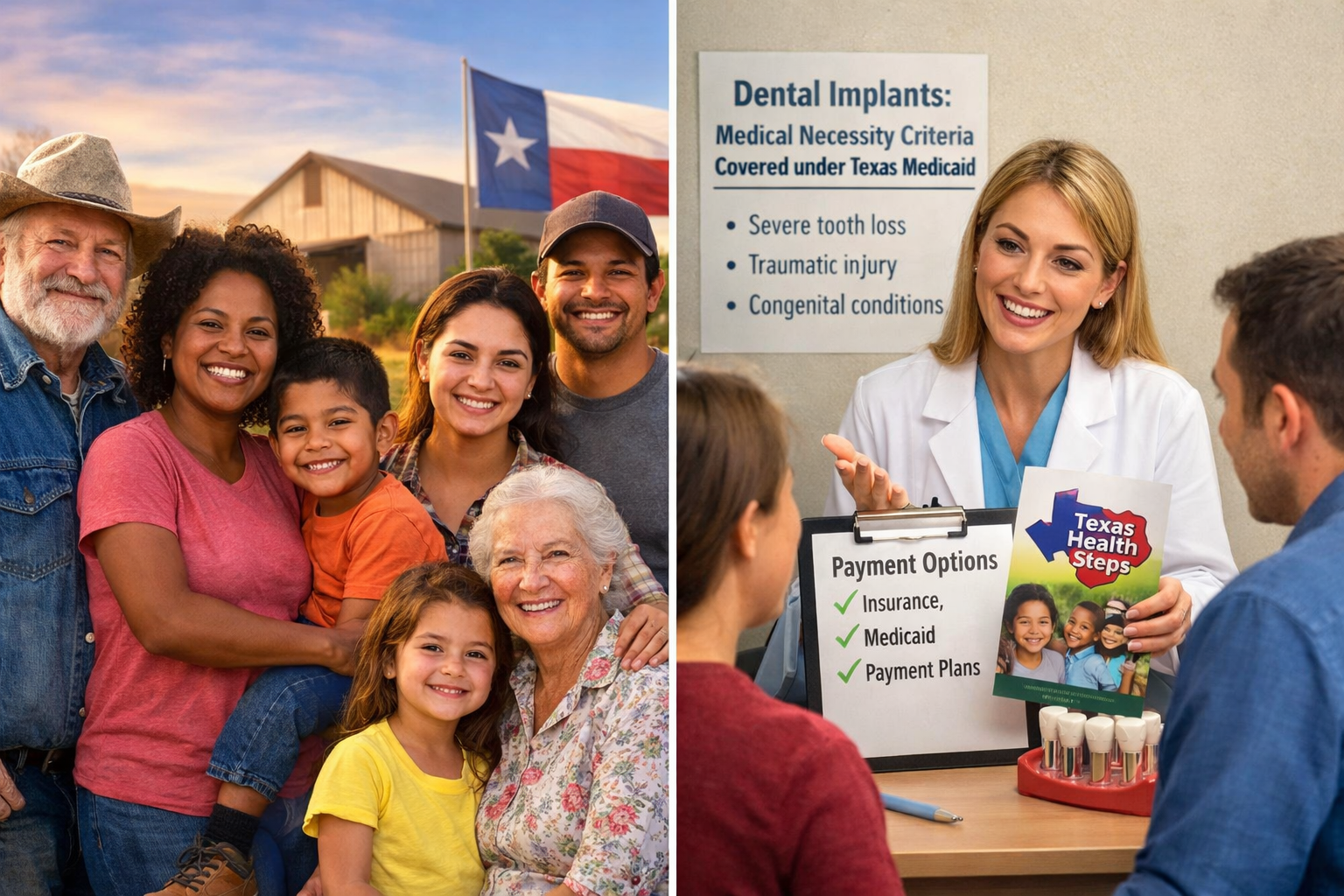
Dental Coverage for Children and Adolescents (Texas Health Steps)
For children and adolescents under 21 who are enrolled in Texas Medicaid, dental care is generally more comprehensive. The Texas Health Steps program provides dental check-ups, cleanings, fluoride treatments, fillings, sealants, and often orthodontics if medically necessary. However, even for this younger demographic, dental implant procedures are rare and usually only considered in cases of severe trauma or congenital conditions that result in missing teeth, and only if other, less costly alternatives are not viable.
Adult Medicaid Dental Coverage in Texas
For adults (age 21 and older) in Texas, Medicaid dental benefits are significantly restricted. As of 2026, routine dental care, including dental implants, is not generally covered under adult Texas Medicaid.
Coverage for adults is usually limited to emergency dental services, such as:
- Pain relief due to acute infection or injury.
- Extractions of diseased teeth that pose an immediate health risk.
When might a dental implant be covered? This is exceptionally rare and would only occur under very specific circumstances, such as:
- Medically Necessary: If a dental implant is deemed absolutely essential to treat a severe medical condition or injury that directly impacts overall health, and no other treatment option is viable or effective. This is typically determined on a case-by-case basis and requires extensive documentation from medical and dental professionals.
- Specific Waivers/Programs: Certain disability waivers or managed care programs within Texas Medicaid might have provisions for specific types of dental services, but this is highly specialized and not a general rule.
What to Do: If you are a Dallas resident with Texas Medicaid and believe your dental implant need qualifies as medically necessary:
- Contact Texas Medicaid: Reach out to the Texas Health and Human Services Commission or your specific Medicaid managed care organization to inquire about adult dental benefits and any exceptions for medically necessary procedures.
- Obtain Detailed Documentation: Your dental professional will need to provide thorough documentation explaining why dental implants are medically necessary for your condition and why other, less expensive alternatives are not suitable.
- Explore Alternative Payment Options: Given the low likelihood of coverage, it is wise to explore other ways to finance dental implants in Dallas, such as payment plans offered by dental clinics or personal financing options. Our article on “Comparing Dental Implant Payment Plans in Dallas: Beyond CareCredit” might offer helpful information.
Does VA Cover Dental Implants in Texas? 2026 Guide for Veterans in Dallas
For eligible veterans in Dallas, the Department of Veterans Affairs (VA) provides dental care benefits that can include dental implants. However, VA dental care is not automatically provided to all veterans; eligibility is specific and often depends on service-connected conditions, disability ratings, or specific circumstances.
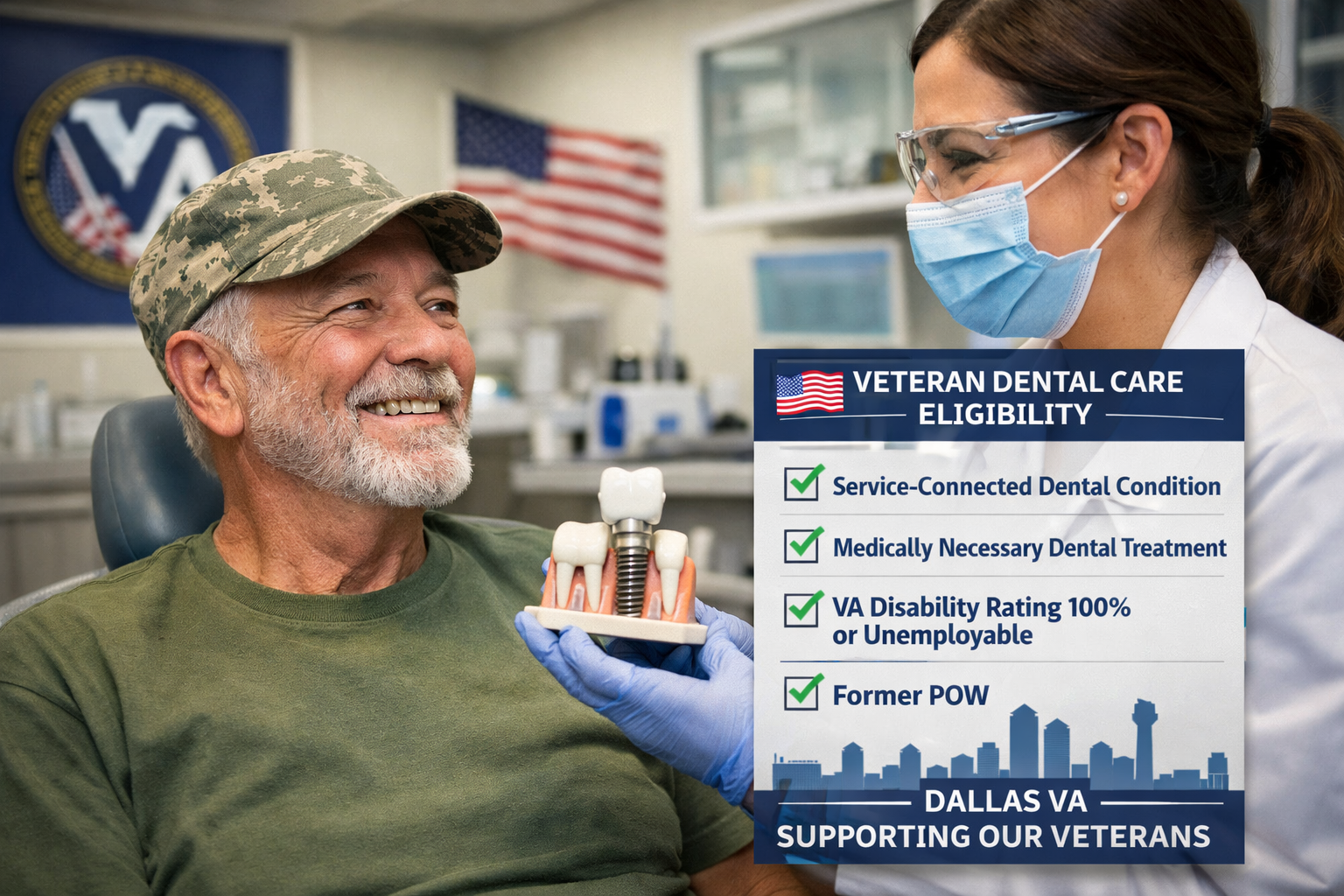
VA Dental Care Eligibility
Generally, VA dental care, including coverage for dental implants, is provided to veterans who meet at least one of the following criteria:
- Service-Connected Dental Condition: Veterans with a dental condition or disability that is rated as service-connected by the VA. This means the dental issue was incurred or aggravated during active military service.
- Former Prisoners of War: Veterans who were prisoners of war.
- 100% Service-Connected Disability: Veterans with a 100% service-connected disability rating (or receiving an increased pension due to being permanently housebound or needing aid and attendance).
- Specific Dental Conditions: Veterans with a service-connected disability that results in a dental condition, or who have specific dental conditions related to head and neck cancer treatment, or radiation therapy.
- Participating in a VA Vocational Rehabilitation Program: Certain veterans enrolled in these programs.
Dental Implants and VA Coverage
For eligible veterans in Dallas, if dental implants are determined to be medically necessary to restore oral function due to a service-connected condition or another qualifying factor, the VA may cover the procedure. The VA prioritizes dental care that impacts a veteran’s overall health and well-being.
What is considered “medically necessary” by the VA for implants? This could include situations where:
- Missing teeth are directly related to a service-connected injury or illness.
- Traditional prosthetics (like dentures) are not feasible or effective due to anatomical issues related to a service-connected condition.
- Implants are needed to stabilize a prosthetic due to a service-connected condition.
Steps for Dallas Veterans:
- Confirm Eligibility: The first step is to confirm your eligibility for VA dental benefits through the Department of Veterans Affairs. You can contact your local VA medical center or the VA Health Benefits Call Center.
- Schedule a VA Dental Examination: If eligible, you will need to undergo a dental examination at a VA dental clinic. This will determine your specific dental needs and whether implants are a suitable and necessary treatment option under VA guidelines.
- Work with VA Providers: The VA typically provides care through its own facilities or approved community providers. You will work with VA dental professionals to plan your treatment.
Veterans seeking to understand their options for dental implants in Dallas should directly engage with the VA system to get the most accurate and personalized information regarding their specific eligibility and coverage.
Alternative Financial Options for Dental Implants in Dallas 2026
Since Medicare, Medicaid, and VA coverage for dental implants can be highly restricted, many Dallas patients will need to explore alternative financing solutions. Investing in dental implants in Dallas is a commitment to long-term oral health, and several options can help make the procedure more accessible.
Private Dental Insurance
Many private dental insurance plans offer some level of coverage for dental implants, though it rarely covers 100% of the cost.
- PPO vs. HMO: Preferred Provider Organization (PPO) plans often offer more flexibility in choosing your dentist and may cover a portion of major procedures like implants after deductibles and waiting periods. Health Maintenance Organization (HMO) plans typically require you to choose from a network of providers and may have more limited implant coverage. For a deeper dive, read our article on “PPO vs HMO Implant Coverage Comparison: Maximizing Your Dental“.
- Annual Maximums: Most plans have an annual maximum benefit, which implants can quickly exceed, especially if multiple implants are needed.
- Waiting Periods: Be aware that many plans have waiting periods (e.g., 6-12 months) for major restorative procedures like implants.
Dental Schools and Research Programs
Sometimes, dental schools, such as those in Texas, offer reduced-cost dental work performed by supervised students. While this might involve a longer treatment timeline, it can significantly lower the overall cost. Research programs may also occasionally offer dental implants at a reduced rate for qualifying participants.
Financing and Payment Plans
Many dental implant clinics in Dallas offer in-house financing or work with third-party medical financing companies.
- Payment Plans: Clinics may allow you to pay for your dental implants in installments over several months or years.
- CareCredit: This is a popular healthcare credit card that offers special financing options, including interest-free periods if the balance is paid within a promotional timeframe.
- Personal Loans: Banks or credit unions offer personal loans that can be used for dental implant costs.
For more detailed information on local costs, you can explore “Dallas Dental Implant Cost vs National Averages 2026” and “Dental Implant Financing in Dallas“.
Dental Tourism
While not for everyone, some Dallas patients consider dental tourism to countries like Mexico for significantly lower costs. However, it’s crucial to weigh the cost savings against potential risks, travel expenses, and aftercare considerations. Our guide on “Dental Implant Tourism from Dallas to Mexico: 2026 Cost Saving” offers an in-depth analysis.
Conclusion
Understanding Does Medicare, Medicaid, or VA Cover Dental Implants in Texas? 2026 Guide for Dallas Patients reveals that direct coverage is often limited. While Original Medicare generally excludes routine dental care, including implants, Medicare Advantage plans might offer some supplemental benefits. Texas Medicaid provides very limited adult dental benefits, with implants being a rare exception for medically necessary cases. Veterans may find more comprehensive coverage through the VA, especially for service-connected conditions.
For most Dallas patients considering dental implants, exploring private dental insurance, in-house financing options, and other payment plans will be necessary. It is highly recommended to schedule a consultation with a qualified Dallas dental implant specialist. During this visit, you can discuss your specific oral health needs, receive an accurate assessment of the dental implant procedure, understand the associated costs, and explore all available financial solutions. An informed decision, made in consultation with dental professionals, is the best path to achieving long-term oral health and a confident smile.