
Despite the known challenges, a significant number of individuals who smoke still seek effective solutions for missing teeth. For those in Dallas considering tooth replacement options, especially dental implants, it is crucial to understand that smoking presents unique and elevated risks that can impact the success and longevity of the procedure. While dental implants offer a durable and aesthetic solution for many, the journey for a smoker requires a more cautious and informed approach, often involving specialized care protocols to mitigate potential complications in 2026.
This article provides a comprehensive overview of the specific risks associated with dental implants for smokers, outlines realistic success rates, and explores the specialized care options available in Dallas to help ensure the best possible outcomes. Our goal is to empower patients with knowledge, allowing them to make informed decisions and seek appropriate professional consultation regarding their oral health.
Key Takeaways
- Smoking significantly increases the risk of dental implant complications, including delayed healing and implant failure.
- Success rates for dental implants in smokers are generally lower than for non-smokers but can still be favorable with proper management.
- Specialized care options, such as bone grafting, guided tissue regeneration, and comprehensive pre- and post-operative protocols, are vital for smokers.
- Smoking cessation is the most impactful step a patient can take to improve implant success.
- Consulting with a qualified Dallas dental implant specialist is essential to assess individual risks and develop a tailored treatment plan.
Understanding the Increased Risks of Dental Implants for Smokers in Dallas 2026
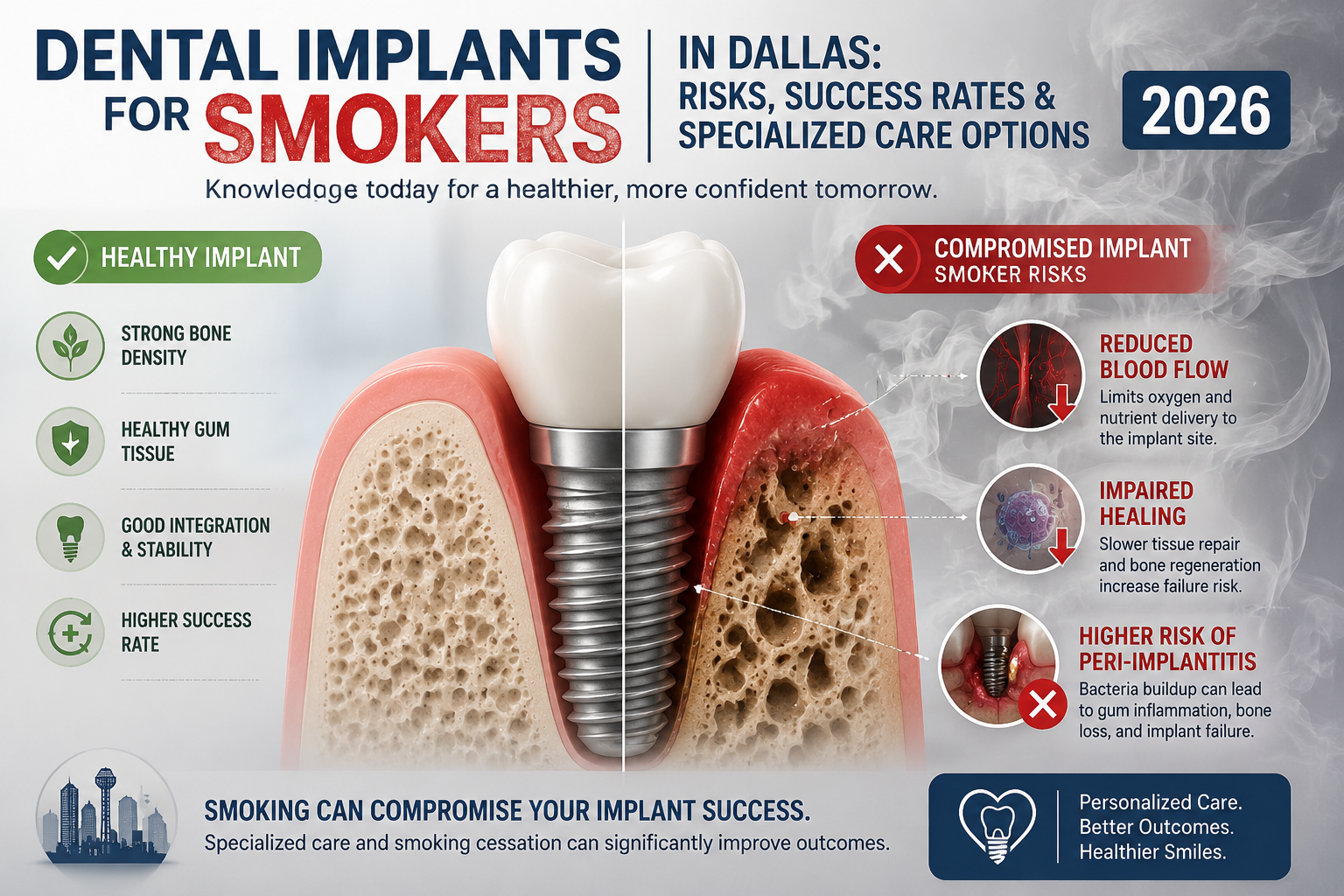
For individuals who use tobacco products, the decision to pursue dental implants in Dallas comes with an elevated set of considerations. Smoking directly impacts oral health in several detrimental ways, creating a less favorable environment for successful dental implant placement and integration.
The primary concerns for smokers include:
- Reduced Blood Flow and Impaired Healing: Nicotine and other chemicals in tobacco smoke cause vasoconstriction, meaning they narrow blood vessels. This significantly reduces blood flow to the gums and jawbone, areas critical for healing after implant surgery. Poor blood supply hinders the delivery of oxygen and nutrients necessary for bone regeneration and tissue repair, leading to delayed healing and increased risk of complications.
- Increased Risk of Infection: Smoking weakens the immune system, making the body less effective at fighting off bacteria. This elevates the risk of infection around the implant site, which can jeopardize the osseointegration process (the fusion of the implant with the jawbone). An infection, if left untreated, can lead to implant failure.
- Compromised Osseointegration: Osseointegration is the cornerstone of dental implant success. The process relies on healthy bone cells growing around and fusing with the titanium implant. Smoking interferes with bone cell activity and regeneration, which can prevent the implant from fully integrating with the jawbone.
- Higher Incidence of Peri-Implantitis: Peri-implantitis is an inflammatory condition affecting the tissues surrounding a dental implant, often leading to bone loss and eventual implant failure. Smokers have a significantly higher risk of developing peri-implantitis compared to non-smokers, largely due to impaired immune response and compromised tissue health.
- Impact on Bone Density: Long-term smoking can contribute to reduced bone density in the jaw, potentially making it more challenging to place implants successfully or requiring additional procedures like bone grafting before implant surgery.
- Delayed Recovery Time: Even when successful, the recovery period for smokers can be longer and more uncomfortable due to the systemic effects of tobacco on the body’s healing capabilities.
For patients exploring tooth replacement options, understanding these risks is the first step toward a successful outcome. Dallas dental implant clinics prioritize patient safety and will thoroughly discuss these factors during your initial consultation.
| Risk Factor | Impact on Dental Implants |
|---|---|
| Reduced Blood Flow | Slows healing, reduces nutrient delivery, increases chance of failure. |
| Weakened Immune System | Higher susceptibility to infection around the implant site. |
| Impaired Bone Metabolism | Hinders osseointegration (implant-to-bone fusion), potentially leading to loose implants. |
| Increased Peri-Implantitis | Inflammatory disease around implants, causing bone loss and failure. |
| Compromised Tissue Quality | Less healthy gum tissue, slower regeneration after surgery. |
Dental Implants for Smokers in Dallas: Success Rates and Predictive Factors 2026
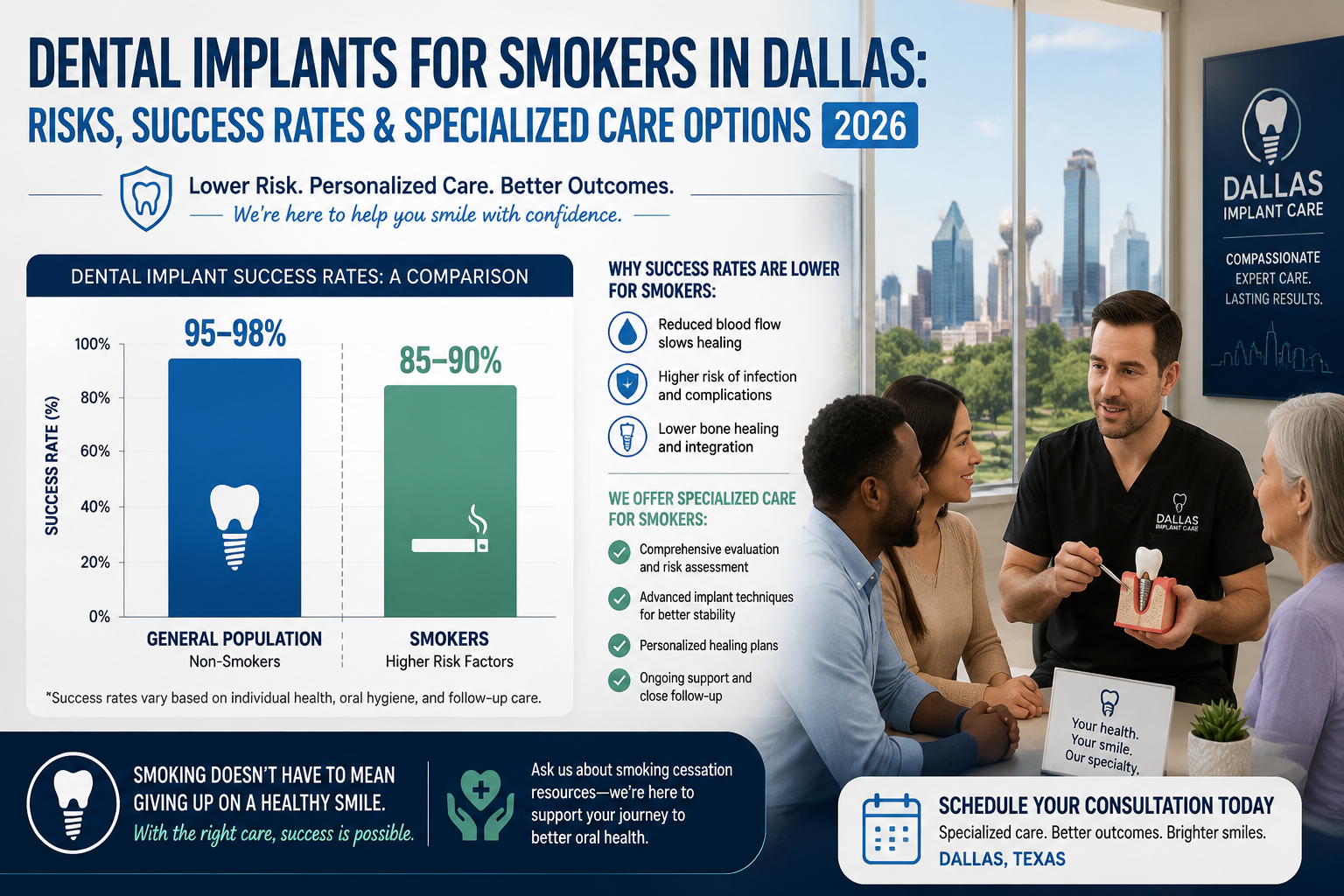
While smoking undeniably introduces challenges, it does not automatically disqualify an individual from receiving dental implants. Modern dental implant procedures, coupled with specialized care, can still achieve favorable outcomes for many smokers in Dallas. However, it is essential to have realistic expectations regarding success rates.
General success rates for dental implants in the non-smoking population typically range from 95% to 98%. For smokers, this rate can drop, with studies often reporting success rates between 85% and 90% or even lower for heavy smokers or those with poor compliance with pre- and post-operative instructions.
Several factors can influence the success rate for smokers:
- Severity and Duration of Smoking: Lighter smokers or those who have recently quit may have better prognoses than heavy, long-term smokers.
- Smoking Cessation: The most significant predictive factor for success is the patient’s willingness and ability to quit smoking, at least temporarily, around the time of the implant procedure. Many Dallas implant specialists require patients to stop smoking for a period before and after surgery (typically 1-2 weeks before and several months after) to improve healing and integration.
- Overall Health Status: Patients with well-controlled systemic conditions (like diabetes) and good general health tend to have better outcomes.
- Oral Hygiene Practices: Excellent oral hygiene is critical for preventing infections and maintaining the health of gum tissues around the implant.
- Quality and Volume of Jawbone: Adequate bone structure is fundamental. If bone loss has occurred due to smoking or other factors, procedures like bone grafting may be necessary. For more information on bone graft healing, consider reading our guide: Bone Graft Healing for Dental Implants: Your 2026 Timeline.
- Skill of the Dental Surgeon: The experience and expertise of the dental implant specialist are paramount, especially when managing complex cases involving smokers. Seeking out Top Dallas Dental Implant Clinics 2026 is advisable.
“While smoking reduces dental implant success rates, dedicated patients who commit to smoking cessation around the surgical period significantly improve their chances of a positive outcome.”
It is crucial for patients to have an honest discussion with their dentist about their smoking habits. A clear understanding of the commitment required will help manage expectations and improve the likelihood of long-term success with dental implants in Dallas.
Specialized Care Options for Dental Implants for Smokers in Dallas: Risks, Success Rates & Specialized Care Options 2026
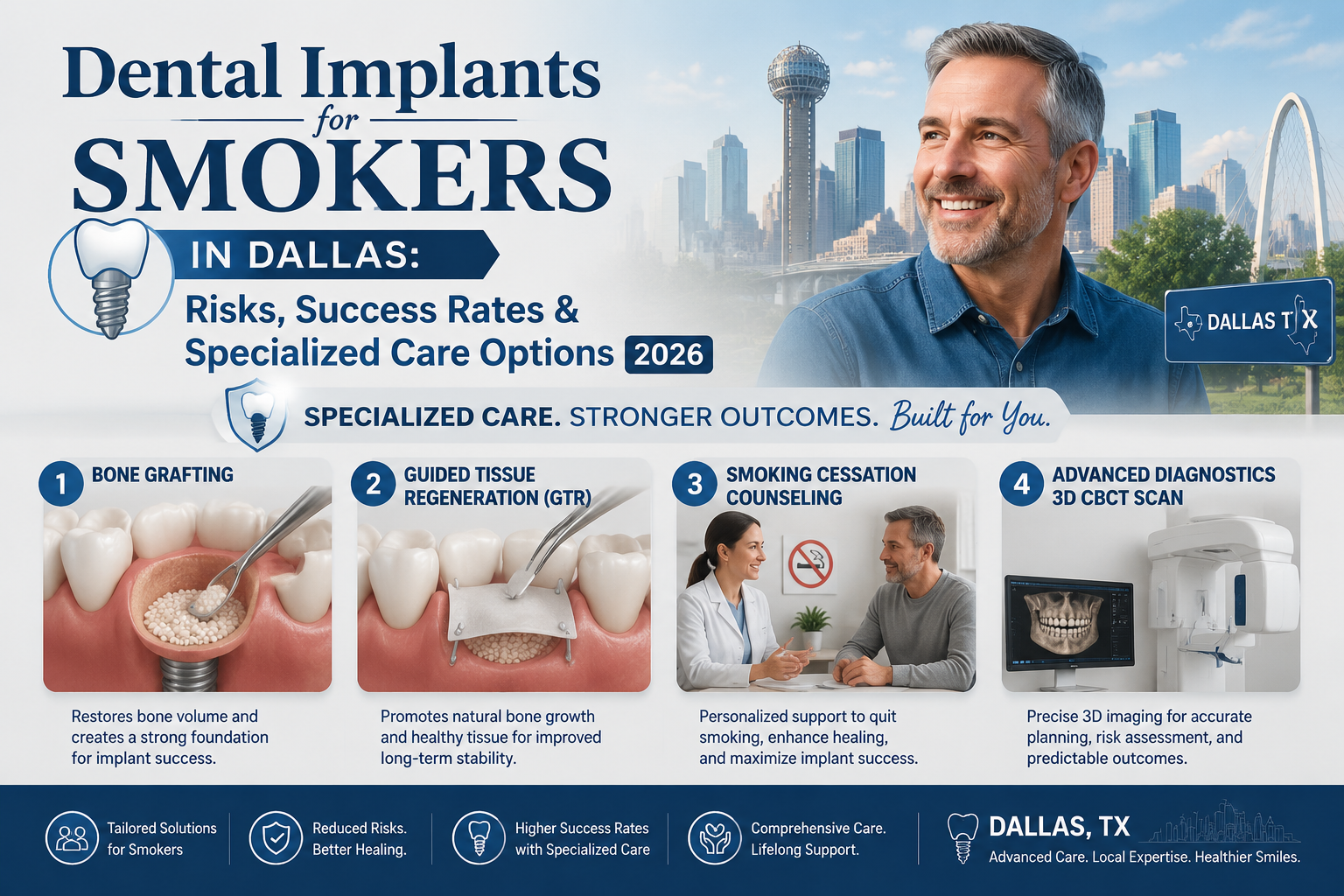
Addressing the unique challenges presented by smoking requires a tailored approach. Many dental implant practices in Dallas offer specialized care options designed to maximize success rates for patients who smoke. These options often include a combination of advanced diagnostics, preparatory procedures, and rigorous post-operative management.
Pre-Treatment Requirements and Diagnostics
- Comprehensive Assessment: A thorough evaluation, including advanced imaging like 3D CBCT scans, is essential to assess bone quality and density, identify any existing infections, and plan precise implant placement.
- Smoking Cessation Counseling: The most critical step. Many clinics will strongly recommend or even require patients to quit smoking for a specific period before, during, and after surgery. This significantly improves healing and reduces the risk of complications. Resources for quitting may be offered or recommended.
- Oral Health Optimization: Before surgery, any existing gum disease, cavities, or other oral infections must be treated to create a healthy foundation for the implant.
- Bone Grafting: If smoking has led to bone loss, bone grafting may be necessary to augment the jawbone and provide sufficient support for the implant. This procedure adds time to the overall treatment timeline as the graft needs to heal. Learn more about how long bone grafts take to heal at Bone Graft Healing for Dental Implants: Your 2026 Timeline.
- Guided Tissue Regeneration (GTR): This procedure uses barrier membranes to encourage the growth of bone and gum tissue in specific areas, which can be beneficial in cases where smoking has compromised tissue integrity.
During and After the Procedure
- Careful Surgical Technique: Experienced surgeons in Dallas utilize meticulous surgical techniques to minimize trauma and ensure optimal implant placement, which is especially important for patients with compromised healing.
- Antibiotic Regimen: A course of antibiotics before and after surgery is often prescribed to prevent infection, a heightened risk for smokers.
- Enhanced Post-Operative Care: Smokers require strict adherence to post-operative instructions, including diligent oral hygiene, avoiding smoking for the prescribed period, and regular follow-up appointments. Our guide on Dental Implant Post-Op Care & Maintenance Costs in Dallas provides further details.
- Growth Factors (PRP/PRF): Some Dallas clinics may utilize Platelet-Rich Plasma (PRP) or Platelet-Rich Fibrin (PRF) derived from the patient’s blood. These contain growth factors that can accelerate healing and improve bone regeneration, potentially benefiting smokers.
- Regular Monitoring: Close monitoring of the implant site during the healing phase and subsequent maintenance appointments is crucial to detect and address any signs of peri-implantitis or other complications early.
By proactively addressing the risks associated with smoking, dental professionals in Dallas can significantly improve the probability of successful long-term outcomes for patients seeking dental implants. A consultation with a dentist specializing in implantology is the best first step to assess individual needs and explore the most suitable treatment plan.
Conclusion
Considering dental implants for smokers in Dallas in 2026 involves a detailed understanding of elevated risks, realistic success rates, and the availability of specialized care. While smoking does present significant challenges, it is not an absolute barrier to receiving this transformative tooth replacement option. The key to a successful outcome lies in a patient’s commitment to improving their oral health, especially through smoking cessation, and partnering with an experienced dental implant specialist in Dallas who can implement tailored treatment protocols.
For anyone with missing teeth in the Dallas area, taking the proactive step of a professional consultation is paramount. During this consultation, a qualified dentist can assess your specific oral health condition, discuss your smoking habits frankly, outline all potential risks and benefits, and develop a personalized treatment plan that maximizes your chances of success. Your long-term oral health is a valuable investment, and an informed decision, coupled with specialized care, can lead to a healthy, confident smile.