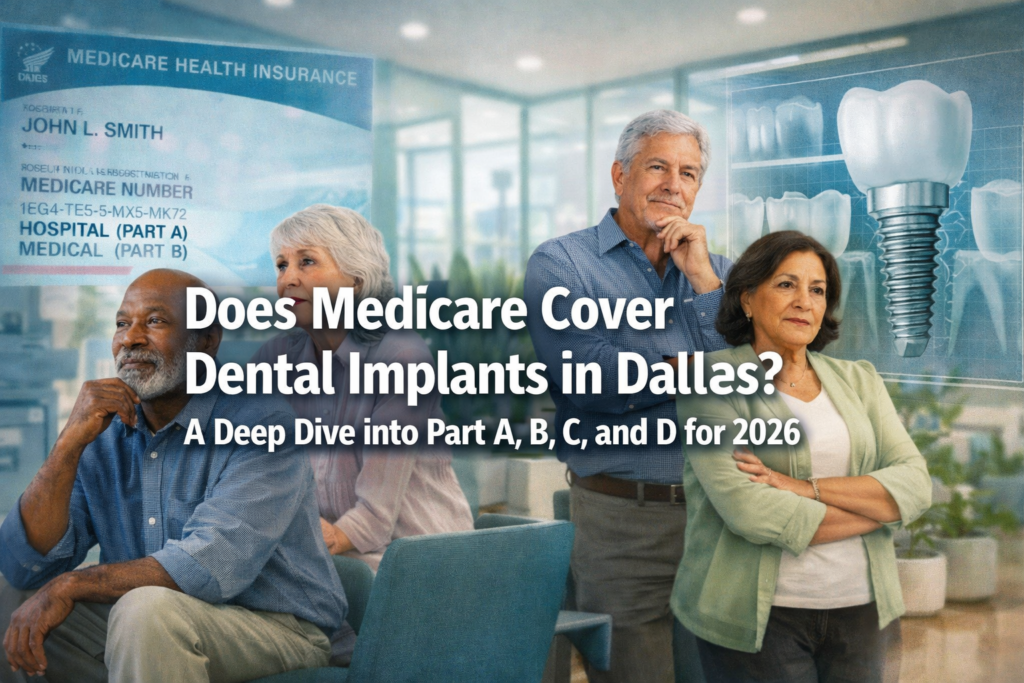
Over 60% of Medicare beneficiaries in Dallas report confusion about their dental coverage, particularly when it comes to advanced procedures like dental implants. Many seniors assume that their comprehensive health insurance will extend to significant oral health needs, only to find themselves facing unexpected out-of-pocket costs. This article aims to clarify precisely, “Does Medicare Cover Dental Implants in Dallas? A Deep Dive into Part A, B, C, and D for 2026,” helping Dallas residents navigate the complexities of their benefits for missing teeth solutions. Understanding the nuances of each Medicare part is essential for making informed decisions about long-term oral health and considering tooth replacement options like dental implants.
Key Takeaways
- Original Medicare (Parts A & B) generally does not cover routine dental care or dental implants. It only covers dental services medically necessary for another covered health service.
- Medicare Advantage (Part C) plans often include dental benefits, some of which may cover a portion of dental implant costs. Coverage varies widely by plan and provider in Dallas.
- Medicare Part D primarily covers prescription drugs and has no direct coverage for dental implants.
- Medigap policies help with Original Medicare out-of-pocket costs but do not add dental implant coverage.
- Exploring alternative financing, dental insurance plans, or discount programs is often necessary for Dallas patients.
Does Medicare Cover Dental Implants in Dallas? A Look at Original Medicare (Parts A & B) in 2026
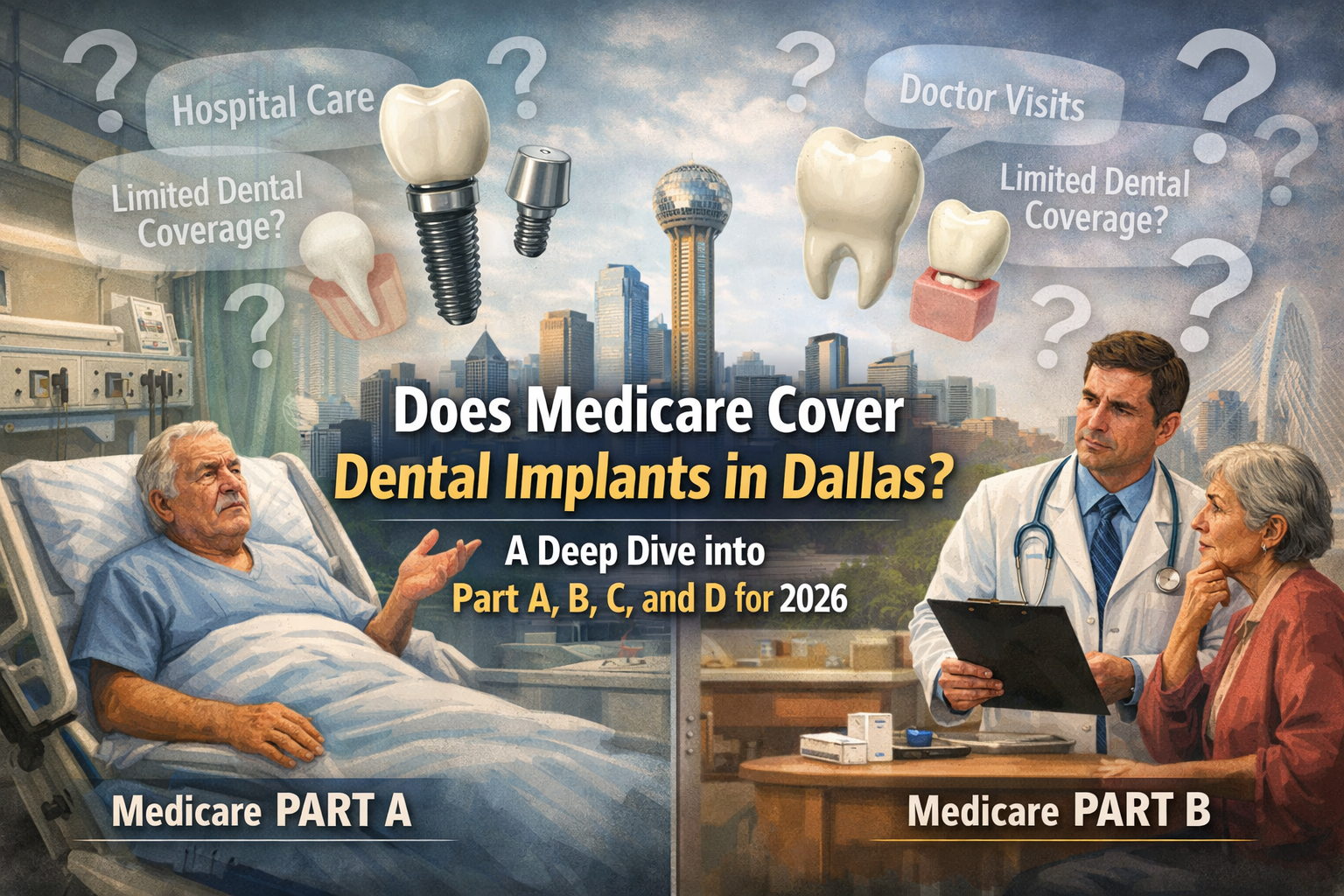
The question, “Does Medicare Cover Dental Implants in Dallas? A Deep Dive into Part A, B, C, and D for 2026,” begins with understanding Original Medicare, which includes Part A (Hospital Insurance) and Part B (Medical Insurance). For the vast majority of beneficiaries, Original Medicare does not cover routine dental care, including cleanings, fillings, extractions, or prosthetics like dentures or dental implants.
Medicare Part A: Hospital Insurance
Medicare Part A primarily covers inpatient hospital stays, skilled nursing facility care, hospice care, and some home health services. Dental services are only covered under Part A if they are an integral part of a covered hospital stay. For instance, if you require a complex procedure on your jaw that necessitates hospitalization, and a dental procedure is medically necessary before or during that hospital stay, Part A might cover the dental portion. However, this is exceptionally rare for standard dental implant procedures. The dental implant procedure itself, which is typically performed on an outpatient basis in a dental office, would not be covered.
Medicare Part B: Medical Insurance
Medicare Part B covers doctor’s services, outpatient care, medical supplies, and preventive services. Similar to Part A, Part B generally excludes routine dental care. Coverage for dental services under Part B is limited to those deemed medically necessary to treat an injury or illness that Medicare does cover. An example might include an oral exam by a dentist directly related to a surgical procedure covered by Part B, such as kidney transplant surgery or heart valve replacement, where a dental clearance is required. Even in these specific cases, the actual dental implant procedure is highly unlikely to be covered. The focus of Part B is on medical care, not elective dental restorations for missing teeth.
In essence, if your primary goal is to address missing teeth solutions through dental implants in Dallas, relying solely on Original Medicare (Parts A and B) will likely lead to disappointment regarding coverage. You would be responsible for the full implant cost in Dallas.
Does Medicare Cover Dental Implants in Dallas? Exploring Part C (Medicare Advantage) and Part D in 2026
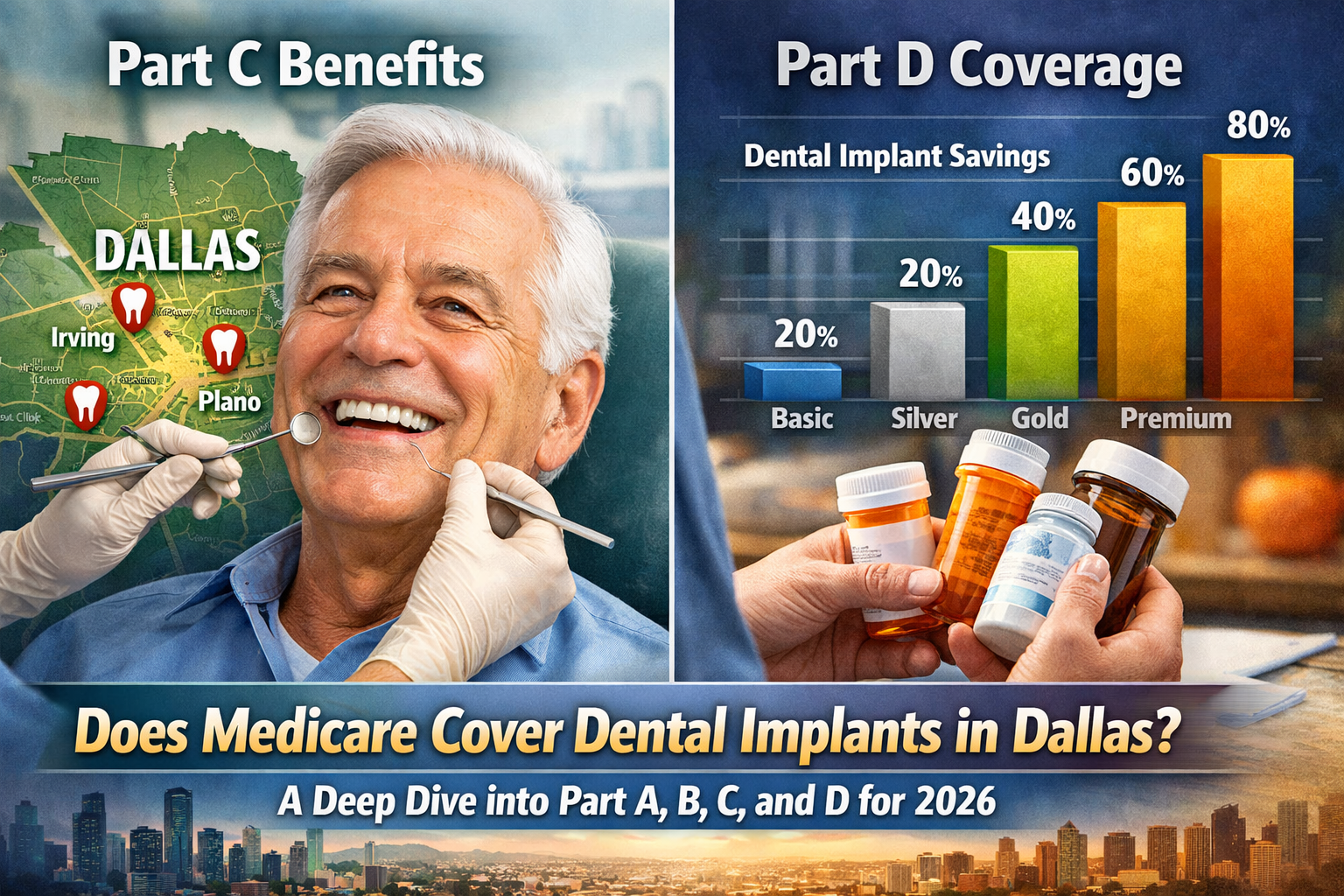
While Original Medicare’s stance on dental implants is restrictive, the landscape changes somewhat when we consider Medicare Part C (Medicare Advantage) and Part D (Prescription Drug Plans). These parts offer different avenues, though direct, full coverage for dental implants remains uncommon.
Medicare Part C: Medicare Advantage Plans
Medicare Advantage plans, also known as Part C, are offered by private companies approved by Medicare. These plans bundle Part A, Part B, and usually Part D benefits, often including additional benefits that Original Medicare does not cover. This is where the possibility of dental implant coverage begins to emerge.
Many Medicare Advantage plans in Dallas offer some form of dental benefits. These can range from basic preventive care (cleanings, X-rays) to more extensive services (fillings, extractions, dentures). A select number of these plans may also include partial coverage for complex procedures like dental implants.
What to Look For in a Part C Plan:
- Specific Dental Benefits: Carefully review the plan’s Evidence of Coverage (EOC) document or summary of benefits. Look for specific mentions of “comprehensive dental” or “major restorative care” that could include dental implants.
- Limitations and Exclusions: Pay attention to annual maximums, deductibles, co-insurance, and waiting periods. Even if a plan covers implants, there might be significant out-of-pocket costs.
- Provider Network: Ensure that local Dallas dentists who perform dental implant procedures are part of the plan’s network, or that the plan offers out-of-network benefits.
- Cost vs. Coverage: Higher premiums often correlate with better dental benefits. Weigh the monthly cost against the potential savings on implant procedures.
It’s crucial to understand that even with Part C, full coverage for dental implants is rare. Plans might cover a percentage of the cost, or a fixed amount per implant, leaving a substantial balance for the patient. For those considering dental implants in Dallas, it is essential to contact the plan provider directly to confirm the specifics of their dental benefits for 2026. For more detailed information, you can explore resources like our guide on Does Medicare Cover Dental Implants in Dallas TX? 2026 Cover.
Medicare Part D: Prescription Drug Coverage
Medicare Part D plans are designed to help cover the cost of prescription drugs. These plans are offered by private insurance companies and are separate from dental coverage. Therefore, Part D has no direct bearing on whether Medicare covers dental implants in Dallas. While you might receive prescriptions for pain medication or antibiotics related to an implant surgery, the Part D plan would only cover those medications, not the implant procedure itself.
Alternative Solutions and Dallas Resources for Dental Implants in 2026
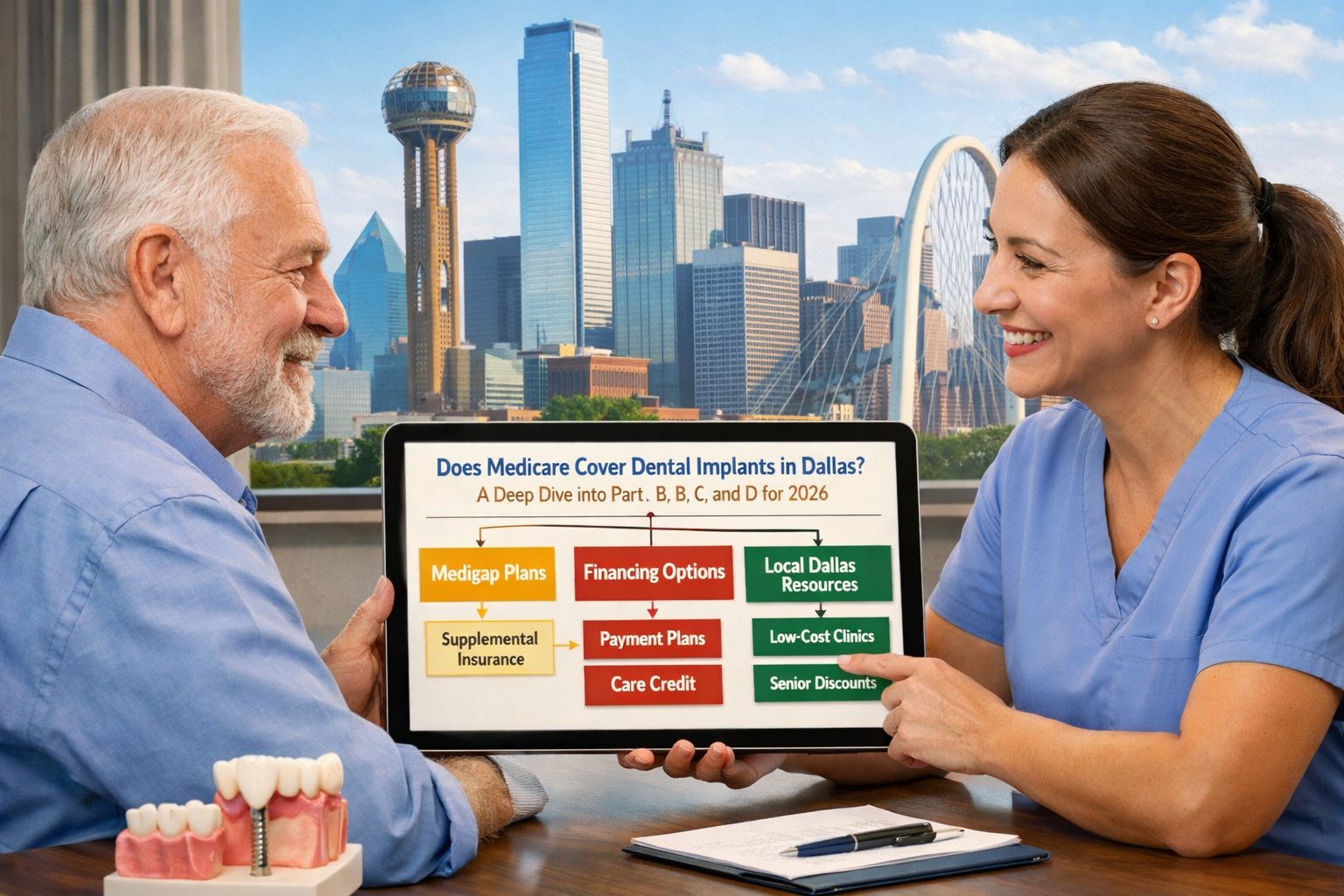
Given the limited direct coverage from Medicare, many Dallas seniors will need to explore alternative financing and support options to cover the cost of dental implants. Understanding these alternatives is a critical part of answering, “Does Medicare Cover Dental Implants in Dallas? A Deep Dive into Part A, B, C, and D for 2026.”
Medigap (Medicare Supplement Insurance)
Medigap policies are sold by private companies and help pay for some of the out-of-pocket costs that Original Medicare doesn’t cover, such as co-payments, co-insurance, and deductibles. However, Medigap plans do not offer additional benefits that Original Medicare doesn’t cover. This means that if Original Medicare doesn’t cover dental implants, a Medigap policy will not either. It supplements, rather than expands, coverage.
Employer or Retiree Dental Plans
Some individuals may still have access to dental insurance through a former employer or retiree benefits. These plans can sometimes offer more robust dental coverage, including assistance with major procedures like dental implants. If available, this is often one of the best avenues for coverage. You might find our article on Employer Dental Insurance for Implants Dallas 2026: Group Pl helpful.
Dental Discount Plans
Dental discount plans are not insurance but rather membership programs. For an annual fee, members receive discounts on various dental procedures from participating dentists. These plans can significantly reduce the implant cost in Dallas, though they don’t cover the full expense. Always confirm that your chosen dental implant clinic in Dallas accepts the specific discount plan.
Financing Options and Payment Plans
Many dental implant providers in Dallas understand the financial commitment involved and offer various financing solutions. These can include:
- In-house payment plans: Spreading the cost over several months.
- Third-party medical financing: Such as CareCredit, which offers special financing options, including interest-free periods for qualified applicants.
- Personal loans: From banks or credit unions.
Understanding these options can make dental implants more accessible. For a deeper dive into financial strategies, consider reading about Comparing Dental Implant Payment Plans in Dallas: Beyond CareCredit.
Local Resources and Dental Schools
Dallas residents may also explore options at local dental schools, if available, which sometimes offer services at reduced rates as part of their educational programs. Additionally, some community dental clinics or non-profit organizations might offer financial assistance for essential oral health needs, although specialized procedures like dental implants might still be limited.
The Importance of a Consultation with a Dentist
Regardless of your potential coverage, the first step for anyone considering dental implants is a comprehensive consultation with a qualified Dallas dentist. During this consultation, the dentist will assess your oral health, discuss suitable tooth replacement options, outline the implant surgery process, and provide a detailed estimate of the implant cost in Dallas. This is also the ideal time to discuss your financial concerns and explore payment options. Patient safety and long-term oral health are paramount, and a thorough assessment ensures the best outcome. To learn more about what to ask, refer to Navigating the Dental Implant Consultation: Key Questions for Dallas.
Conclusion
Navigating the complexities of Medicare coverage for dental implants in Dallas can be challenging. For 2026, Original Medicare (Parts A and B) generally does not cover dental implants, classifying them as routine dental care. However, Medicare Advantage (Part C) plans offer a potential pathway, with some plans providing partial coverage for dental implants. Medicare Part D focuses solely on prescription drugs and does not cover dental procedures.
For Dallas seniors seeking to restore their smiles and improve their long-term oral health with dental implants, exploring Medicare Advantage plans, employer dental insurance, dental discount programs, and various financing options is crucial. A proactive approach, beginning with a detailed consultation with a local dental professional, is the most effective way to understand your personal needs, the dental implant procedure, and the realistic costs involved. By educating yourself and exploring all available resources, you can make an informed decision about achieving a healthy, complete smile.