Navigating dental insurance for complex procedures like dental implants can feel overwhelming, especially when weighing the differences between PPO and HMO plans. In 2026, understanding how these distinct insurance structures impact your choices and expenses for dental implants in Dallas is crucial for maximizing your coverage and minimizing out-of-pocket costs. This article will provide a clear, factual comparison to help you make an informed decision about your oral health.
Dental implants offer a durable and aesthetically pleasing solution for missing teeth, closely mimicking natural teeth in function and appearance. However, the cost can be a significant consideration, making insurance coverage a vital component of treatment planning. For residents of Dallas, Texas, choosing the right dental plan can directly affect access to preferred dentists and the financial burden of implant surgery.
Key Takeaways
- PPO plans offer flexibility: You can choose any licensed dentist, including specialists outside a specific network, providing greater choice for dental implants in Dallas.
- HMO plans restrict choice: You must select a primary care dentist within the plan’s network and typically require referrals for specialists, potentially limiting options for implant procedures.
- Costs vary significantly: PPO plans usually have higher premiums, deductibles, and coinsurance but may cover a percentage of implant costs. HMO plans typically have lower premiums and fixed co-pays but often have stricter limitations or exclusions for major procedures like implants.
- Pre-authorization is key: Regardless of plan type, obtaining pre-authorization for dental implants is essential to understand your exact coverage and prevent unexpected costs.
- Consultation is vital: A consultation with a dentist specializing in dental implants, coupled with a thorough review of your specific insurance policy, is the best approach to estimate your out-of-pocket expenses for dental implants in Dallas in 2026.
Understanding PPO Dental Insurance for Implants in Dallas 2026
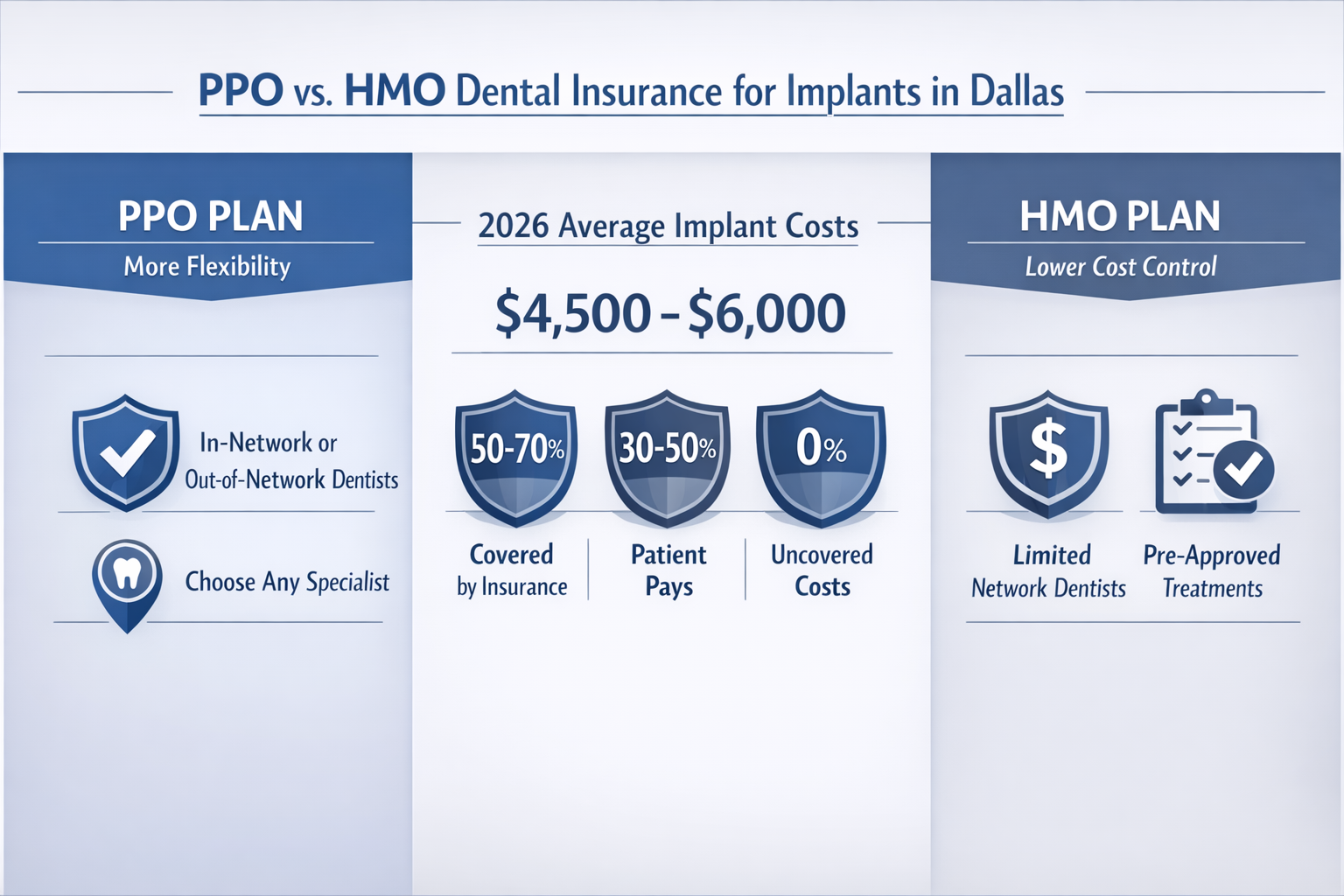
Preferred Provider Organization (PPO) dental plans are known for their flexibility. When considering dental implants in Dallas, a PPO plan generally allows you to choose any licensed dentist, including specialists, whether they are in-network or out-of-network. This freedom of choice is often a significant benefit for patients seeking specific expertise or who have an established relationship with a particular dentist.
How PPO Plans Work with Dental Implants
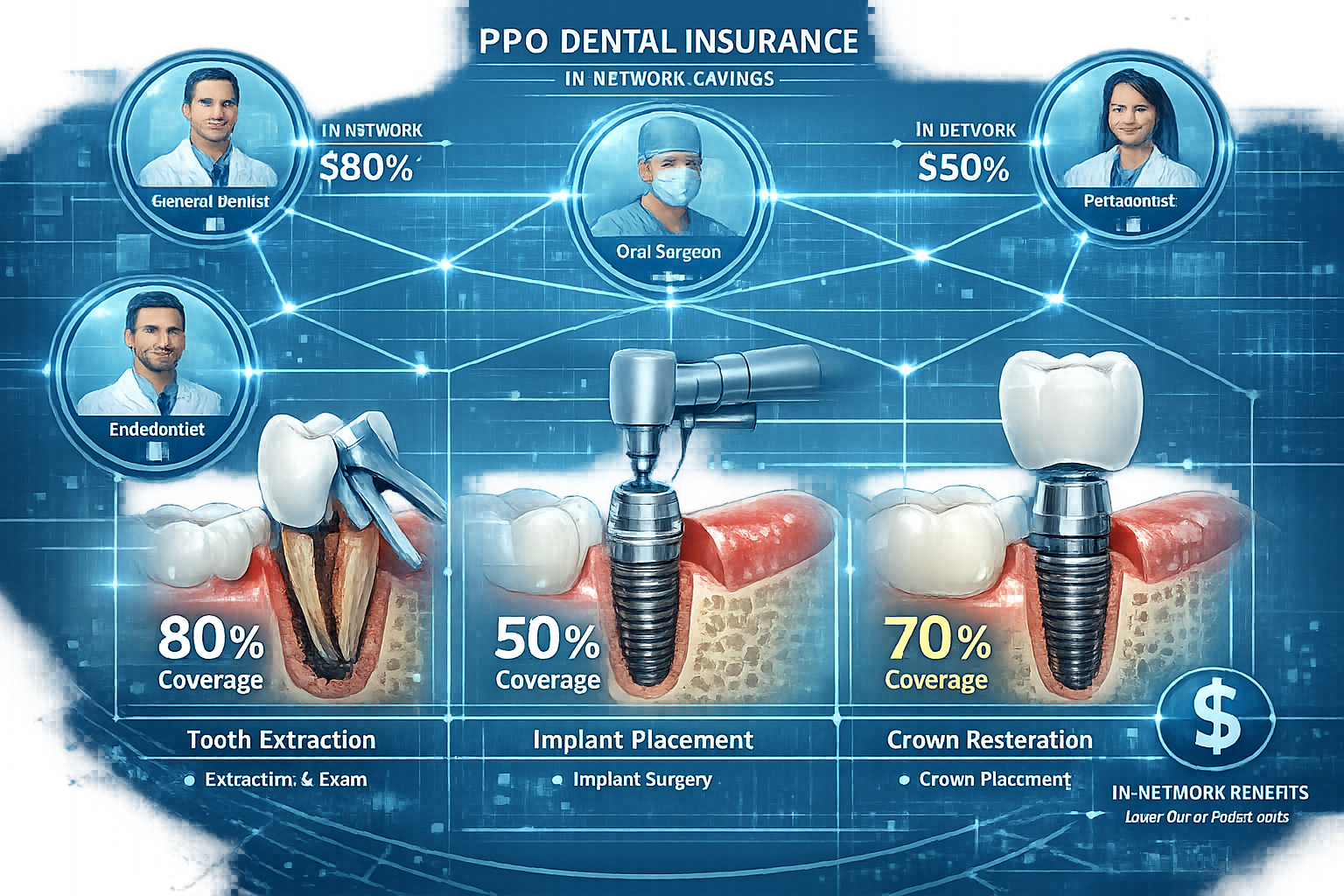
With a PPO plan, you typically pay a higher premium than an HMO. When you receive dental care, you pay a deductible before your insurance begins to cover costs. After the deductible, the plan usually pays a percentage of the service cost (coinsurance), and you pay the remaining percentage. For major procedures like dental implants, PPO plans often cover a portion of the cost, usually ranging from 30% to 50%, after your deductible has been met. However, it’s important to note that many PPO plans have an annual maximum benefit, which is the total amount the insurance company will pay in a given year. Given that the cost of dental implants in Dallas can be substantial, it is possible to reach this annual maximum with just one implant procedure.
Key features of PPO plans for dental implants:
- Provider Choice: You are not restricted to a specific network of dentists. You can choose a dentist who specializes in implant surgery and has a strong reputation, even if they are out-of-network.
- Out-of-Network Coverage: While using an in-network dentist will typically result in lower out-of-pocket costs, PPO plans still offer some coverage for out-of-network providers, though at a lower reimbursement rate.
- Higher Costs: Generally, PPO plans come with higher monthly premiums compared to HMO plans. They also usually have deductibles and coinsurance.
- Annual Maximums: Most PPO dental plans have an annual limit on what they will pay for covered services. For comprehensive procedures like dental implants, it’s common to meet this maximum quickly.
For patients prioritizing their choice of dental provider and who are willing to pay higher premiums for that flexibility, a PPO plan can be advantageous for securing dental implants in Dallas. It allows you to select a dentist based on their experience and reputation rather than solely on network affiliation. Understanding qualifying for dental implant insurance reimbursement in Dallas is also crucial for PPO users.
Understanding HMO Dental Insurance for Implants in Dallas 2026
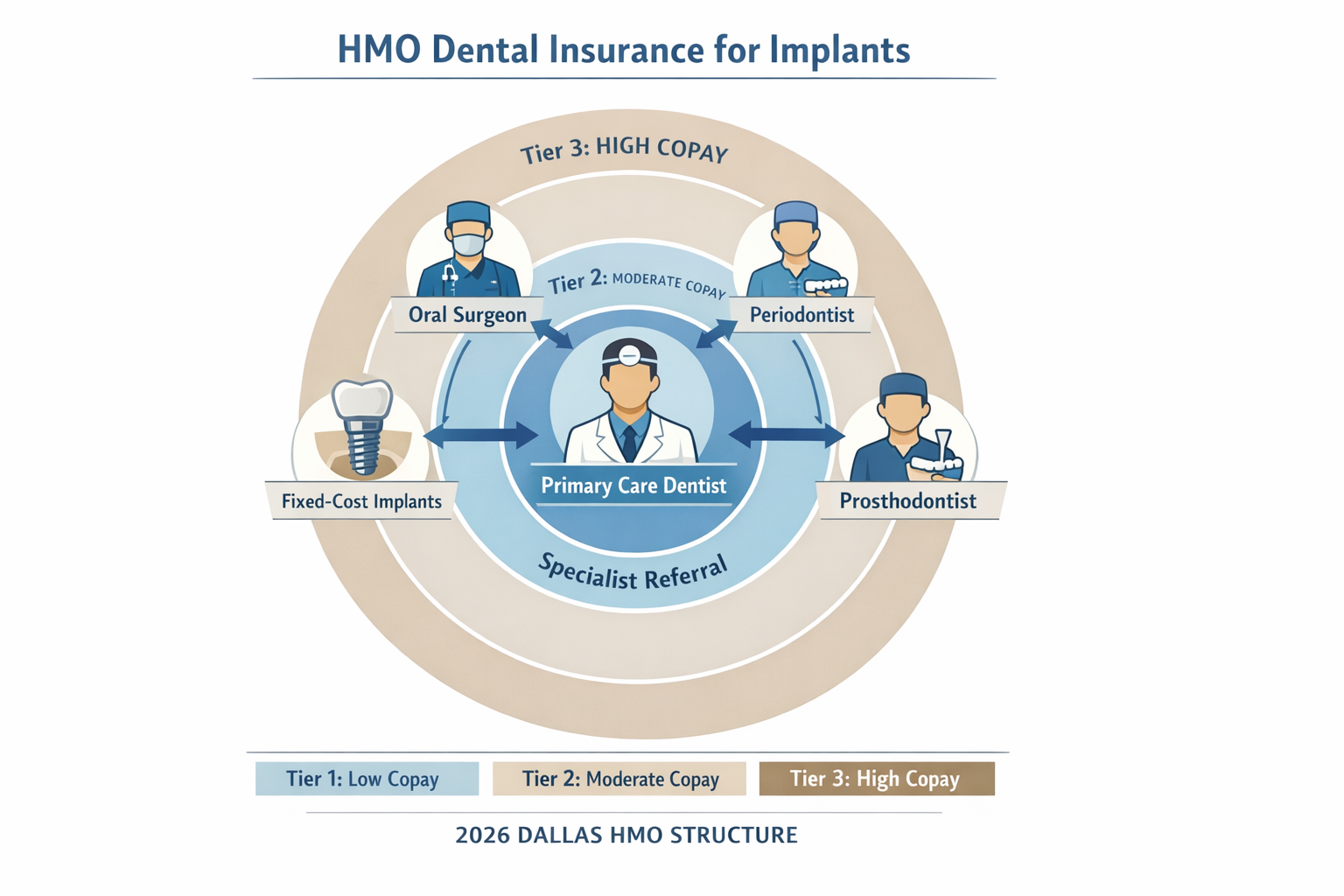
Health Maintenance Organization (HMO) dental plans operate differently from PPO plans, particularly concerning provider choice and cost structure. When considering dental implants in Dallas, an HMO plan typically requires you to choose a primary care dentist (PCD) within the plan’s specific network. All of your dental care, including referrals to specialists for procedures like dental implants, must go through your assigned PCD.
How HMO Plans Work with Dental Implants
HMO plans are generally characterized by lower monthly premiums compared to PPO plans. Instead of deductibles and coinsurance, you typically pay fixed co-payments for services. However, the trade-off for these lower costs is often a more restricted network of providers and potentially less coverage for major procedures like dental implants. Many HMO dental plans consider dental implants to be an elective or cosmetic procedure and may offer very limited, if any, coverage. Some plans may even exclude implant coverage entirely.
Key features of HMO plans for dental implants:
- Restricted Network: You must select a primary dentist from the plan’s network, and all referrals to specialists, such as an oral surgeon for implant surgery, must be made by your PCD.
- Lower Premiums & Fixed Co-pays: HMO plans typically have lower monthly costs and predictable co-payments for various services, rather than deductibles and coinsurance percentages.
- Limited Implant Coverage: Coverage for dental implants can be significantly more limited under an HMO plan. It’s essential to scrutinize the policy details for any exclusions or strict criteria.
- Referral System: You cannot typically see a specialist without a referral from your primary dentist within the network. This can impact your timeline and choice of specialist for the dental implant procedure.
For patients who prioritize lower monthly premiums and predictable co-pays, and who are comfortable with a more structured approach to dental care within a defined network, an HMO plan might be suitable. However, for those specifically needing dental implants in Dallas, a careful review of the plan’s specific coverage for major restorative procedures is absolutely critical. It’s often advisable to contact the insurance provider directly to confirm implant coverage before enrollment.
Maximizing Your Coverage and Minimizing Out-of-Pocket Costs for Dental Implants in Dallas 2026
Regardless of whether you have a PPO or HMO plan, a strategic approach is necessary to make dental implants more affordable in Dallas in 2026. Understanding your policy inside and out and actively planning your treatment can significantly reduce your financial burden.
Strategies for PPO Plan Holders
- Understand Your Annual Maximum: PPO plans have annual maximums. If your procedure is extensive, consider phasing your treatment over two calendar years to utilize two annual maximums. For example, the implant placement surgery could be done in late 2026, and the abutment and crown in early 2027.
- Verify In-Network Dentists: While PPO offers flexibility, utilizing an in-network dentist will always result in lower out-of-pocket costs due to negotiated rates. Ask your prospective Dallas dentist about their network affiliations.
- Pre-authorization is a Must: Always obtain a pre-authorization or pre-determination of benefits from your insurance company before starting any major dental implant work. This document will outline exactly what the plan will cover and your estimated out-of-pocket share.
- Review the Small Print: Look for clauses related to “major restorative” care, “prosthodontics,” or specific exclusions for implants. Some plans may cover the surgical placement but not the crown, or vice versa.
- Utilize HSAs/FSAs: If you have a Health Savings Account (HSA) or Flexible Spending Account (FSA), these funds can be used for your out-of-pocket dental implant expenses, offering tax advantages.
Strategies for HMO Plan Holders
- Confirm Implant Coverage: This is the most crucial step. Many HMO plans offer very limited or no coverage for dental implants. Contact your insurance provider directly and get written confirmation of any coverage details.
- Understand Referral Requirements: If your HMO offers any implant coverage, it will almost certainly require a referral from your primary care dentist to an approved in-network specialist. Ensure this process is clear before moving forward.
- Explore Discount Plans: If your HMO offers no implant coverage, or insufficient coverage, consider supplementing it with a dental discount plan. These plans provide reduced rates at participating dentists for a low annual fee.
- Negotiate with Providers: Even within an HMO network, some Dallas dentists may offer payment plans or in-house financing options for major procedures. Discuss your financial concerns openly during your dental implant consultation.
- Consider Alternative Plans: If dental implants are a high priority and your current HMO provides minimal coverage, it might be worth investigating individual PPO plans or supplemental dental insurance designed specifically for major services. You may find more comprehensive options when comparing plans in Dallas.
General Tips for Both PPO and HMO Plan Holders
- Get a Detailed Treatment Plan: Your dentist should provide a comprehensive treatment plan outlining all steps, estimated costs, and potential insurance contributions. This allows you to budget effectively.
- Ask About All Components: Remember that a dental implant involves several parts: the implant post, the abutment, and the crown. Ensure your insurance review covers all these elements.
- Investigate Local Cost Variations: Dallas can offer competitive pricing compared to national averages for dental implants. Researching Dallas dental implant costs 2026 vs. national averages can help you find a cost-effective provider.
- Consider Financing Options: Many dental clinics offer various financing solutions, including third-party medical credit cards (like CareCredit) or in-house payment plans. Explore dental implant monthly payment plans in Dallas to spread out the cost.
- Review Your Policy Annually: Insurance benefits and policies can change. Regularly reviewing your dental insurance policy, especially at the start of 2026, ensures you have the most up-to-date information regarding your coverage for major procedures like dental implants.
Making an informed decision about your dental insurance and how it relates to major restorative work like dental implants is a crucial step towards long-term oral health. Always prioritize a detailed consultation with a qualified dentist in Dallas to discuss your specific needs and coverage options.
Conclusion
Choosing between PPO and HMO dental insurance for implants in Dallas in 2026 involves a careful evaluation of flexibility, cost, and coverage. PPO plans offer greater freedom in selecting your dental provider, which can be invaluable when seeking a specialist for complex dental implant procedures, albeit with potentially higher premiums and out-of-pocket expenses. HMO plans typically come with lower premiums and predictable co-pays but often impose stricter network limitations and may offer significantly less coverage for dental implants.
Ultimately, maximizing your coverage and minimizing out-of-pocket costs for dental implants in Dallas requires proactive research into your specific insurance policy, thorough communication with your chosen dental professional, and strategic planning. We encourage you to review your dental insurance policy details, speak directly with your insurance provider about implant coverage, and schedule a comprehensive consultation with a dentist specializing in dental implants. This personalized approach will help you understand your best path forward for restoring your smile and ensuring long-term oral health.