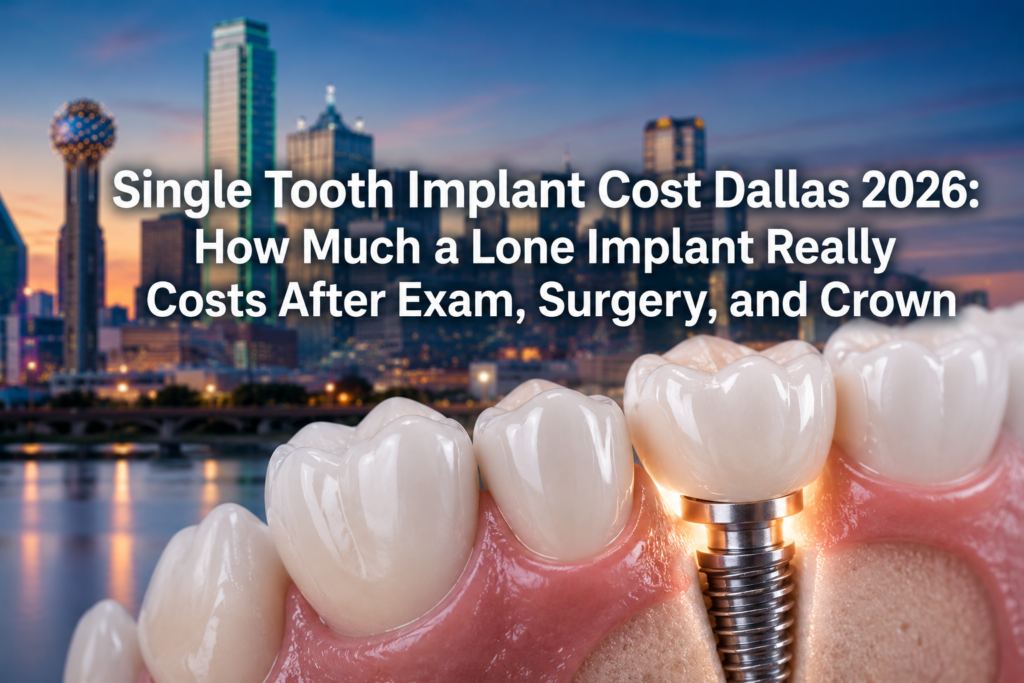
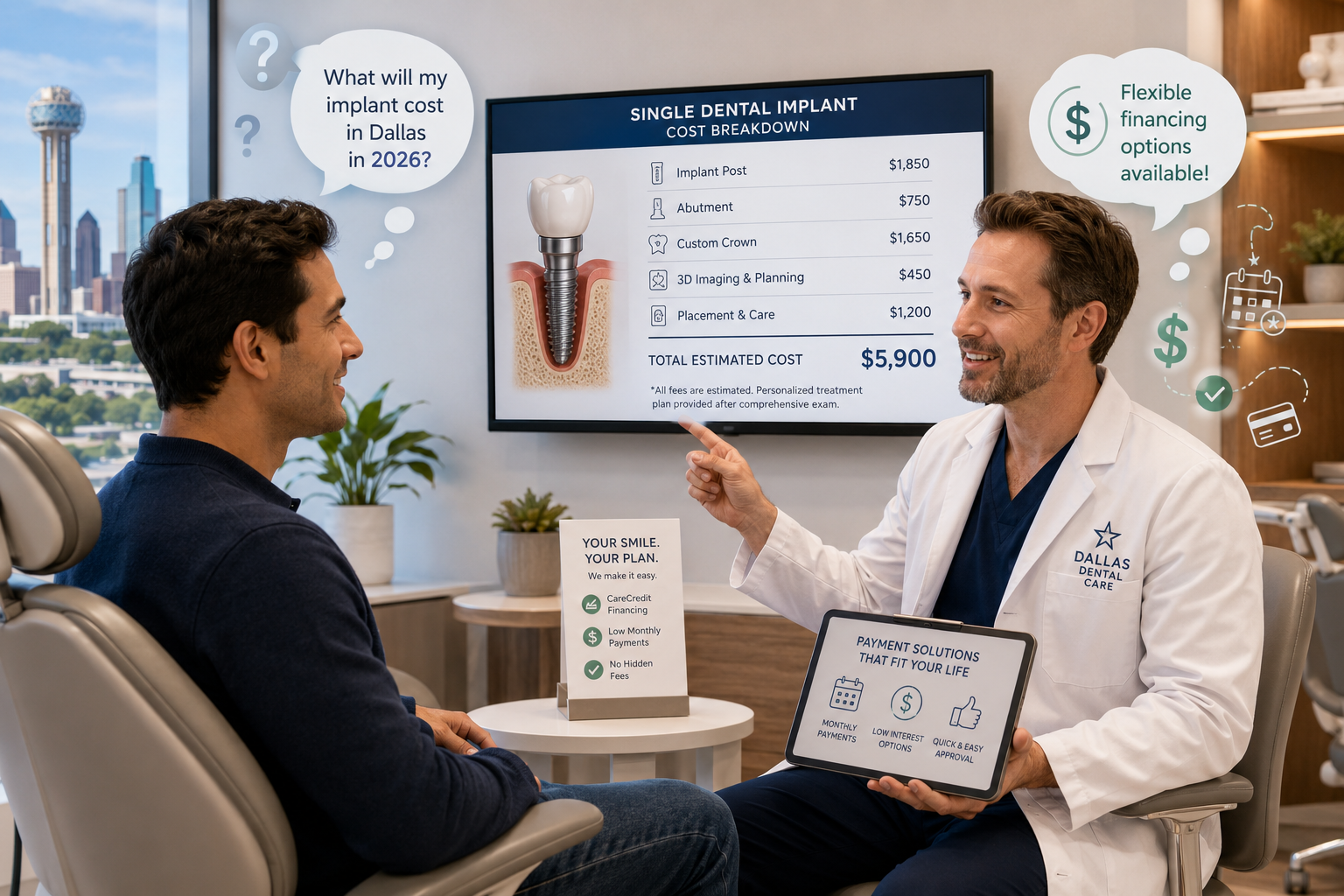
The average cost for a single dental implant can vary significantly, often falling between $3,000 and $6,000 in Dallas, Texas. However, this initial range often refers only to the implant post itself, not the complete procedure. Understanding the comprehensive financial commitment for a single tooth replacement requires looking beyond basic figures. This article, “Single Tooth Implant Cost Dallas 2026: How Much a Lone Implant Really Costs After Exam, Surgery, and Crown,” aims to provide a clear, patient-focused breakdown of the expected expenses associated with restoring a missing tooth with a dental implant in the Dallas area in 2026, covering everything from the initial consultation through to the final crown. Our goal is to empower you with medically responsible information to make informed decisions about your oral health.
Key Takeaways
- The total cost of a single dental implant in Dallas in 2026 includes the initial exam, the implant surgery, and the placement of the prosthetic crown.
- Factors like the need for bone grafting, the type of materials used, and the specific dental professional’s fees can significantly influence the final price.
- Dental insurance often covers a portion of diagnostic services or the crown, but typically not the implant post or surgical placement itself.
- Understanding the full cost upfront through a detailed consultation is crucial for budgeting and comparing tooth replacement options.
- Investing in a dental implant offers long-term benefits for oral health, jawbone preservation, and chewing function, making it a valuable solution for missing teeth.
Understanding the Components of Single Tooth Implant Cost Dallas 2026
When considering dental implants in Dallas, it’s essential to recognize that the final price tag for a single tooth implant is not a single fee but rather a sum of several distinct services and components. Each stage of the dental implant procedure contributes to the overall investment. This comprehensive approach ensures the longevity and success of your new tooth.
Initial Assessment and Planning 🔬
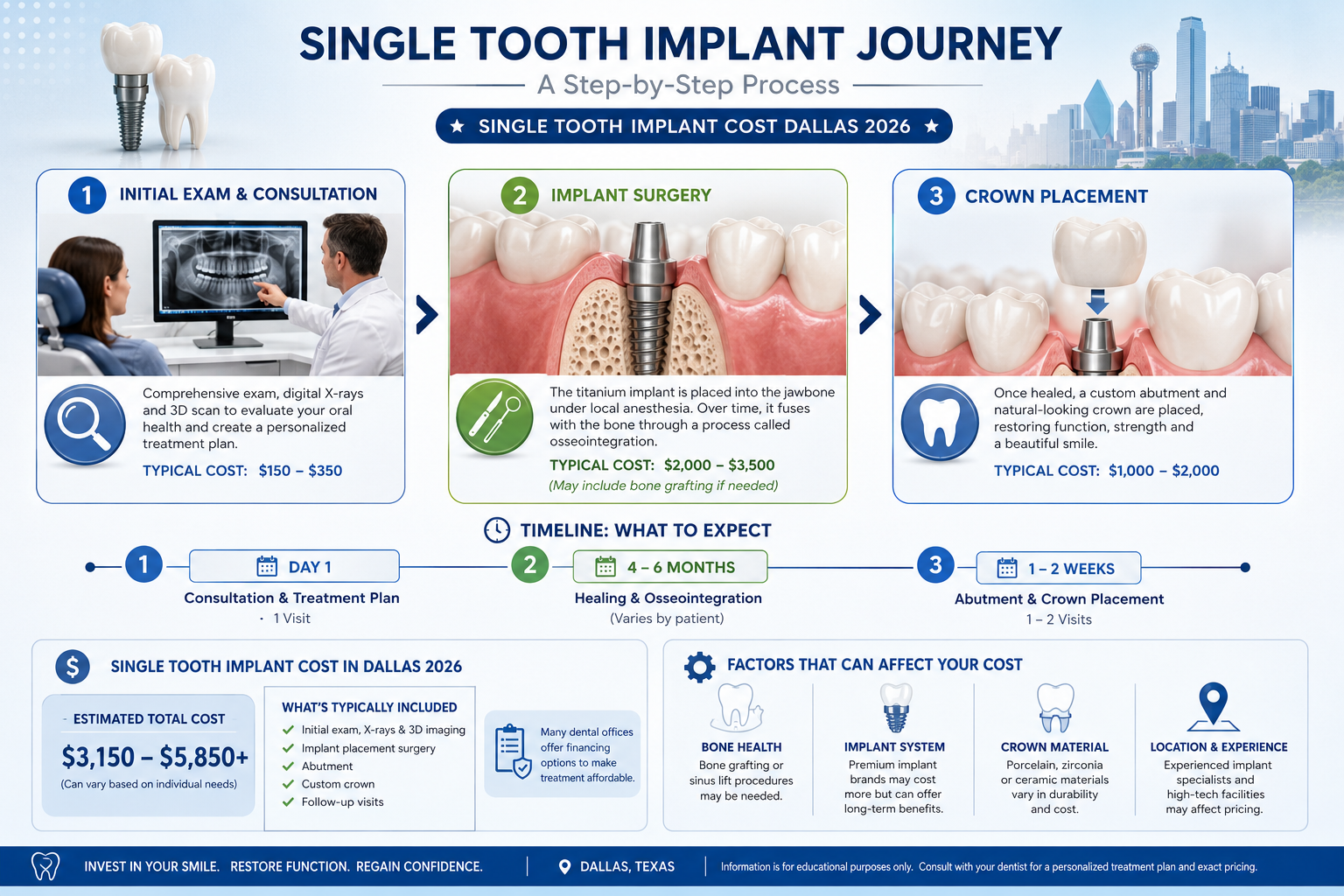
The journey toward a single dental implant begins with a thorough examination. This crucial phase lays the groundwork for a successful procedure and includes:
- Comprehensive Oral Examination: A visual check of your mouth, teeth, and gums to assess your overall oral health.
- X-rays and 3D Imaging (CBCT Scan): These imaging techniques provide detailed views of your jawbone, nerve pathways, and sinus cavities. A 3D Cone Beam Computed Tomography (CBCT) scan is particularly important for precise planning, helping the dentist determine the exact location for implant placement and assess bone density. This technology can contribute to the cost but significantly enhances safety and predictability. Learn more about how technology impacts costs in our article on 3D Guided Dental Implant Surgery Dallas: How Tech Cuts Costs.
- Treatment Planning: Based on the examination and imaging, your dentist will develop a personalized treatment plan, outlining the steps, materials, and estimated timeline. This includes discussing any necessary preparatory procedures.
- Consultation Fee: A fee for the dentist’s time and expertise during this initial assessment.
These diagnostic and planning steps are fundamental. They typically range from a few hundred dollars to upwards of $1,000, depending on the complexity and the specific imaging required. This initial investment is vital for ensuring patient safety and the long-term success of the implant.
The Dental Implant Surgery Process 🧑⚕️
The next major component of the Single Tooth Implant Cost Dallas 2026 is the surgical placement of the implant itself. This involves:
- Implant Post: This is the titanium (or sometimes zirconia) screw-like post that is surgically placed into your jawbone. This acts as the new tooth root. The material and brand of the implant can influence its cost.
- Surgical Placement: The procedure to precisely insert the implant post into the jawbone. This is typically performed under local anesthesia, but sedation options are often available for patient comfort, which may incur additional fees.
- Abutment Placement: After the implant has fused with the bone (a process called osseointegration, which can take several months), an abutment is attached to the implant. This small connector piece extends above the gum line and serves as the base for the prosthetic crown. In some cases, a temporary crown may be placed while the permanent one is being fabricated.
- Anesthesia and Sedation: The cost of local anesthesia is usually included, but if you opt for additional sedation (such as oral conscious sedation or IV sedation), there will be an extra charge.
The cost for the implant post and its surgical placement generally represents the largest portion of the overall expense. In Dallas, this phase alone can range from approximately $1,500 to $3,500 or more per implant, not including any necessary pre-procedures like bone grafting.
Restorative Crown and Final Adjustments 🦷
The final step in replacing your missing tooth is the placement of the custom-made crown. This is what you see and use to chew.
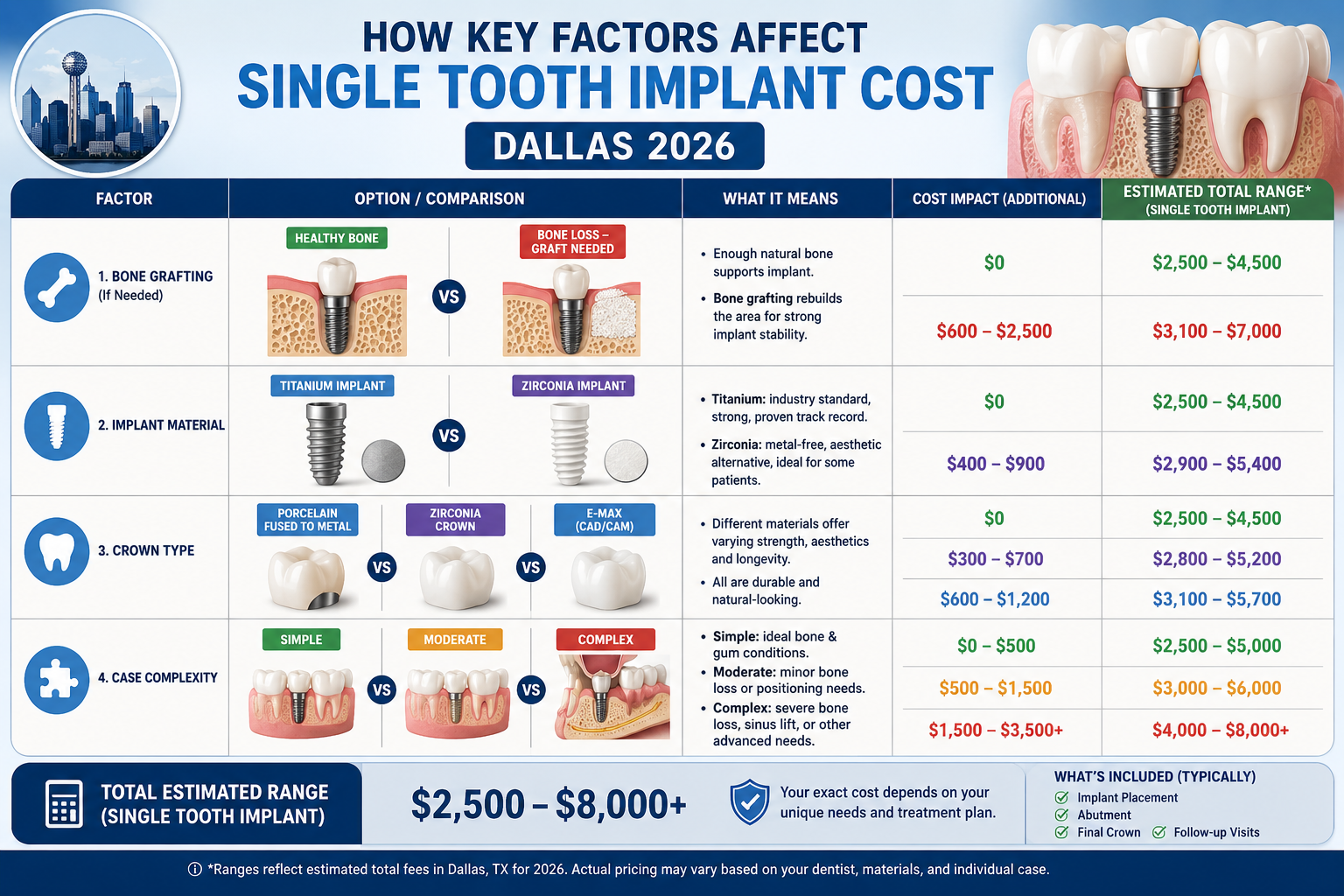
- Custom Crown: This is the visible part of the implant, designed to match your natural teeth in shape, size, and color. Crowns can be made from various materials, with porcelain-fused-to-metal (PFM) and all-ceramic (zirconia or e.max) being common choices. All-ceramic crowns often offer superior aesthetics, especially for front teeth, but can be more expensive. For insights into material costs, consider our article on Why Zirconia Implants Cost More in Dallas: Material Comparison.
- Laboratory Fees: A significant portion of the crown cost goes to the dental laboratory that custom-fabricates the crown based on impressions or digital scans provided by your dentist.
- Placement and Adjustments: Your dentist will carefully attach the crown to the abutment and make any necessary adjustments to ensure a proper fit and comfortable bite.
The cost of the prosthetic crown and abutment typically ranges from $1,000 to $3,000 or more, depending on the material and the complexity of its design.
How Additional Factors Influence Single Tooth Implant Cost Dallas 2026: How Much a Lone Implant Really Costs After Exam, Surgery, and Crown
While the core components of an implant procedure remain consistent, several variables can significantly affect the final Single Tooth Implant Cost Dallas 2026. Understanding these factors is crucial for obtaining an accurate estimate during your consultation with a dentist.
Need for Ancillary Procedures 🦴
Sometimes, the jawbone may not be strong or voluminous enough to support a dental implant. In such cases, additional procedures are necessary:
- Bone Grafting: If you have experienced bone loss due to a missing tooth, gum disease, or trauma, a bone graft may be required to build up the jawbone. This procedure involves placing bone material (from your own body, a donor, or synthetic sources) into the area where the implant will be placed. The cost of bone grafting varies widely based on the amount and type of bone material needed, often adding $500 to $2,500 or more to the total. Find out more about these costs in our guide: Bone Graft Costs for Dental Implants in Dallas.
- Sinus Lift: If a missing upper back tooth is being replaced, and there isn’t enough bone height in the upper jaw due to the proximity of the maxillary sinuses, a sinus lift procedure may be necessary. This lifts the sinus membrane and adds bone material to allow for implant placement. A sinus lift can add $1,500 to $3,000 or more to the overall cost.
- Tooth Extraction: If the damaged tooth is still present, its extraction will be an additional expense.
Choice of Materials and Technology ⚙️
The materials used for the implant itself and the prosthetic crown can impact the price:
- Implant Material: While most implants are titanium, some patients opt for zirconia implants, which are metal-free. Zirconia implants can sometimes be more expensive due to their material cost and specialized placement techniques.
- Crown Material: As mentioned, all-ceramic crowns (like zirconia or e.max) generally cost more than porcelain-fused-to-metal (PFM) crowns due to their superior aesthetics and biocompatibility.
- Advanced Technology: The use of cutting-edge technology, such as 3D guided surgery, digital impressions, and advanced implant systems, can contribute to the cost but often leads to greater precision, faster healing, and improved long-term outcomes. This investment in technology can be a significant factor in successful implant rates in Dallas.
Dentist’s Experience and Location 📍
The fees charged by dental professionals can vary based on several factors:
- Specialization: An oral surgeon or periodontist, who specializes in implant placement, may have different fees than a general dentist who performs implant procedures. Their specialized training and expertise are reflected in their pricing.
- Geographic Location within Dallas: Dental practices in prime commercial areas may have higher overheads, which can influence pricing compared to those in other neighborhoods.
- Clinic Reputation and Technology: Highly reputable clinics that invest in state-of-the-art equipment and offer advanced services may have higher overall costs.
These variables underscore the importance of a detailed consultation to understand all potential expenses tailored to your unique needs.
Navigating Payment and Financing for Your Single Tooth Implant in Dallas 💰
Understanding the financial aspects of a single tooth implant is a critical step in your treatment journey. While the cost may seem substantial, several options can help make dental implants in Dallas more accessible.
Dental Insurance Coverage 🛡️
It’s important to have realistic expectations regarding dental insurance for implants:
- Limited Coverage: Most traditional dental insurance plans do not cover the full cost of dental implants, as they are often classified as a cosmetic procedure or an advanced restoration.
- Partial Coverage: However, some plans may cover portions of the procedure, such as:
- Diagnostic Services: Initial exams, X-rays, and 3D scans.
- Tooth Extraction: If necessary prior to implant placement.
- Bone Grafting: In some cases, if deemed medically necessary to restore function.
- The Crown: The prosthetic tooth itself may be covered under major restorative benefits, similar to how crowns on natural teeth are treated.
- Maximizing Benefits: It’s highly recommended to contact your insurance provider directly or have your dental office submit a pre-treatment estimate to understand your specific coverage and out-of-pocket expenses for a single tooth implant. Remember to also explore how different plans might compare using resources like our PPO vs HMO Implant Coverage Comparison: Maximizing Your Dental guide.
Financing Options and Payment Plans 💳
Many dental practices in Dallas understand the financial commitment involved with dental implants and offer various payment solutions:
- In-House Payment Plans: Some clinics provide flexible payment schedules, allowing you to pay for your treatment over several months.
- Third-Party Financing: Companies like CareCredit or LendingClub offer specialized healthcare credit cards with low or no-interest payment plans for qualified applicants. These plans can spread the cost over an extended period.
- Health Savings Accounts (HSAs) and Flexible Spending Accounts (FSAs): If you have an HSA or FSA through your employer, you can use these pre-tax funds to pay for dental implant procedures, effectively reducing your overall cost.
- Discount Plans: Some dental discount plans offer reduced fees for a network of dentists. While not insurance, they can offer savings on various procedures, including implants.
When you prepare for your dental implant consultation in Dallas, be sure to inquire about all available payment and financing options.
The Long-Term Value of Dental Implants ⏳
While the initial Single Tooth Implant Cost Dallas 2026 might seem higher than other tooth replacement options like traditional bridges or removable partial dentures, it’s important to consider the long-term value:
- Durability and Longevity: Dental implants are designed to be a permanent solution and can last for decades, often a lifetime, with proper care. This contrasts with bridges, which typically need replacement every 5-15 years, incurring recurring costs.
- Preservation of Jawbone: Implants stimulate the jawbone, preventing the bone loss that naturally occurs when a tooth is missing. This preserves facial structure and prevents issues like shifting teeth.
- Oral Health Benefits: Unlike bridges, implants do not require grinding down adjacent healthy teeth, preserving their integrity. They also allow for easier cleaning, promoting better overall oral health.
- Comfort and Functionality: Implants feel and function like natural teeth, offering superior chewing efficiency and comfort compared to removable prosthetics.
- Quality of Life: The confidence of a complete smile and the ability to eat all your favorite foods without worry significantly enhance your quality of life.
Considering these long-term benefits, dental implants often prove to be the most cost-effective and beneficial solution for missing teeth over time. For more information on post-op care, visit our article on Dental Implant Post-Op Care & Maintenance Costs in Dallas.
Conclusion
Understanding the true “Single Tooth Implant Cost Dallas 2026: How Much a Lone Implant Really Costs After Exam, Surgery, and Crown” involves more than just a single number. It encompasses diagnostic evaluations, surgical expertise, quality materials, and meticulous restorative work. While the initial investment may seem significant, the benefits of dental implants—including their longevity, impact on oral health, and enhancement of your quality of life—make them a superior choice for many patients with missing teeth.
We encourage you to prioritize a comprehensive consultation with an experienced dental professional in Dallas. During this consultation, you can discuss your specific needs, understand all potential costs, explore financing options, and receive a personalized treatment plan. Taking this proactive step will help you make an informed decision and embark on your journey toward a healthier, more confident smile.
References
- American Academy of Implant Dentistry. (n.d.). FAQs about Dental Implants. Retrieved from https://www.aaid.com/dental_implant_information/faqs.html
- American Dental Association. (n.d.). Dental Implants. Retrieved from https://www.mouthhealthy.org/en/az-topics/i/implants
- Misch, C. E. (2008). Contemporary Implant Dentistry (3rd ed.). Mosby Elsevier.