
Securing quality dental implants in Dallas can be a significant investment in your long-term oral health and confidence. Many Dallas patients naturally wonder how dental insurance can help manage these costs. While dental implants are often considered an elective or major procedure, understanding the nuances of different insurance plans in Texas can reveal pathways to genuinely lowering out-of-pocket expenses. This article will explore which plan structures—PPO, HMO, or employer-sponsored plans—offer the most practical assistance for individuals seeking dental implants in Dallas, examining their benefits and limitations in 2026.
Key Takeaways
- Most dental insurance plans in 2026 categorize dental implants as a “major procedure,” meaning higher co-pays and longer waiting periods.
- PPO plans generally offer more flexibility in choosing providers and may cover a portion (often 20-50%) of implant costs after deductibles and waiting periods are met, up to an annual maximum.
- HMO plans typically have lower premiums but restrict choice to a network, often covering less for major procedures or requiring referrals, making them less ideal for comprehensive implant coverage.
- Employer-sponsored plans can sometimes offer more robust benefits, including higher annual maximums or specific implant coverage, making them a valuable option if available.
- Beyond insurance, financing options, dental savings plans, and seeking clinics with transparent pricing are crucial strategies for managing the implant cost in Dallas.
Understanding Dental Insurance Types and Implant Coverage in 2026
When considering tooth replacement options like dental implants in Dallas, it is essential to differentiate between various dental insurance plan types and how they typically address major procedures. The goal is to find the Best Dental Insurance for Implants in Texas: Which Plans Actually Help Dallas Patients Lower Out-of-Pocket Costs?
PPO (Preferred Provider Organization) Plans
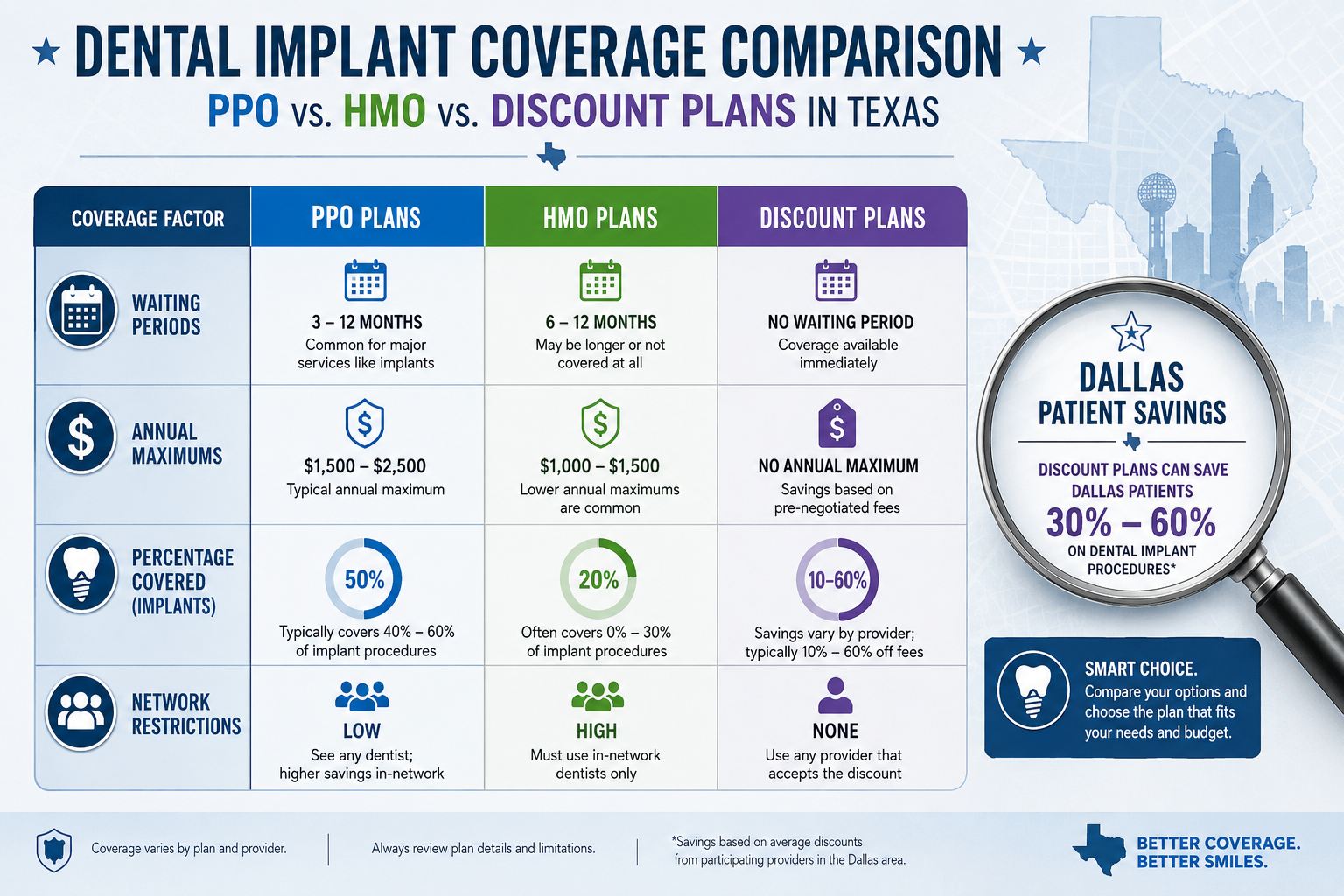
PPO plans are generally the most common type of dental insurance and often provide the greatest flexibility. With a PPO, you can typically choose any licensed dentist, though you will usually pay less if you visit a dentist within the plan’s network. For dental implants, PPO plans often cover a percentage of the cost after you’ve met your deductible and a waiting period has passed.
- Coverage: Typically, PPO plans categorize dental implants as a “major procedure.” This means they might cover 20-50% of the cost, depending on the specific plan.
- Deductibles: You will need to pay a deductible (e.g., $50-$100 per person) before the insurance begins to pay.
- Annual Maximums: Most PPO plans have an annual maximum benefit, often ranging from $1,000 to $2,000. For a procedure like a dental implant, which can cost several thousand dollars per tooth, this maximum can be quickly reached, leaving a substantial out-of-pocket balance.
- Waiting Periods: It is common for PPO plans to have waiting periods for major procedures—often 6 to 12 months after enrollment—before implant coverage kicks in. This prevents individuals from signing up just to get a costly procedure covered immediately.
For Dallas patients, the flexibility of PPO plans allows you to choose a dentist you trust for your implant surgery process, even if they are not in-network, albeit at a potentially higher cost. This freedom of choice is often highly valued for complex procedures like dental implants.
HMO (Health Maintenance Organization) Plans
HMO dental plans, also known as Dental Maintenance Organization (DMO) plans, typically have lower monthly premiums but come with more restrictions.
- Network Restriction: You must choose a primary care dentist within the HMO network, and all care, including referrals to specialists for implant surgery, must go through this network.
- Coverage: HMOs often focus on preventive and basic care. Coverage for major procedures like dental implants can be limited, sometimes requiring co-pays or a fixed fee schedule for specific services rather than a percentage. Some HMOs may not cover implants at all, or only under very specific circumstances.
- Referrals: To see a specialist, you will likely need a referral from your primary HMO dentist.
While HMOs can be very affordable for routine care, their limitations often make them less suitable for individuals specifically seeking comprehensive coverage for dental implants in Dallas.
Employer-Sponsored Plans
If you receive dental insurance through your employer, these plans can sometimes offer more generous benefits than individual plans purchased directly.
- Potentially Higher Maximums: Employer plans may have higher annual maximums (sometimes $2,500 or more) and shorter waiting periods, or even waive them entirely for major procedures if you have had continuous coverage.
- Group Rates: Premiums are often lower due to group purchasing power.
- PPO vs. HMO Options: Employers may offer both PPO and HMO options, giving you a choice based on your specific needs for tooth replacement options.
If you have access to an employer-sponsored plan, carefully review its Summary of Benefits to understand its specific coverage for dental implants. These plans often provide the best opportunity for Dallas patients to lower out-of-pocket costs for implant procedures. For a deeper dive into plan structures, consider reading about “Best Dental Insurance for Implants in Texas 2026: PPO vs HMO”.

Navigating Waiting Periods, Deductibles, and Annual Maximums for Dallas Patients
Understanding the fine print of your dental insurance policy is crucial when planning for dental implants. These elements directly impact how much financial assistance you will receive and when. For Dallas patients, deciphering these terms is key to finding the Best Dental Insurance for Implants in Texas: Which Plans Actually Help Dallas Patients Lower Out-of-Pocket Costs?
Waiting Periods: The Time Factor
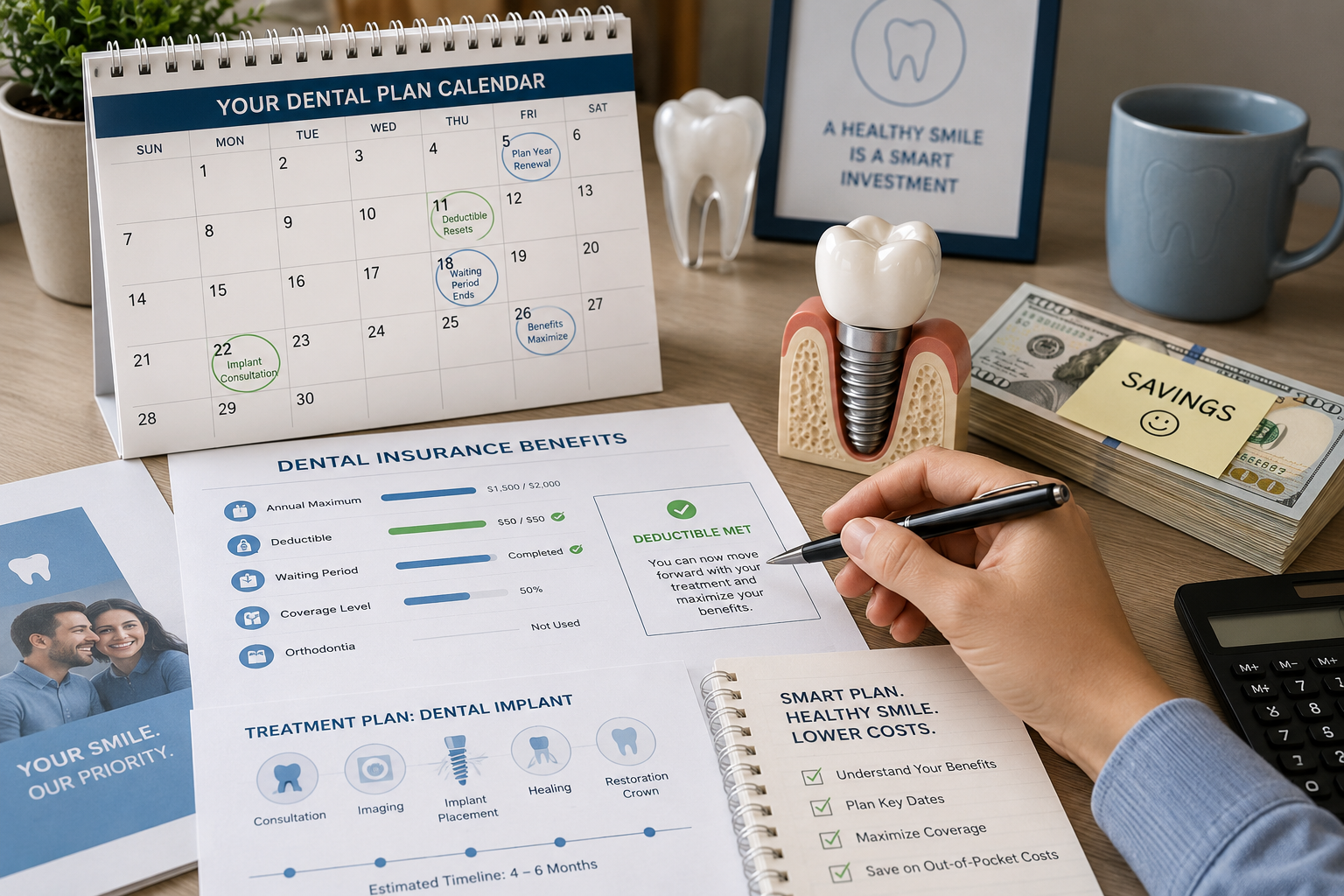
A waiting period is the amount of time you must be enrolled in a dental insurance plan before certain procedures are covered. For major services like dental implants, waiting periods commonly range from 6 to 12 months, and sometimes even longer.
- Impact on Implants: If you need an implant soon after enrolling in a new plan, you might find that the procedure is not covered until the waiting period expires. This means you would be responsible for 100% of the cost during that time.
- Strategy: If you anticipate needing dental implants in the future, it is advisable to secure a dental insurance plan well in advance to ensure the waiting period is met by the time your dental implant procedure is scheduled.
Deductibles: Your Initial Investment
The deductible is the amount you must pay out-of-pocket before your insurance company begins to pay for covered services. Most individual dental plans have an annual deductible, often between $50 and $100 per person.
- How it Works: Once you meet your deductible for the year, your insurance will start covering a percentage of your eligible dental expenses. For example, if your deductible is $100 and your implant consultation costs $150, you would pay $100 (your deductible) and the insurance would then begin to pay its portion of the remaining $50, or future services.
- Single vs. Family: Deductibles can apply per individual or per family, so it’s important to clarify this with your provider.
Annual Maximums: The Coverage Cap
Perhaps the most significant limitation for dental implant coverage is the annual maximum benefit. This is the total dollar amount your dental insurance plan will pay for your dental care within a 12-month period.
- Typical Ranges: Annual maximums for individual dental plans often fall between $1,000 and $2,000.
- Implant Impact: Given that the cost of a single dental implant in Dallas can range from $3,000 to $5,500 or more (including the implant, abutment, and crown), an annual maximum of $1,500 means the insurance will likely only cover a fraction of the total cost. You would be responsible for the remainder.
- Maximizing Benefits: To make the most of your annual maximum, some dentists may be able to stage treatment over two calendar years if medically appropriate, allowing you to utilize two annual maximums for one comprehensive dental implant treatment plan. This requires careful planning and consultation with a dentist.
Understanding these financial mechanics is key to effectively using your dental insurance for missing teeth solutions. For those exploring payment alternatives, information on “Dental Implant Monthly Payment Plans Dallas: Navigating Affordable” can be helpful.

Beyond Insurance: Alternative Strategies for Lowering Dental Implant Costs in Dallas
While finding the Best Dental Insurance for Implants in Texas: Which Plans Actually Help Dallas Patients Lower Out-of-Pocket Costs? is a priority, it is also important for Dallas patients to consider additional strategies to manage the overall expense of dental implants. Given that even the best insurance plans often have limits, a multi-faceted approach can significantly reduce your financial burden.
Dental Savings Plans (Discount Plans)
Dental savings plans are not insurance but offer a different way to reduce costs. You pay an annual membership fee, and in return, you get discounted rates (typically 10-60%) on dental services, including major procedures like dental implants, from participating dentists.
- No Waiting Periods or Deductibles: Unlike insurance, there are typically no waiting periods, deductibles, or annual maximums with dental savings plans.
- Immediate Savings: Once you join, you can start receiving discounts immediately.
- Good for Major Work: These plans can be particularly beneficial for extensive dental work where traditional insurance falls short due to annual maximums.
Financing Options and Payment Plans
Many dental practices in Dallas understand the financial considerations of dental implants and offer various financing solutions.
- In-Office Payment Plans: Some clinics provide their own payment plans, allowing you to spread the cost over several months.
- Third-Party Financing: Companies like CareCredit or LendingClub offer specialized healthcare credit cards or loans that can help cover the cost of dental implants with flexible terms, including low or no-interest options for a promotional period.
- HSA/FSA Accounts: If you have a Health Savings Account (HSA) or Flexible Spending Account (FSA) through your employer, these tax-advantaged accounts can be used to pay for qualified medical expenses, including dental implants. This allows you to pay for your procedure with pre-tax dollars, saving you money. Learn more about “Dallas Dental Implants HSA/FSA Eligible Expenses 2026: Full”.
Researching Dental Practices and Transparent Pricing
The cost of dental implants can vary significantly between different practices in Dallas. Performing thorough research and seeking transparent pricing is crucial.
- Get Multiple Quotes: Don’t hesitate to get quotes from several qualified dentists offering dental implants in Dallas. This allows you to compare costs and understand what is included in each estimate.
- Understand the Full Cost: Ensure the quote includes all components of the dental implant procedure: the implant post, the abutment, the crown, and any necessary preparatory procedures like bone grafting or extractions. A consultation with a dentist is vital to get a comprehensive cost breakdown.
- Ask About Technology: Advanced technologies like 3D imaging and digital planning can enhance precision and success rates, but may also influence costs. Ask how these are factored into the overall price. Consider reading about “The Role of 3D Imaging and Digital Planning in Dallas Dental Implant”.
- Local Cost Comparison: Keep in mind that Dallas dental implant costs can be competitive compared to national averages. For more information, see our article on “Dallas Dental Implant Cost vs National Averages 2026: Why Te”.
By combining a smart insurance strategy with these alternative payment options and diligent research, Dallas patients can significantly reduce their out-of-pocket costs for dental implants, ensuring access to quality missing teeth solutions and long-term oral health.

Conclusion
Navigating the landscape of dental insurance for implants in Texas, especially for Dallas patients, requires careful consideration and a clear understanding of your plan’s specifics. While no dental insurance plan typically covers 100% of the cost of dental implants, certain structures, particularly PPO plans and robust employer-sponsored benefits, offer more substantial assistance than others. Factors like waiting periods, deductibles, and annual maximums play a critical role in determining your actual out-of-pocket expenses.
For those seeking the Best Dental Insurance for Implants in Texas: Which Plans Actually Help Dallas Patients Lower Out-of-Pocket Costs?, it is often a combination of strategic insurance selection and exploring alternative financial avenues. Dental savings plans, flexible financing options, and the smart use of HSA/FSA accounts can bridge the gap left by insurance limitations.
The most important actionable step for any Dallas patient considering dental implants is to schedule a comprehensive consultation with a dentist. During this consultation, you can discuss your individual oral health needs, the specifics of the dental implant procedure, and receive a detailed, transparent breakdown of the implant cost in Dallas. Furthermore, inquire about the various payment solutions and financing options available at the practice. Making an informed decision about your tooth replacement options is paramount for your patient safety and long-term oral health.