For many patients considering dental implants in Dallas, the recovery period and potential for discomfort are primary concerns. While the dental implant procedure is a highly effective solution for missing teeth, understanding what to expect after surgery is crucial for a smooth and successful healing journey. This article provides a comprehensive Dental Implant Recovery Timeline & Pain Management Dallas: What to Expect Post-Surgery, offering a clear overview of the healing process, practical pain management strategies, and essential post-operative care tips. Our goal is to empower you with knowledge, reduce anxiety, and help you prepare for a comfortable recovery, ensuring your path to long-term oral health is well-informed.
Key Takeaways
- Initial Recovery (Days 1-3): Expect swelling, minor bleeding, and discomfort. Cold compresses and prescribed pain medication are vital.
- Weeks 1-2: Swelling and bruising should subside. Stick to a soft diet and maintain gentle oral hygiene.
- Months 1-6: Osseointegration (bone fusion) occurs. Avoid chewing hard foods directly on the implant site.
- Pain Management: A combination of prescribed pain medication, over-the-counter options, cold compresses, and proper rest is key.
- Post-Operative Care: Adhere strictly to your dentist’s instructions, focusing on diet, oral hygiene, and activity restrictions for optimal healing.
Understanding the Dental Implant Recovery Timeline & Pain Management in Dallas
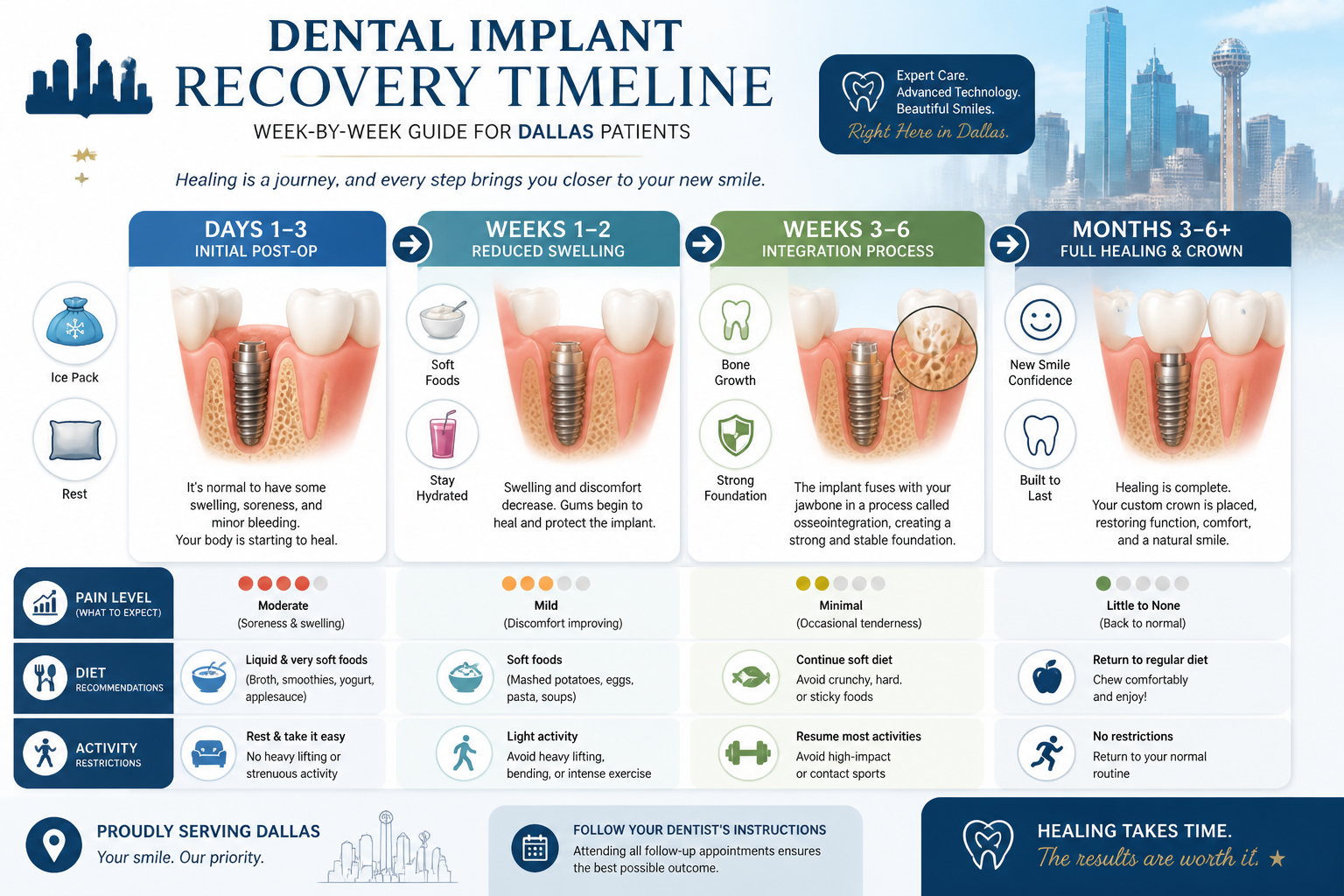
The recovery process after dental implant surgery is a critical phase, directly impacting the success and longevity of your new tooth replacement option. While every individual’s healing experience may vary slightly, there’s a general timeline and set of expectations that can help Dallas patients prepare. The initial days are typically the most intensive, with discomfort gradually decreasing as the site heals.
Immediately After Surgery (Day 1)
Upon leaving your Dallas dental office, the effects of local anesthesia will gradually wear off. This is when you might start to feel some discomfort. Your dental professional will likely have provided you with a prescription for pain medication to manage this.
- Bleeding: Light bleeding or oozing from the surgical site is normal during the first 24-48 hours. You may be instructed to bite gently on gauze pads, changing them as needed.
- Swelling: Swelling is a common response to oral surgery. It typically peaks within 48-72 hours after the procedure. Applying an ice pack or cold compress to the outside of your face, 20 minutes on and 20 minutes off, can significantly help reduce swelling.
- Pain: Expect mild to moderate pain. This is usually managed effectively with prescribed pain relievers and/or over-the-counter anti-inflammatory medications.
- Diet: Stick to a liquid or very soft diet. Cold foods like yogurt or smoothies can be soothing. Avoid hot foods or drinks, as they can increase bleeding.
The First Week of Dental Implant Recovery (Days 2-7)
During the first week, you’ll notice a gradual improvement in your symptoms. The initial discomfort should start to subside, but it’s crucial to continue following your post-operative instructions carefully.
- Swelling and Bruising: Swelling should begin to decrease, although some bruising may appear on your face or neck. This is normal and will fade within a few days.
- Pain Management: Continue taking pain medication as directed. Many patients can transition from prescription pain relievers to over-the-counter options like ibuprofen or acetaminophen by the end of the first week.
- Oral Hygiene: Gentle oral hygiene is paramount. You’ll likely be advised to rinse with a prescribed antibacterial mouthwash or warm salt water several times a day, starting 24 hours after surgery. Avoid brushing directly on the surgical site, but continue to brush your other teeth gently.
- Diet: Continue with soft foods. Avoid anything crunchy, chewy, spicy, or extremely hot. This protects the healing site and prevents irritation.
- Activity: Limit strenuous physical activity. Resting helps your body focus energy on healing.
“The first few days after dental implant surgery are the most crucial for setting the stage for a smooth recovery. Diligent adherence to post-operative instructions for pain and swelling management is vital.”
Weeks 2-4: Continued Healing and Osseointegration
This period marks significant internal healing, though you may feel largely back to normal. The dental implant itself, which is a small titanium post, begins to fuse with your jawbone in a process called osseointegration. This is the foundation for the long-term success of your implant.
- Discomfort: Most discomfort should be minimal or gone by this stage. If you experience persistent or increasing pain, contact your dentist immediately.
- Diet: You can gradually reintroduce more solid foods, but continue to avoid chewing directly on the implant site.
- Oral Hygiene: Maintain excellent oral hygiene. Your dentist will advise on when you can gently brush the surgical area.
- Follow-up: You will likely have a follow-up appointment with your Dallas dentist to assess healing.
- Factors for Success: Your overall oral health, smoking status, and adherence to care instructions significantly impact this phase. Patients in Dallas who smoke or vape should be aware of The Impact of Smoking and Vaping on Dental Implant Success Rates in Dallas.
Months 1-6+: Long-Term Healing and Restoration
Osseointegration can take anywhere from 3 to 6 months, or even longer in some cases, especially if bone grafting was performed. During this time, the implant becomes a stable part of your jawbone, ready to support a dental crown.
- Full Integration: The implant is fully fused with the bone.
- Restoration Phase: Once osseointegration is complete, your dentist will proceed with placing the abutment (a connector) and then the custom-made crown, bridge, or denture.
- Function: With the final restoration in place, you can typically resume normal chewing and speaking functions.
- Longevity: Proper care after the final restoration is key to the longevity of dental implants in Dallas.
Effective Pain Management Strategies for Dental Implant Recovery in Dallas
Managing pain and discomfort effectively is a top priority for patients undergoing dental implant surgery. Your dentist in Dallas will provide specific instructions, but here’s a general overview of common and effective strategies.
Prescribed Medications
Your dentist will likely prescribe pain medication to manage the acute pain immediately following your procedure. These may include:
- Opioid Analgesics: For more severe pain, often prescribed for the first few days. Use only as directed due to potential side effects and addiction risks.
- Antibiotics: To prevent infection, which is crucial for implant success. Take the full course as prescribed.
- Anti-inflammatory Drugs: These can help reduce both pain and swelling.
Over-the-Counter Pain Relievers
For milder pain or as you transition from prescription medications, over-the-counter options are usually sufficient.
- Ibuprofen (Advil, Motrin): An NSAID (non-steroidal anti-inflammatory drug) that helps reduce both pain and inflammation.
- Acetaminophen (Tylenol): Primarily a pain reliever, less effective for inflammation.
- Naproxen (Aleve): Another NSAID with longer-lasting effects than ibuprofen.
Always follow dosage instructions carefully and consult your dentist if you are unsure which medication is best for you, especially if you have other medical conditions or are taking other medications.
Non-Pharmacological Pain Relief
Several non-medication strategies can significantly aid in pain and swelling management.
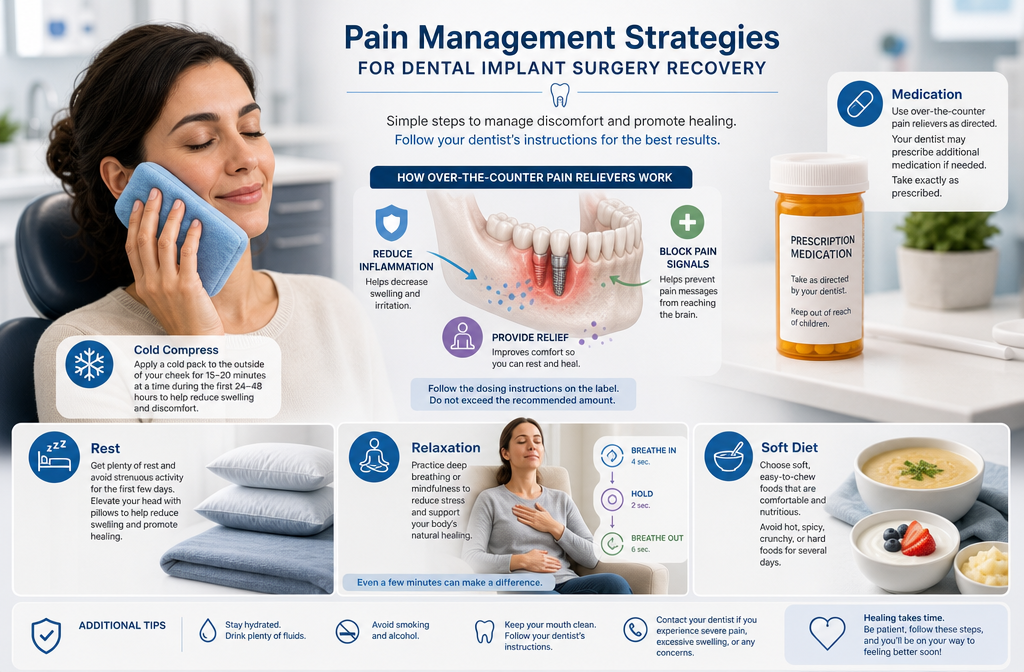
- Cold Compresses: As mentioned, applying ice packs to the outside of your cheek near the surgical site can help minimize swelling and numb the area. Use for 20 minutes on, 20 minutes off, for the first 24-48 hours.
- Rest: Adequate rest allows your body to dedicate its resources to healing. Avoid strenuous activities that could increase blood pressure or dislodge the blood clot.
- Soft Diet: Eating soft foods reduces the need for chewing, which can irritate the surgical site. Opt for smoothies, yogurt, mashed potatoes, scrambled eggs, and soups.
- Elevation: Keep your head elevated, especially while sleeping, to help reduce swelling. Using an extra pillow can be beneficial.
- Warm Salt Water Rinses: After the first 24 hours, gentle rinses with warm salt water (1/2 teaspoon salt in 8 ounces of warm water) can help keep the area clean and promote healing. Avoid vigorous rinsing.
- Avoid Smoking and Alcohol: Both can significantly hinder the healing process and increase the risk of complications. For more information, refer to The Link Between Oral Health and Dental Implant Success in Dallas.
- Stay Hydrated: Drinking plenty of water is essential for overall health and recovery.
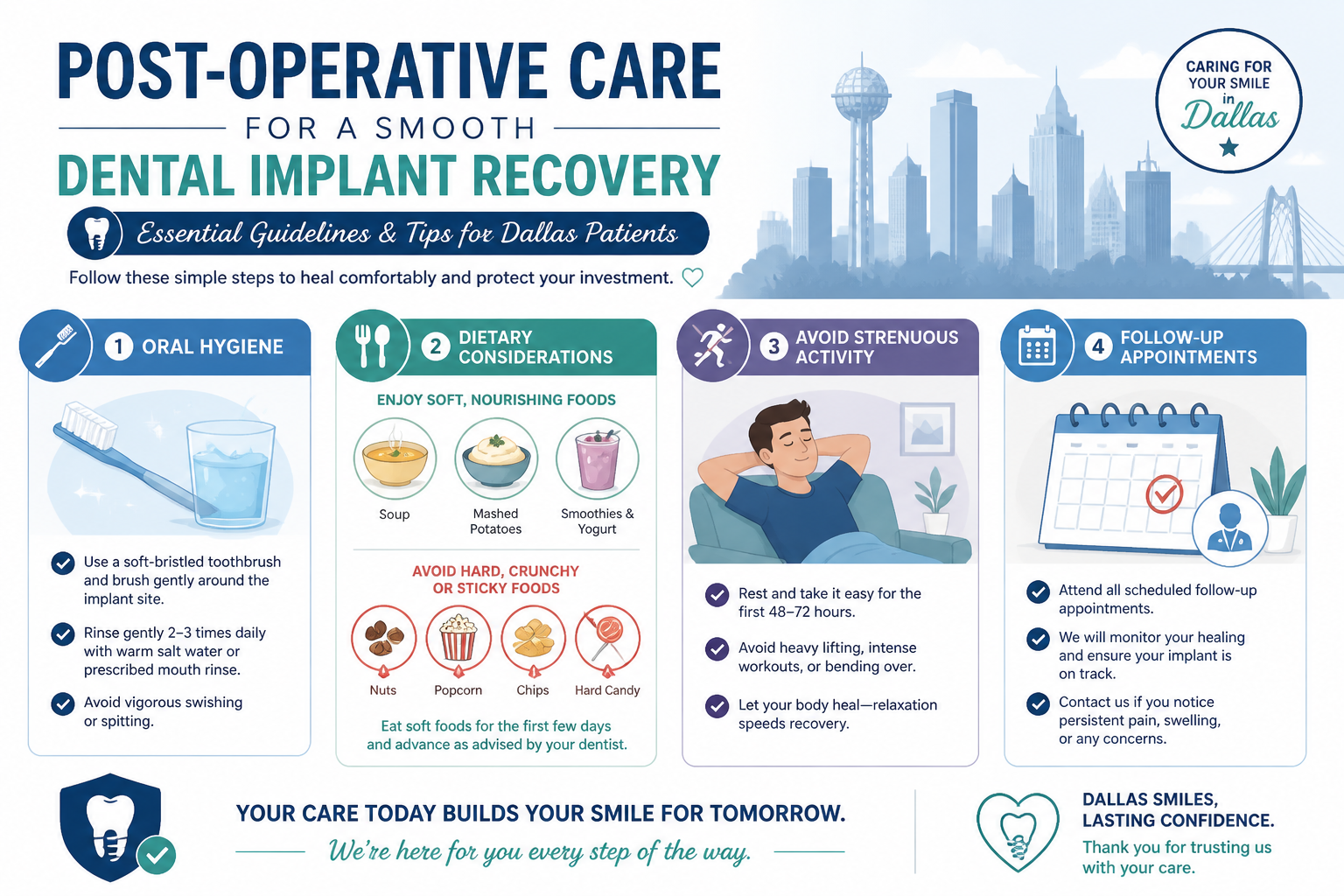
Essential Post-Operative Care for a Smooth Dental Implant Recovery in Dallas
Following your dentist’s specific post-operative instructions is the single most important factor for a successful and comfortable Dental Implant Recovery Timeline & Pain Management Dallas: What to Expect Post-Surgery. Neglecting these guidelines can lead to complications such as infection or implant failure.
Oral Hygiene Guidelines
Maintaining cleanliness around the surgical site without disturbing it is crucial.
- Initial 24 Hours: Avoid rinsing, spitting, or touching the surgical area. This can dislodge the blood clot, leading to dry socket or delayed healing.
- After 24 Hours: Gently rinse your mouth with warm salt water or a prescribed mouthwash 2-3 times a day.
- Brushing: Avoid brushing the surgical site directly for the first few days. Gently brush your other teeth, taking care not to disturb the healing area. Your dentist will advise when it’s safe to use a very soft toothbrush near the implant.
- Flossing: Avoid flossing around the surgical site until your dentist gives you the go-ahead.
Dietary Restrictions and Recommendations
What you eat (and don’t eat) plays a significant role in your recovery.
| Phase | Recommended Foods | Foods to Avoid |
|---|---|---|
| First 24-48 Hrs | Cold liquids and very soft foods: water, juice, milk, smoothies, yogurt, ice cream, soft pureed soups (lukewarm), applesauce, pudding. | Hot liquids and foods, carbonated beverages, alcohol, chewing with the side of the mouth where the surgery was performed. |
| First Week | Continue with soft foods: mashed potatoes, scrambled eggs, well-cooked pasta, soft fish, finely chopped chicken (moist), oatmeal, soft bread (no crust), cottage cheese. Gradually introduce warm foods as tolerated, ensuring they are not too hot. | Crunchy foods (chips, nuts, popcorn), hard bread/crusts, chewy foods (steak, gummy candies), sticky foods, spicy foods, acidic foods (citrus fruits), very hot foods. Avoid using straws as the suction can dislodge the blood clot. |
| Weeks 2-6 | Gradually expand your diet to include softer solid foods, chewing carefully on the opposite side of the mouth. Continue to avoid very hard or chewy items directly on the implant site. | Hard or very chewy foods that could put excessive pressure on the healing implant. Continue to be cautious with foods like raw vegetables, tough meats, and anything that requires significant biting force. |
| Long-Term | Once the final restoration is placed and the implant is fully integrated, you can typically resume a normal diet. However, it is always wise to avoid habitually chewing extremely hard items, which could damage the restoration or surrounding teeth. | While dental implants are very strong, avoiding excessively hard foods (e.g., cracking nuts with your teeth) is generally good practice for the longevity of all your teeth, natural or implanted. Consider options like mini implants vs standard implants in Dallas for specific dietary needs or jawbone conditions. |
Activity Restrictions
To ensure proper healing, it’s important to modify your physical activities temporarily.
- Avoid Strenuous Exercise: For at least the first 48-72 hours, avoid heavy lifting, vigorous exercise, or anything that significantly raises your heart rate or blood pressure. This can increase bleeding and swelling.
- Rest: Prioritize rest. Your body needs energy to heal.
- Bending/Stooping: Avoid excessive bending over or stooping, as this can increase pressure at the surgical site.
When to Contact Your Dentist
While some discomfort and swelling are normal, certain symptoms warrant immediate attention. If you experience any of the following, contact your Dallas dental office promptly:
- Severe, uncontrolled pain that doesn’t respond to medication.
- Excessive bleeding that doesn’t stop after applying pressure with gauze.
- Fever (above 100°F or 38°C).
- Pus or foul-smelling discharge from the surgical site.
- Persistent or increasing swelling after 3-4 days.
- Numbness that persists beyond the expected duration of local anesthesia.
Choosing a dental provider in Dallas who uses advanced techniques like 3D Guided Dental Implant Surgery Dallas can sometimes lead to a smoother recovery due to enhanced precision. When comparing dental implant clinics in Dallas, considering the experience and technology used is as important as the cost.
Conclusion
Navigating the Dental Implant Recovery Timeline & Pain Management Dallas: What to Expect Post-Surgery can seem daunting, but with proper preparation and adherence to your dentist’s instructions, it can be a manageable and comfortable process. Understanding the stages of healing, implementing effective pain management strategies, and committing to diligent post-operative care are essential for the long-term success of your dental implants.
If you are considering dental implants in Dallas for missing teeth, we encourage you to consult with a dentist specializing in this tooth replacement option. They can provide personalized advice, discuss the implant surgery process, and address any concerns you may have about implant cost in Dallas or your individual recovery. Investing in your oral health can restore your smile, improve your quality of life, and contribute to your overall well-being. Make an informed decision for your long-term oral health by seeking professional consultation.