
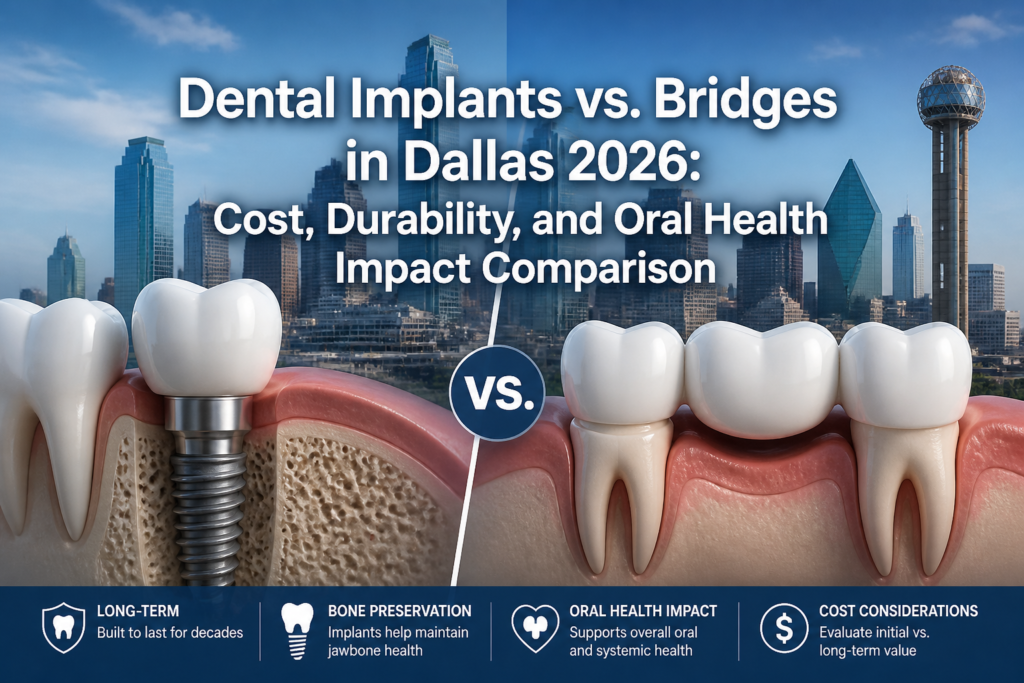
Approximately 178 million Americans are missing at least one tooth, making tooth replacement a common and important decision for long-term oral health (American College of Prosthodontists, 2023). For residents in Dallas considering options for missing teeth in 2026, understanding the differences between dental implants and traditional dental bridges is crucial. This article will provide an in-depth comparison of Dental Implants vs. Bridges in Dallas 2026: Cost, Durability, and Oral Health Impact Comparison, offering clear, factual information to help you make an informed choice. We aim to clarify the nuances of each solution, from initial investment to how they affect your oral well-being over time.
Key Takeaways
- Dental implants replace the tooth root, offering superior stability, bone preservation, and a natural feel.
- Traditional dental bridges involve crowning adjacent teeth to support an artificial tooth, often being a quicker and initially less expensive solution.
- In Dallas for 2026, implant costs typically range higher initially but offer long-term savings due to their durability and minimal impact on surrounding healthy teeth.
- Bridges may have a lower upfront cost but often require replacement sooner and can affect the health of adjacent teeth.
- Making the best decision involves a comprehensive consultation with a dentist to assess individual oral health needs, budget, and long-term goals.
Understanding the Basics: Dental Implants vs. Bridges
When faced with a missing tooth, two primary restorative solutions are widely considered: dental implants and dental bridges. While both aim to restore your smile and chewing function, their approaches, longevity, and impact on oral health differ significantly. Understanding these fundamental differences is the first step toward choosing the right path for your situation in Dallas.
What is a Dental Implant?
A dental implant is a sophisticated tooth replacement solution that mimics the structure of a natural tooth. It consists of three main parts:
- The Implant Post: A small, titanium screw surgically placed into the jawbone, acting as an artificial tooth root. This post integrates with the bone over time through a process called osseointegration, providing a strong, stable foundation.
- The Abutment: A connector piece attached to the implant post.
- The Crown: A custom-made artificial tooth, usually made of porcelain, that is secured to the abutment, perfectly matching your natural teeth.
The dental implant procedure is often a multi-step process that can take several months, allowing for proper healing and bone integration. For more details on the process, you might find our guide on Pain Level & Recovery Timeline After Dental Implant Surgery Dallas helpful.
What is a Dental Bridge?
A traditional dental bridge is a fixed prosthetic device used to replace one or more missing teeth. It typically consists of one or more artificial teeth (pontics) that are held in place by dental crowns cemented onto the natural teeth adjacent to the gap. These adjacent teeth are called abutment teeth.
To place a traditional bridge, the dentist must reshape, or “prepare,” the abutment teeth by removing some of their enamel. This allows the crowns to fit over them properly. This is a key distinction from dental implants, which do not rely on altering neighboring healthy teeth.
Dental Implants vs. Bridges in Dallas 2026: Cost Comparison 💰
When considering tooth replacement options, cost is often a significant factor for residents in Dallas. It’s important to look beyond the initial price tag and consider the long-term investment, as cheaper upfront options may incur higher costs over time due to maintenance or replacement.
Understanding Dental Implant Costs in Dallas 2026
The cost of dental implants in Dallas for 2026 can vary widely based on several factors, including:
- The number of implants needed (a single tooth implant will differ from full mouth dental implants cost Dallas).
- The type of implant (e.g., standard, mini, immediate load).
- The materials used for the crown.
- Additional procedures required, such as bone grafting or sinus lifts, especially if bone density is insufficient (see Dental Implants and Bone Loss).
- The experience and specialization of the dentist or oral surgeon.
- Geographic location within Dallas and the specific clinic.
Generally, a single dental implant in Dallas in 2026, including the implant post, abutment, and crown, can range from $3,000 to $6,000 or more per tooth. This figure does not include potential preliminary procedures. While this appears higher initially, it reflects a complete tooth replacement system designed for longevity. For those needing multiple teeth replaced, options like implant supported bridges Dallas 2026 can offer cost efficiencies over individual implants.
Understanding Dental Bridge Costs in Dallas 2026
The cost of a traditional dental bridge in Dallas for 2026 is generally lower than that of a single dental implant initially. A bridge’s cost depends on:
- The number of pontics (artificial teeth) needed.
- The type of materials used (e.g., porcelain, porcelain-fused-to-metal, zirconia).
- The complexity of the case.
- The location and fees of the dental practice.
For a three-unit bridge (replacing one missing tooth with crowns on two abutment teeth), the cost in Dallas for 2026 might range from $2,000 to $5,000. This covers the bridge itself but also includes the cost of preparing and crowning the two adjacent healthy teeth.
Financial Considerations and Long-Term Value
| Feature | Dental Implants (Dallas 2026) | Traditional Bridges (Dallas 2026) |
|---|---|---|
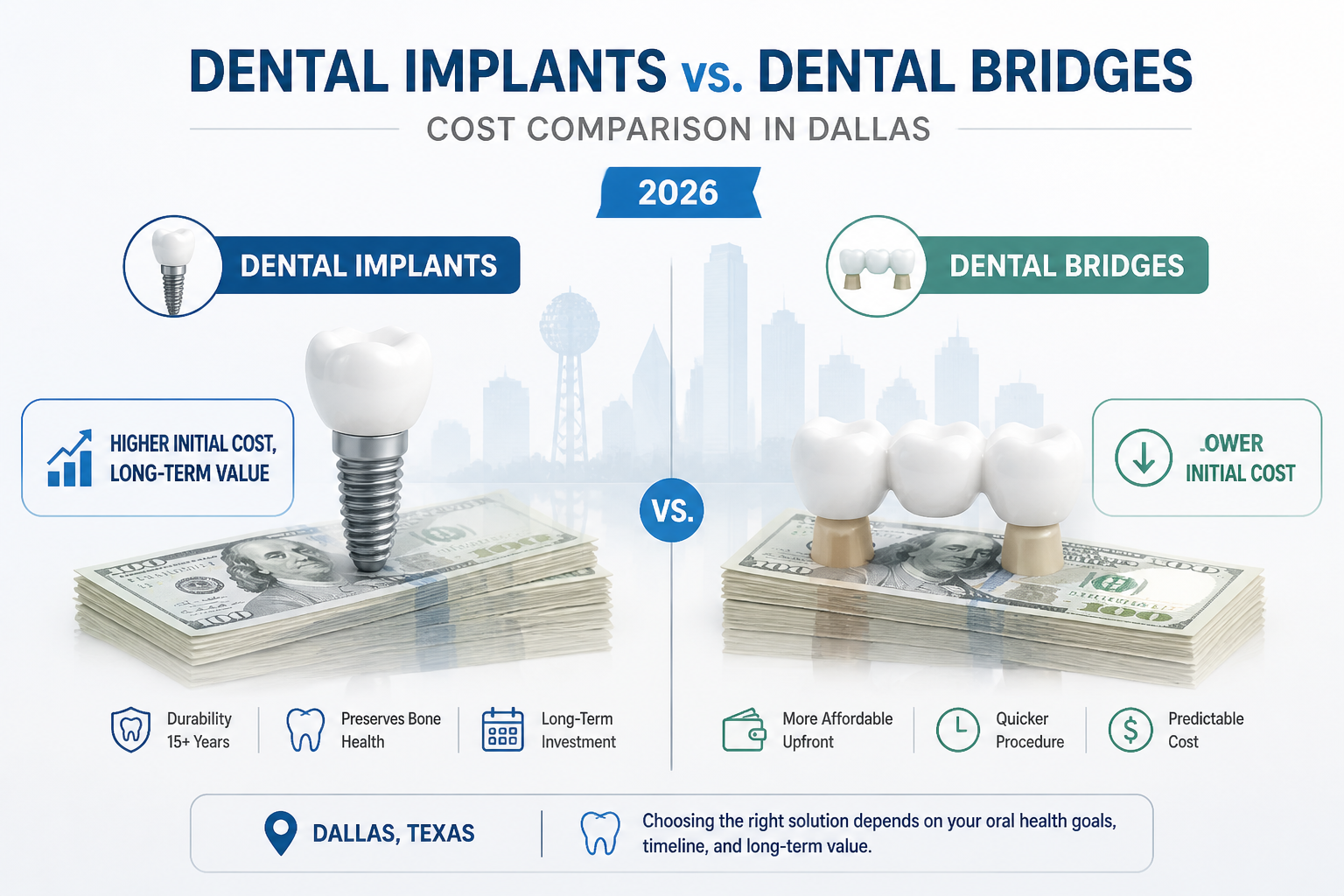
| Initial Cost | Generally higher (e.g., $3,000-$6,000+ per tooth) | Generally lower (e.g., $2,000-$5,000 for a 3-unit bridge) |
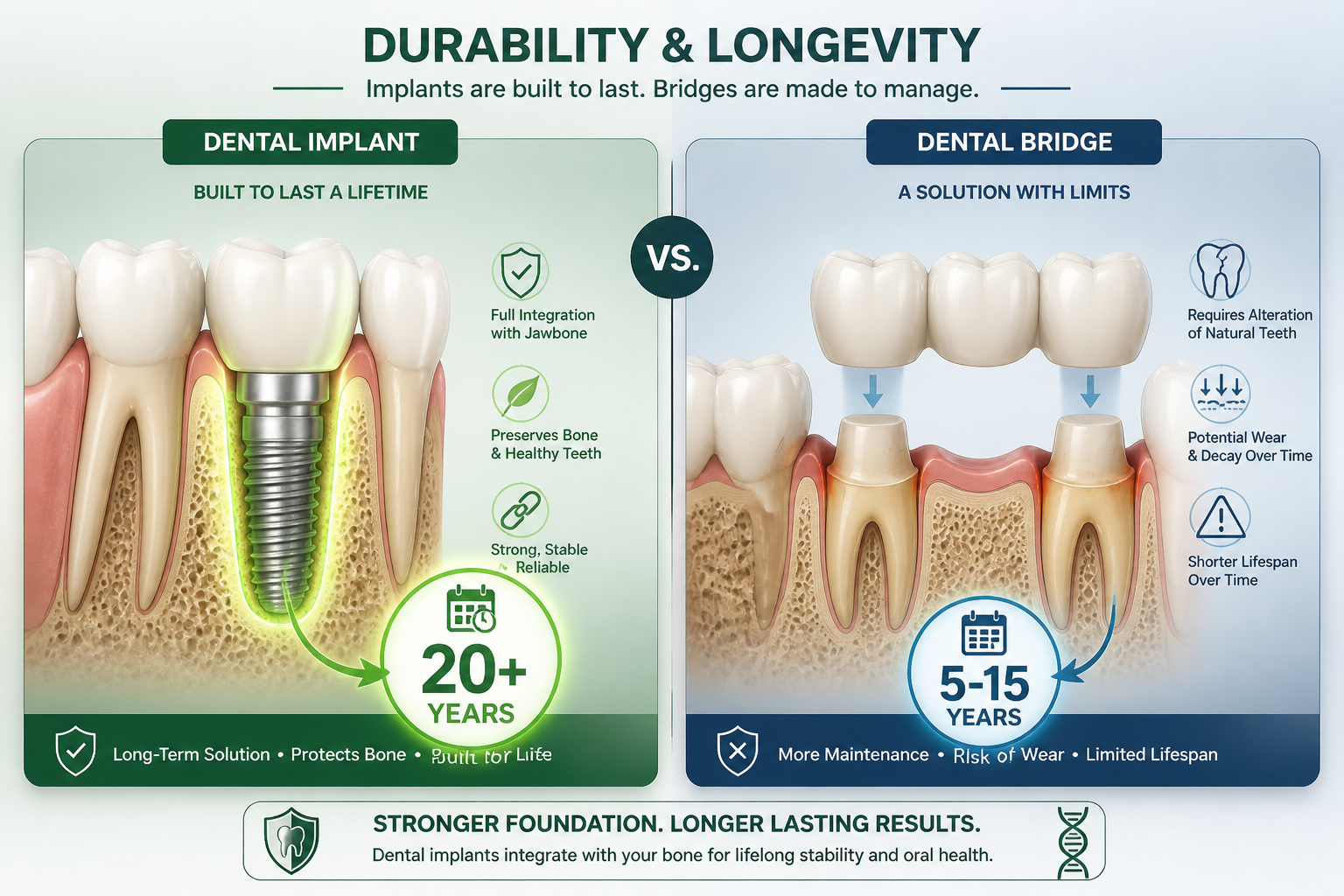
| Longevity | 20+ years, often lifetime with proper care | 5-15 years, requiring eventual replacement |
| Maintenance | Regular brushing, flossing, dental check-ups (like natural teeth) | Regular cleaning, potential for decay under abutments, porcelain chips |
| Impact on Adjacent Teeth | None, preserves healthy tooth structure | Requires reduction (shaping) of healthy adjacent teeth |
| Bone Health | Stimulates jawbone, preventing bone loss | Does not stimulate bone, bone loss can occur under pontic |
| Replacement Costs | Rarely needed if well-maintained | Incurs costs for new bridge, potential for additional dental work on abutment teeth |
It’s clear that while the upfront cost of a dental implant may be higher, its long-term durability and oral health benefits can lead to significant savings over time by avoiding repeated replacements and potential complications associated with bridges. Many Dallas dental practices offer dental implant financing Dallas to help manage the investment.

Dental Implants vs. Bridges in Dallas 2026: Durability and Longevity 🕰️
Beyond the immediate cost, the expected lifespan and durability of your tooth replacement option are critical considerations. Both dental implants and bridges offer functional restoration, but their long-term performance and resilience differ notably.
Durability of Dental Implants
Dental implants are renowned for their exceptional durability and longevity. Made from biocompatible materials like titanium, the implant post fuses directly with the jawbone. This osseointegration process creates an incredibly strong and stable foundation, much like a natural tooth root.
- Long Lifespan: With proper oral hygiene and regular dental check-ups, dental implants can last 20 years, 30 years, or even a lifetime for many patients. The crown attached to the implant may need replacement after 10-15 years, but the implant post itself is designed to be a permanent solution. Our article on The Longevity of Dental Implants in Dallas provides more insights.
- Strength and Stability: Implants are strong enough to withstand the forces of biting and chewing, allowing patients to enjoy a full range of foods without worry.
- Resistance to Decay: The implant crown, being an artificial material, cannot develop cavities, unlike natural teeth. However, the surrounding gums and bone still require diligent care to prevent conditions like peri-implantitis.
Durability of Dental Bridges
Traditional dental bridges are a tried-and-true method of tooth replacement, but their lifespan is generally shorter compared to implants.
- Moderate Lifespan: A typical dental bridge can last anywhere from 5 to 15 years, depending on factors such as oral hygiene, the materials used, and the health of the abutment teeth.
- Potential for Wear: The crowns on the abutment teeth and the pontics themselves can experience wear and tear over time. Porcelain can chip or crack, and the underlying natural teeth can be susceptible to decay, especially at the margins of the crowns.
- Reliance on Abutment Teeth: The longevity of a bridge is heavily dependent on the health and strength of the natural teeth supporting it. If an abutment tooth develops decay, cracks, or structural issues, the entire bridge may be compromised and require replacement. This can lead to additional dental work and costs down the line.
While bridges offer a good solution for immediate tooth replacement, the need for eventual replacement and the potential for issues with supporting teeth are important considerations for long-term planning.
Oral Health Impact: Dental Implants vs. Bridges in Dallas 2026 🦷
The choice between dental implants and bridges goes beyond just aesthetics and cost; it profoundly affects your overall oral health. Each option has a distinct impact on your jawbone, adjacent teeth, and gum health.
Oral Health Impact of Dental Implants
Dental implants are often considered the superior choice for long-term oral health due to their unique benefits:
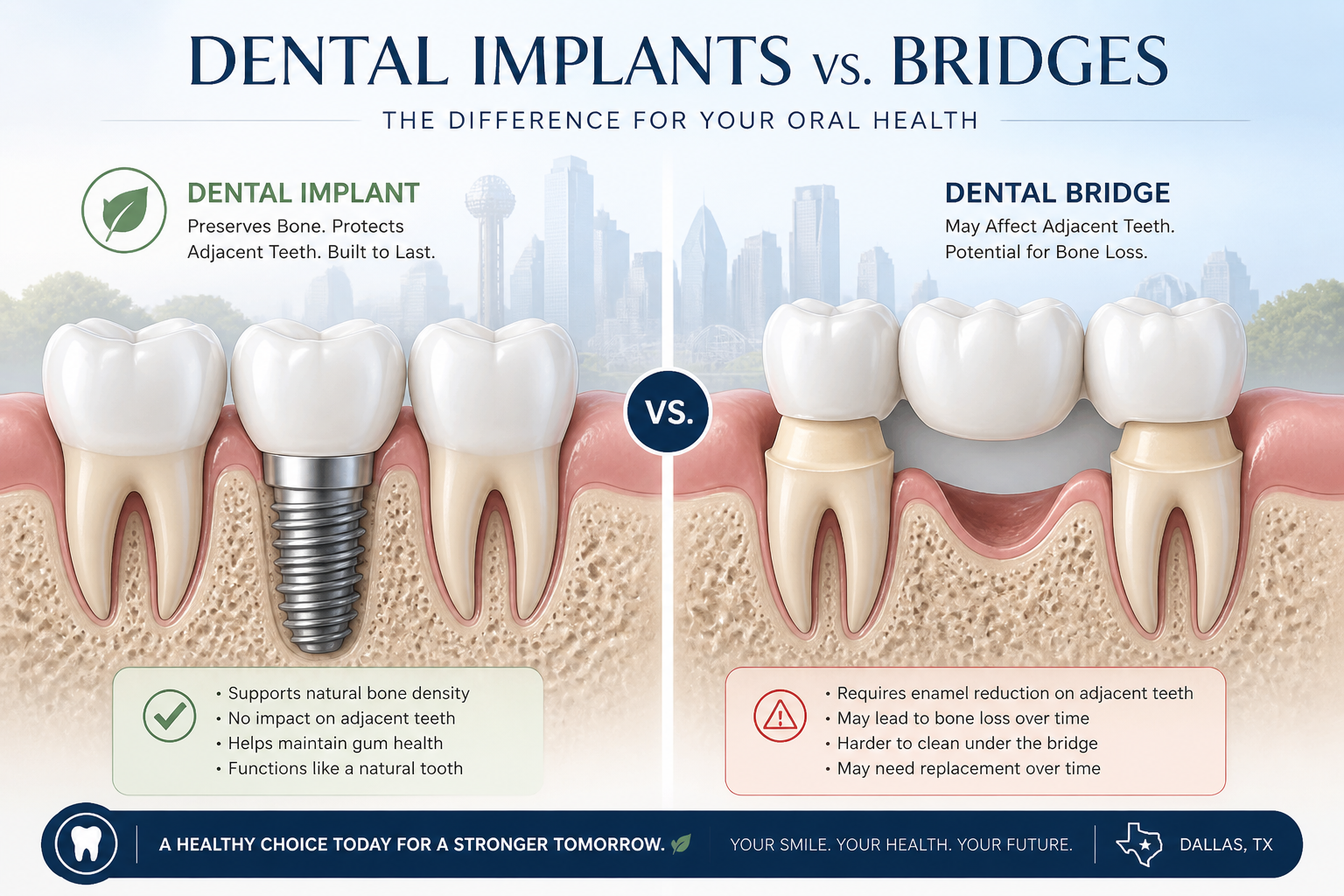
- Bone Preservation: One of the most significant advantages of dental implants is their ability to prevent jawbone loss. When a tooth is lost, the bone beneath it no longer receives stimulation from chewing and can begin to resorb (deteriorate). The implant post, by integrating with the jawbone, provides the necessary stimulation, maintaining bone density and preserving the natural shape of your face. This is a crucial aspect of long-term oral health.
- Protection of Adjacent Teeth: Unlike bridges, dental implants do not require altering healthy neighboring teeth. This means your natural teeth are preserved, reducing their risk of decay or damage often associated with bridge preparation.
- Improved Chewing Function: Because implants are anchored securely in the jawbone, they restore chewing efficiency almost identically to natural teeth, promoting good digestion and nutrition.
- Ease of Cleaning: You can brush and floss around an implant much like you would a natural tooth, making oral hygiene straightforward and reducing the risk of gum disease.
“Dental implants are a game-changer for oral health, offering a permanent solution that preserves bone and protects surrounding natural teeth, something traditional bridges cannot fully achieve.”
Oral Health Impact of Traditional Dental Bridges
While bridges effectively fill a gap, they come with certain oral health considerations:
- Alteration of Healthy Teeth: To support a bridge, the healthy teeth on either side of the gap must be prepared, meaning a significant amount of their enamel is removed to fit crowns. This makes these “abutment” teeth more vulnerable to decay, sensitivity, and the need for future dental work like root canals, even if they were perfectly healthy before.
- No Bone Stimulation: A traditional bridge sits above the gum line and does not interact with the jawbone. Consequently, the bone beneath the missing tooth (where the pontic sits) can still resorb over time, leading to a sunken appearance in the gum line and potentially weakening the jawbone structure.
- Challenges with Oral Hygiene: Cleaning underneath a bridge can be more challenging than cleaning around individual teeth or implants. Special floss threaders or interdental brushes are often required to remove food particles and plaque, making proper hygiene more difficult and increasing the risk of gum disease and decay in the abutment teeth.
- Potential for Stress on Abutment Teeth: The abutment teeth bear the chewing forces of the artificial tooth (or teeth) in the bridge, which can put extra stress on them, potentially shortening their lifespan.
For individuals in Dallas evaluating their tooth replacement options in 2026, understanding these oral health implications is essential. A consultation with a dentist specializing in dental implants in Dallas can provide personalized insights into which option best aligns with your long-term oral health goals.
Making an Informed Decision in Dallas 2026
Choosing between a dental implant and a dental bridge is a personal decision that should be made in consultation with a qualified dental professional. As an expert SEO content strategist and senior editor for Dental Implant Education – Dallas TX, our goal is to empower you with knowledge, not to push a particular treatment.
Factors to Consider
When weighing your options for Dental Implants vs. Bridges in Dallas 2026: Cost, Durability, and Oral Health Impact Comparison, consider these points:
- Overall Oral Health: Are your adjacent teeth healthy and strong enough to support a bridge? Do you have sufficient jawbone density for an implant? Conditions like Dental Implants for Diabetics in Dallas might require special consideration.
- Budget and Financing: While implants often have a higher upfront cost, their long-term value can outweigh the repeated costs of bridges. Explore dental implant financing Dallas options.
- Timeframe: Implants typically involve a longer treatment period, whereas bridges can be completed more quickly.
- Aesthetics: Both options can provide excellent aesthetic results, but implants generally offer a more natural look and feel because they emerge directly from the gums.
- Long-Term Goals: Are you looking for a permanent solution that preserves bone and adjacent teeth, or a more immediate, less invasive option?
- Patient Safety: Discuss all potential risks and benefits with your dentist. Reputable clinics prioritize patient safety and provide comprehensive care.
The Importance of a Consultation with a Dentist
The most critical step in this decision-making process is to schedule a comprehensive consultation with a dentist experienced in both dental implants and bridges. In Dallas, a thorough examination will include:
- A detailed assessment of your oral health, including X-rays and potentially 3D scans.
- Discussion of your medical history.
- An explanation of all viable tooth replacement options for your specific case.
- A clear breakdown of the associated costs, treatment timelines, and expected outcomes.
Asking the right questions during this consultation is key to transparent pricing and treatment plans. Our guide on Navigating Dental Implant Consultations in Dallas can help you prepare.
Conclusion
For Dallas residents considering options for missing teeth in 2026, both dental implants and traditional bridges offer effective solutions. However, their differences in cost structure, long-term durability, and impact on oral health are substantial. Dental implants, while often a greater initial investment, provide a superior long-term solution by preserving jawbone, protecting adjacent healthy teeth, and offering exceptional longevity. Bridges, while more immediate and often less expensive upfront, may require more frequent replacement and can affect the health of surrounding natural teeth.
Ultimately, the best choice for you depends on your individual oral health situation, aesthetic goals, budget, and long-term expectations. We strongly encourage you to seek a professional consultation with a dentist in Dallas. A qualified dental professional can assess your unique needs, explain the intricacies of each tooth replacement option, and help you navigate the process towards achieving a healthy, confident smile.
References
American College of Prosthodontists. (2023). Missing Teeth Statistics. Retrieved from https://www.prosthodontics.org/assets/sitefiles/missing-teeth-statistics.pdf