
The average cost of replacing a single missing tooth with a dental implant in Dallas can range from $3,000 to $5,500, making it a significant investment in oral health. For many Dallas residents relying on Medicaid, understanding whether this state program offers any coverage for dental implants is crucial. This article provides a comprehensive and up-to-date guide to help Dallas patients navigate the complexities of Medicaid eligibility and benefits for dental implants in Texas in 2026.
Key Takeaways
- Limited Adult Coverage: Texas Medicaid generally does not cover routine dental implants for adults, as they are often considered cosmetic or elective.
- “Medically Necessary” Exception: Coverage for adults may be possible only in rare, specific cases where dental implants are deemed “medically necessary” to treat a severe medical condition or injury.
- Children’s Coverage is Broader: Texas Medicaid, through programs like CHIP, offers more extensive dental benefits for children under 21, including medically necessary orthodontics and potentially some tooth replacement if functionally critical.
- Alternative Solutions Exist: For those without Medicaid coverage for implants, options like financing plans, community dental clinics, or dental schools in Dallas may provide more affordable pathways.
- Professional Consultation is Key: The most reliable way to determine potential eligibility and explore all options is through a direct consultation with a dental professional who understands Medicaid policies.
Does Medicaid Cover Dental Implants in Texas for Dallas Adults? Understanding the Realities of 2026 Eligibility
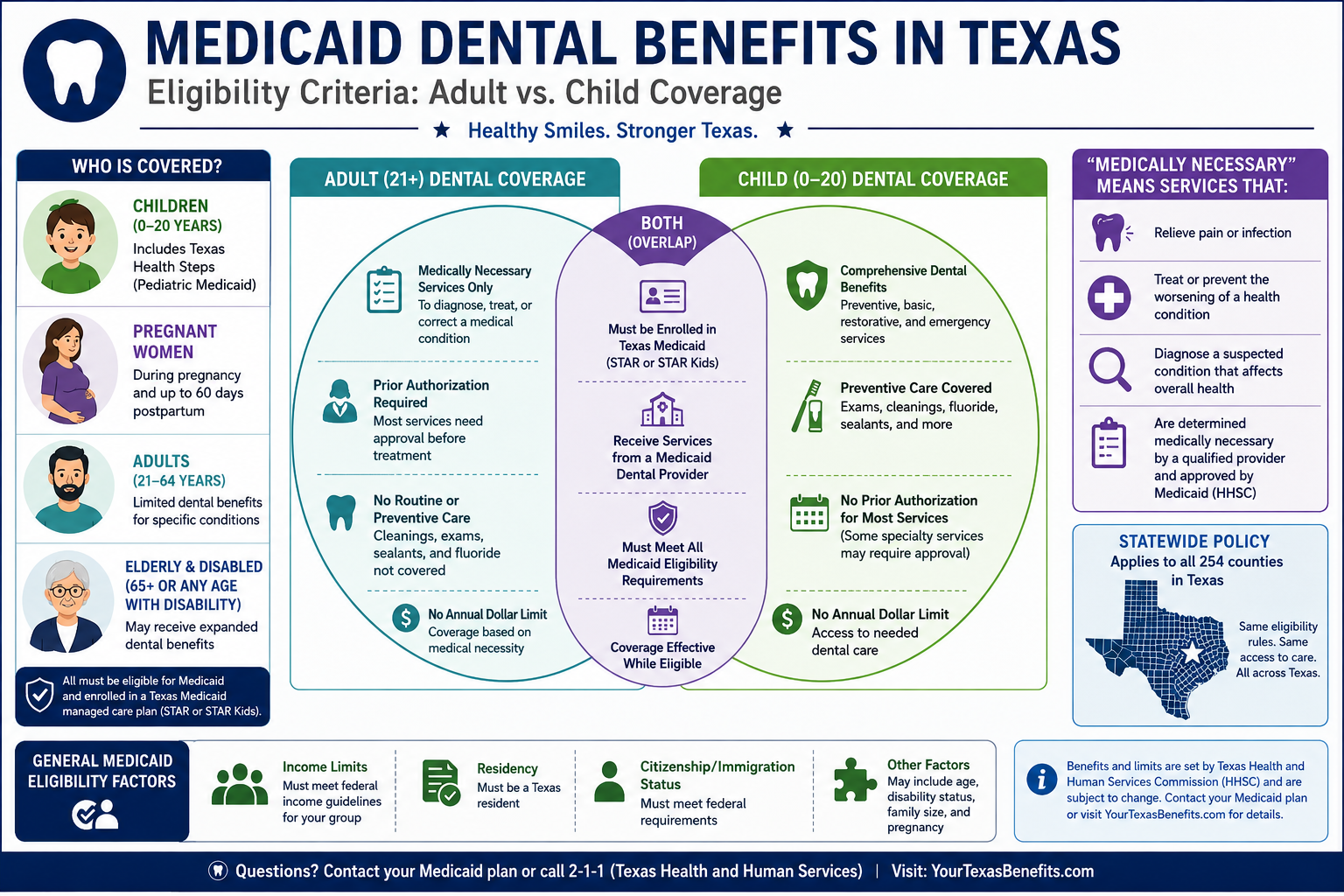
Many patients in Dallas dealing with missing teeth consider dental implants as a preferred solution due to their stability, longevity, and natural feel. However, one of the most common questions is: Does Medicaid cover dental implants in Texas? For adults, the answer is often complex and, in most routine cases, no. Texas Medicaid’s dental benefits for adults are generally limited and do not typically include procedures considered cosmetic or elective, which usually applies to dental implants.
Medicaid programs are primarily designed to provide essential medical care for low-income individuals and families. While dental health is vital, states have considerable flexibility in defining the scope of adult dental benefits. In Texas, adult Medicaid dental coverage focuses on emergency care, pain relief, and maintenance to prevent severe health issues. This usually includes:
- Routine exams and cleanings
- Fillings and simple extractions
- Root canals (limited to specific teeth)
- Basic dentures (removable appliances)
Dental implants, which involve surgical placement of a titanium post into the jawbone to support a crown, bridge, or denture, are categorized differently. They are seen as a reconstructive or restorative procedure that often goes beyond the “medically necessary” threshold defined for routine adult Medicaid benefits.
The “Medically Necessary” Exception
While general coverage for dental implants under Texas Medicaid for adults is rare, there can be very specific exceptions. If a dental implant procedure is deemed “medically necessary” to treat a severe medical condition, address the aftermath of a traumatic injury, or restore essential bodily function directly linked to overall health, it might be considered.
For instance, if a severe oral injury caused by an accident necessitates implants to prevent further medical complications (such as severe malnutrition or systemic infection), a case could potentially be made. However, this determination is highly stringent and requires:
- Thorough documentation: Detailed medical and dental records.
- Justification from a healthcare provider: A dentist or oral surgeon must provide a compelling case demonstrating why the implant is essential for the patient’s overall health and not merely for aesthetic or comfort purposes.
- Prior authorization: Even with strong justification, approval is not guaranteed and requires a comprehensive review process by Medicaid.
It is crucial for Dallas patients to understand that merely wanting to replace missing teeth for improved chewing or aesthetics will almost certainly not meet this strict “medically necessary” criterion. This nuance is why a direct consultation with a qualified dentist in Dallas is essential. They can assess your individual circumstances and help you understand the specific limitations and very slim possibilities of Medicaid coverage.
What About Children (Under 21) on Medicaid?
The dental benefits for children and young adults (under 21) enrolled in Texas Medicaid or the Children’s Health Insurance Program (CHIP) are significantly more comprehensive, adhering to the Early and Periodic Screening, Diagnostic, and Treatment (EPSDT) mandate. This means that medically necessary dental care is covered to ensure children’s proper growth and development.
For children, this broader coverage can include:
- Regular check-ups, cleanings, and fluoride treatments
- Fillings and sealants
- Root canals and extractions
- Orthodontic services (braces) if deemed medically necessary to correct severe functional problems.
- Prosthodontic services (e.g., crowns, bridges, dentures)
In cases where a child loses a tooth due to trauma or a congenital condition, and a dental implant is the most appropriate and medically necessary solution to restore function, speech, or prevent other oral health complications, there may be a possibility for coverage. However, the decision would still be based on strict medical necessity criteria, focusing on functional impairment rather than cosmetic enhancement. Dental implants in Dallas for children are also less common due to the developing jawbone, which might not be mature enough for implant placement until late adolescence or early adulthood.
Comparing Tooth Replacement Options: Why Dental Implants in Dallas Are Often Preferred (But Not by Medicaid)
When considering missing teeth solutions, patients in Dallas have several options, each with its own benefits, costs, and implications for long-term oral health. While Does Medicaid Cover Dental Implants in Texas? A Dallas Patient’s Guide to Eligibility and Benefits highlights the limited coverage, it’s important to understand why dental implants are often the preferred choice when financially feasible.
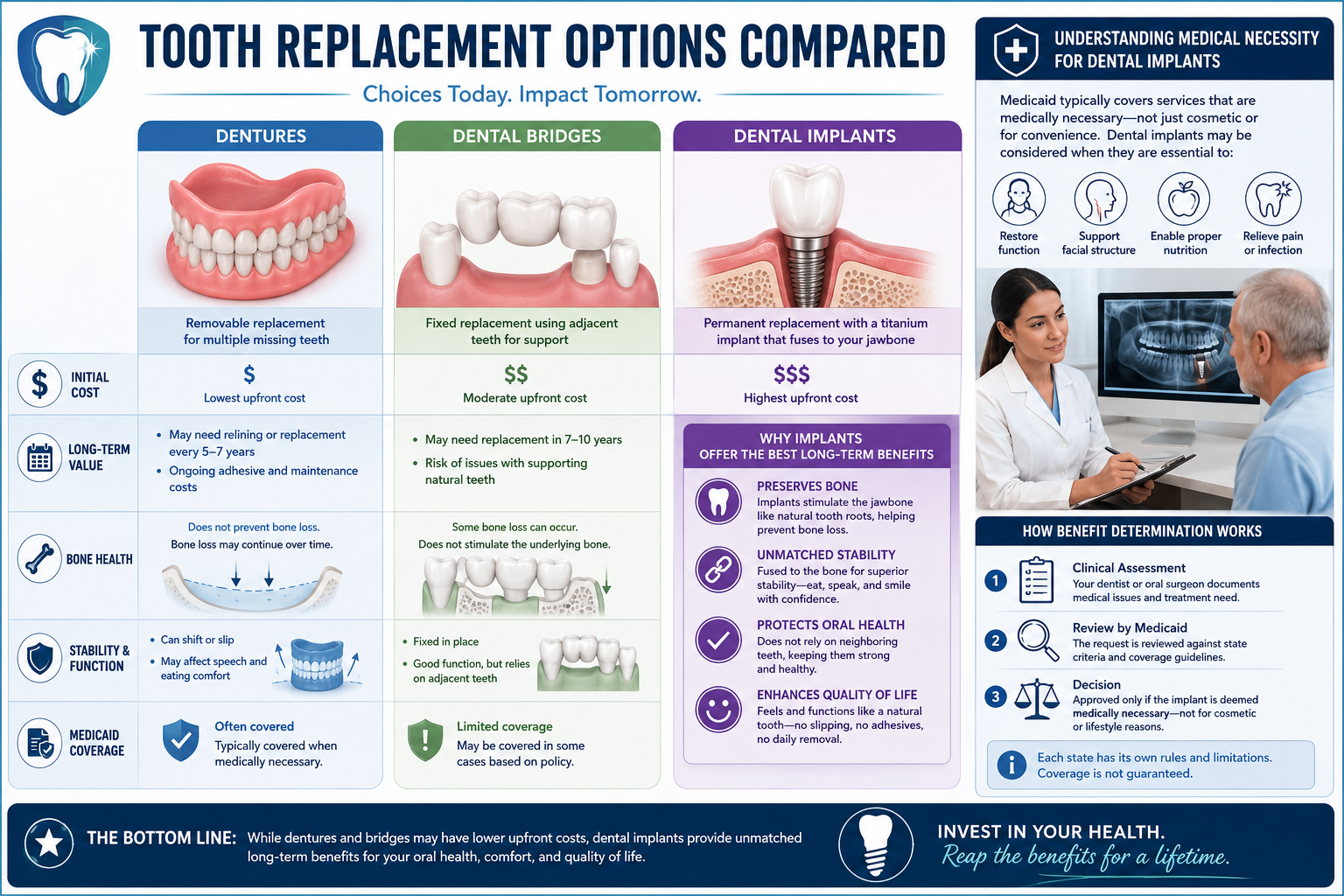
Here’s a comparison of common tooth replacement options:
| Feature | Dental Implants | Dental Bridges | Removable Partial/Full Dentures |
|---|---|---|---|
| Description | Titanium post surgically placed into jawbone, topped with a crown. | False tooth anchored to adjacent natural teeth. | Removable appliance with artificial teeth and gums. |
| Stability | Excellent, acts like a natural tooth root. | Good, but relies on adjacent teeth. | Variable, can slip, requires adhesive. |
| Bone Health | Stimulates jawbone, preventing bone loss. | Does not stimulate bone, bone loss can occur over time. | Does not stimulate bone, bone loss common. |
| Adjacent Teeth | Does not affect adjacent teeth. | Requires grinding down healthy adjacent teeth. | Does not affect adjacent teeth. |
| Durability | Excellent, can last a lifetime with proper care. | Good, typically 5-15 years. | Fair, typically 5-10 years, needs relining. |
| Maintenance | Like natural teeth (brushing, flossing). | Requires special cleaning under the bridge. | Requires daily removal for cleaning. |
| Cost in Dallas | High (e.g., single tooth implant costs in Dallas). | Moderate. | Lower initial cost. |
| Medicaid TX | Very rare, only if medically necessary. | Potentially covered if medically necessary. | Often covered for adults. |
Dental implants stand out because they address not just the visible missing tooth but also the underlying bone health. When a tooth is lost, the jawbone in that area no longer receives stimulation and can begin to resorb, leading to facial changes and affecting adjacent teeth. Implants prevent this bone loss, maintaining the structural integrity of the jaw. For those able to invest in them, they offer a long-term oral health solution. For more on the longevity, see our article on The Real Longevity of Dental Implants in Dallas.
The implant surgery process is precise and involves a healing period, but the outcome provides a strong, durable foundation for a replacement tooth that looks and functions like a natural one. This makes them a superior choice for many, despite the higher initial implant cost in Dallas.
Why Medicaid’s Stance on Dental Implants?
Medicaid’s focus on “medically necessary” care, especially for adults, means that procedures offering extensive functional and aesthetic benefits, like dental implants, are typically outside its scope. The program aims to cover basic healthcare needs within budget constraints. While dental implants are recognized for their superior benefits, they are often seen as exceeding basic functional requirements, especially when less expensive, though perhaps less ideal, alternatives like dentures or bridges exist.
Understanding this distinction is vital for Dallas patients. If you’re exploring tooth replacement options and considering Does Medicaid Cover Dental Implants in Texas? A Dallas Patient’s Guide to Eligibility and Benefits, it’s crucial to acknowledge these limitations and prepare to explore alternative financing if implants are your desired solution. For those interested in comparing the overall cost of various tooth replacement options in Dallas, our Dallas Dental Implant Cost vs National Averages 2026 article provides more detail.
Exploring Alternatives and Financial Assistance for Dallas Patients in 2026

Given the limited Medicaid coverage for dental implants for adults in Texas, Dallas patients often need to explore other avenues to afford this valuable tooth replacement option. While Does Medicaid Cover Dental Implants in Texas? A Dallas Patient’s Guide to Eligibility and Benefits highlights the challenges, numerous resources and strategies can make dental implants more accessible.
Financial Assistance and Payment Plans
Many dental practices in Dallas understand the financial concerns associated with dental implants and offer various payment solutions:
- In-house financing: Some clinics provide their own payment plans, allowing patients to spread the cost over several months or years.
- Third-party financing: Companies like CareCredit or LendingClub specialize in healthcare financing, offering low-interest or interest-free payment plans for qualified applicants. This can significantly ease the immediate financial burden. You can learn more about these options in our Dental Implant Financing in Dallas guide.
- Dental insurance: While many standard dental insurance plans have limitations for implants, some premium plans or PPO options offer partial coverage. It’s essential to check with your provider and compare plans. Our guide on the Best Dental Insurance for Implants in Texas 2026 can help.
- Health Savings Accounts (HSAs) or Flexible Spending Accounts (FSAs): If you have access to these, they allow you to set aside pre-tax money for medical and dental expenses, including dental implants.
Community Resources and Dental Schools
For those seeking more affordable dental implant options, Dallas and the broader North Texas area may offer:
- Community Dental Clinics: Some non-profit or government-subsidized clinics might offer lower-cost services, though complex procedures like implants may still be limited. It’s worth inquiring about their specific offerings and eligibility.
- Dental Schools: Universities with dental programs, such as the Texas A&M College of Dentistry in Dallas, often provide services at a reduced cost. Procedures are performed by students under the close supervision of experienced faculty. This can be an excellent option for high-quality care at a more affordable price, though it might involve longer appointment times.
- Clinical Trials: Occasionally, opportunities arise to participate in clinical trials for new dental technologies or procedures, which may offer reduced or free treatment. These are rare but worth researching.
Consulting with a Dental Professional
The first and most critical step for any Dallas patient is to schedule a consultation with a dentist experienced in dental implants. During this visit, the dentist can:
- Assess your oral health: Determine if you are a suitable candidate for dental implants.
- Discuss all tooth replacement options: Explain the pros and cons of implants, bridges, and dentures tailored to your situation.
- Provide a detailed cost estimate: Outline the full implant cost in Dallas, including all associated procedures.
- Help navigate financing: Many dental offices have financial coordinators who can explain payment plans and assist with applications.
- Explore Medicaid “Medically Necessary” potential: While unlikely for most adults, a dentist can help assess if your specific medical condition might warrant a special case application.
Choosing a dentist who prioritizes patient safety and long-term oral health is key. Don’t hesitate to ask about their experience, the dental implant brands they use (e.g., Dental Implant Brands Compared Dallas 2026: Straumann vs Nobel Biocare), and their success rates.
By thoroughly researching options and consulting with a trusted dental professional, Dallas patients can make informed decisions about their oral health and find the best pathway to restoring their smile, even when navigating the limitations of Medicaid coverage for dental implants in Texas.
Conclusion
Understanding Does Medicaid Cover Dental Implants in Texas? A Dallas Patient’s Guide to Eligibility and Benefits reveals a complex landscape. For adult patients in Dallas, routine dental implants are generally not covered by Texas Medicaid unless they are deemed medically necessary for a severe health condition or injury, a very high bar to meet. Children under 21, however, typically have access to more comprehensive dental benefits, potentially including implants if functionally critical.
Despite these limitations, dental implants remain an excellent, long-term solution for missing teeth, offering superior stability, bone health preservation, and natural aesthetics compared to traditional bridges or dentures. For Dallas patients seeking this gold standard of tooth replacement, exploring alternative financing options such as in-house payment plans, third-party medical credit, or even community dental programs and dental schools is often necessary.
The most crucial step is to engage in a comprehensive consultation with a qualified Dallas dentist. This professional guidance will provide a clear understanding of your specific needs, treatment options, and the financial pathways available to achieve your long-term oral health goals.
References
- Texas Health and Human Services. (n.d.). Dental Services. Retrieved from https://www.hhs.texas.gov/services/health/medicaid-chip/medicaid-chip-members/dental-services
- Texas A&M College of Dentistry. (n.d.). Patient Care. Retrieved from https://www.tamhsc.edu/dentistry/patient-care/
- American Academy of Implant Dentistry. (n.d.). What Are Dental Implants?. Retrieved from https://www.aaid.com/dental_implant_information/What_Are_Dental_Implants.html