
Despite the high success rates and long-term benefits of modern dental implants, complications can arise, sometimes leading to an emergency situation. For individuals in Dallas who have undergone or are considering the dental implant procedure, understanding these potential emergencies is crucial. Recognizing the signs of trouble and knowing when to seek immediate professional help can significantly impact the outcome, ensuring patient safety and the longevity of your long-term oral health. This article serves as a comprehensive guide for navigating Emergency Dental Implant Situations in Dallas: What to Do and When to Seek Help.
Key Takeaways
- Recognize the Signs: Be aware of symptoms like severe pain, persistent swelling, fever, pus, or a loose implant, as these often indicate a dental implant emergency.
- Act Immediately: Do not delay seeking professional dental attention if you suspect an emergency. Prompt action can prevent further complications and improve treatment success.
- Contact Your Dentist First: Your implant dentist in Dallas is the primary resource for emergency care, as they possess your dental history and specific implant details.
- Understand Treatment Options: Emergency care might range from antibiotics to surgical intervention, depending on the cause and severity of the issue.
- Prevention is Key: Adhering to post-operative care instructions and maintaining excellent oral hygiene are vital for preventing many emergency situations.
Recognizing Emergency Dental Implant Situations in Dallas: What to Look For
Dental implants are a robust and effective tooth replacement option, designed to integrate with your jawbone. However, like any surgical procedure, there is a small risk of complications. Being able to identify the signs of an emergency is the first step toward effective management.
Common Signs of a Dental Implant Emergency
It’s important to distinguish between typical post-operative discomfort and a genuine emergency. While some swelling and mild pain are normal after implant surgery, certain symptoms warrant immediate attention.
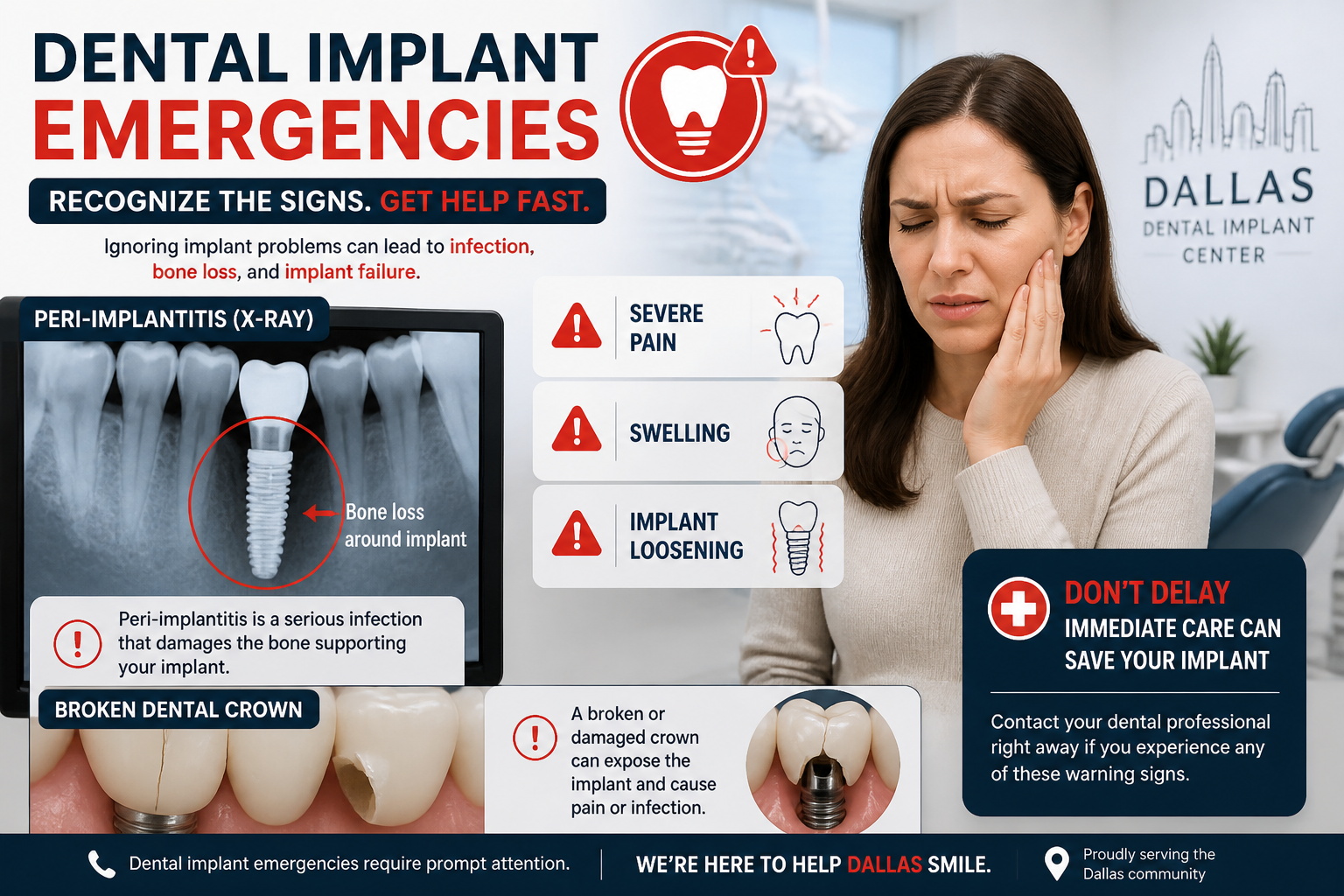
- Severe or Worsening Pain: If your pain is intense, throbbing, or getting worse several days after your dental implant procedure, rather than improving, it could indicate an infection or other complication.
- Persistent Swelling and Bruising: While some initial swelling is normal, swelling that is excessive, spreads, or doesn’t subside after 2-3 days, especially if accompanied by fever, is a red flag.
- Pus or Discharge: The presence of pus around the implant site is a clear sign of infection (peri-implantitis) and requires urgent professional evaluation.
- Fever or Chills: These are systemic signs of infection and should never be ignored after any surgical procedure, including dental implant surgery.
- Bleeding that Doesn’t Stop: Minor oozing is normal, but heavy or continuous bleeding that saturates gauze pads quickly after the initial 24 hours suggests a problem.
- Loose or Wobbly Implant: A dental implant should be firmly anchored. If you feel any movement in the implant itself or the crown attached to it, seek immediate help. This could indicate failed osseointegration or a loose abutment/crown.
- Numbness or Tingling: Prolonged numbness or tingling in the lips, chin, or tongue, especially if it persists beyond the effects of anesthesia, could indicate nerve damage.
- Difficulty Swallowing or Breathing: While rare, these are critical signs of a severe infection or allergic reaction and necessitate immediate emergency medical attention, often beyond a dental office.
These symptoms indicate that something is not right and requires the expertise of a dental professional. Understanding the difference can make a significant impact on your recovery and the success of your implant.
)
Immediate Steps to Take When Facing Emergency Dental Implant Situations in Dallas
When an emergency arises, knowing the proper steps to take can alleviate discomfort and prevent further damage. Your immediate actions are crucial before you can reach a professional.
What to Do
- Stay Calm: Panicking can make the situation worse. Take a deep breath and assess your symptoms.
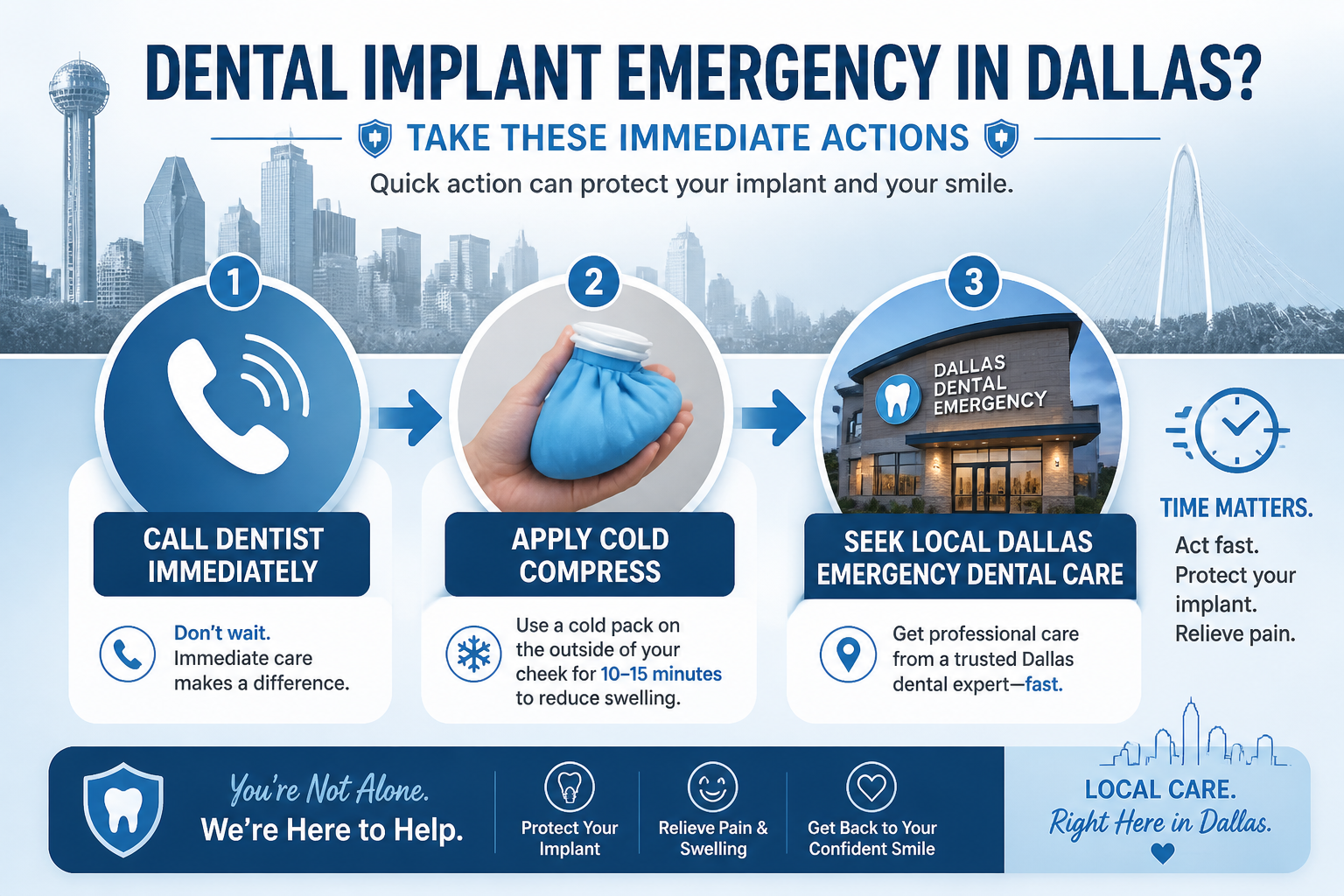
- Contact Your Dentist Immediately: Your implant dentist in Dallas is your first point of contact. They are familiar with your specific dental implant procedure and medical history. Call their office and explain your symptoms clearly. Many dental practices have an emergency line or protocol for after-hours care.
- Describe Your Symptoms: Be as specific as possible about your pain, swelling, and any other symptoms you are experiencing. This helps the dental team understand the urgency and prepare for your visit.
- Follow Instructions: Your dentist or their staff may provide specific instructions over the phone, such as applying a cold compress, taking over-the-counter pain relievers, or avoiding certain foods.
- Manage Pain (Temporarily):
- Cold Compress: For swelling, apply a cold compress to the outside of your cheek near the affected area for 20 minutes on, 20 minutes off.
- Over-the-Counter Pain Relievers: Medications like ibuprofen or acetaminophen can help manage pain temporarily, but do not exceed recommended dosages.
- Saltwater Rinse: A warm saltwater rinse (1/2 teaspoon of salt in 8 ounces of warm water) can help reduce inflammation and keep the area clean, especially if there’s bleeding or discharge. Swish gently and spit.
When to Seek Emergency Dental Care in Dallas
While your primary dentist should always be your first call, sometimes an immediate visit to an emergency dental clinic or even a hospital emergency room (ER) might be necessary.
- Your Dentist is Unavailable: If you cannot reach your regular dentist or they are unable to see you quickly for severe symptoms, seek an emergency dental clinic in Dallas.
- Severe and Uncontrolled Bleeding: If bleeding is heavy and doesn’t stop after applying pressure with gauze for 15-20 minutes, it’s a critical emergency.
- Difficulty Breathing or Swallowing: These symptoms, though rare, indicate a potentially life-threatening infection or allergic reaction and require immediate medical attention at an ER.
- Rapidly Spreading Swelling: Swelling that is increasing quickly, especially if it affects your eye or neck, needs urgent evaluation.
Remember, prompt action is key. Delaying care can lead to more complex problems, higher dental implant cost in Dallas for treatment, and potentially compromise the success of your implant. To learn more about navigating different clinics, you might find our article on comparing dental implant clinics in Dallas helpful.
)
Understanding Emergency Treatment for Dental Implants in Dallas
Once you reach a dental professional, they will assess your situation and determine the appropriate course of action. Treatment for emergency dental implant situations varies widely based on the underlying cause.
Diagnosis and Treatment Options
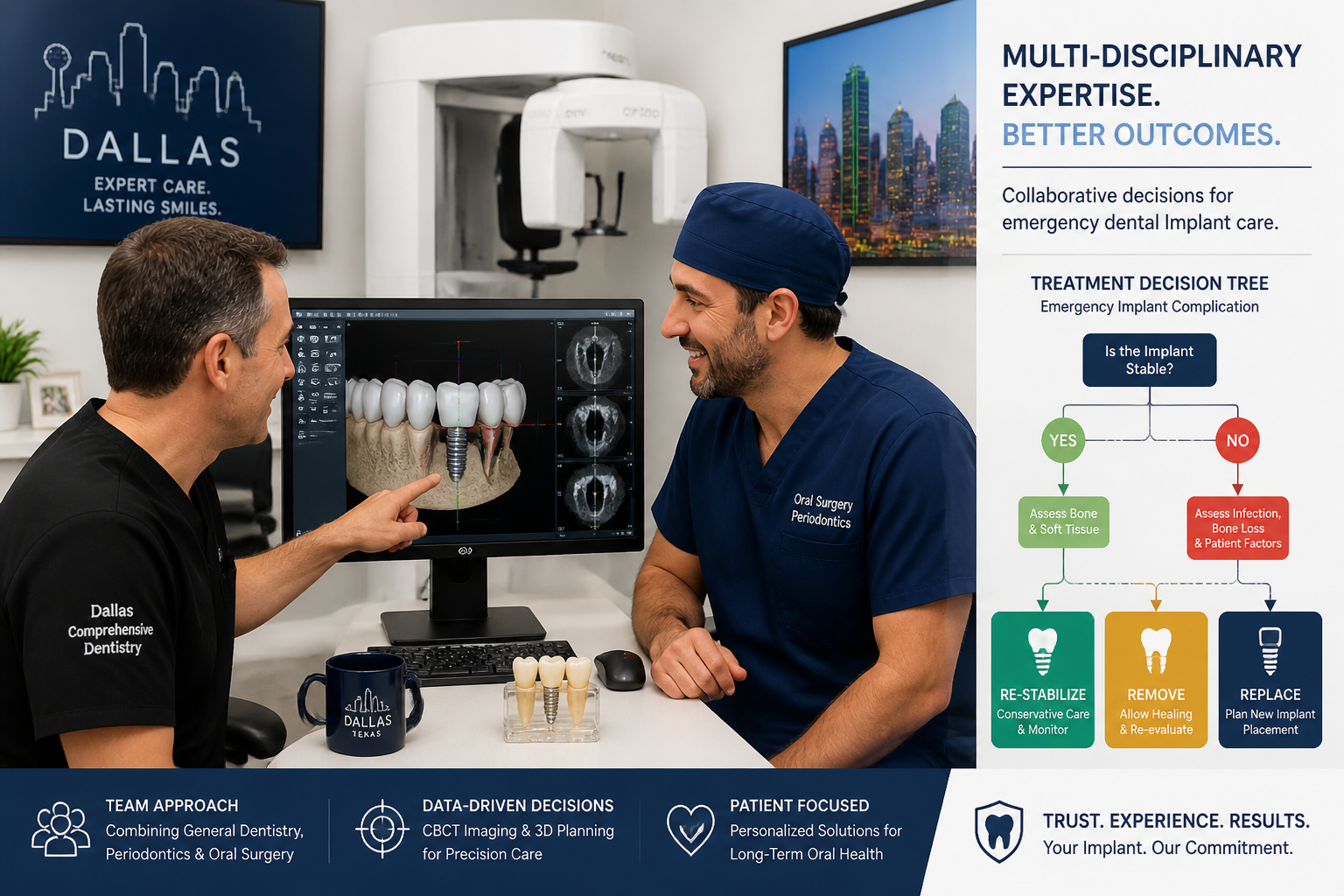
- Comprehensive Examination: The dentist will perform a thorough examination, which often includes X-rays (like a 3D CBCT scan) to visualize the implant, surrounding bone, and soft tissues. This helps identify issues like infection, bone loss, or implant fracture. Understanding the role of 3D guided dental implant surgery Dallas can illustrate how advanced diagnostics improve outcomes.
- Infection Management (Peri-implantitis):
- Antibiotics: For mild to moderate infections, oral antibiotics may be prescribed to clear the bacterial infection.
- Debridement and Cleaning: The area around the implant will be thoroughly cleaned to remove bacteria and plaque.
- Surgical Intervention: In more severe cases of peri-implantitis, a surgical procedure may be necessary to remove infected tissue, clean the implant surface, and potentially graft bone to support the implant if bone loss has occurred.
- Addressing a Loose Implant:
- Loose Abutment/Crown: If only the abutment (connector) or the crown is loose, the dentist can often tighten or recement it.
- Failed Osseointegration: If the implant itself is loose, it means it has not properly fused with the bone or has lost integration. In such cases, the implant may need to be removed. After the site heals, and if sufficient bone is present, a new implant can often be placed. This highlights the importance of patient safety and proper healing.
- Nerve Damage: If nerve damage is suspected, the dentist will work to diagnose the extent of the injury and may refer you to a specialist (like an oral surgeon) for further evaluation and management.
- Pain and Swelling Control: Prescribed pain medication and anti-inflammatory drugs will be given to manage discomfort during recovery.
The Importance of Professional Consultation
When facing an emergency, it’s essential to seek consultation with a dentist who has experience in dental implant care. Specialists like oral surgeons and periodontists are particularly well-equipped to handle complex implant complications. They can provide an accurate diagnosis and develop a tailored treatment plan.
Regular dental check-ups and maintaining excellent oral hygiene are crucial for preventing many of these emergency situations. Factors like gum disease, smoking, and certain medical conditions can increase the risk of implant complications. Our article on the link between oral health and dental implant success in Dallas offers more insights into preventative measures.
Always discuss any concerns about your dental implant procedure or your long-term oral health with your dental professional. They are your best resource for guidance and care.
)
Conclusion
Understanding Emergency Dental Implant Situations in Dallas: What to Do and When to Seek Help is a vital part of responsible dental implant ownership. While dental implants offer an excellent, long-lasting solution for missing teeth, knowing how to react to unexpected complications can make a significant difference in preserving your oral health and investment.
If you experience severe pain, persistent swelling, signs of infection, or a loose implant, remember to stay calm and contact your dental professional immediately. Prompt action and expert care from a qualified implant dentist in Dallas are your best defense against serious complications. Prioritizing your oral health education and regular follow-ups will help ensure the enduring success of your dental implants. For further information on financial planning, you might also consider reviewing dental implant monthly payment plans Dallas to ensure you are prepared for unexpected costs.
SEO Meta Title: Dallas Emergency Dental Implant: What to Do Now SEO Meta Description: Faced with a dental implant emergency in Dallas? Learn to recognize urgent signs (pain, infection, loosening) & what steps to take for immediate help.