When considering tooth replacement options, dental implants are often highlighted for their durability and natural feel. However, navigating the financial aspect, especially understanding dental implant insurance coverage in Dallas: Beyond the Basics for 2026, can feel like a complex puzzle. Many Dallas residents find themselves asking, “Does my dental insurance cover implants?” The answer is rarely a simple ‘yes’ or ‘no.’ It involves delving into the specifics of your policy, understanding common limitations, and knowing how to advocate for yourself. This comprehensive guide aims to demystify dental implant insurance in Dallas, offering clear, factual insights to help you make informed decisions about your oral health.
Key Takeaways
- Dental implant insurance coverage varies significantly, with many plans offering partial rather than full coverage.
- Understanding terms like waiting periods, annual maximums, and pre-authorization is crucial for maximizing benefits.
- PPO plans generally offer more flexibility and potentially better implant coverage than HMO plans in Dallas.
- Exploring alternatives like dental discount plans, financing, and Health Savings Accounts (HSAs) can significantly reduce out-of-pocket costs.
- A thorough consultation with a Dallas dentist is essential to clarify treatment costs and explore all available financial avenues.
Demystifying Dental Implant Insurance Coverage in Dallas: The Policy Landscape in 2026
Dental implants represent a significant investment in long-term oral health, providing a stable and aesthetic solution for missing teeth. In 2026, the landscape of dental insurance coverage for implants remains nuanced. Unlike routine cleanings or fillings, implants are often considered a “major procedure,” which typically means different coverage rules apply.
One of the first things to understand is that many traditional dental insurance plans were not initially designed with advanced procedures like dental implants in mind. Historically, dentures and bridges were the primary tooth replacement options, and insurance policies reflected this. While more plans are now incorporating some level of implant coverage, it’s rare to find a policy that covers 100% of the cost.

Common Insurance Terminology Explained
To effectively understand your policy, it’s helpful to be familiar with key terms:
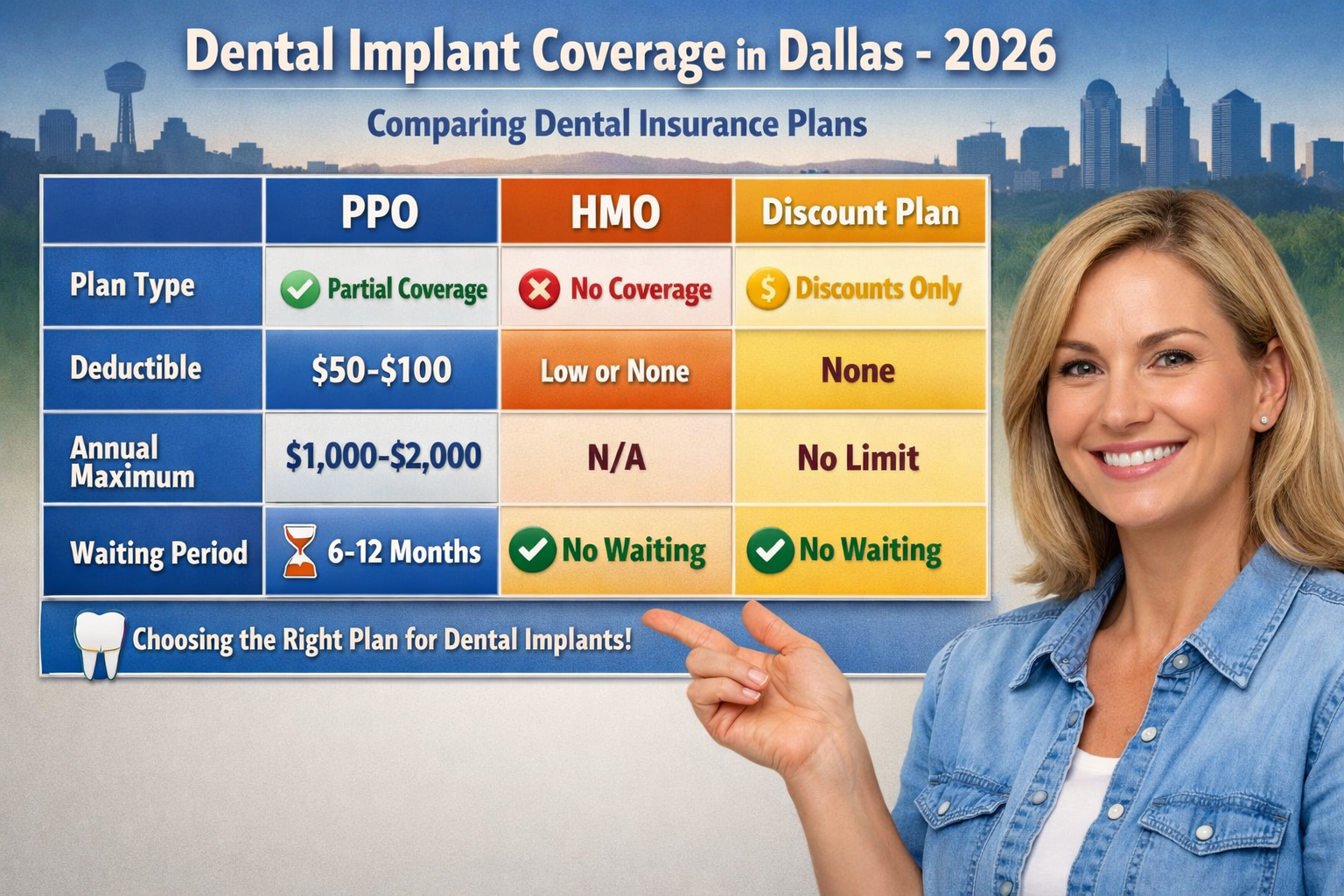
- Annual Maximum: This is the highest dollar amount your dental insurance plan will pay out for your dental care within a plan year. For major procedures like dental implants, this maximum can be a significant limiting factor. Many plans in Dallas have annual maximums ranging from $1,000 to $2,500, which may only cover a portion of the total implant cost.
- Deductible: This is the amount you must pay out-of-pocket before your insurance company begins to pay for covered services. Deductibles for dental plans are often much lower than medical deductibles, perhaps $50-$100 per person.
- Coinsurance: After you’ve met your deductible, coinsurance is the percentage of the cost of a service that you are responsible for. For example, if your plan covers major procedures at 50%, you pay 50% of the cost, and the insurance pays the other 50%.
- Waiting Period: Many dental insurance plans impose a waiting period, especially for major procedures like dental implants. This means you must be enrolled in the plan for a certain period (e.g., 6 months to 1 year) before you can receive coverage for these services. This is a critical factor for anyone needing immediate implant treatment.
- Pre-authorization (Predetermination of Benefits): This is a formal request to your insurance company, submitted by your dentist, to determine what procedures will be covered and at what percentage before the treatment begins. It provides a clear estimate of your out-of-pocket expenses and is highly recommended for dental implant procedures.
Understanding these terms is the first step in unlocking your benefits for dental implants in Dallas.
What is Typically Covered (and What Isn’t)
Most insurance plans that offer implant coverage will cover a percentage of the actual implant placement, the abutment, and the crown. However, ancillary procedures often required for successful implant surgery might not be fully covered, or covered under different categories:
- Diagnostic Procedures: X-rays, 3D imaging, and initial consultations are usually covered at a higher percentage (e.g., 80-100%) as preventative or diagnostic care.
- Extractions: If a tooth needs to be extracted before implant placement, this is often covered as a basic procedure.
- Bone Grafting: This is a common requirement if there isn’t sufficient bone density to support the implant. Coverage for bone grafting can be inconsistent. Some plans may cover it if it’s deemed medically necessary for a covered procedure, while others may not.
- Sinus Lifts: Similar to bone grafting, coverage for sinus lifts can vary.
- Anesthesia/Sedation: While basic local anesthesia is typically part of the procedure cost, sedation options for patient comfort may be covered differently or not at all. Our guide on Painless Dental Implant Techniques Dallas TX: Sedation Optio can provide more details.
It is vital to have a detailed discussion with your Dallas dentist’s office about all potential costs, including these “hidden” costs, and how they relate to your specific insurance plan. For more on this, consider reading “The ‘Hidden’ Costs of Dental Implants in Dallas: What to Expect”.
Navigating Plan Types and Maximizing Your Dental Implant Benefits in 2026
Choosing the right dental insurance plan in Dallas can significantly impact your out-of-pocket costs for dental implants. In 2026, the two most common types of dental insurance plans are PPO (Preferred Provider Organization) and HMO (Health Maintenance Organization), each with distinct advantages and limitations regarding implant coverage.
PPO vs. HMO for Dental Implants
- PPO Plans: These plans offer more flexibility. You can typically choose any dentist, whether they are in-network or out-of-network, though you’ll generally pay less for in-network providers. PPO plans are often more likely to offer some coverage for dental implants, usually covering a percentage (e.g., 50%) of major procedures after your deductible is met and subject to your annual maximum. This flexibility can be beneficial if you have a specific Dallas dentist in mind for your implant procedure. For a deeper dive into these options, see “Best Dental Insurance for Implants in Texas 2026: PPO vs HMO”.
- HMO Plans: HMO dental plans typically require you to choose a primary dentist within their network. All your care, including referrals to specialists, must go through this network. While HMOs usually have lower premiums and no deductibles, their coverage for major procedures like dental implants can be very limited or non-existent. If they do cover implants, it might be through a deeply discounted rate rather than a traditional insurance payout, and you’ll be restricted to specific in-network providers for the procedure.
For Dallas residents exploring Medicare Advantage Plans Dallas 2026: Do Any Cover Dental Implants, it’s important to note that while some plans offer dental benefits, comprehensive implant coverage is still an exception rather than the norm.
Strategies to Maximize Your Benefits
Even with coverage limitations, there are strategies to help reduce your out-of-pocket costs for dental implants:
- Utilize Your Annual Maximum Strategically: If your implant treatment involves multiple stages (e.g., extraction, bone graft, implant placement, crown), your dentist may be able to phase the treatment across two calendar years. This allows you to potentially use two annual maximums, effectively doubling your insurance benefit for a single treatment plan.
- Request a Pre-authorization: Always ask your dentist to submit a pre-authorization (predetermination of benefits) to your insurance company. This provides a written estimate of what your plan will cover, preventing financial surprises.
- Explore Medical Insurance Coverage: In some specific cases, if tooth loss is due to an accident or a medical condition (e.g., tumor removal), certain components of the dental implant procedure might be covered by your medical insurance. This is rare but worth investigating with your dentist and medical insurer.
- Review Coordination of Benefits (COB): If you have coverage under more than one dental insurance plan (e.g., through two employers), Coordination of Benefits rules determine how the plans work together to pay claims, potentially increasing your overall coverage.
- Understand Your Plan’s Limitations: Be aware of exclusions, limitations, and frequency restrictions. For instance, some plans may only cover implants once every X years per tooth.
Alternative Financing Options
Even with insurance, a significant portion of the implant cost may fall to the patient. Fortunately, several alternatives can help make dental implants in Dallas more affordable:
- Dental Discount Plans: These are not insurance but membership plans where you pay an annual fee and receive discounted rates on dental procedures from participating dentists. These often include significant discounts on dental implants.
- Payment Plans: Many Dallas dental clinics offer in-house payment plans or work with third-party financing companies (e.g., CareCredit). These allow you to pay for your treatment in monthly installments. Learn more about flexible options with Dental Implant Monthly Payment Plans Dallas: Navigating Affordable.
- Health Savings Accounts (HSAs) and Flexible Spending Accounts (FSAs): If you have an HSA or FSA, you can use these tax-advantaged accounts to pay for qualified dental expenses, including dental implants, with pre-tax dollars.
- Personal Loans: Banks or credit unions may offer personal loans for larger expenses, though interest rates can vary.
Comparing these options during your consultation with a dentist can provide clarity on the total implant cost in Dallas and how to manage it.
Your Consultation: The Key to Understanding Dental Implant Insurance Coverage in Dallas for 2026
The journey to receiving dental implants should always begin with a comprehensive consultation with a qualified Dallas dentist. This initial meeting is not just about examining your oral health; it’s a crucial step in understanding the entire treatment plan, including all associated costs and how your insurance will apply.

What to Discuss During Your Consultation
When preparing for your consultation, be sure to bring your dental insurance card and policy details. Here are key questions to ask:
- Detailed Cost Breakdown: Request a comprehensive estimate that outlines the cost of each component of the dental implant procedure (e.g., extraction, bone graft, implant post, abutment, crown, diagnostic fees). This transparency is vital for understanding “Understanding Dental Implant Insurance Coverage in Dallas: Beyond the Basics for 2026.”
- Insurance Verification: Ask the dental office to verify your specific insurance benefits for dental implants. They often have experience dealing with various providers and can provide more accurate estimations than you might get on your own.
- Pre-authorization Process: Confirm that the office will submit a pre-authorization to your insurance company on your behalf.
- Payment Options: Discuss all available payment plans, financing options, and any discounts for paying in full.
- Phasing Treatment: Inquire if phasing the treatment across calendar years to maximize annual maximums is a viable option for your specific treatment plan.
- Long-term Oral Health: Discuss the long-term benefits of dental implants and how they contribute to your overall long-term oral health.
The Role of Your Dallas Dental Team
Your dental team plays an invaluable role beyond the clinical procedure. They act as your advocate, working with you and your insurance provider to help you understand and maximize your benefits. A knowledgeable administrative staff can navigate the complexities of insurance claims, appeal denied claims, and provide clarity on your financial responsibilities. They are experts in explaining your dental implant procedure and the implant surgery process.
Choosing a dental practice in Dallas that prioritizes patient education and transparent financial discussions is paramount. They should be able to clearly explain the implant cost in Dallas and guide you through the various tooth replacement options available. Remember, patient safety and comfort are always top priorities.
Conclusion
Understanding dental implant insurance coverage in Dallas: Beyond the Basics for 2026 requires patience, diligence, and informed engagement with both your insurance provider and your dental team. While comprehensive coverage for dental implants can be challenging to secure, knowing the specifics of your plan, leveraging all available benefits, and exploring alternative financial solutions can significantly ease the financial burden. Prioritizing a detailed consultation with a trusted Dallas dentist is the most effective way to gain clarity on your treatment plan, its costs, and how to best navigate your insurance benefits for successful and lasting tooth replacement.